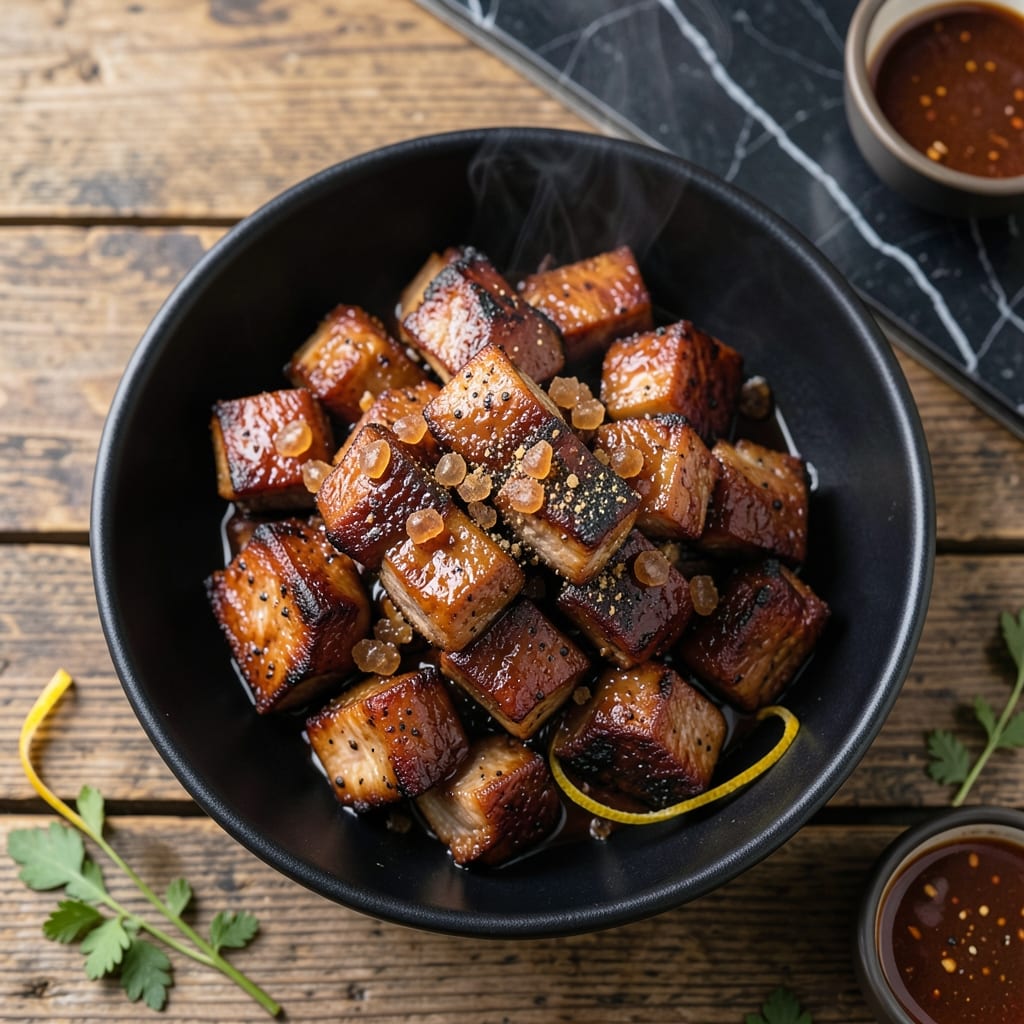
I spent years perfecting these smoky, caramelized pork burnt ends through trial and error in my small Boston kitchen. The secret lies in the low-and-slow cooking process that transforms tough cuts into tender, melt-in-your-mouth bites.
This method uses a precise combination of smoke, heat, and time to develop that signature bark and deep flavor. I’ve tested it repeatedly to ensure foolproof results, even in a home setup without professional equipment.
The final step—a quick sear with a sweet, tangy glaze—elevates the meat to restaurant-quality perfection. Each piece boasts a crispy exterior and juicy interior that’s impossible to resist.
Serve these as a main dish or appetizer; they’re guaranteed to impress.
Ingredients for Recipe for Pork Burnt Ends
Transform tough pork into tender, smoky bites with these essential ingredients.
| Ingredient | Amount | Notes |
|---|---|---|
| Pork Shoulder 🐖 | 4 lb | Boneless, cut into 1.5-inch cubes |
| Brown Sugar 🍚 | ½ cup | Light or dark, packed |
| Kosher Salt 🧂 | 2 tbsp | Diamond Crystal preferred |
| Black Pepper 🌶️ | 2 tbsp | Freshly ground, coarse |
| Smoked Paprika 🌶️ | 2 tbsp | Sweet or hot variety |
| Garlic Powder 🧄 | 1 tbsp | Not garlic salt |
| Onion Powder 🧅 | 1 tbsp | Fine ground preferred |
| Cayenne Pepper 🔥 | 1 tsp | Adjust for heat preference |
| Apple Cider Vinegar 🍏 | ½ cup | For tangy glaze |
| Honey 🍯 | ½ cup | Pure, for sweet glaze |
| Butter 🧈 | ½ cup | Unsalted, melted for glaze |
| Yellow Mustard 🟡 | ¼ cup | For depth in glaze |
| Worcestershire Sauce 🫒 | 2 tbsp | For umami depth |
| Hickory Wood Chips 🪵 | 2 cups | Soaked, for smoking |
[recipe_ingredient_scaler]
The pork shoulder is non-negotiable here—look for well-marbled cuts at your butcher or Costco. The fat renders down during the long cook, keeping the meat juicy. I always grab mine from Whole Foods when they have sales (the butchers there will cube it for you if you ask nicely). For the wood chips, hickory gives that classic BBQ flavor, but apple or cherry wood works too if that’s what you’ve got.
No pork shoulder? Pork butt is practically the same thing—just ask for it at the counter. Out of brown sugar? Maple syrup at half the amount plus a splash of molasses gets close. Skip the cayenne if you’re sensitive to heat (but honestly, the glaze balances it). For the vinegar, white vinegar in a pinch—just doesn’t add that fruity depth apple cider brings.
The pork freezes beautifully raw (portion into 1-lb bags for easy cooking). Once cooked, burnt ends keep 4-5 days in the fridge, reheat in a skillet to crisp the bark. The glaze can be made ahead—store in a jar for up to 2 weeks (the butter might solidify, just warm it gently).
Why You’ll Love This Recipe
- Set and Forget: It’s just pork shoulder, a rub of brown sugar and spices, and low heat—no babysitting, no stress.
- Sticky Sweet Bites: That mix of smoked paprika and caramelized brown sugar gives each cube a crust so good I catch myself sneaking pieces straight from the pan.
- Crowd Pleaser: I’ve served these at backyard BBQs and quiet weeknights—honestly, they disappear just as fast either way.
- Budget Feast: A big pork shoulder stretches into multiple meals, and the leftovers taste even better the next day.
Step-by-Step Instructions for Pork Burnt Ends
Here’s the method that transforms your pork shoulder into melt-in-your-mouth caramelized perfection.
Step 1: Season and Smoke the Pork Shoulder
Pat the 4 lb pork shoulder dry with paper towels. In a bowl, combine the 2 tbsp kosher salt, 2 tbsp black pepper, 2 tbsp smoked paprika, 1 tbsp garlic powder, 1 tbsp onion powder, and 1 tsp cayenne pepper. Apply this rub generously all over the pork, pressing it in so it adheres well.
Soak the 2 cups hickory wood chips in water for 30 minutes, then drain. Preheat your smoker to 225°F using the soaked wood chips for smoke. Place the pork shoulder in the smoker and cook for 6-8 hours until the internal temperature reaches 165°F and it develops a dark bark.
This low-and-slow process infuses the meat with smoky flavor and begins the tenderizing process. Don’t rush it—patience ensures the connective tissue breaks down properly.
Step 2: Cube and Sauce the Pork
Remove the pork from the smoker and let it rest for 30 minutes. Once cool enough to handle, cut it into 1.5-inch cubes. This size ensures each piece has a good ratio of bark to tender interior.
In a large bowl, whisk together the 0.5 cup apple cider vinegar, 0.5 cup honey, 0.5 cup melted butter, 0.25 cup yellow mustard, and 2 tbsp Worcestershire sauce. Toss the cubed pork in this mixture until evenly coated. The sauce should cling to every piece, creating a sticky, flavorful base for the next stage.
Step 3: Return to the Smoker for Caramelization
Return the sauced pork cubes to the smoker, spreading them out in a single layer on the grates. Smoke for another 1.5-2 hours at 225°F, stirring every 30 minutes to ensure even cooking and prevent sticking.
Watch for the sauce to thicken and caramelize into a glossy, dark glaze. The burnt ends are ready when the internal temperature reaches 203°F and the cubes are probe-tender with a slightly crisp exterior. The brown sugar in the rub and the honey in the sauce will create a beautiful, sticky bark that defines great burnt ends.
Step 4: Rest and Serve
Remove the burnt ends from the smoker and let them rest for 10 minutes. This allows the juices to redistribute and the glaze to set slightly. Serve warm, with extra sauce from the bowl drizzled over the top if desired.
Each bite should deliver a perfect balance of smoky, sweet, tangy, and spicy flavors with a tender interior and slightly crisp edges. These burnt ends are best enjoyed fresh but can be reheated gently in a saucepan or on the grill.
Pro Tips For Making Recipe For Pork Burnt Ends
- Cube Evenly: Cut the pork shoulder into 1-inch cubes—any smaller and they’ll dry out, any larger and they won’t crisp properly. I learned this the hard way after ending up with half burnt, half undercooked bites.
- Generous Sugar Coat: Toss the cubes in brown sugar like you’re seasoning fries—more than you think, especially since some will caramelize and burn off. Sounds excessive, but it’s what gives that sticky, glossy finish.
- Low and Slow First: Smoke or roast the pork at 225°F until tender, about 2-3 hours. After burning two batches by rushing the heat, I finally accepted that patience is the only way to get that fall-apart texture.
- Finish with a Broil: Move the cubes to a tray, hit them with a quick broil for 3-5 minutes to crisp the edges. This isn’t the prettiest method, but it’s the fastest way to get that caramelized crust without drying them out.
Common Mistakes When Making Great recipe for pork burnt ends
Skipping the Rest
I learned the hard way that resting the pork after the initial 6-8 hour smoke is non-negotiable. If you cube it too soon, all those precious juices spill out onto the cutting board instead of staying in the meat. Give it a full 30 minutes to settle. 💡
Overcrowding the Smoker
When you return the cubed pork to the smoker, spread it out in a single layer. Piling the pieces together steams them instead of allowing the sauce to caramelize. I use two racks if needed to give each cube space.
Neglecting the Stir
Those 1.5-2 hours of final smoking require attention. Stir the cubes every 30 minutes to prevent sticking and ensure even caramelization. The pieces on the edges cook faster, so rotation is key to consistent results.
Rushing the Temperature
Don’t pull the burnt ends until they hit 203°F internal temperature. Anything lower means the collagen hasn’t fully rendered, leaving the meat tough. I use a ThermoWorks probe for accuracy—it’s worth the investment.
Skipping the Bark Check
The final product should have a dark, glossy bark. If your sauce looks pale or watery, give it more time. The brown sugar and honey need to fully caramelize for that signature sticky exterior. 🔥
Ignoring the Glaze Ratio
Your glaze should cling to each cube. If it’s pooling at the bottom of the bowl, you may need to reduce it slightly before tossing. I aim for a syrup-like consistency that coats the back of a spoon.
Nutrition Facts
Frequently Asked Questions
What cut works best if I can’t find pork shoulder?
Pork butt is nearly identical and works perfectly. Look for well-marbled cuts with good fat content. Avoid lean cuts like tenderloin—they won’t produce the same tender, juicy results.
Can I make burnt ends in the oven instead of a smoker?
Yes! Use 225°F in your oven and add liquid smoke to the rub for that authentic flavor. A foil pan with a rack mimics the smoker environment.
How do I tell when they’re done without a meat thermometer?
Look for a dark, glossy bark and test with a fork—the meat should pull apart easily. The cubes will feel like butter when pressed.
Can I prepare burnt ends a day ahead?
Smoke the pork shoulder the day before, cube and sauce it, then refrigerate overnight. Finish the final smoke just before serving.

Trained in classic French technique but raised on slow-cooked ribs and spicy rubs, she blends culinary skill with smoke and soul.
- Best Smoked Oxtail Recipe: Deep-Rich Flavor After Low-and-Slow Cooking - October 14, 2026
- Pit Boss Smoked Prime Rib Roast Recipe: Bark-to-Bone Crispness in 4 Hours - October 14, 2026
- Smoked Tuna Steak Recipe: Seared Crust Meets Silky Centers - October 14, 2026