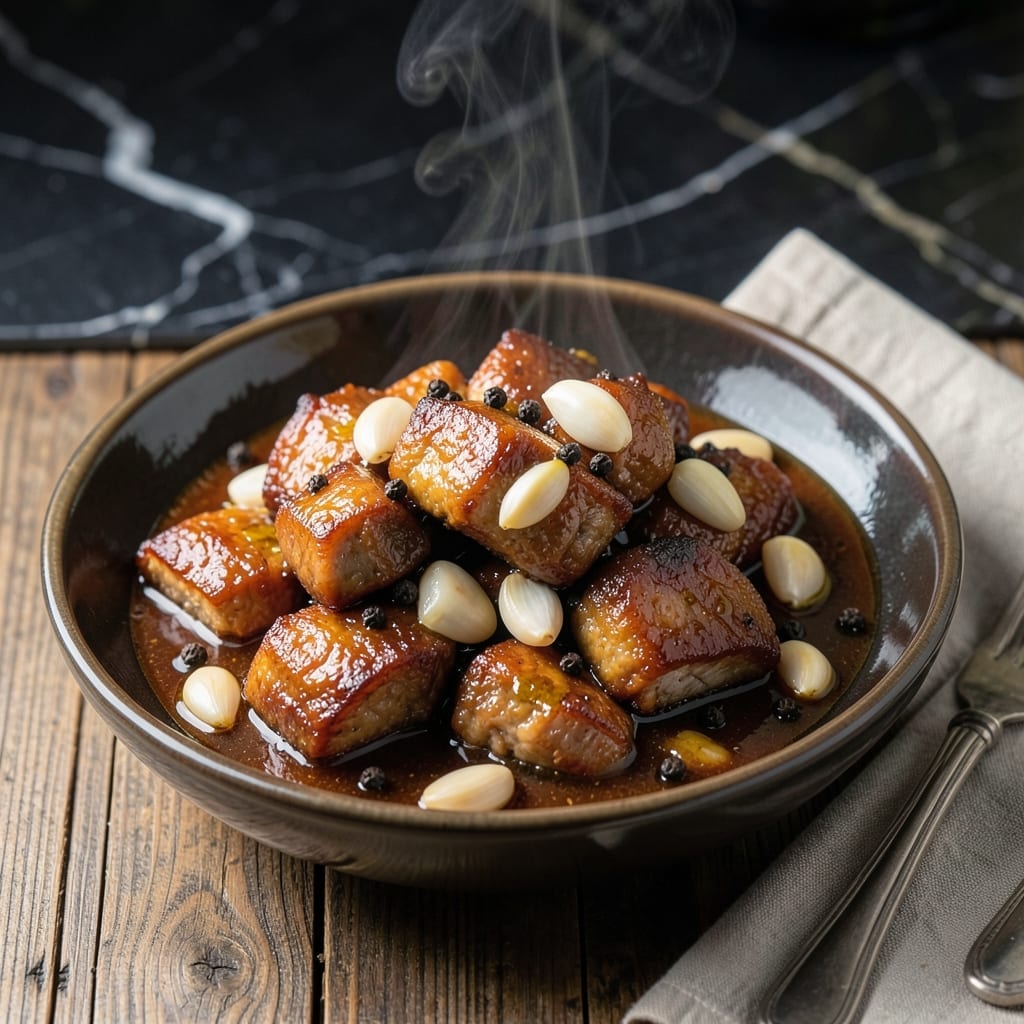
This Filipino pork humba recipe brings the rich, sweet-savory flavors of my grandmother’s kitchen to your table. I spent years decoding her intuitive method for perfectly tender pork belly braised in soy sauce, vinegar, and brown sugar.
The secret lies in the slow cooking process, allowing the pork to absorb the complex blend of garlic, black peppercorns, and bay leaves. The result is fall-apart tender meat with a glossy, caramelized sauce that’s both tangy and sweet.
Traditionally served over steamed rice, this dish transforms simple ingredients into something extraordinary. The aroma alone will transport you to a Filipino family gathering.
With just 2 hours of mostly hands-off cooking, you’ll create a meal that tastes like it took all day. Here’s how to make it authentically at home.
Ingredients for Recipe for Pork Humba Filipino Style
Rich, slow-braised pork belly with deep Filipino flavors in every bite.
| Ingredient | Amount | Notes |
|---|---|---|
| Pork Belly 🥩 | 2 lb | Cut into 2-inch chunks |
| Soy Sauce 🫒 | ¾ cup | Regular or Filipino soy sauce |
| White Vinegar 💧 | ½ cup | Distilled or cane preferred |
| Brown Sugar 🍚 | ½ cup | Packed, light or dark |
| Garlic Cloves 🧄 | 6 cloves | Peeled and smashed |
| Black Peppercorns 🌶️ | 1 tbsp | Whole, lightly crushed |
| Bay Leaves 🍃 | 3 whole | Dried or fresh |
| Shallots 🧅 | 4 whole | Peeled and quartered |
| Pineapple Juice 🍍 | ½ cup | Optional for sweetness |
| Water 💧 | 1 cup | For braising liquid |
| Vegetable Oil 🫒 | 2 tbsp | For searing pork |
| Salt 🧂 | 1 tsp | Adjust to taste |
[recipe_ingredient_scaler]
The pork belly is non-negotiable here. Look for skin-on pieces at an Asian market—they render fat perfectly and hold shape during braising. Costco sometimes carries it pre-cut, but ask your butcher if not. The soy sauce should be Filipino brands like Silver Swan or Datu Puti for authentic depth (regular soy works, but the flavor profile shifts).
No pork belly? Pork shoulder cut into chunks is the closest substitute, though it won’t caramelize quite the same. Missing pineapple juice? Brown sugar plus a splash of water mimics the sweetness. For vinegar, apple cider at half the amount works if that’s all you’ve got. The black peppercorns can be swapped for ground pepper, but whole adds a subtle complexity worth hunting down.
This tastes even better the next day. Store in the fridge for up to 4 days, or freeze for 3 months. Reheat gently on the stove with a splash of water to loosen the sauce (trust me on this).
Why You’ll Love This Recipe
- One Pan Wonder: I just dump everything in a pot—pork belly, soy sauce, vinegar, brown sugar—and let it simmer while I do laundry.
- Sweet-Savory Magic: The brown sugar caramelizes with the soy and vinegar, and the garlic? It turns into these little flavor bombs.
- Feeds the Gang: Honestly, I make a big batch on Sunday and we’re set for lunch and dinner all week.
- Budget Stretcher: Pork belly is cheap here, and this recipe turns it into something restaurant-worthy without the price tag.
Instructions
Here’s how to build layers of flavor that make this dish irresistibly rich and tender.
Step 1: Sear the Pork Belly for Deep Flavor
Heat the 2 tbsp vegetable oil in a heavy pot over medium-high heat until it shimmers. Add the 2 lb pork belly chunks in a single layer, working in batches if needed to avoid crowding the pan. Let them sear undisturbed for 4-5 minutes per side until deeply browned.
The goal is a caramelized crust on each piece—this adds complexity to the final dish. You’ll know it’s ready to flip when the pieces release easily from the pot. Remove the pork and set aside, leaving the rendered fat in the pot.
This step builds the foundation of flavor through the Maillard reaction, so don’t rush it. The browned bits stuck to the pot will dissolve into the braising liquid later, adding incredible depth.
Step 2: Sauté Aromatics Until Fragrant
In the same pot, add the 4 whole shallots, 6 cloves garlic cloves, 1 tbsp black peppercorns, and 3 whole bay leaves. Sauté over medium heat for 2-3 minutes until the shallots soften and the garlic turns light golden brown.
Be careful not to let the garlic burn—it should smell sweet and aromatic, not bitter. The peppercorns will begin to release their pungent aroma, and the bay leaves will start to curl at the edges. These aromatics form the flavor base that defines the dish.
Step 3: Deglaze and Build the Braising Liquid
Pour in the 0.5 cup white vinegar and scrape the bottom of the pot to release all the browned bits. Let it simmer for 1-2 minutes until the liquid reduces by about half. This step lifts all the caramelized flavors from the searing process into the sauce.
Add the 0.75 cup soy sauce, 0.5 cup brown sugar, 0.5 cup pineapple juice, and 1 cup water. Stir until the brown sugar dissolves completely. The mixture should smell sweet, tangy, and deeply savory.
Return the pork belly to the pot, ensuring the pieces are mostly submerged. The liquid should just cover the meat—if it doesn’t, add a splash more water. This balance of sweet, salty, and sour is what makes the dish special.
Step 4: Braise Until Fork-Tender
Bring the mixture to a gentle boil, then reduce the heat to low. Cover and let it simmer for 1.5 to 2 hours, stirring occasionally. The pork should become fork-tender, easily pulling apart with minimal resistance.
As it cooks, the liquid will reduce slightly, and the pork will absorb the flavors of the sauce. The shallots and garlic will nearly dissolve into the braising liquid, creating a rich, thick glaze. If the liquid reduces too much before the pork is tender, add a little hot water to maintain the level.
Step 5: Reduce and Serve
Once the pork is tender, uncover the pot and increase the heat to medium. Let the sauce reduce for 10-15 minutes until it thickens into a glossy, syrupy consistency that clings to the pork. Taste and adjust seasoning with the 1 tsp salt if needed.
Serve hot, with plenty of the reduced sauce spooned over the pork. The sauce should be sticky and deeply flavorful, with a balance of sweetness from the brown sugar and pineapple juice, saltiness from the soy sauce, and tang from the vinegar. This is comfort food at its finest.
Pro Tips For Making Recipe For Pork Humba Filipino Style
- Low and Slow: Cook the pork belly on low heat for at least 2 hours—rushing it with high heat will make the meat tough instead of fall-apart tender.
- Balance the Vinegar: I learned this the hard way—add the white vinegar after the soy sauce has simmered for 10 minutes to prevent it from turning bitter.
- Trim the Fat: Leave about 1/4-inch fat on the pork belly for flavor, but trim excess to avoid a greasy sauce that drowns the dish.
- Caramelize the Sugar: Let the brown sugar melt and darken slightly before adding liquids—this builds a deeper, richer base for the humba’s signature sticky glaze.
Perfect Pairings for These Flavors
Steamed Rice Partner
I always serve this with jasmine or long-grain white rice—the fluffy texture soaks up that glossy sauce perfectly. Use a 1:1.5 rice-to-water ratio and let it rest 10 minutes after cooking for ideal consistency. The neutral base lets the humba shine. 💛
Fresh Contrast Sides
A simple cucumber-tomato salad with rice vinegar dressing cuts through the richness. I toss 2 sliced cucumbers with 1 diced tomato and 1 tbsp vinegar. The crisp texture refreshes your palate between bites.
Pickled Vegetables
Atchara (Filipino pickled papaya) is the traditional pairing—its tangy crunch complements the pork beautifully. Look for it at Asian markets or make your own with shredded green papaya, carrots, and white vinegar. Even store-bought kimchi works in a pinch.
Wine Pairing
An off-dry Riesling from Washington State balances the sweet-savory flavors. The slight sweetness mirrors the dish’s caramelized sauce while the acidity cuts through the fat. For beer lovers, a Filipino San Miguel Pale Pilsen is my go-to. 🍷
Simple Garnishes
Finish with thinly sliced green onions or cilantro for freshness. I also like to add crushed chili flakes for those who want heat. These small touches add color and let guests customize their plates.
Nutrition Facts
Frequently Asked Questions
Can I use pork shoulder instead of pork belly?
Yes, but the texture will differ. Pork shoulder works in a pinch, though it won’t caramelize as well. Use 2 lb cut into chunks and extend braising time by 30 minutes for tenderness.
Why does the vinegar go in first?
Deglazing with vinegar first lifts the browned bits from searing, adding depth to the sauce. It also balances the sweetness of the brown sugar. Never skip this step!
Let it reduce by half before adding other liquids.
How do I store leftovers?
Cool completely, then store in an airtight container in the fridge for up to 4 days. Reheat gently on the stove with a splash of water to loosen the sauce.
Can I make this in a slow cooker?
Sear the pork first, then transfer everything to the slow cooker. Cook on low for 6-8 hours or high for 4-5 hours. Finish by reducing the sauce on the stovetop.

Trained in classic French technique but raised on slow-cooked ribs and spicy rubs, she blends culinary skill with smoke and soul.
- Smoked Teriyaki Beef Jerky Recipe: Umami-Deep Flavor in Every Chewy Bite - October 15, 2026
- Stewed Beef Brisket Recipe: Deep-Rich Flavor After 8 Hours of Slow Simmering - October 15, 2026
- Beef Brisket Rolls Recipe: Flaky Layers and Smoky Sweet Filling - October 15, 2026