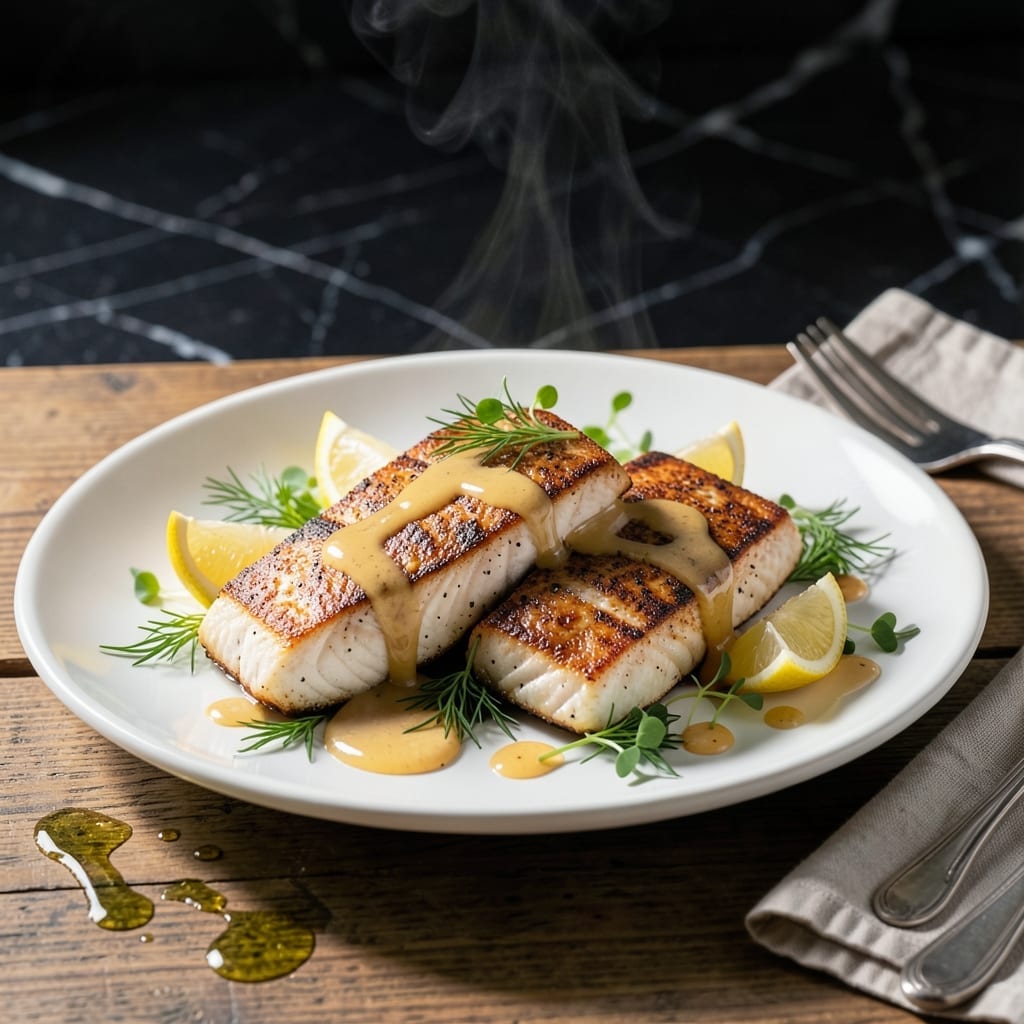
This pan-seared mahi mahi delivers restaurant-quality results with a simple yet elegant approach. The firm texture of the fish stands up beautifully to high heat, creating a golden crust while keeping the inside tender and moist.
Topped with a fresh tropical salsa, this dish balances rich, savory flavors with bright, zesty notes. It’s a pescatarian delight that comes together in under 20 minutes.
Ingredients for Recipe Mahi Mahi Fish
Fresh fish meets vibrant tropical flavors for a quick, elegant meal.
| Ingredient | Amount | Notes |
|---|---|---|
| Mahi Mahi Fillets 🐟 | 1 ½ lb | Skinless, about 1-inch thick |
| Kosher Salt 🧂 | 1 tsp | Diamond Crystal preferred |
| Black Pepper 🌶️ | ½ tsp | Freshly ground |
| Paprika 🌶️ | 1 tsp | Sweet or smoked variety |
| Olive Oil 🫒 | 3 tbsp | Divided, for searing |
| Unsalted Butter 🧈 | 2 tbsp | For basting |
| Fresh Lime Juice 🍋 | 3 tbsp | About 2 limes |
| Fresh Cilantro 🌿 | ½ cup | Chopped, for salsa |
| Red Onion 🧅 | ½ whole | Finely diced |
| Jalapeño Pepper 🌶️ | 1 whole | Seeded and minced |
| Mango 🥭 | 1 whole | Ripe, diced |
| Pineapple 🍍 | ½ cup | Fresh, diced |
| Garlic Cloves 🧄 | 2 cloves | Minced |
| Honey 🍯 | 1 tsp | Optional for salsa |
[recipe_ingredient_scaler]
The mahi mahi quality is non-negotiable. Wild-caught fillets from Whole Foods or a trusted seafood counter ensure firm texture and clean flavor. Look for fillets with vibrant color and no fishy odor. Thickness matters—aim for 1-inch cuts for even cooking. The salsa ingredients should be peak ripeness; underripe mango or pineapple will taste starchy rather than sweet.
Short on time? Pre-diced mango or pineapple from Trader Joe’s works in a pinch (fresh is superior though). No jalapeño? Serrano pepper at half the amount delivers similar heat. Cilantro haters can substitute fresh parsley or mint. For a sweeter salsa, add diced peaches or nectarines. The honey can be swapped for agave if you prefer a vegan touch.
Store fresh fish in the coldest part of your fridge—use within 1-2 days for optimal flavor. The tropical salsa keeps 3-4 days refrigerated in an airtight container. Mahi mahi freezes well for 2-3 months if wrapped tightly in plastic and foil.
Why You’ll Love This Recipe
- One Pan Magic: I love that this comes together with just mahi mahi, olive oil, and a few spices—no fuss, no extra dishes.
- Smoky Delight: The paprika gives it this warm, slightly smoky flavor that makes the fish taste like it came from a fancy restaurant.
- Weeknight Hero: Honestly, it’s my go-to for busy evenings when I need something quick but still impressive.
- Budget Friendly: Mahi mahi fillets stretch farther than you’d think, and the spices are probably already in your pantry.
Step-by-Step Instructions for Pan-Seared Mahi Mahi with Tropical Salsa
Master the technique for perfectly seared fillets with a vibrant, fresh topping that complements the fish beautifully.
Step 1: Season and Prepare the Mahi Mahi Fillets
Pat the 1.5 lb Mahi Mahi Fillets completely dry with paper towels—moisture prevents proper searing. This is critical for achieving that restaurant-quality crust. Season both sides evenly with the 1 tsp Kosher Salt, 0.5 tsp Black Pepper, and 1 tsp Paprika. The paprika adds a subtle depth and color to the crust.
Let the seasoned fillets sit at room temperature for 10-15 minutes while you prepare the tropical salsa. This step ensures even cooking throughout the thick fillets. The salt will also begin to draw out surface moisture, which we’ll sear off for maximum flavor development.
Step 2: Craft the Tropical Salsa
In a bowl, combine the diced mango, 0.5 cup Pineapple, finely diced 0.5 whole Red Onion, minced jalapeño pepper, and minced 2 cloves Garlic Cloves. The jalapeño adds a mild heat that balances the sweetness of the fruit—remove all seeds for a milder salsa.
Add the 0.5 cup Fresh Cilantro, 3 tbsp Fresh Lime Juice, and 1 tsp Honey. Stir gently to combine, taking care not to overmix and turn the salsa mushy. The lime juice brightens the flavors, while the honey rounds out the acidity. Let the salsa sit for 10 minutes to allow the flavors to meld.
Step 3: Sear the Mahi Mahi to Perfection
Heat 2 tbsp Olive Oil in a large skillet over medium-high heat until it shimmers—this is the ideal temperature for searing. Carefully place the fillets in the pan, leaving space between them to prevent steaming. Sear undisturbed for 4-5 minutes per side until the crust is deep golden brown and the fish releases easily from the pan.
In the last 2 minutes of cooking, add the 2 tbsp Unsalted Butter to the skillet. Tilt the pan slightly and spoon the foaming butter over the fillets repeatedly to baste them. This technique adds richness and helps cook the top of the fillets evenly. The mahi mahi is done when it flakes easily with a fork and reaches an internal temperature of 145°F.
Step 4: Plate and Serve with Tropical Salsa
Transfer the seared mahi mahi fillets to a serving platter or individual plates. Spoon the tropical salsa generously over the top of each fillet, allowing some to spill onto the plate for a colorful presentation. The contrast of the warm, flaky fish with the cool, fresh salsa is what makes this dish exceptional.
Drizzle any remaining butter from the pan over the fillets for added flavor. Serve immediately while the fish is hot—the salsa’s bright acidity and sweetness cut through the richness of the buttery mahi mahi beautifully. Garnish with extra fresh cilantro if desired for a final touch.
Pro Tips For Making Recipe Mahi Mahi Fish
- Pat Fish Dry: Use paper towels to thoroughly dry the mahi mahi fillets before seasoning—I learned this the hard way after my first few batches steamed instead of seared in the pan.
- Hot Pan, Quick Sear: Get your skillet screaming hot before adding the oil and fish, then cook each side for just 3-4 minutes. Sounds obvious, but I used to rush this and ended up with rubbery fillets.
- Season Generously: Don’t be shy with the kosher salt, black pepper, and paprika—mahi mahi can handle bold seasoning, and the spices form a crust that’s hard to beat.
- Rest Before Serving: Let the fish rest 2-3 minutes after cooking, tented with foil. My grandmother swore by this, and she was right: it keeps the juices where they belong.
Dietary Considerations for These Flavors
Pescatarian Friendly
This dish is naturally pescatarian, making it perfect for those who enjoy seafood but avoid other meats. The mahi mahi provides high-quality protein without any land animal products, aligning with pescatarian dietary guidelines. I love how it fits seamlessly into a seafood-focused diet. 💪
Gluten-Free Option
All ingredients in this recipe are inherently gluten-free, but always verify your seasonings—some paprika blends may contain additives. Use certified gluten-free paprika like McCormick’s to be absolutely certain. The tropical salsa adds freshness without any risk of gluten contamination.
Dairy-Free Adaptation
For a dairy-free version, simply swap the 2 tbsp Unsalted Butter for olive oil or a dairy-free alternative like Earth Balance. The sear will still develop beautifully, and the tropical salsa keeps the dish vibrant and flavorful. No other adjustments are needed!
Low-Carb Suitable
This meal is naturally low-carb, with the tropical salsa contributing minimal sugars from the fruit. A 1.5 lb serving contains roughly 15g net carbs, primarily from the mango and pineapple. It’s a great option for those watching their carbohydrate intake. ✨
Allergen Notes
Be mindful of potential allergens: the recipe contains fish (mahi mahi), so it’s unsuitable for those with seafood allergies. The salsa includes jalapeño, which may cause sensitivity in some individuals. Always check labels on pre-diced fruit for added preservatives.
Keto-Friendly Adjustments
To make this keto-friendly, reduce the salsa portion or replace higher-carb fruits like mango with avocado or cucumber. The mahi mahi itself is keto-perfect, with 0g carbs and high protein. I often serve it with a side of sautéed greens for a complete keto meal.
Nutrition Facts
Frequently Asked Questions
What’s the best way to tell when it’s done?
Look for an internal temperature of 145°F and flesh that flakes easily with a fork. The fillets should release cleanly from the pan and have a golden-brown crust.
Can I use frozen fillets instead of fresh?
Yes, but thaw them overnight in the fridge first. Pat them very dry before seasoning to ensure proper searing. Avoid microwave thawing as it can make the texture mushy.
How do I keep the salsa from making the fish soggy?
Add the salsa just before serving, not during cooking. Use a slotted spoon to drain excess liquid from the salsa. The contrast of warm fish and cool salsa works best.
What sides pair well with this dish?
Try cilantro-lime rice, grilled vegetables, or a simple green salad. The tropical flavors also work beautifully with coconut rice or roasted sweet potatoes.

Trained in classic French technique but raised on slow-cooked ribs and spicy rubs, she blends culinary skill with smoke and soul.
- Recipe for Boneless Pork Chops in Cast Iron Skillet: Sear and Baste to Juicy Perfection - October 3, 2026
- Recipe for Boneless Cross Rib Roast: Slow-Roasted Beef with Herb Crust - October 3, 2026
- Hamburgers in Sauce Recipe Crock Pot: Slow-Cooked Savory Delight - October 3, 2026