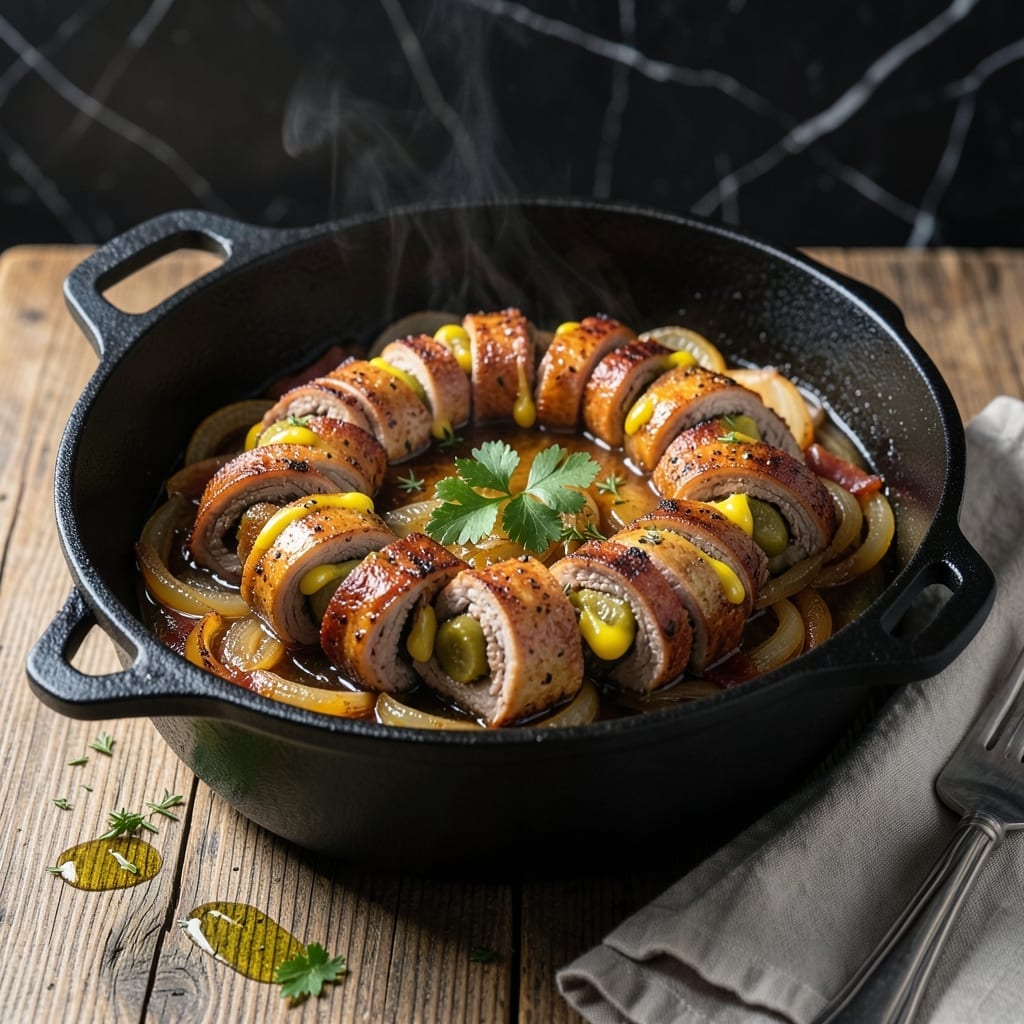
This classic German dish transforms thin beef slices into tender, flavorful rolls stuffed with tangy mustard, crisp pickles, and savory bacon. A traditional technique creates a melt-in-your-mouth texture.
Perfect for special occasions, the dish delivers rich, complex flavors through slow braising. Serve with red cabbage or potato dumplings for an authentic experience.
Ingredients for Recipe Rouladen German Dish
Thin beef, tangy mustard, crisp pickles, and savory bacon create these classic German rolls ready for braising.
| Ingredient | Amount | Notes |
|---|---|---|
| Beef Round Steak 🥩 | 1 ½ lb | Thinly sliced, about 1/8-inch thick |
| Yellow Mustard 🟡 | ¼ cup | Dijon or whole-grain acceptable |
| Dill Pickles 🥒 | 4 whole | Thinly sliced lengthwise |
| Bacon Slices 🥓 | 4 slices | Thin-cut, halved crosswise |
| Yellow Onion 🧅 | 1 whole | Thinly sliced, separated into strips |
| All-Purpose Flour 🌾 | ¼ cup | For dredging beef slices |
| Beef Broth 🥣 | 1 ½ cups | Low-sodium preferred |
| Dry White Wine 🍷 | ½ cup | Optional for deglazing pan |
| Olive Oil 🫒 | 2 tbsp | For searing beef rolls |
| Kosher Salt 🧂 | 1 tsp | Diamond Crystal preferred |
| Black Pepper 🌶️ | ½ tsp | Freshly ground |
| Bay Leaves 🌿 | 2 pieces | For braising liquid |
| Juniper Berries 🍇 | 4 pieces | Lightly crushed for aroma |
| Fresh Parsley 🌿 | ¼ cup | Chopped, for garnish |
| Carrots 🥕 | 2 whole | Peeled and sliced into sticks |
[recipe_ingredient_scaler]
The beef is critical here—top round or sirloin tip cut into 1/8-inch slices is ideal. Ask your butcher to slice it for you, or freeze the meat for 30 minutes to firm it up before slicing at home. Whole Foods or local butcher shops typically have the best selection. Avoid pre-sliced beef as it’s often too thick. Look for marbling, which keeps the rolls tender during braising.
No dill pickles? Bread and butter pickles work in a pinch, though the flavor will be sweeter. Out of bacon? Thin-cut prosciutto adds a similar saltiness. For a non-alcoholic version, replace the wine with additional beef broth. The mustard can be swapped for whole-grain or spicy brown if you prefer a stronger kick.
Rouladen can be prepped a day ahead—assemble the rolls and refrigerate until ready to cook. Leftover braising liquid makes an excellent gravy. Store cooked rouladen in the fridge for up to 4 days or freeze for 3 months. Reheat gently to avoid drying out the beef.
Why You’ll Love This Recipe
- Minimal Rolling Required: I just spread the mustard, layer the pickles and bacon, then roll—no fancy techniques.
- Tangy Meets Savory: The sharp dill pickles and mustard cut through the rich beef and bacon in every bite.
- Feeds a Hungry Table: One batch serves six, and it’s just as good for Sunday dinner as it is for meal-prepping lunches.
- Leftovers Get Better: Honestly, the flavors deepen overnight—so I always make extra for tomorrow’s sandwiches.
Step-by-Step Instructions for Rouladen
Master the technique of rolling, searing, and braising for authentic German flavor and tenderness.
Step 1: Prepare and Fill the Beef Slices
Lay the thinly sliced 1.5 lb beef round steak on a clean surface. Pat each piece dry with paper towels to ensure proper searing later. Season both sides with the 1 tsp kosher salt and 0.5 tsp black pepper.
Spread a thin layer of the 0.25 cup yellow mustard evenly over each slice. Place a portion of the 4 whole dill pickles (thinly sliced lengthwise) and half slices of the 4 slices bacon along one end of each beef slice. Roll tightly, securing the filling inside, and set aside.
Step 2: Sear the Rouladen
Heat the 2 tbsp olive oil in a large Dutch oven or heavy pot over medium-high heat. When the oil shimmers, add the beef rolls seam-side down. Sear undisturbed for 3-4 minutes until the underside is deep golden brown.
Carefully turn each roll to sear the remaining sides for an additional 2-3 minutes per side. The goal is an even, rich crust on all surfaces. Transfer the seared rolls to a plate and set aside temporarily.
Step 3: Sauté the Aromatics
In the same pot, add the 1 whole yellow onion (thinly sliced) and the 2 whole carrots (peeled and sliced into sticks). Sauté for 5 minutes over medium heat until the onion begins to soften and turn translucent.
Lightly crush the 4 pieces juniper berries and add them to the pot along with the 2 pieces bay leaves. Stir to combine and cook for an additional 2 minutes to release the aromatics.
Step 4: Braise to Perfection
Sprinkle the 0.25 cup all-purpose flour over the vegetables and stir to coat evenly. This will help thicken the braising liquid. Pour in the 0.5 cup dry white wine to deglaze the pot, scraping up any browned bits from the bottom.
Return the seared beef rolls to the pot. Add the 1.5 cups beef broth, ensuring the liquid covers about two-thirds of the rolls. Bring to a gentle simmer, then reduce heat to low. Cover and braise for 1.5 to 2 hours, turning the rolls occasionally, until the beef is fork-tender.
Step 5: Finish and Serve
Once the beef is tender, remove the rolls to a serving platter. Skim any excess fat from the surface of the braising liquid, then simmer uncovered for 5 minutes to slightly reduce and thicken the sauce.
Pour the sauce over the rouladen, garnish with the 0.25 cup fresh parsley (chopped), and serve immediately. The sauce should be rich and velvety, complementing the tender, flavorful beef rolls perfectly.
Pro Tips For Making Recipe Rouladen German Dish
- Pound the Steak: Use a meat mallet to pound the beef round steak to ¼-inch thickness—I learned this the hard way after my first few rouladen turned out chewy because the meat was too thick.
- Soak the Pickles: Rinse and soak dill pickles in cold water for 10 minutes to mellow their sharpness, or your rouladen might taste overwhelmingly sour.
- Secure with Toothpicks: After rolling, fasten each roulade with 2-3 toothpicks to keep the bacon, pickles, and onions from falling out during browning and braising.
- Brown Before Braising: Sear each roulade on all sides in hot oil until deeply browned—about 3 minutes per side—before adding liquid, or the final dish will lack depth.
Dietary Considerations for These Flavors
Gluten-Free Adaptation
For gluten-free rouladen, replace the all-purpose flour with 1:1 gluten-free flour blend. I use King Arthur Measure for Measure for best texture. Ensure your mustard and pickles are certified gluten-free, as some brands contain wheat-based thickeners. 💪
Dairy-Free Version
This dish is naturally dairy-free since it relies on mustard, pickles, and bacon for flavor. Just verify your bacon doesn’t contain lactose—Applegate Naturals or Pederson’s Natural Farms are safe choices. Always check labels for hidden dairy derivatives.
Lower-Sodium Option
Use low-sodium beef broth and no-salt-added pickles. Replace regular bacon with uncured, no-salt-added bacon. I recommend Niman Ranch for quality. Reduce added salt to ½ tsp or omit entirely.
Pork Substitution
For a lighter option, use pork loin sliced ¼-inch thick. The cooking time reduces to about 1 hour since pork cooks faster. The flavors work beautifully with the same mustard-pickle-bacon combination.
Vegetarian Twist
Swap beef for thinly sliced eggplant or portobello mushrooms. Brush with olive oil before rolling. Braise for 45-60 minutes until tender. The mustard and pickles provide plenty of flavor without meat.
Keto-Friendly Adjustments
Skip the flour dredge and thicken the braising liquid with 1 tsp xanthan gum instead. Use sugar-free pickles and check your mustard for added sugars. The beef and bacon keep this dish naturally low-carb. ✨
Nutrition Facts
Frequently Asked Questions
What cut of beef works best for this?
Use top round or sirloin tip for ideal results. Ask your butcher to slice it 1/8-inch thick or freeze the meat for 30 minutes before slicing at home. Avoid pre-sliced beef as it’s often too thick.
Can I make these ahead of time?
Yes! Assemble the rolls and refrigerate for up to 24 hours before cooking. This helps the flavors meld. Leftover braising liquid also makes excellent gravy.
What if my rolls unravel while cooking?
Secure them with kitchen twine or toothpicks before searing. Ensure the beef slices are thin enough to roll tightly around the fillings.
How do I know when they’re done?
The beef is ready when it’s fork-tender after braising for 1.5 to 2 hours. Check the internal temperature reaches 160°F for safety.

Trained in classic French technique but raised on slow-cooked ribs and spicy rubs, she blends culinary skill with smoke and soul.
- Recipe for Boneless Pork Chops in Cast Iron Skillet: Sear and Baste to Juicy Perfection - October 3, 2026
- Recipe for Boneless Cross Rib Roast: Slow-Roasted Beef with Herb Crust - October 3, 2026
- Hamburgers in Sauce Recipe Crock Pot: Slow-Cooked Savory Delight - October 3, 2026