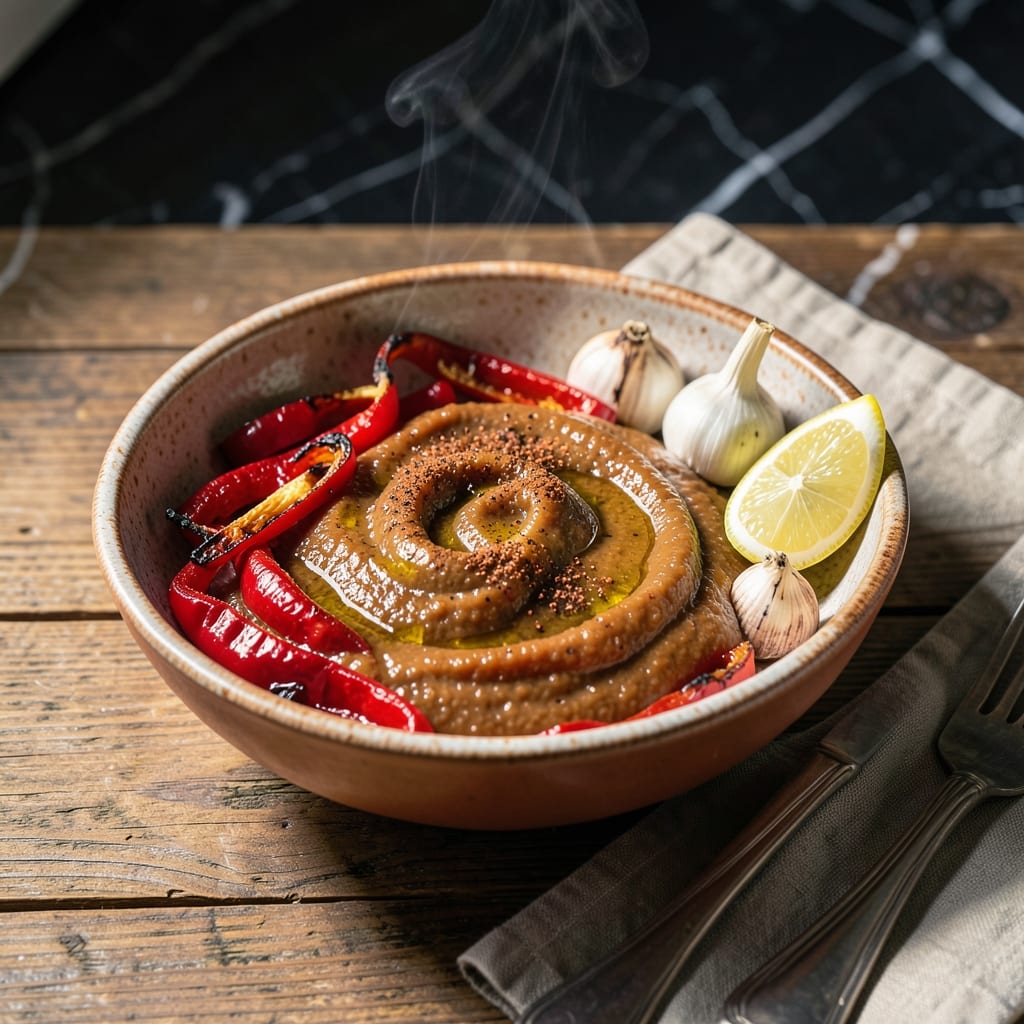
This red pepper paste brings smoky depth to any dish with just a spoonful. I developed it after discovering how much flavor roasted peppers can add when concentrated into a rich, versatile condiment.
The process is simple but transformative. Roasting the peppers first intensifies their natural sweetness, while blending creates a smooth, spreadable paste that lasts for weeks in the fridge.
Use it to elevate stews, marinades, or even as a sandwich spread. The paste delivers a bold, complex flavor that works in countless recipes without overpowering them.
Once you try this, you’ll find yourself reaching for it constantly. It’s the kind of ingredient that makes everything taste just a little better.
Ingredients for Red Pepper Paste
Eight ingredients transform into this bold, smoky paste that elevates everything it touches.
| Ingredient | Amount | Notes |
|---|---|---|
| Red Bell Peppers 🌶️ | 4 whole | Large, seeds removed, halved |
| Extra-Virgin Olive Oil 🫒 | ¼ cup | Divided for roasting and blending |
| Garlic Cloves 🧄 | 4 cloves | Peeled, roughly chopped |
| Smoked Paprika 🌶️ | 1 tsp | For smoky depth |
| Sea Salt 🧂 | 1 tsp | Fine grain preferred |
| Lemon Juice 🍋 | 1 tbsp | Freshly squeezed for brightness |
| Red Pepper Flakes 🔥 | ½ tsp | Adjust for heat preference |
| Tomato Paste 🍅 | 2 tbsp | For richness and depth |
[recipe_ingredient_scaler]
The peppers are everything here. Farmers market red bells have more sweetness than grocery store ones, but any fresh pepper works. Roast until charred black in spots—that’s where the smoky flavor comes from. I get mine from Whole Foods when they’re on sale, but standard supermarkets are fine. Just avoid the pre-cut ones—they dry out too fast.
No smoked paprika? Chipotle powder at half the amount adds similar depth. Out of fresh garlic? Garlic powder at one-third the quantity works. The olive oil should be something you’d actually drizzle on bread—California Olive Ranch is my go-to. If you want it sweeter, add a pinch of sugar (but it’s honestly perfect without).
This keeps beautifully. Store in an airtight jar with a thin olive oil layer on top—stays fresh for 3-4 weeks in the fridge. Freezes for 6 months too (ice cube trays are perfect for portions).
Why You’ll Love This Recipe
- Five-Minute Prep: I just roast the peppers, blend with garlic and olive oil, and it’s done—no fancy steps.
- Smoky Depth: The smoked paprika and charred peppers give it this rich, almost barbecue-like kick.
- Spreads Like Magic: I slather it on sandwiches, stir into stews, or dollop on eggs—never the same meal twice.
- Jars for Days: One batch fills two jars, and honestly, it tastes even better after a week in the fridge.
Step-by-Step Instructions for Red Pepper Paste
Here’s the method. Straightforward, tested, works every time.
Step 1: Roast the Red Bell Peppers to Charred Perfection
Preheat your oven to 450°F. Halve the 4 whole Red Bell Peppers lengthwise, remove all seeds and membranes, then place them cut-side down on a rimmed baking sheet. Drizzle with 2 tablespoons of the 0.25 cup Extra-Virgin Olive Oil and roast for 20-25 minutes.
You want the skins to blacken and blister in spots—that’s how you know the natural sugars are caramelizing and developing deep, smoky flavor. Don’t be tempted to turn them early; the char is essential for that rich, complex base. The peppers are done when they collapse slightly and the skins are mostly blackened.
Step 2: Steam and Peel the Roasted Peppers
Transfer the roasted peppers to a large bowl and immediately cover with a plate or plastic wrap. Let them steam for 10 minutes—this loosens the skins so they slip right off. After steaming, peel away and discard all the charred skin. It’s okay if a few stubborn bits remain; perfection isn’t the goal here.
Place the peeled peppers in a colander set over a bowl to drain any excess liquid. This step prevents a watery paste, ensuring a concentrated, vibrant flavor. Meanwhile, roughly chop the 4 cloves Garlic Cloves and set them aside.
Step 3: Blend All Ingredients into a Smooth Paste
In a food processor or blender, combine the drained roasted peppers, remaining Extra-Virgin Olive Oil, chopped garlic cloves, 1 tsp Smoked Paprika, 1 tsp Sea Salt, 1 tbsp Lemon Juice, 0.5 tsp Red Pepper Flakes, and 2 tbsp Tomato Paste. Pulse a few times to break everything up, then blend continuously for 1-2 minutes.
Stop to scrape down the sides as needed. The mixture should be completely smooth and glossy, with no visible chunks of pepper or garlic. If it seems too thick, add a splash of water, but remember: the paste will thicken slightly as it cools.
Step 4: Adjust Seasoning and Store for Maximum Flavor
Taste the paste and adjust the seasoning if needed. The Sea Salt enhances all the flavors, while the Lemon Juice brightens the smoky depth. If you prefer more heat, add an extra pinch of Red Pepper Flakes.
Transfer the paste to a clean jar and let it cool to room temperature. For the best flavor, refrigerate it for at least 2 hours before using—this allows all the ingredients to meld together. It will keep in the refrigerator for up to 2 weeks, or you can freeze it for longer storage.
Pro Tips For Making Red Pepper Paste
- Roast Peppers Low and Slow: Char the peppers at 375°F for 40-45 minutes until deeply blistered—I learned this the hard way after burning three batches at high heat.
- Peel While Warm: Transfer roasted peppers to a bowl, cover with a plate for 10 minutes, then peel. The steam makes the skins slide right off.
- Skip Raw Garlic: Roast the garlic cloves alongside the peppers for a sweeter, more mellow flavor that blends perfectly into the paste.
- Add Salt Last: Wait until the very end to season with sea salt—adding it earlier can draw out too much moisture from the peppers.
Common Mistakes When Making This Dish
Under-roasting Peppers
Don’t pull the peppers out too early. If they’re not charred black in spots, you’ll miss that deep, smoky flavor. I learned this the hard way in my tiny Boston kitchen—pale peppers make a bland paste. Aim for 20-25 minutes at 450°F for maximum caramelization. 🔥
Skipping the Steaming
After roasting, steaming the peppers for 10 minutes is crucial. It loosens the skins so they peel off effortlessly. Skip this step, and you’ll struggle with stubborn bits of skin that ruin the texture. Trust me, the extra patience pays off.
Overcrowding the Blender
Trying to blend everything at once can lead to uneven results. I pulse the peppers first to break them down, then add the remaining ingredients gradually. This ensures a smooth, consistent paste without straining your blender.
Neglecting to Drain
After peeling, drain the peppers in a colander for 5-10 minutes. Excess liquid makes the paste watery and dilutes the flavor. I set mine over a bowl to catch every last drop of that precious roasted pepper juice.
Storage Shortcuts
Always cover the paste with a thin layer of Extra-Virgin Olive Oil before sealing the jar. This prevents oxidation and keeps it fresh for 3-4 weeks in the fridge. Without it, the paste can develop an off flavor or mold.
Seasoning Too Soon
Taste and adjust the seasoning only after the paste has cooled. Flavors meld and intensify as it rests, so what tastes perfect hot might be overpowering later. I wait at least 2 hours before final adjustments.
Nutrition Facts
Frequently Asked Questions
Can I use jarred roasted red peppers instead?
You can, but the flavor won’t be as deep. Fresh roasted peppers develop a smokier character at 450°F that jarred versions lack. If using jarred, drain and pat dry thoroughly to avoid a watery paste.
How can I make this spicier?
Increase the red pepper flakes to 1 teaspoon or add a pinch of cayenne. For serious heat, include a fresh jalapeño or serrano when blending. The smoky base balances the spice beautifully.
What’s the best way to use leftover paste?
Stir into soups, spread on sandwiches, or mix into salad dressings. A spoonful transforms humble dishes like scrambled eggs or roasted vegetables. It freezes well in ice cube trays for portion control.
Why does my paste taste bitter?
Bitterness often comes from under-roasted peppers or their seeds. Ensure peppers are completely charred and always remove all seeds and membranes before blending. The lemon juice helps balance any residual bitterness.

Trained in classic French technique but raised on slow-cooked ribs and spicy rubs, she blends culinary skill with smoke and soul.
- Recipe for Boneless Pork Chops in Cast Iron Skillet: Sear and Baste to Juicy Perfection - October 3, 2026
- Recipe for Boneless Cross Rib Roast: Slow-Roasted Beef with Herb Crust - October 3, 2026
- Hamburgers in Sauce Recipe Crock Pot: Slow-Cooked Savory Delight - October 3, 2026