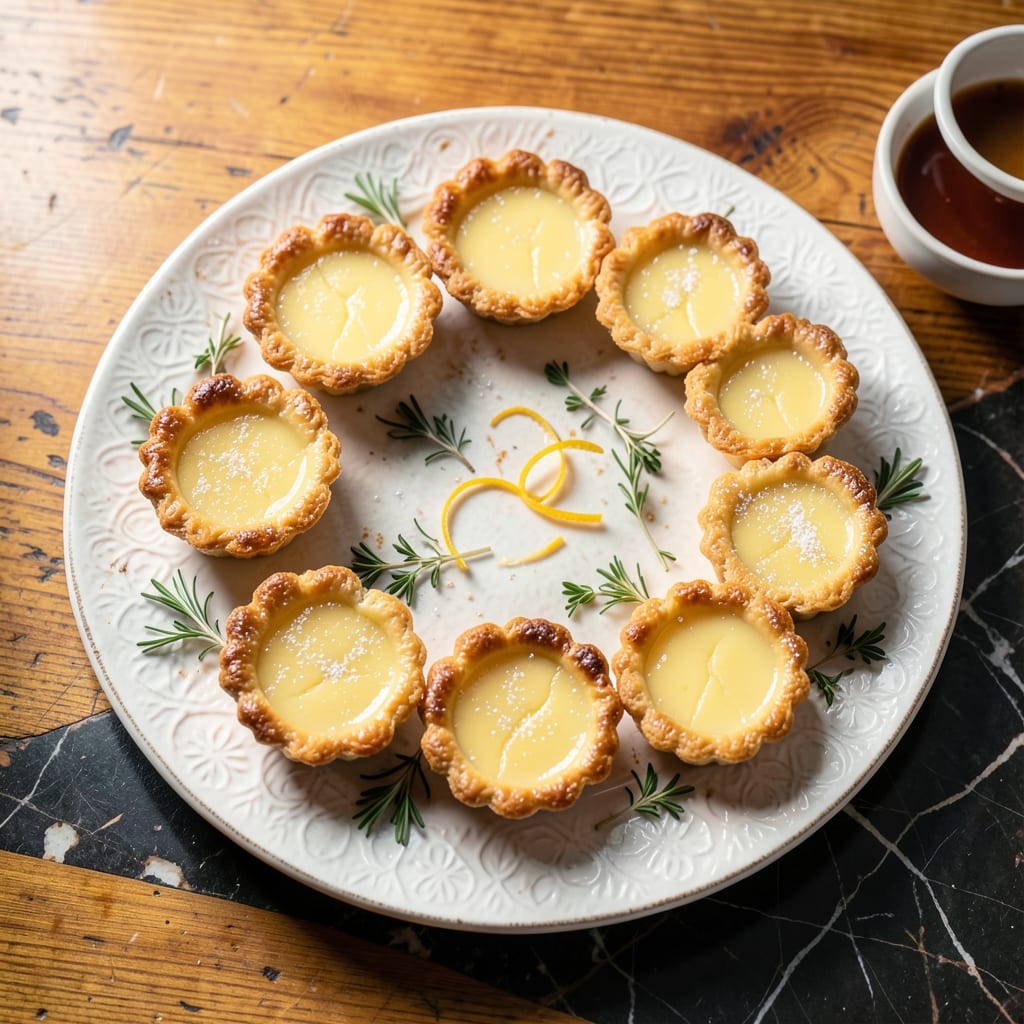
This recipe delivers the perfect balance of flaky pastry and silky custard that defines authentic Chinese egg tarts. I developed this method after testing multiple approaches to achieve that delicate, layered texture without complicated techniques.
The pastry requires precise handling to create those signature crisp layers, while the custard demands gentle heating to maintain its smooth, velvety consistency. Every step has been refined to ensure professional-quality results at home.
You will end up with golden tarts featuring a buttery, flaky crust that shatters at the touch, encasing a rich egg custard with just the right amount of sweetness. The contrast between textures makes each bite unforgettable.
Serve warm for the best experience, as the custard reaches its ideal creamy state straight from the oven. This is a dish that rewards patience and attention to detail.
Ingredients for Chinese Egg Custard Tarts
Simple ingredients create authentic flaky pastry and silky custard at home.
| Ingredient | Amount | Notes |
|---|---|---|
| All-Purpose Flour 🌾 | 2 cups | Plus extra for dusting |
| Unsalted Butter 🧈 | 1 cup | Cold, cubed for pastry |
| Granulated Sugar 🍚 | ¼ cup | Divided for pastry and custard |
| Large Eggs 🥚 | 2 whole | Divided, yolks for custard |
| Ice Water 💧 | ¼ cup | For pastry dough |
| Sweetened Condensed Milk 🥛 | ½ cup | For custard richness |
| Whole Milk 🥛 | ½ cup | Warmed for custard |
| Vanilla Extract 🌿 | 1 tsp | Pure for best flavor |
| Salt 🧂 | ¼ tsp | Fine grain for pastry |
| Baking Powder 🧂 | ¼ tsp | For flaky layers |
[recipe_ingredient_scaler]
The butter is critical for flakiness—use high-fat European-style like Plugrá or Kerrygold for best results. All-purpose flour works perfectly, but avoid bread flour which makes the pastry tough. The condensed milk gives the custard its signature richness—Carnation is the most widely available brand. Ensure your eggs are fresh for the smoothest custard texture.
No condensed milk? Simmer 2 cups whole milk with 2/3 cup sugar until reduced by half as a substitute. The vanilla can be omitted, but it adds depth to the custard flavor. For a lighter texture, half-and-half instead of whole milk works well. The salt in the pastry is essential—don’t skip it even though it seems like a small amount.
The dough can be made 1 day ahead and refrigerated. Baked tarts keep at room temperature for 2 days or freeze for 1 month. Warm briefly before serving to restore the custard’s silky texture.
Why You’ll Love This Recipe
- One Bowl Wonder: I mix the dough right in the same bowl I use for the filling—no extra dishes, just butter, flour, and ice water coming together effortlessly.
- Buttery Crisp Meets Silky: That flaky pastry shell snaps between your teeth, then gives way to the smoothest egg custard, rich with sugar and eggs.
- Tea Time Star: Honestly, these disappear whether it’s a lazy Sunday afternoon or I need a last-minute potluck contribution.
- Budget Baking: Five simple ingredients I always have on hand, and one batch makes enough to stash extras in the fridge for midnight cravings.
Step-by-Step Instructions for Chinese Egg Custard Tarts
Master the technique for achieving flaky pastry layers and a silky smooth custard filling.
Step 1: Prepare the Flaky Pastry Dough
In a large bowl, combine the 2 cups All-Purpose Flour, 0.25 tsp Salt, and 0.25 tsp Baking Powder. I use a fork to mix these dry ingredients thoroughly, ensuring the leavening agent is evenly distributed for consistent flakiness.
Cut in the 1 cup Unsalted Butter (cold and cubed) using a pastry cutter or your fingers until the mixture resembles coarse crumbs with pea-sized butter pieces visible. This is crucial—visible butter creates those sought-after layers. Add the 0.25 cup Ice Water gradually, mixing just until the dough comes together. Overworking will make it tough.
Step 2: Shape and Chill the Pastry
Turn the dough onto a lightly floured surface and knead gently 3-4 times until smooth. I dust the surface with some of the extra all-purpose flour to prevent sticking. Divide the dough into 4 equal portions (for 4 tarts) and shape each into a ball.
Flatten each ball into a disc, wrap in plastic, and refrigerate for 30 minutes. This chilling step firms up the butter, which is essential for creating distinct, flaky layers during baking. The dough should feel cold but pliable when ready to roll.
Step 3: Make the Silky Custard Filling
In a separate bowl, whisk together the 2 whole Large Eggs with the 0.25 cup Granulated Sugar until pale and slightly thickened. I focus on the yolks here for maximum richness. Gradually whisk in the 0.5 cup Sweetened Condensed Milk and 0.5 cup Whole Milk (warmed) until fully incorporated.
Add the 1 tsp Vanilla Extract and mix well. Strain the custard mixture through a fine-mesh sieve to remove any lumps—this ensures the smooth, silky texture that defines a perfect egg tart filling. Let it rest while you roll out the pastry.
Step 4: Assemble and Bake the Tarts
Preheat your oven to 375°F. On a floured surface, roll each dough portion into a circle about 6 inches in diameter. Press the dough into tart pans, ensuring it covers the bottom and sides evenly. Trim any excess dough from the edges.
Pour the custard filling into each tart shell, filling them about 80% full to prevent spillage during baking. Bake for 20-25 minutes until the pastry is golden brown and the custard is set with a slight jiggle in the center. This jiggle indicates the perfect silky texture.
Let the tarts cool in the pans for 10 minutes before transferring to a wire rack. The custard will continue to set as it cools, achieving that characteristic smooth, creamy consistency.
Pro Tips For Making Chinese Egg Custard Tarts
- Chill the Dough: After mixing the flour, butter, and ice water, wrap the dough and refrigerate for at least 30 minutes—I learned this the hard way when my tarts shrank in the pan because the gluten hadn’t relaxed.
- Strain the Custard: Press the egg and sugar mixture through a fine-mesh sieve before pouring it into the tart shells. Sounds fussy, but it removes air bubbles and guarantees a silky-smooth filling every time.
- Skip the Overmixing: When combining the flour and butter for the crust, stop as soon as the dough comes together. Overworking it develops tough gluten, and nobody wants a chewy tart base.
- Pre-Bake the Shells: Blind-bake the tart shells for 8-10 minutes at 375°F before adding the custard. This prevents a soggy bottom and gives you that crisp, flaky texture that makes these tarts irresistible.
Creative Variations of These Flavors
Matcha Green Tea Twist
Add 1 tsp matcha powder to your custard mixture for a vibrant green hue and earthy flavor. I whisk it with the eggs before adding the milk to prevent clumping. The bitterness balances the sweetness beautifully. 🌱
Coconut Milk Variation
Replace whole milk with coconut milk for a tropical flair. Use the same 0.5 cup measurement and warm it first. The coconut adds a subtle nuttiness that pairs well with the vanilla.
Citrus Zest Boost
Stir 1 tsp lemon or orange zest into the custard for a bright, fresh note. I prefer orange zest for its warm, floral aroma. This small addition elevates the flavor without overpowering.
Chocolate Swirl
After pouring the custard, drizzle 2 tbsp melted dark chocolate over the top and swirl with a toothpick. Use 70% cacao for the best balance of sweetness and bitterness against the custard.
Almond Extract Swap
Replace the vanilla extract with ½ tsp almond extract for a nutty, aromatic depth. I find this works especially well with a sprinkle of sliced almonds on the pastry before baking.
Mini Tart Bites
Use mini muffin tins to create bite-sized versions. Reduce baking time to 12-15 minutes and adjust custard filling to 1 tbsp per tart. These are perfect for parties and potlucks. ✨
Nutrition Facts
Frequently Asked Questions
Why does my pastry turn out tough?
Overworking the dough develops gluten, making it tough. Handle it minimally and keep ingredients cold. Resting the dough for 30 minutes helps relax the gluten.
Can I use store-bought puff pastry?
Yes, but the texture won’t be as flaky. Thaw it first, then roll and shape as directed. Bake at 375°F for the same time.
How do I prevent the custard from curdling?
Strain the mixture and avoid overheating. Bake at 375°F just until set with a slight jiggle. Overbaking causes curdling.
Can I make these ahead of time?
The dough can be refrigerated for 1 day. Baked tarts keep at room temperature for 2 days or freeze for 1 month.

Trained in classic French technique but raised on slow-cooked ribs and spicy rubs, she blends culinary skill with smoke and soul.
- Recipe for Boneless Pork Chops in Cast Iron Skillet: Sear and Baste to Juicy Perfection - October 3, 2026
- Recipe for Boneless Cross Rib Roast: Slow-Roasted Beef with Herb Crust - October 3, 2026
- Hamburgers in Sauce Recipe Crock Pot: Slow-Cooked Savory Delight - October 3, 2026