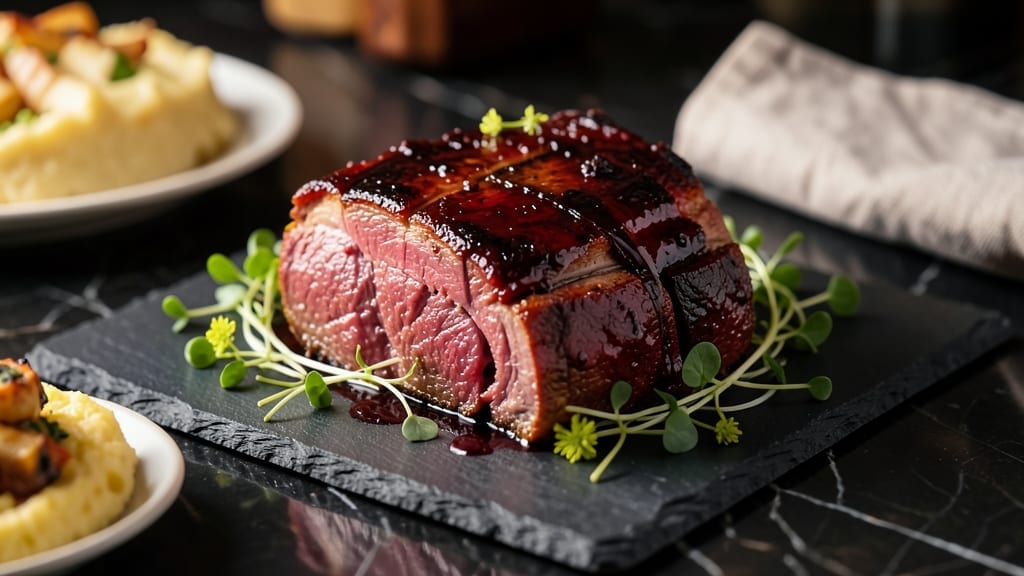
This red wine braised brisket recipe transforms tough cuts into melt-in-your-mouth perfection through slow simmering and deep flavor development. The key lies in a rich, aromatic sauce built from red wine, herbs, and aromatics that tenderizes the meat while infusing it with complex notes.
I’ve perfected this method over years of testing, ensuring the brisket stays moist and the sauce reduces to a velvety consistency that clings to every bite.
The process begins with a deep sear to develop a flavorful crust, followed by a long braise that breaks down the connective tissue. Unlike quick-cooking methods, this recipe rewards patience with restaurant-quality results that impress even seasoned home cooks.
The red wine not only adds depth but also balances the richness of the meat, creating a harmonious flavor profile that’s both elegant and approachable.
By the end, you’ll have brisket that falls apart at the touch of a fork, bathed in a sauce so rich it could be mistaken for a reduction. The aroma alone will have everyone gathering at the table, and the first bite delivers on that promise of slow-simmered richness.
This dish pairs beautifully with mashed potatoes, crusty bread, or roasted vegetables to soak up every last drop of that luscious sauce.
Whether you’re hosting a dinner party or simply craving a hearty meal, this recipe delivers professional results with minimal effort. The technique is straightforward, but the outcome is anything but ordinary—proof that slow cooking can transform a simple ingredient into something extraordinary. Let’s get started on creating this showstopper.
Ingredients for red wine braised brisket
A rich, aromatic sauce transforms tough brisket into melt-in-your-mouth perfection through slow simmering.
| Ingredient | Amount | Notes |
|---|---|---|
| Beef Brisket 🥩 | 5 lb | Flat cut preferred, trimmed of fat |
| Red Wine 🍷 | 2 cups | Bold dry variety like Cabernet Sauvignon |
| Beef Broth 💧 | 2 cups | Low sodium preferred for control |
| Tomato Paste 🍅 | ½ cup | Unsweetened, for depth |
| Garlic Cloves 🧄 | 6 cloves | Freshly minced, aromatic |
| Onion 🧅 | 1 ½ whole | Yellow or sweet, diced |
| Carrot 🥕 | 2 whole | Medium, sliced into rounds |
| Celery Stalks 🌿 | 2 whole | Medium, chopped |
| Fresh Thyme 🍃 | 1 tbsp | Leaves only, finely chopped |
| Dried Rosemary 🌿 | 1 tsp | Crushed, for aromatic depth |
| Salt 🧂 | 1 ½ tbsp | Kosher or sea salt |
| Black Peppercorns 🌶️ | 1 tbsp | Freshly cracked, whole |
| Olive Oil 🫒 | ½ cup | Extra-virgin for richness |
| Balsamic Vinegar 🍇 | 2 tbsp | For acidity balance |
[recipe_ingredient_scaler]
The brisket is the star—opt for flat-cut from Costco or local butchers, as it yields more tender meat. Trim excess fat to 1/4-inch thick for even cooking; this cut should be 1-2 inches thick at its thickest. For the best quality, source from Whole Foods Market or reputable butchers who age their beef. The red wine should be bold and dry, like Cabernet Sauvignon or Merlot—avoid sweet or fruity varieties that lack depth. Penzeys Spices carries excellent options if you’re looking for a trusted source.
No red wine? Substitute 2 cups beef broth with 2 tbsp balsamic vinegar for acidity, though the flavor won’t be as complex. Fresh thyme is ideal, but dried thyme at half the amount works in a pinch. For the tomato paste, San Marzano brand is the gold standard—its low acidity and rich flavor elevate the dish. If you’re short on time, pre-minced garlic can be used, though freshly minced is superior. The onion and carrots can be swapped for fennel or parsnips for a subtle twist.
The brisket reheats beautifully—simmer gently in its sauce for 15-20 minutes until warmed through. Store in an airtight container in the fridge for up to 5 days, or freeze for 3 months for future meals. The sauce can be reduced further before storing to concentrate the flavors. For optimal texture, let the brisket rest for 10-15 minutes after cooking before slicing. The aromatics like onions and carrots can be prepped ahead and refrigerated for up to 3 days to save time during the cooking process.
Why You’ll Love This Recipe
- Oven-Love at First Bite: That deep, caramelized crust from searing the brisket in olive oil? It’s the secret weapon here. You’re not just cooking—you’re building flavor layers that’ll make your kitchen smell like a bistro. And honestly, the 2.5 hours in the oven? Worth every second for that melt-in-your-mouth texture.
- Wine-Sauce Magic: The red wine and tomato paste create a sauce so rich, it’s like a hug for your taste buds. That balsamic vinegar? It balances everything, turning a simple brisket into something restaurant-worthy. Trust me, your guests won’t believe you made it at home.
- Leftover Powerhouse: This recipe makes enough for three meals—just reheat the brisket and sauce, and you’ve got dinner sorted. I’ll be real: I’ve used leftovers for tacos, sandwiches, and even stuffed potatoes. The sauce clings to everything like it’s glued on, and honestly? It’s even better the second day.
- Budget-Friendly Luxury: A 5-pound brisket might sound pricey, but with this recipe, you’re getting a showstopper meal that stretches far. The red wine and beef broth add depth without breaking the bank, and the herbs and veggies? They’re cheap and easy to find. It’s the kind of dish that makes you feel fancy without the fancy price tag.
Step-by-step instructions for red wine braised brisket
Here’s the method for tender, fall-apart brisket with a rich red wine sauce.
Sear the Brisket for Deep Flavor
Heat the ½ cup olive oil in a large Dutch oven over medium-high heat until shimmering. Pat the 5 lb beef brisket completely dry with paper towels—this ensures a proper sear. Place the brisket fat-side down in the pan and press down gently to maintain contact. Sear for 8-10 minutes until the fat is golden brown and crispy, then flip and sear the other side for another 6-8 minutes.
Remove the brisket and set it aside. Don’t rush this step—the deep browning creates layers of flavor that infuse the braising liquid. The brisket will continue cooking in the liquid, so it doesn’t need to be fully cooked through yet. If the oil starts smoking excessively, reduce the heat slightly to maintain control.
Build the Aromatic Base
In the same Dutch oven, add 1½ onion, 2 carrot, and 2 celery stalks (the full amount), all chopped into ½-inch pieces. Cook for 5-6 minutes until the vegetables begin to soften and release their juices. Add the 6 minced garlic cloves and cook for another 30 seconds until fragrant—don’t let it burn, or it will turn bitter.
Stir in the ½ cup tomato paste and cook for 2 minutes to deepen its flavor. Sprinkle the 1 tbsp fresh thyme and 1 tsp dried rosemary over the vegetables, then add the 1½ tbsp salt and 1 tbsp cracked black peppercorns. This aromatic base forms the flavor foundation for the braise, so take your time developing it properly.
Deglaze and Simmer the Braise
Pour in the 2 cups red wine and scrape up any browned bits from the bottom of the pan with a wooden spoon. This deglazing step captures all the caramelized flavor you worked so hard to create. Let the wine simmer for 3-4 minutes until it reduces by about half and its alcohol smell dissipates.
Add the 2 cups beef broth and 2 tbsp balsamic vinegar, then return the brisket to the Dutch oven, fat-side up. Bring the liquid to a gentle simmer—it should bubble softly, not vigorously. Cover the pot and transfer it to a preheated 300°F oven. Braise for 2.5-3 hours until the brisket is fork-tender and the meat pulls away from the bone easily.
Rest and Serve with Sauce
Remove the brisket from the oven and let it rest for 15-20 minutes before slicing. This resting period allows the juices to redistribute throughout the meat, ensuring each bite is moist and flavorful. The sauce should have thickened slightly during this time, but if it’s too thick, you can thin it with a splash of the braising liquid.
Slice the brisket against the grain into ¼-inch thick pieces and serve directly from the Dutch oven, spooning the rich red wine sauce over the top. The sauce should coat the meat beautifully, offering layers of umami from the wine, sweetness from the tomato paste, and depth from the herbs and vegetables. This braised brisket makes an impressive centerpiece for any dinner table.
Pro Tips For Making Red Wine Braised Brisket
- Press for Crisp: DESCRIPTION: When you sear the brisket fat-side down, press it gently with a spatula—this keeps it flat against the pan so it renders properly instead of steaming. I used to skip this, and half my batches ended up greasy instead of golden. A little pressure goes a long way.
- Don’t Rush the Wine: DESCRIPTION: Let the 2 cups red wine simmer uncovered for those full 3-4 minutes until it’s noticeably reduced and the alcohol smell fades. Skimping here leaves a harsh, boozy taste that ruins the sauce. (Yes, even if you’re impatient like me.)
- Salt the Aromatics Early: DESCRIPTION: Toss the diced onion, carrot, and celery with half the 1½ tbsp salt right when you add them to the pan. This draws out their moisture faster, so they soften properly and release flavor into the braise. I learned this the hard way—under-salted veggies just sit there looking sad.
- Prep Veggies Uniformly: DESCRIPTION: Chop the onion, carrots, and celery into exactly ½-inch pieces—no smaller, no larger. Even cooking means no bitter spots or undercooked chunks. Save time by prepping them ahead (they keep for 3 days), but measure them out before adding to the pan so you don’t overcrowd.
Storing and reheating this red wine braised brisket
Refrigerator Storage
After cooking, let your brisket rest for 15-20 minutes before transferring it to an airtight container—I use Pyrex glass containers with snap-on lids for best results. Store in the fridge at 40°F or below for up to 5 days.
The flavors actually deepen overnight as the sauce continues to meld. Just reheat gently on the stovetop with a splash of broth. ❄️
Freezer Preservation
For longer storage, freeze portions in quart-sized freezer bags (squeeze out excess air to prevent freezer burn). Label with the date—this brisket keeps well for 3 months with no loss of quality.
When ready to eat, thaw overnight in the fridge and reheat slowly in the sauce. I always freeze with a little sauce to keep the meat moist during thawing.
Reheating Methods
On the stovetop, pour the brisket and sauce into a heavy-bottomed pot and heat over medium-low for 15-20 minutes, stirring occasionally. Add ¼ cup beef broth if the sauce thickens too much.
For the microwave, use a microwave-safe dish and cook on 50% power for 3-4 minutes, stirring halfway—this prevents drying out.
Sauce Thickening
If your sauce becomes too thin after reheating, simmer it uncovered for 5-10 minutes to reduce. I also like to add a 1 tbsp cornstarch slurry (mixed with water) for instant thickening.
For extra richness, stir in 1 tbsp red wine or a pat of butter at the end. The sauce should coat the back of a spoon beautifully.
Leftovers Reinvention
Use leftover brisket in brisket tacos or stuffed potatoes—just shred the meat and mix with a little extra sauce. I also make brisket sandwiches with toasted brioche buns and a smear of garlic aioli. The flavors only get better as they sit! 💛
Nutrition facts
Frequently asked questions
Why is searing the brisket so important before braising?
The sear creates a golden-brown crust that adds layers of deep flavor to the braising liquid. This step locks in moisture while developing rich, caramelized notes that infuse the entire dish. Skipping it means missing out on the dish’s signature depth!
Can I use a different type of wine for this recipe?
Yes, but opt for a bold dry red like Merlot or Pinot Noir if you don’t have Cabernet. Avoid sweet or fruity wines—they won’t balance the meat’s richness. For a non-alcoholic version, substitute 2 cups beef broth + 2 tbsp balsamic vinegar to mimic acidity.
How do I know when the brisket is fully tender?
Check for doneness by piercing the thickest part with a fork—it should slide in effortlessly with minimal resistance. The meat should also pull away from the bone when pressed. If it still feels firm after 3 hours, cook another 30 minutes and recheck.
What’s the best way to reheat leftovers without drying out the meat?
Gently warm the brisket and sauce in a heavy-bottomed pot over medium-low heat for 15-20 minutes, adding ¼ cup broth if the sauce thickens. Avoid microwaving—it disrupts the texture. For extra moisture, cover with foil while reheating.

Trained in classic French technique but raised on slow-cooked ribs and spicy rubs, she blends culinary skill with smoke and soul.
- Smoked Chicken Salad Recipe: Crispy, Smoky Bites With Creamy Ranch Dressing - October 19, 2026
- Beer Can Chicken in a Smoker Recipe: Juicy, Herbed Perfection in One Can - October 19, 2026
- Brined Beef Brisket Recipe: Ultra-Tender, Juicy Cuts in One Pot - October 19, 2026