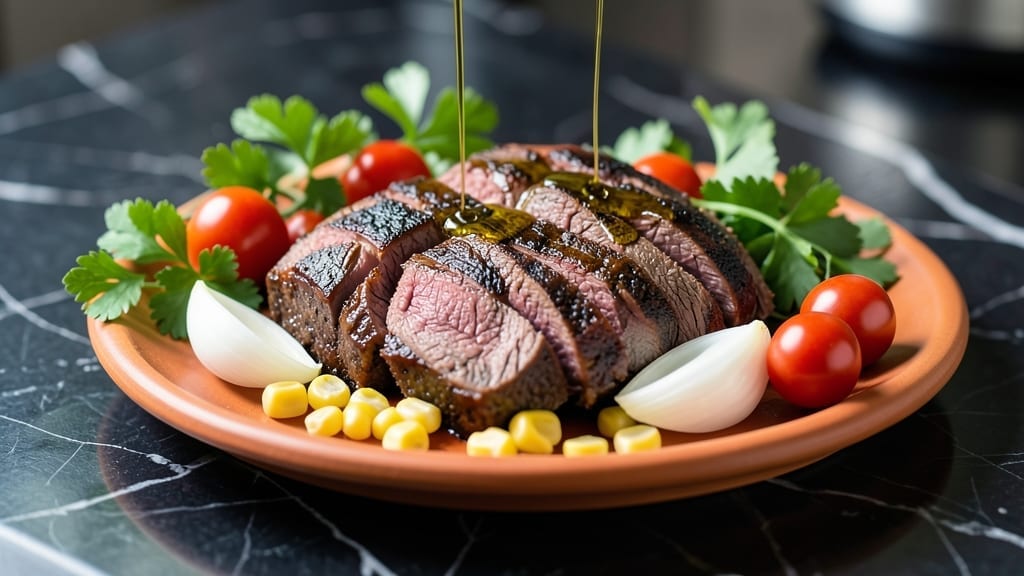
This beef brisket slices recipe transforms tough, flavorful beef into melt-in-your-mouth perfection that you can actually slice—no forks required. I perfected this method after years of battling chewy brisket, and the secret lies in low-and-slow cooking with just the right amount of moisture and smoke.
The result? Brisket so tender it practically falls apart at the touch, with a deep, smoky flavor that makes every bite worth the wait.
What sets this recipe apart is the balance of time and technique—smoking the brisket until it reaches 203°F internal temperature ensures that fat renders perfectly, keeping the meat juicy while developing that signature bark.
The key is patience: letting it rest for hours after cooking allows the juices to redistribute, so every slice stays moist and flavorful. No more dry, stringy brisket—just restaurant-quality tenderness that’s foolproof once you know the tricks.
By the time you’re done, you’ll have brisket that’s so tender it practically slices itself against the grain, with a rich, smoky aroma that fills your whole house.
Serve it on sandwiches, in tacos, or straight from the cutting board with a side of pickles and onions—it’s versatile enough for game day or a weeknight dinner. The best part? Leftovers taste even better the next day, making this a meal that keeps giving.
Whether you’re feeding a crowd or just treating yourself, this recipe delivers brisket that’s worth the effort. Ready to master the art of slicing? Let’s get started—your taste buds (and your guests) will thank you.
Ingredients for beef brisket slices
Six pounds of beef and simple seasonings create brisket so tender it slices like butter.
| Ingredient | Amount | Notes |
|---|---|---|
| Beef Brisket 🥩 | 5 lb | Flat cut preferred, fat cap intact |
| Chicken Bouillon Cubes 🍲 | 4 whole | Low-sodium preferred, dissolved in water |
| Apple Cider Vinegar 🍎 | ½ cup | For tenderizing, not cooking |
| Brown Sugar 🍚 | ½ cup | Packed, for bark development |
| Smoked Paprika 🌶️ | 1 tbsp | Sweet or smoked variety |
| Garlic Powder 🧄 | 1 tbsp | Freshly ground preferred |
| Onion Powder 🧅 | 1 tbsp | Fresh ground preferred |
| Black Pepper 🌶️ | 1 tbsp | Freshly ground for bark |
| Salt 🧂 | 1 tbsp | Kosher or sea salt |
| Pepperoncini Peppers 🌶️ | ½ cup | Sliced, for acidity balance |
| Water 💧 | 2 cups | For bouillon mixture |
| Wood Chips 🌳 | 1 lb | Hickory or oak preferred |
[recipe_ingredient_scaler]
The brisket is everything here. Flat cut (not point cut) gives you more meat and better texture. Look for fat cap at least 1/4 inch thick—this renders beautifully during cooking. I always buy mine from butcher shops or the meat counter, not pre-packaged. The vendor at Whole Foods knows to trim it just right, but your local grocery store butcher will do too. Pro tip: Wrap it in cheesecloth before smoking to keep it moist.
No pepperoncini? Pickles or lemon juice work in a pinch—just add it after cooking. Want more smokiness? Add 1 tbsp liquid smoke to the water before dissolving the bouillon. Brown sugar is non-negotiable for that perfect bark—packed = better. The wood chips matter too: hickory or oak for classic BBQ, mesquite if you want intensity. Skip the pre-soaked chips unless you’re in a hurry—soak them yourself for 30 minutes before using.
This brisket is best smoked low-and-slow—250°F for 10-12 hours until it hits 203°F internal. Wrap it in foil with apple cider vinegar-soaked paper towels for the last 2 hours to lock in moisture. Rest it 2 hours before slicing—this is critical for juiciness. Keeps 4 days in the fridge or 3 months frozen. I portion mine into containers so leftovers are ready for sandwiches or tacos. Trust me, the second day is even better.
Why You’ll Love This Recipe
- No-Fuss Smoking: I love that this recipe turns a tough cut into something effortlessly tender. Just trim the fat, slap on that dry rub, and let the smoker do the heavy lifting—no constant babysitting required. The 1-hour chill in the fridge is the only real prep step, and honestly, that’s the part that makes the bark chef’s kiss perfect.
- Tangy Twist Wins: The pepperoncini peppers and apple cider vinegar aren’t just there for show—they actually tenderize the meat while adding a bright, slightly spicy kick. That balance between the sweet brown sugar bark and the zesty marinade? It’s the kind of flavor that makes you go back for seconds without even thinking about it.
- Budget Beef Boost: Brisket is one of those cuts that’s affordable but often intimidating. This method turns it into something special without breaking the bank—especially when you use the low-sodium chicken bouillon to keep costs down. Plus, the wood chips and pepperoncini add just enough flavor to make it feel like a splurge, even if it’s not.
Step-by-step instructions for slow-smoked brisket slices
Here’s how to transform a tough cut into melt-in-your-mouth slices with perfect bark and juicy interior.
Prepare the Brisket and Seasoning Mix
Start by trimming the fat cap of the 5 lb beef brisket down to about ¼ inch thickness using a sharp knife. Leave the fat intact on the edges to protect the meat during smoking. In a small bowl, combine the ½ cup brown sugar, 1 tbsp smoked paprika, 1 tbsp garlic powder, 1 tbsp onion powder, 1 tbsp black pepper, and 1 tbsp salt. Mix well until evenly distributed.
Generously coat the entire brisket with this dry rub, pressing it into the meat so it adheres well. Place the brisket on a wire rack set over a baking sheet and refrigerate uncovered for at least 1 hour. This allows the rub to penetrate deeply and the meat to dry slightly, which is crucial for developing that perfect bark later.
Create the Pepperoncini Marinade and Bouillon Mixture
Slice the ½ cup pepperoncini peppers into thin rounds. In a separate bowl, combine these with the ½ cup apple cider vinegar. Set aside to marinate while you prepare the smoker. In a small saucepan, dissolve the 4 chicken bouillon cubes in the 2 cups water over medium heat until fully combined. Remove from heat and let cool slightly.
Here’s the thing—this pepperoncini mixture serves two purposes. First, it adds acidity that helps tenderize the meat during the smoking process. Second, it creates a bright, tangy flavor that balances the richness of the brisket. The bouillon mixture will help maintain moisture in the smoker, ensuring your brisket doesn’t dry out during the long cook.
Set Up and Smoke the Brisket Low and Slow
Soak the 1 lb wood chips in water for 30 minutes, then drain before adding them to your smoker. Preheat your smoker to 225°F using the soaked wood chips. Place the brisket fat-side up on the smoker grates and pour the bouillon mixture into a water pan below it. Close the lid and maintain this temperature for the entire cook.
Smoke the brisket for 6 hours, then brush it with the pepperoncini marinade every 90 minutes. This creates a beautiful bark while keeping the meat moist. You’ll know it’s ready when the internal temperature reaches 165°F. Don’t open the smoker during this time—each time you peek, you lose heat and extend cooking time. Patience is key here for that perfect texture.
Wrap and Finish for Maximum Tenderness
When the brisket hits 165°F, it will enter “the stall”—where the temperature stops rising despite continued cooking. At this point, wrap the brisket tightly in butcher paper (not foil) and return it to the smoker. This technique, called the Texas crutch, helps break down collagen while preserving that beautiful bark.
Continue smoking until the internal temperature reaches 200-205°F, which should take another 4-6 hours. The meat should be fork-tender and pull apart easily. Remove from the smoker and let it rest wrapped in the butcher paper for at least 1 hour before slicing. This resting period allows juices to redistribute, ensuring every slice is moist and flavorful.
Slice and Serve Perfectly Tender Brisket
Unwrap the brisket and locate the grain direction. Using a sharp knife, slice against the grain into ¼-inch thick slices. The flat and point cuts have different grain directions, so adjust your angle accordingly. Serve immediately with the remaining pepperoncini marinade drizzled over the top for extra brightness.
Each slice should be tender enough to pull apart with gentle pressure, with a dark mahogany bark on the outside and a beautiful pink smoke ring beneath. The combination of low-and-slow smoking with the pepperoncini marinade creates a brisket that’s both tender and packed with flavor—exactly what you want from a brisket slice recipe.
Pro Tips For Making Beef Brisket Slices
- Trim That Fat Cap: DESCRIPTION: I used to leave the fat cap thick, thinking it added flavor—it does, but too much makes the bark uneven and gummy. Trim it to ¼ inch like the recipe says, but leave the edges untouched. That thin layer protects the meat while still letting the bark develop properly. Trust me, your slices will thank you.
- Don’t Skip the Vinegar Soak: DESCRIPTION: The ½ cup apple cider vinegar isn’t just for flavor—it’s the tenderizer. Let those sliced pepperoncini peppers soak in it for at least 30 minutes before brushing on the brisket. I learned this the hard way: skipping it means tougher meat and less bright acidity cutting through the richness. Give it time, even if you’re eager to start smoking.
- Stall? Wrap in Paper: DESCRIPTION: When the brisket hits 165°F, the stall hits too—and so does panic if you’re new to this. Don’t mess with foil; grab that butcher paper and wrap it tight. It keeps the bark intact while letting moisture escape just enough to push the temp up. I’ve seen people rush this, and their brisket ends up soggy. Be patient. The paper’s the secret weapon.
- Rest Before Slicing: DESCRIPTION: That 1-hour rest in the butcher paper isn’t optional. I’ve sliced brisket fresh out of the smoker, and the juices pool messily on the cutting board. Let it rest, wrapped, so every slice is moist and clean. Even if you’re starving, wait. Your first bite will be worth it.
Essential equipment for this dish
Your Smoker’s Best Friend
Invest in a quality pellet smoker like the Traeger Timberline 1300 if you want consistent 225°F temperatures with minimal fuss. Pellet smokers automatically feed wood pellets to maintain heat, so you can focus on other tasks while your brisket cooks.
I’ve also had great success with the Weber Smokey Mountain Cooker, which is more affordable and still delivers reliable results. Both options come with built-in thermometers, making it easier to track your brisket’s internal temperature without opening the lid. 🔥
Thermometers Are Non-Negotiable
You’ll need at least two thermometers: a probe-style internal thermometer like the Meater Plus to monitor the brisket’s temperature, and a smoker thermometer like the Thermoworks Smoke to ensure your smoker stays at 225°F. The Meater Plus connects to your phone via Bluetooth, so you can track progress remotely.
I’ve learned the hard way that relying on the smoker’s built-in thermometer alone can lead to overcooking or undercooking—trust the probes instead.
The Right Tools for Bark Perfection
For that crispy, mahogany bark, you’ll want a sharp boning knife like the Victorinox Fibrox to trim the fat cap and a wire rack to elevate the brisket on your baking sheet. The wire rack allows air to circulate underneath, which helps develop the bark.
I also keep a butcher paper roll on hand for the Texas crutch—it’s cheaper and more breathable than foil, so your brisket stays moist without getting soggy.
Water Pan Essentials
A stainless steel water pan like the Camp Chef 12-inch is a game-changer for maintaining moisture in your smoker. Place it directly under the brisket to create a humid environment, which prevents the meat from drying out during the long cook.
I refill it with the bouillon mixture every few hours to keep the humidity levels consistent. This simple setup has saved my brisket more times than I can count!
Slicing Like a Pro
Don’t skimp on your knife for slicing—use a 12-inch slicing knife like the Dexter-Russell to get clean, even slices. A dull knife will crush the meat and ruin the texture you’ve worked so hard to achieve.
I also recommend a cutting board with a non-slip mat to keep everything stable while you slice against the grain. Trust me, the difference between a good slice and a perfect slice is in the tool!
Nutrition facts
Frequently asked questions
Why does my brisket need to rest before slicing?
Resting is essential because it lets the meat’s juices redistribute evenly after cooking. If you slice too soon, all the flavorful juices will run out, leaving you with dry slices. Wrap your brisket in butcher paper and let it rest for at least 1 hour before slicing for maximum tenderness and moisture. This step makes all the difference in achieving that perfect, juicy bite!
What’s the best way to tell when brisket is fully cooked?
Use a reliable meat thermometer to check the internal temperature—it should reach 200-205°F for perfect tenderness. The meat will also pull apart easily when tested with a fork. Avoid relying on visual cues alone, as brisket can look done before it reaches the right temperature. Patience during this phase ensures a juicy, fork-tender result.
Can I substitute pepperoncini peppers if I don’t have them?
Sliced pickles or a splash of lemon juice work well to add acidity and balance the richness. Just apply it after cooking for the best flavor. The key is maintaining that tangy contrast—it keeps the brisket from tasting too heavy. Your taste buds will thank you!
How do I handle brisket if I don’t have a smoker?
Use a slow cooker or oven on low heat (200°F) with indirect heat and a water pan. Wrap the brisket in foil with the bouillon mixture and cook for 8-10 hours, checking the temperature often. While it won’t have the same smoky depth, it’ll still turn out tender and flavorful. Adaptability is key!

Trained in classic French technique but raised on slow-cooked ribs and spicy rubs, she blends culinary skill with smoke and soul.
- Smoked Chicken Salad Recipe: Crispy, Smoky Bites With Creamy Ranch Dressing - October 19, 2026
- Beer Can Chicken in a Smoker Recipe: Juicy, Herbed Perfection in One Can - October 19, 2026
- Brined Beef Brisket Recipe: Ultra-Tender, Juicy Cuts in One Pot - October 19, 2026