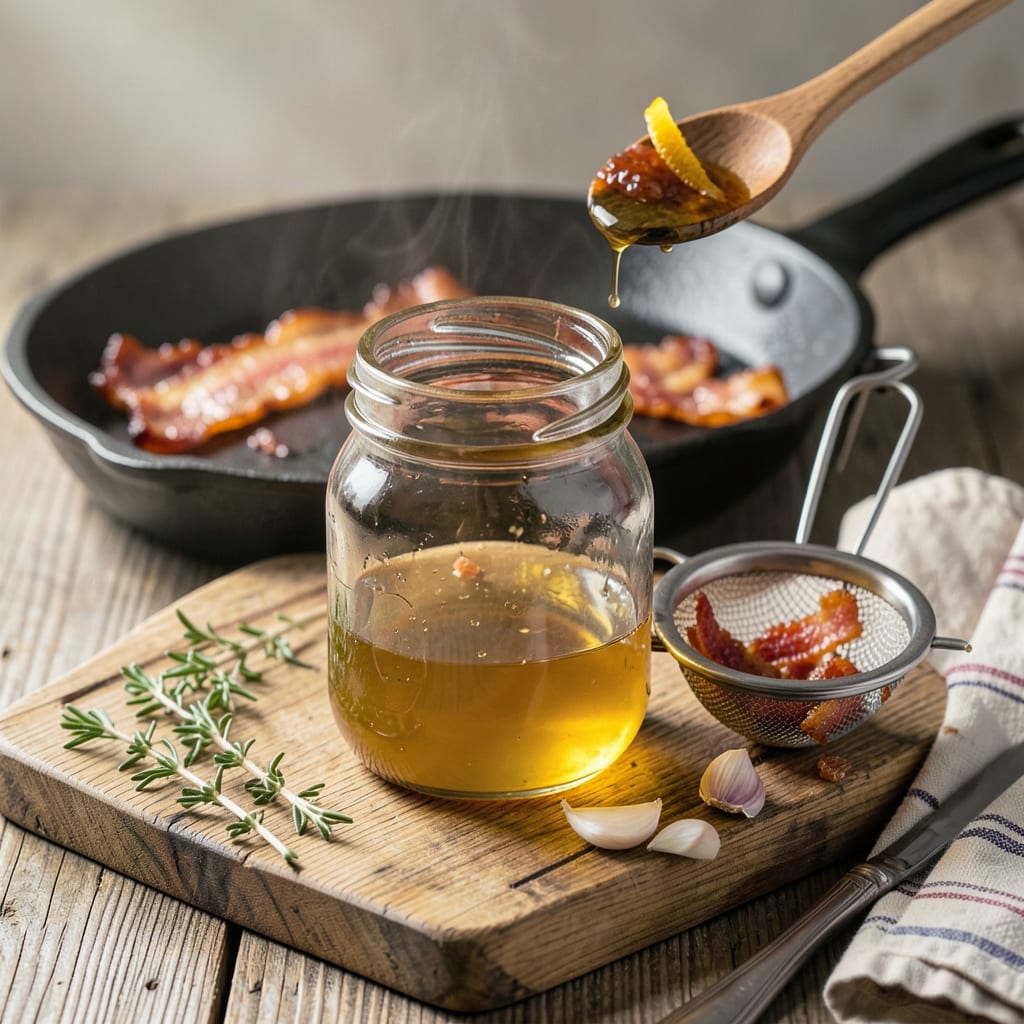
I’ll be real with you: throwing away bacon grease is like pouring liquid gold down the drain. That smoky, salty fat is my secret weapon for adding depth to everything from roasted vegetables to flaky biscuits. I grew up watching my grandma save every drop in a coffee can by the stove, and now I can’t imagine cooking without it.
Here’s the thing—bacon grease isn’t just for frying eggs. When stored properly (strained through a fine mesh sieve and kept in the fridge), it stays fresh for months and transforms ordinary dishes. I’ve used it to crisp up the best Brussels sprouts of my life, make cornbread that tastes like it came from a Southern diner, and even add richness to gravies that need a flavor boost.
The science is simple: bacon fat carries that unmistakable smoky, meaty essence that butter or oil just can’t match. When you cook with it, you’re not just adding fat—you’re building layers of umami that make people ask for seconds. My personal test? If a dish tastes good with bacon, it’ll taste even better cooked in bacon grease.
Fair warning though—this stuff is potent. A little goes a long way, and you’ll want to balance it with acidic or fresh elements. But once you start cooking with saved bacon grease, you’ll never look at that skillet the same way again. Let me show you how to make the most of every smoky drop.
📚 In This Guide
- What You’ll Need
- Instructions
- Tips and Common Mistakes
What Youll Need
- ● Bacon grease – At least ¼ cup (or more, depending on your recipe). Freshly rendered is best, but stored grease works too! 🥓
- ● Heat-safe storage container – A glass jar (8–16 oz) with an airtight lid or a metal tin for long-term storage.
- ○ Fine-mesh strainer or cheesecloth – For filtering out crispy bits (optional but highly recommended for clarity).
- ● Funnel – Small kitchen funnel (3–4 inches) to transfer grease without spills.
- ● Cooking utensils – Wooden spoon or heat-resistant spatula for stirring/scooping.
- ● Paper towels or coffee filters – For wiping excess grease from tools or lining storage containers.
- ● Label & marker – To date your grease (trust us, you’ll forget! 😅).
- ● Refrigerator or freezer – For safe storage (grease lasts 1 month refrigerated or 3 months frozen).
- ● Flavor infusions – Garlic cloves, rosemary, or chili flakes to customize your grease.
- ● Kitchen thermometer – To monitor grease temp (ideal for frying: 350–375°F).
- ● Reusable silicone molds – For portioning grease into 1-tbsp cubes.
Instructions
Here’s exactly how to safely store and creatively reuse that liquid gold in your kitchen.
Strain and Store the Grease Properly
After cooking bacon, immediately pour the hot grease through a fine-mesh strainer into a clean glass jar or container. I use a heatproof glass jar with a tight-fitting lid. The strainer catches any crispy bits that would otherwise burn when you reuse the fat.
Let the grease cool completely at room temperature before sealing the container. I never cover it while warm—condensation would create moisture and spoil the grease faster. Once cooled, store it in the refrigerator for up to 3 months or in the freezer for 6 months.
The grease will solidify when cold, turning opaque white or pale yellow. This is normal and actually helps with portioning later. Always label your container with the date so you can track freshness.
Determine When to Use It Hot or Cold
For immediate reuse (within a few hours), you can keep the grease in a heatproof container at room temperature. I use it this way for sautéing vegetables or frying eggs while it’s still warm and liquid. The residual bacon flavor infuses beautifully into these quick-cooking foods.
For most applications though, you’ll want to use cold, solidified grease. Simply scoop out what you need with a spoon. I find that 1-2 tablespoons is perfect for most recipes. The grease melts quickly in a warm pan, so there’s no need to pre-melt it.
Never reuse grease that’s been sitting at room temperature for more than 2 hours. When in doubt, give it a sniff—rancid grease has a sour, off smell that’s unmistakable.
Cook with Confidence Using These Techniques
Use bacon grease anywhere you’d use butter or oil, but with some smart adjustments. For eggs, heat the pan over medium-low heat and add just 1 teaspoon of grease. You’ll get crispy edges without overpowering the egg flavor.
For roasted vegetables, toss them with 1-2 tablespoons of melted bacon grease before putting them in the oven. The grease’s lower smoke point means you should roast at 375°F instead of higher temperatures to prevent burning. I love this with Brussels sprouts and potatoes.
When making gravies or pan sauces, use bacon grease as your fat base. Start with 2 tablespoons in the pan, then add flour to make a roux. The bacon flavor adds incredible depth to the finished sauce.
Know When to Retire Old Grease
Even properly stored grease eventually breaks down. Watch for these signs it’s time to toss it: the grease develops a strong, unpleasant odor; turns dark brown or black; or becomes sticky instead of smooth. I err on the side of caution—if it doesn’t smell fresh and clean, I discard it.
You can actually reuse the same batch of grease 2-3 times for frying, but each use degrades the quality slightly. After each use, strain it again through a fine-mesh sieve to remove any food particles that would burn next time.
For high-heat cooking like searing, I only use fresh bacon grease. The repeated heating lowers the smoke point over time, making older grease more likely to burn during high-temperature cooking.
Tips and Common Mistakes
Here’s what I’ve learned from years of working with bacon grease—small details that make a big difference in flavor and safety.
Straining Strategy: In Step 1, use a fine-mesh strainer with small holes to catch even the tiniest crispy bits. I like to place a coffee filter inside the strainer for extra filtration—this prevents any burnt particles from affecting the flavor of your stored grease. The cleaner your grease, the more versatile it becomes for different recipes.
Portioning Tip: When using cold, solidified grease as mentioned in Step 2, run your spoon under hot water first. This helps the grease release cleanly from the spoon and makes measuring those 1-2 tablespoons much easier. I keep a small bowl of hot water nearby when portioning grease for cooking.
Heat Control: For roasting vegetables at 375°F as suggested in Step 3, position your oven rack in the middle. This ensures even heat distribution and prevents the grease from burning before your vegetables are fully cooked. I also recommend rotating the pan halfway through cooking for consistent browning.
Freshness Check: Beyond the 2 hours room temperature limit in Step 2, always trust your nose. Fresh bacon grease should have a clean, slightly smoky aroma. If it smells at all sour or rancid, it’s better to discard it and start fresh—your dishes will taste noticeably better with quality grease.
Pro Tips for Reusing Bacon Grease
- Here’s what I’ve learned from years of working with bacon grease—small details that make a big difference in flavor a…
- Straining Strategy: In Step 1, use a fine-mesh strainer with small holes to catch even the tiniest crispy bits. I lik…
- Portioning Tip: When using cold, solidified grease as mentioned in Step 2, run your spoon under hot water first. This…
Frequently Asked Questions
How long can I safely reuse bacon grease?
Store strained bacon grease in an airtight container in the fridge for up to 3 months or freeze for 6+ months. At room temp, it lasts 1–2 weeks (but refrigeration is safer!). Sniff for rancidity—if it smells off, toss it!
Can I reuse bacon grease after frying other foods?
Yes, but flavors mix! Reuse it for similar dishes (e.g., eggs, potatoes, or meats). Avoid reusing grease that fried fish or strongly spiced foods—it’ll overpower the bacon taste. Stick to neutral-flavored foods for best results.
What’s the best way to strain and store bacon grease?
Strain hot grease through a fine-mesh sieve or cheesecloth to remove bits. Store in a glass jar (mason jars work great!) or silicone mold. Let cool slightly before sealing to prevent condensation. Pro tip: Label with the date!
Is reusing bacon grease healthier than using fresh oil?
Bacon grease has less smoke point degradation than reused vegetable oils, but it’s still high in saturated fat. Use sparingly! For a lighter option, mix with olive oil (50/50) to balance flavor and health.
My reused grease looks cloudy—is it still good?
Cloudiness is normal when refrigerated (fat solidifies). Reheat gently to check clarity—if it clears up, it’s fine! If it stays murky or smells sour, discard it. Always reheat to 350°F before reuse for safety.
Reusing bacon grease isn’t just thrifty—it’s a game-changer for bold flavors and less waste! 🌟 From crispy fried eggs to savory roasted veggies, that golden liquid is your kitchen’s secret weapon. With a few simple storage tips and creative uses, you’ll turn leftover grease into culinary magic in no time.
Ready to level up? Grab a jar, strain that grease, and try it in your next recipe—your taste buds (and wallet) will thank you! 🍳✨

Trained in classic French technique but raised on slow-cooked ribs and spicy rubs, she blends culinary skill with smoke and soul.
- Recipe for Boneless Pork Chops in Cast Iron Skillet: Sear and Baste to Juicy Perfection - October 3, 2026
- Recipe for Boneless Cross Rib Roast: Slow-Roasted Beef with Herb Crust - October 3, 2026
- Hamburgers in Sauce Recipe Crock Pot: Slow-Cooked Savory Delight - October 3, 2026