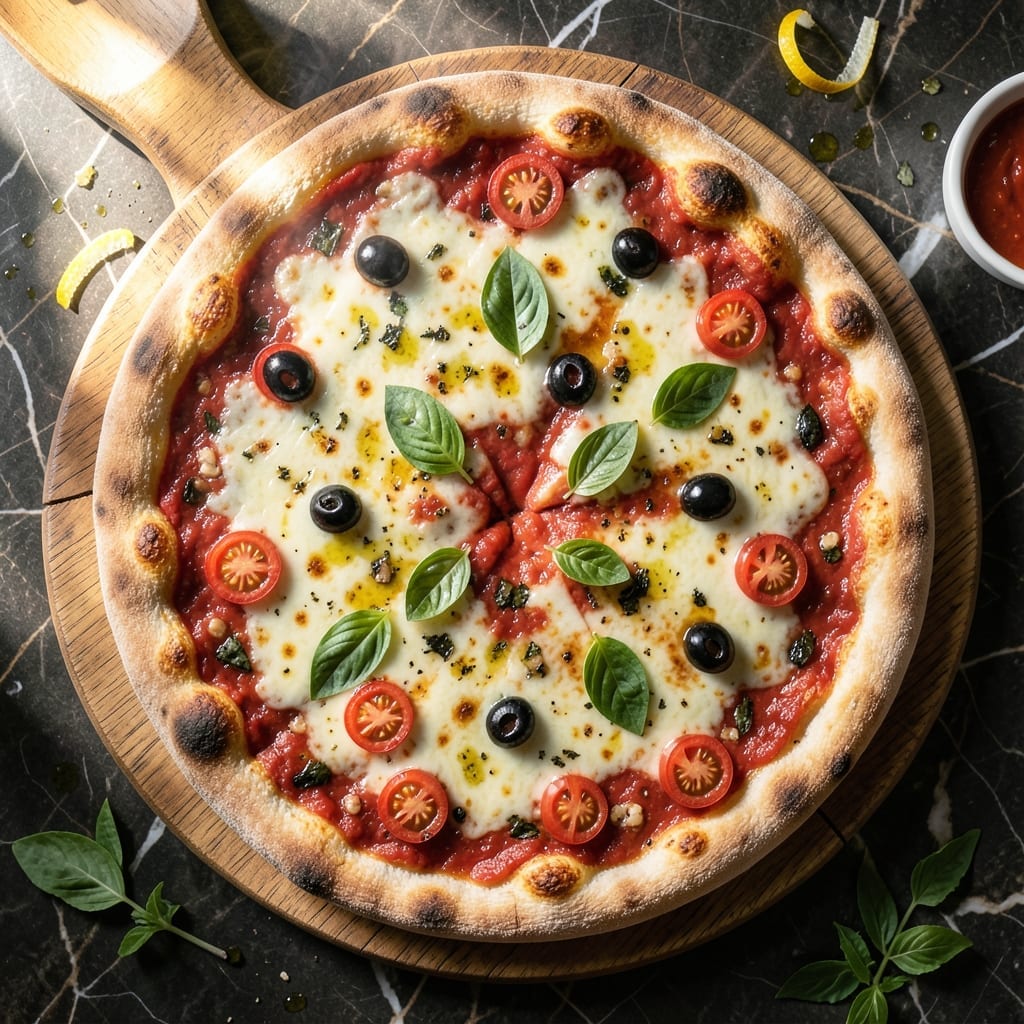
There’s something special about making pizza from scratch, especially when it starts with homemade dough that rises to perfection. I’ve tested this method in my small Boston kitchen, and it never fails to deliver a crisp, golden crust.
The beauty of this recipe lies in its simplicity: a straightforward dough that requires minimal effort but yields professional results. The secret is allowing enough time for the dough to rise properly, which develops both flavor and texture.
By the time it comes out of the oven, you’ll have a pizza with a crust that’s crispy on the outside and chewy on the inside, ready for your favorite toppings. The foundation is solid, so the results are always impressive.
This approach transforms basic ingredients into a canvas for creativity. Here’s how to build your perfect pie.
Ingredients for Rhodes Pizza
Basic pantry staples turn into a restaurant-worthy crust with your favorite toppings.
| Ingredient | Amount | Notes |
|---|---|---|
| Bread Flour 🌾 | 3 ½ cups | High protein for chewy crust |
| Active Dry Yeast 🍞 | 1 package | 2 1/4 tsp per package |
| Warm Water 💧 | 1 ¼ cups | 110°F for yeast activation |
| Granulated Sugar 🍚 | 1 tbsp | Feeds the yeast |
| Olive Oil 🫒 | 2 tbsp | Extra-virgin preferred |
| Salt 🧂 | 1 ½ tsp | Kosher or sea salt |
| Pizza Sauce 🍅 | 1 cup | Tomato-based for classic flavor |
| Shredded Mozzarella Cheese 🧀 | 2 cups | Low-moisture for melting |
| Pepperoni Slices 🍕 | 40 pieces | Classic topping choice |
| Fresh Basil Leaves 🌿 | ¼ cup | For garnish after baking |
| Parmesan Cheese 🧀 | ¼ cup | Freshly grated preferred |
| Garlic Powder 🧄 | 1 tsp | For seasoning the crust |
| Dried Oregano 🍃 | 1 tsp | Classic Italian seasoning |
| Cornmeal 🌽 | ¼ cup | For dusting the pan |
[recipe_ingredient_scaler]
Flour is the foundation here. King Arthur Bread Flour is my go-to for that perfect chew—Gold Medal works too if that’s what’s on hand. The yeast needs to be fresh (check the expiration date), and Fleischmann’s or Red Star are reliable. Warm water should feel like bathwater on your wrist—too hot kills the yeast. For the olive oil, any extra-virgin will do, but I keep a bottle of Bertolli around just for pizza nights.
No bread flour? All-purpose plus 1 tbsp vital wheat gluten per cup gets you close. Out of pizza sauce? Crushed tomatoes blended with garlic, salt, and oregano works in a pinch. Vegetarian? Swap pepperoni for bell peppers or mushrooms (sauté them first to remove excess moisture). The mozzarella can be whole-milk for extra gooeyness, or part-skim if you’re watching calories (the texture difference is minimal).
Dough can rise in the fridge overnight for deeper flavor (cover it tightly). Baked pizza keeps 3-4 days in the fridge, but it’s best fresh. Freeze extras for up to 2 months—reheat in a hot oven to revive that crispy crust.
Why You’ll Love This Recipe
- No-Fuss Dough: I love that the yeast activates right in warm water with sugar—no proofing headaches, just mix and go.
- Crispy Chewy Bite: The olive oil in the dough gives it that perfect golden crust with a soft, pillowy center.
- Endless Topping Fun: Honestly, this blank canvas works for pepperoni nights or veggie-loaded lunches.
- Pocket-Friendly Feast: Bread flour and yeast stretch further than takeout, and leftovers reheat like a dream.
Step-by-Step Instructions for Homemade Pizza with Custom Toppings
This method delivers a crisp, chewy crust with perfectly melted toppings every time.
Step 1: Activate the Yeast and Mix the Dough
In a large bowl, dissolve the 1 tbsp Granulated Sugar in the 1.25 cups Warm Water—I always use a thermometer to confirm it’s 110°F. Sprinkle the 1 package Active Dry Yeast over the surface and let it sit for 5 minutes until foamy. This proves the yeast is alive and ready to work.
Add the 2 tbsp Olive Oil, 1.5 tsp Salt, and 3.5 cups Bread Flour to the yeast mixture. Stir with a wooden spoon until a shaggy dough forms. The dough will be sticky at first, but resist adding extra flour—this hydration level ensures a chewy crust.
Step 2: Knead and Let the Dough Rise
Turn the dough onto a lightly floured surface and knead for 8-10 minutes until smooth and elastic. I press my thumb into the dough to test—if it bounces back slowly, it’s ready. The bread flour’s high protein content gives the dough structure.
Lightly oil a clean bowl, place the dough inside, and cover with a damp towel. Let it rise in a warm spot for 1-2 hours or until doubled in size. A sunny windowsill or preheated oven (turned off) works perfectly for this.
Step 3: Shape the Dough and Prepare the Pan
Punch down the risen dough to release air bubbles, then divide it into 4 equal portions for individual pizzas. On a floured surface, roll each portion into a 12-inch round. For a rustic look, I stretch the dough by hand instead of using a rolling pin.
Sprinkle the 0.25 cup Cornmeal evenly over your baking sheets or pizza stones. This prevents sticking and adds a subtle crunch to the crust. Transfer the shaped dough onto the prepared pans.
Step 4: Add Sauce, Cheese, and Toppings
Spread ¼ cup Pizza Sauce evenly over each dough round, leaving a ½-inch border for the crust. Sprinkle with ½ cup Shredded Mozzarella Cheese per pizza, then add the 40 pieces Pepperoni Slices—I space them evenly for consistent flavor in every bite.
Sprinkle the 1 tsp Garlic Powder and 1 tsp Dried Oregano over the toppings for extra seasoning. Finally, add a light dusting of the 0.25 cup Parmesan Cheese for a sharp, salty finish.
Step 5: Bake to Golden Perfection
Preheat your oven to 475°F and bake the pizzas for 12-15 minutes until the crust is golden brown and the cheese is bubbly and slightly spotted. Rotate the pans halfway through for even cooking.
Remove from the oven and let cool for 2 minutes before garnishing with the 0.25 cup Fresh Basil Leaves. The basil’s aroma will intensify when it hits the hot pizza. Slice and serve immediately for the best texture.
Pro Tips For Making Rhodes Pizza
- Proof the Yeast: Always activate the dry yeast in warm water with a pinch of sugar first—I learned this the hard way after wasting flour on dough that never rose. Look for bubbles within 5 minutes to confirm it’s alive.
- Use Bread Flour: Skip all-purpose flour if you want that chewy Rhodes-style crust. The higher protein in bread flour actually changes the outcome, giving you better structure and bite.
- Don’t Rush Rising: Give the dough a full 1-2 hours to double in size, even if it seems slow. After burning three batches, I finally figured out that patience here is non-negotiable.
- Oil the Bowl: Coat your rising bowl with about 1 tablespoon of olive oil before adding the dough—it prevents sticking and makes punching down way easier. Sounds weird, but it works.
Essential Equipment for This Recipe
Dough Preparation Tools
Start with a large mixing bowl—I use a 5-quart glass Pyrex from my Boston kitchen. A wooden spoon works perfectly for stirring the initial dough, and a kitchen scale ensures precise flour measurements. Honestly, I never make pizza without my OXO 11-pound scale. 💪
Kneading Essentials
A clean, flat surface is key for kneading. I prefer a marble pastry board, but any countertop works. Lightly dust it with flour to prevent sticking. Keep a dough scraper nearby to handle the sticky dough—mine’s from King Arthur Baking.
Rising Setup
For proofing, use a damp kitchen towel to cover the bowl. A warm environment speeds up rising—I often use my turned-off oven with the light on. A digital thermometer helps monitor the ambient temperature, ensuring it stays around 75-80°F for optimal results.
Baking Equipment
A pizza stone or baking steel mimics a pizzeria oven. I swear by my Lodge cast iron pizza pan for even heat distribution. A pizza peel makes transferring your pie to the oven a breeze, especially when dusted with cornmeal.
Finally, a pizza cutter with a sharp wheel ensures clean slices. My Kitchy 3.5-inch model handles thick and thin crusts effortlessly. 🔥
Nutrition Facts
Frequently Asked Questions
Do I need bread flour for the crust?
Bread flour gives the best chewy texture, but you can substitute all-purpose flour plus 1 tbsp vital wheat gluten per cup. The higher protein content in bread flour creates that perfect stretchy consistency.
Can I make the dough ahead of time?
Prepare the dough, cover it tightly, and refrigerate overnight. This slow rise develops deeper flavor. Let it sit at room temperature for 30 minutes before shaping.
Why did my crust turn out dense?
Dense crust usually means the dough didn’t rise enough or the yeast was old. Check your yeast expiration date and ensure the water is 110°F. Let it rise until doubled in size.
Can I freeze leftover pizza?
Yes, wrap slices tightly in foil and freeze for up to 2 months. Reheat in a 400°F oven for 10-12 minutes to restore crispiness. Avoid microwaving for best texture.

Trained in classic French technique but raised on slow-cooked ribs and spicy rubs, she blends culinary skill with smoke and soul.
- Recipe for Boneless Pork Chops in Cast Iron Skillet: Sear and Baste to Juicy Perfection - October 3, 2026
- Recipe for Boneless Cross Rib Roast: Slow-Roasted Beef with Herb Crust - October 3, 2026
- Hamburgers in Sauce Recipe Crock Pot: Slow-Cooked Savory Delight - October 3, 2026