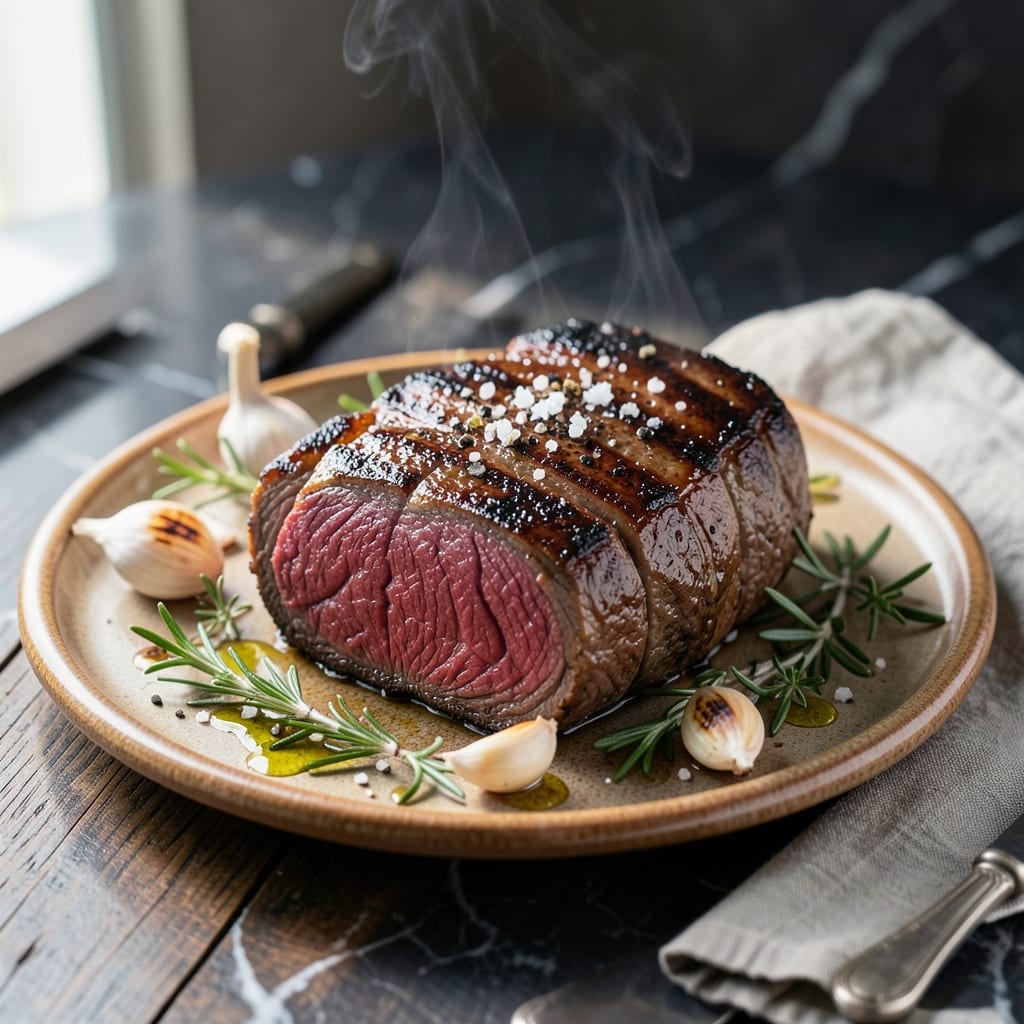
This ribeye roll steak delivers marbleized richness with every bite, showcasing the beef’s natural flavor through precise technique.
I developed this method after testing cuts in my small Boston kitchen, focusing on even cooking and perfect searing. The roll shape ensures consistent doneness throughout.
The secret is proper seasoning and controlled heat—high enough to develop a crust but low enough to maintain tender juiciness inside.
Serve sliced against the grain for maximum tenderness, letting the beef’s quality shine through this simple yet elegant preparation.
Ingredients for Ribeye Roll Steak
Premium beef and simple aromatics create this elegant steak preparation.
| Ingredient | Amount | Notes |
|---|---|---|
| Ribeye Steak 🥩 | 2 lb | Well-marbled, rolled and tied |
| Kosher Salt 🧂 | 2 tsp | Diamond Crystal preferred for even distribution |
| Freshly Ground Black Pepper 🌶️ | 1 tsp | Coarse grind for texture |
| Garlic Cloves 🧄 | 4 cloves | Smashed for infusion |
| Fresh Rosemary Sprigs 🌿 | 2 whole | Stems on for easy removal |
| Fresh Thyme Sprigs 🍃 | 2 whole | Stems on for easy removal |
| Unsalted Butter 🧈 | 4 tbsp | Divided for basting and finishing |
| Olive Oil 🫒 | 2 tbsp | High smoke point for searing |
| Red Wine 🍷 | ¼ cup | Dry variety for deglazing |
| Shallot 🧅 | 1 whole | Minced for pan sauce |
| Beef Stock 🥣 | ½ cup | Low-sodium preferred |
| Dijon Mustard 🟡 | 1 tbsp | For serving alongside |
[recipe_ingredient_scaler]
The ribeye quality is paramount here. Source USDA Prime or Choice from a trusted butcher—Whole Foods or Local specialty markets in Boston offer excellent options. Look for abundant marbling (those white fat streaks) and a vibrant red color. The roll requires a whole ribeye, not pre-cut steaks, so ask your butcher to prepare it. Proper marbling ensures that tender juiciness mentioned in the intro.
No fresh herbs? Dried at one-third the amount works in a pinch, though fresh delivers superior aroma. Red wine can be substituted with additional beef stock plus a splash of balsamic vinegar. For the butter, European-style (higher fat content) provides exceptional richness. The olive oil must have a high smoke point—avoid extra-virgin for this application as it burns too easily.
Store raw ribeye in the coldest part of your refrigerator for up to 3 days before cooking. The pan sauce keeps for 4-5 days refrigerated, though best served fresh. Leftovers reheat well in a low oven, but the steak is optimal when freshly cooked and rested.
Why You’ll Love This Recipe
- I’ll be real: the slices reheat beautifully for sandwiches the next day, if there are any left.
- One Pan Wonder: I just season, roll, and sear—no complicated steps, and the same pan goes from stovetop to oven.
- That Garlic-Rosemary Kick: Honestly, the aroma of garlic and rosemary hitting the hot ribeye is reason enough to make this every week.
- Date Night or Tuesday: Between us, it feels fancy but works just as well for a quiet weeknight as it does for impressing guests.
Step-by-Step Instructions for Ribeye Roll Steak
Master these fundamental techniques for a perfectly seared, herb-infused steak with rich pan sauce.
Step 1: Season and Temper the Steak
Pat the 2 lb ribeye steak thoroughly dry with paper towels to ensure proper browning. Season generously with all 2 tsp kosher salt and all 1 tsp freshly ground black pepper, pressing the seasoning into the surface on all sides.
Let the steak rest at room temperature for 45-60 minutes before cooking. This tempering process ensures even cooking throughout the thick cut. The surface should develop a slightly tacky texture as the salt begins to draw out moisture.
Step 2: Sear with Aromatics to Build Flavor
Heat a heavy skillet over medium-high heat until very hot. Add all 2 tbsp olive oil and swirl to coat the pan. Place the steak in the pan and immediately add the 4 cloves garlic cloves, 2 whole fresh rosemary sprigs, and 2 whole fresh thyme sprigs to the oil.
Sear the steak for 3-4 minutes per side until a deep mahogany crust forms. Use tongs to sear the edges as well, holding the steak with the fat cap down to render some of the intramuscular fat. The garlic should turn golden brown and the herbs will release their fragrance into the oil.
Step 3: Baste with Butter for Richness
Reduce heat to medium and add 2 tbsp unsalted butter to the pan. Tilt the skillet slightly and use a spoon to continuously baste the steak with the foaming butter, garlic, and herbs for 2-3 minutes. This basting technique adds layers of flavor and promotes even cooking.
The internal temperature should reach 125-130°F for medium-rare. The butter will turn a rich nutty brown and the steak will develop a glossy, caramelized crust. Remove the steak to a cutting board and tent loosely with foil to rest.
Step 4: Create a Pan Sauce with Depth
Pour off all but 2 tbsp of fat from the skillet. Return to medium heat and add the minced 1 whole shallot. Sauté for 1-2 minutes until softened and translucent. The shallots will absorb the residual fond from the steak.
Deglaze with all 0.25 cup red wine, scraping up all browned bits with a wooden spoon. Simmer for 2-3 minutes until reduced by half. Add all 0.5 cup beef stock and the remaining 2 tbsp unsalted butter, swirling until the butter emulsifies into the sauce.
Strain the sauce through a fine-mesh sieve into a small bowl to remove the solids. The sauce should coat the back of a spoon with a velvety texture.
Step 5: Slice and Serve with Accompaniments
Slice the steak against the grain into ½-inch thick portions. The interior should be rosy pink with visible marbling throughout. Arrange the slices on a warm platter and spoon some of the pan sauce over the top.
Serve immediately with the remaining sauce on the side and all 1 tbsp Dijon mustard for dipping. The sauce should pool slightly around the steak without overwhelming the meat. Each bite should deliver the perfect balance of crust, tender interior, and rich sauce.
Pro Tips For Making Ribeye Roll Steak
- Dry the Surface: Pat the ribeye completely dry with paper towels before seasoning—moisture is the enemy of a good sear, and I learned this the hard way after too many steaks boiled in their own juices.
- Crush the Garlic: Lightly crush the garlic cloves with the side of your knife before adding them to the pan; this releases the oils without burning the cloves, and the flavor actually changes the outcome.
- Skip the Cold Steak: Let the ribeye sit at room temperature for 30-45 minutes before cooking—cold steak cooks unevenly, and after ruining a few perfect cuts, I finally started planning ahead.
- Rest Under Foil: Tent the cooked steak with foil and rest it for 10 minutes before slicing; I used to skip this when I was in a hurry, but the juices stay put instead of all over the cutting board.
Essential Equipment for This Recipe
Heavy Skillet
For ribeye roll, I swear by my Lodge 12-inch cast iron skillet—it retains heat perfectly and develops that beautiful crust. A heavy stainless steel skillet works too, but cast iron adds a depth of flavor that’s hard to beat. It’s what I reach for in my tiny Boston kitchen every time. 🔥
Tongs for Control
Invest in a good pair of 12-inch locking tongs. They give you the precision to flip the steak and baste without piercing the meat. I learned this the hard way after ruining a perfect sear with a fork in my early cooking days.
Instant-Read Thermometer
Don’t guess—use a ThermoWorks Instant-Read thermometer to hit that perfect 125-130°F for medium-rare. It’s the only way to ensure consistency, especially with a thick cut like this. I check mine in three spots for accuracy.
Fine-Mesh Sieve
A fine-mesh sieve is essential for straining your pan sauce to silky smoothness. It catches all the solids while letting that rich, velvety sauce flow through. I keep mine right next to the stove for easy access.
Wooden Spoon
Use a wooden spoon for deglazing—it won’t scratch your skillet and helps scrape up all those flavorful browned bits. I’ve had mine for years, and it’s still my go-to for sauces and searing.
Cutting Board
A large bamboo or plastic cutting board gives you space to rest and slice the steak properly. I prefer bamboo for its durability and how it handles my knives. Always rest your steak for 10-15 minutes before slicing. 💡
Nutrition Facts
Frequently Asked Questions
How long should the steak rest before slicing?
Let it rest for 10-15 minutes after cooking. This allows the juices to redistribute throughout the meat, ensuring every bite stays tender and flavorful. Slicing too soon will cause the juices to spill out.
Can I use a different cut of beef?
Stick with well-marbled cuts like ribeye for best results. While you could try strip or sirloin, they lack the fat content that makes this dish so rich. Ribeye’s marbling is key to the flavor and texture.
What if my pan sauce breaks?
If it separates, remove from heat and whisk vigorously. For stubborn cases, add 1 tsp cold water or butter while whisking to bring it back together. The emulsion is delicate but repairable.
Is medium-rare the only safe doneness?
USDA recommends 145°F for whole beef cuts. Medium-rare (125-130°F) is safe and ideal for tenderness, but you can cook to 140°F for medium if preferred. Always use a thermometer.

Trained in classic French technique but raised on slow-cooked ribs and spicy rubs, she blends culinary skill with smoke and soul.
- Recipe for Boneless Pork Chops in Cast Iron Skillet: Sear and Baste to Juicy Perfection - October 3, 2026
- Recipe for Boneless Cross Rib Roast: Slow-Roasted Beef with Herb Crust - October 3, 2026
- Hamburgers in Sauce Recipe Crock Pot: Slow-Cooked Savory Delight - October 3, 2026