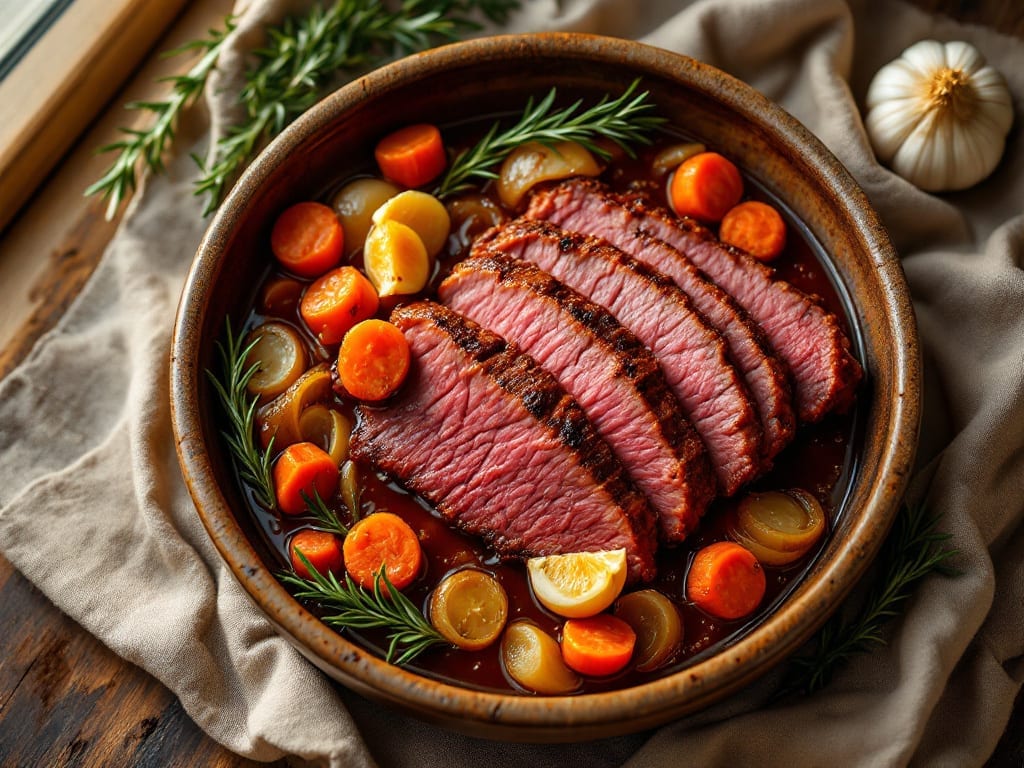
This roasted corned beef brisket recipe transforms tough cuts into melt-in-your-mouth perfection through slow roasting and precise technique. The day I realized French braising could elevate my family’s corned beef tradition changed everything—now we have a method that delivers restaurant-quality results at home.
That deep, caramelized crust and tender meat? It all starts with proper seasoning and patience.
The secret lies in the slow braise—low and slow in the oven until the meat practically falls apart. You’ll need about 3 hours for a perfectly cooked brisket that’s rich, flavorful, and ready for any celebration.
The crust forms naturally from the juices, creating that irresistible golden bark while keeping the inside fork-tender. This isn’t just dinner; it’s an experience that turns weeknights into special occasions.
By the time you’re done, you’ll have a brisket so tender it practically dissolves at the touch of a fork, with a crust that’s crisp enough to stand up to a knife.
The aroma alone will have everyone gathering at the table, and each slice will be packed with deep, savory flavors. This is the kind of dish that makes you feel like a pitmaster without needing a smokehouse.
Serve with classic sides like horseradish cream, sauerkraut, and crusty rye bread for the full experience. The leftovers? Even better the next day, making this the ultimate meal for feeding a crowd or treating yourself to a Sunday feast. Let’s get cooking—this brisket won’t wait forever to be made.
Ingredients for roasted corned beef brisket
Six ingredients transform tough brisket into restaurant-style perfection through slow roasting magic.
| Ingredient | Amount | Notes |
|---|---|---|
| Corned Beef Brisket 🥩 | 4 lb | Whole packer cut preferred |
| Yellow Onion 🧅 | 2 whole | Cut into wedges |
| Carrot 🥕 | 4 whole | Whole, unpeeled |
| Garlic Cloves 🧄 | 8 cloves | Peeled, whole |
| Fresh Rosemary 🌿 | ¼ cup | Chopped sprigs |
| Fresh Thyme 🌿 | ¼ cup | Stems removed |
| Beef Broth 💧 | 2 cups | Low-sodium preferred |
| Red Wine 🍷 | 1 cup | Dry, bold variety |
| Olive Oil 🫒 | ¼ cup | Extra-virgin preferred |
| Salt 🧂 | 1 ½ tsp | Kosher or sea salt |
| Black Peppercorns 🌶️ | 1 tsp | Freshly cracked |
| Bay Leaves 🍃 | 2 whole | Fresh preferred |
| Mustard Seeds 🌿 | 1 tsp | Whole, yellow preferred |
[recipe_ingredient_scaler]
The brisket is everything here—packer cut from the butcher’s case delivers the best results. Costco or local meat counters usually have it pre-trimmed, but if you’re buying whole, ask for the flat cut with good marbling. The onions and carrots? Baby carrots and pearl onions work too—just trim the ends. Fresh herbs make a difference, so grab rosemary and thyme sprigs from the grocery store’s produce section. If they’re wilted, skip them—dried works in a pinch (use half the amount). The red wine should be bold and dry—Cabernet Sauvignon or Merlot from the store’s wine section works perfectly.
No red wine? Beef broth with a splash of balsamic vinegar gets you close. Fresh herbs? Dried thyme and rosemary at half the amount will do. Mustard seeds are optional but add nice depth—Dijon mustard powder works if you’re out. The bay leaves? Fresh is ideal, but dried is fine too. For the broth, low-sodium is key—you don’t want to over-salt the meat. If you can’t find low-sodium, just skip the extra salt in the recipe. The olive oil matters here—use extra-virgin for the best flavor, but regular works if that’s what you’ve got.
This brisket reheats beautifully—better the next day once all the flavors meld together. Keeps for 4-5 days in the fridge, freezes for up to 3 months. I always make a double batch and freeze half—Sunday dinner solved. The crust is delicate, so reheat gently with a splash of broth. Serve with horseradish cream and sauerkraut for the full experience. Leftovers make amazing sandwiches the next day.
Why You’ll Love This Recipe
- One-Pan Magic: I swear by this—just toss the brisket, onions, carrots, and garlic on a sheet pan, drizzle with oil, and let the oven do the rest. No pots, no pans, no stress. (Yes, even on a Tuesday night.)
- Crispy-Creamy Payoff: That caramelized crust on the outside? The tender, almost melty center? The rosemary and garlic seeping into every bite? It’s the kind of flavor that makes you forget to check your phone.
- Leftovers That Shine: Between us, this recipe makes way more than I can eat in one sitting. The next day, I slice it thin for sandwiches or toss it into a hearty soup—no one ever complains.
- Budget-Friendly Feast: A whole brisket for a fraction of the cost of steak? Check. Onions, carrots, and garlic are always cheap. And honestly? This feeds a crowd without breaking the bank—my wallet thanks me every time.
Step-by-step instructions for roasted corned beef brisket
Here’s how to transform tough brisket into melt-in-your-mouth perfection with a rich crust.
Prep the Brisket and Build the Flavor Base
Preheat your oven to 325°F. Pat the 4 lb corned beef brisket dry with paper towels—this helps the crust form properly. In a small bowl, combine 0.25 cup olive oil, 1.5 tsp salt, 1 tsp freshly cracked black peppercorns, 1 tsp mustard seeds, 2 whole bay leaves, 0.25 cup chopped fresh rosemary, and 0.25 cup fresh thyme. Rub this mixture all over the brisket, pressing it into the meat so it sticks.
Here’s the thing—don’t skip the mustard seeds. They add a subtle depth that complements the wine and herbs beautifully. Place the seasoned brisket fat-side up in a large Dutch oven or heavy roasting pan. This allows the fat to render and baste the meat as it cooks.
Sear and Layer the Vegetables
Heat 0.25 cup olive oil in the same Dutch oven over medium-high heat until shimmering. Add the 2 whole yellow onion wedges and 4 whole carrots (peels on for extra flavor). Sear for 8-10 minutes, turning occasionally, until the onions soften and carrots begin to caramelize. Remove them and set aside.
In the same pot, add the 8 peeled garlic cloves and cook for 30 seconds until fragrant. Be careful not to burn them—garlic turns bitter quickly. Pour in 1 cup red wine and scrape up any browned bits from the bottom of the pan. This step captures all the flavor that would otherwise get lost. Let the wine simmer for 2-3 minutes until reduced by half.
Layer and Braise the Brisket
Return the seared onions and carrots to the pot. Place the brisket on top of the vegetables, fat-side up. Pour 2 cups beef broth around the brisket, making sure the liquid comes at least halfway up the sides of the meat. The liquid should cover about half of the brisket—this ensures even cooking without steaming.
Cover the pot tightly with a lid or foil. Transfer to the preheated 325°F oven and braise for 3 hours. Here’s where patience pays off—the slow cooking breaks down the connective tissue, turning tough meat into something tender enough to cut with a fork. After 2 hours, check the liquid level and add more broth if needed to keep it from drying out.
Finish with Crispy Crust and Rest
Remove the brisket from the oven and increase the temperature to 425°F. Uncover the pot and let the brisket sit uncovered for 20-30 minutes in the oven. This final step creates that coveted crispy crust while keeping the meat tender inside. You’ll know it’s ready when the edges look deep golden brown and the top has developed a caramelized crust.
Transfer the brisket to a cutting board and let it rest for 15-20 minutes before slicing. This resting period is crucial—it allows the juices to redistribute throughout the meat, ensuring every slice stays moist and flavorful. Skim any excess fat from the braising liquid before serving it as a rich gravy alongside the brisket.
Pro Tips For Making Roasted Corned Beef Brisket
- Trim the Fat First: Slice off that thick fat cap before roasting—it’ll render into grease and make your pan a smoky mess. Trust me, you’ll thank yourself when you’re not scrubbing a charred-on crust later.
- Carrot Slices, Not Chunks: Cut those carrots into ¼-inch thick rounds, not random chunks. They’ll caramelize faster and soak up the rosemary and garlic flavors instead of staying stubbornly undercooked.
- Don’t Crowd the Pan: I learned this the hard way—tightly packed veggies steam instead of roast. Space them out so the onions brown and the carrots crisp up. Your brisket won’t steam-dampen either.
- Rest Under Foil: After roasting, tent the brisket with foil for 10 minutes. The residual heat keeps it juicy while you finish the veggies—no more dry slices when you slice too soon.
Regional styles of this dish
Irish Pub Style
This is the version I grew up with at my family’s St. Patrick’s Day gatherings—where the brisket gets a deep, smoky flavor from slow-roasting with black tea and bay leaves (yes, really!). Start by adding 2 black tea bags and 4 extra bay leaves to the braising liquid.
The tannins from the tea create that signature Irish pub depth. Serve with horseradish sauce and soda bread for the full experience. I still use this method when I want that classic pub vibe at home. 🍀
Texas-Style BBQ Twist
For a smoky, Texas-inspired take, swap the red wine for 1 cup beef broth and add 2 tbsp smoked paprika and 1 tbsp brown sugar to the seasoning rub. After the initial braise, transfer the brisket to a smoker set to 250°F for 1-2 hours to develop that signature bark.
Finish with a sprinkle of coarse kosher salt for a crispy crust. Serve with white beans and pickled jalapeños for a modern Texas touch. 🔥
French-Inspired Braise
This version leans into my French technique training—replace the red wine with 1 cup dry white wine and add 1 sprig fresh tarragon and 1 sprig fresh parsley to the braising liquid.
After the initial 3-hour braise, remove the brisket and reduce the cooking liquid until it forms a glossy gravy. Deglaze the pan with 2 tbsp brandy for a flambé finish. Serve with mashed potatoes and buttered green beans for an elegant twist. 🍷
Jewish Delicatessen Classic
The deli version I love calls for 1 tbsp coriander seeds toasted and ground into the seasoning rub, plus 1 tsp ground cinnamon for warmth. After braising, slice the brisket thinly against the grain and layer it with sauerkraut and caramelized onions on rye bread for sandwiches.
The cinnamon adds that familiar deli sweetness without overpowering. 🥪
Coastal Herb Variation
Foraging along the coast inspired this version—swap the thyme for 0.25 cup fresh dill and add 1 tbsp lemon zest to the braising liquid. Finish with a drizzle of lemon-infused olive oil before serving.
Pair with roasted fingerling potatoes and wilted spinach for a bright, coastal-inspired meal. This version reminds me of my motorcycle rides along the cliffs where I collect wild herbs. 🌊
Nutrition facts
Frequently asked questions
How do I know when the corned beef brisket is fully cooked?
The brisket is done when it reaches an internal temperature of 203°F and the meat easily pulls apart with a fork. Check after 2.5 hours of braising, as the final 30 minutes at 425°F will push it to perfection. The crust should be deep golden brown and crispy.
Can I use a different cut of beef instead of brisket?
Brisket is ideal due to its connective tissue, but you could try chuck roast or short ribs for a similar result. These cuts require the same slow cooking method, though cooking times may vary. Avoid leaner cuts like sirloin—they won’t become tender with this technique.
What if I don’t have red wine for the recipe?
No problem! Substitute with 1 cup beef broth + 1 tbsp balsamic vinegar for depth, or use 1 cup apple cider for a sweeter profile. The key is maintaining the liquid level—just ensure it covers about half the brisket during braising.
How do I prevent the brisket from drying out?
Keep the liquid level high by adding more broth if it reduces too much. The brisket should be partially submerged but not steaming. Also, avoid opening the oven door during cooking—every time you peek, heat escapes and drying accelerates. The final 30 minutes at 425°F creates the crust without overcooking.
Can I make this brisket in a slow cooker instead?
Yes! Brown the brisket first, then transfer everything to a slow cooker and cook on Low for 8-10 hours. After cooking, finish it in a 425°F oven for 20-30 minutes** to develop the crust. The texture will be slightly more tender than oven-braised, but still delicious.

Trained in classic French technique but raised on slow-cooked ribs and spicy rubs, she blends culinary skill with smoke and soul.
- Best Smoked Oxtail Recipe: Deep-Rich Flavor After Low-and-Slow Cooking - October 14, 2026
- Pit Boss Smoked Prime Rib Roast Recipe: Bark-to-Bone Crispness in 4 Hours - October 14, 2026
- Smoked Tuna Steak Recipe: Seared Crust Meets Silky Centers - October 14, 2026