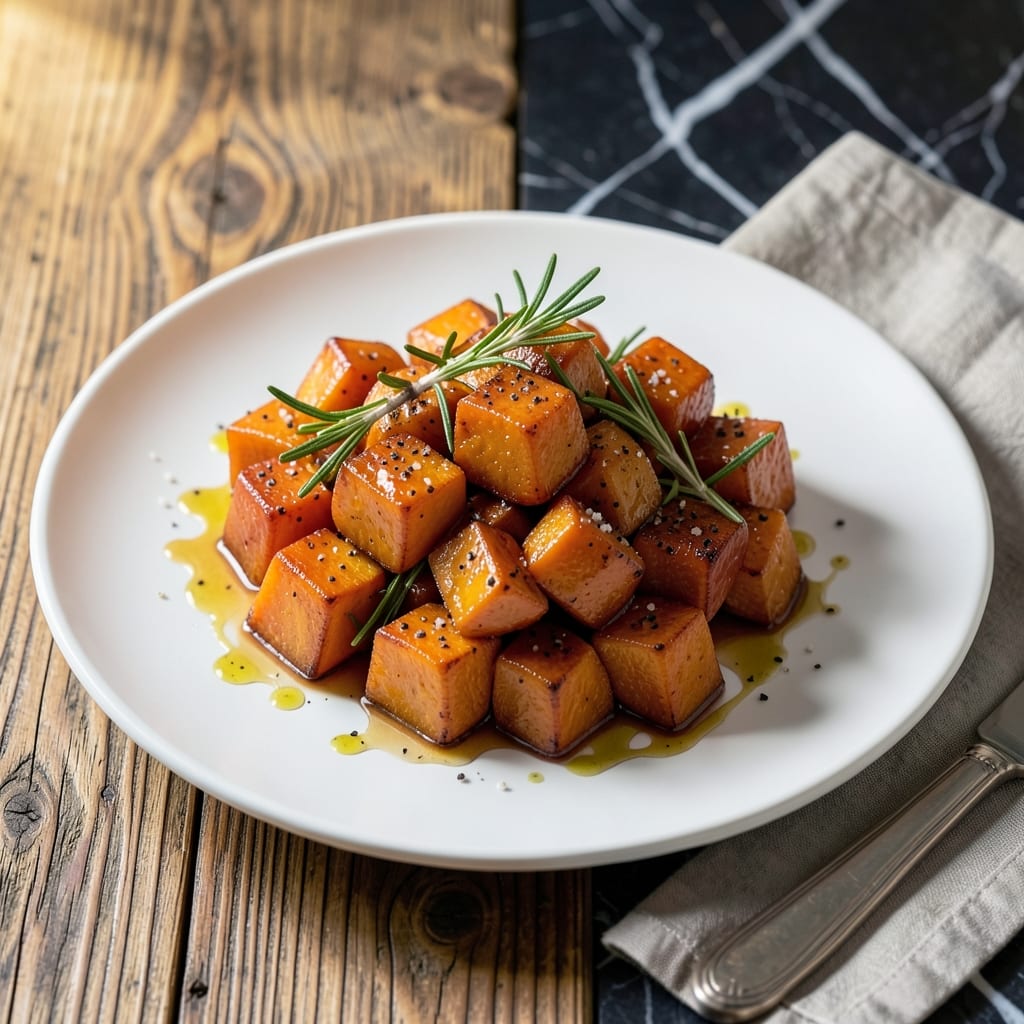
Koginut squash transforms into something magical when roasted—its natural sweetness deepens while developing a rich, nutty complexity. I’ve tested this method repeatedly to ensure perfectly tender flesh with caramelized edges every time.
This dish requires minimal effort but delivers restaurant-quality results. A simple toss with oil, salt, and a touch of maple syrup enhances the squash’s flavor without overpowering it. The oven does most of the work.
What emerges is a side dish with a velvety texture and layers of flavor—sweet, earthy, and subtly savory. It pairs beautifully with hearty mains or stands alone as a satisfying vegan option.
Roasting at high heat ensures the edges crisp slightly while the inside stays creamy. The process is straightforward, but the outcome feels special.
Ingredients for Robin’s Koginut Squash
The ingredients are simple but precise for this squash dish with rich depth.
| Ingredient | Amount | Notes |
|---|---|---|
| Koginut Squash 🎃 | 2 lb | Peeled, seeded, cubed into 1-inch pieces |
| Extra-Virgin Olive Oil 🫒 | 3 tbsp | Divided for tossing and finishing |
| Pure Maple Syrup 🍁 | 1 ½ tbsp | Grade A or B for depth |
| Sea Salt 🧂 | 1 tsp | Fine grain, adjust to taste |
| Freshly Ground Black Pepper 🌶️ | ½ tsp | Coarse grind preferred |
| Fresh Rosemary 🌿 | 2 tsp | Finely chopped, stems discarded |
| Fresh Thyme Leaves 🍃 | 2 tsp | Stems removed, loosely packed |
| Garlic Cloves 🧄 | 3 cloves | Minced or pressed |
| Smoked Paprika 🌶️ | ½ tsp | Optional, for depth of flavor |
| Apple Cider Vinegar 🍏 | 1 tsp | Balances sweetness |
[recipe_ingredient_scaler]
Koginut squash can be tricky to find—look for it at Whole Foods or Trader Joe’s in autumn. Choose firm, heavy squash with smooth, unblemished skin (a sign of freshness). The maple syrup should be 100% pure; avoid pancake syrup with additives. For the herbs, organic varieties from the produce section have better fragrance than dried. If your market doesn’t carry koginut, butternut is an acceptable substitute.
No maple syrup? Agave nectar or date syrup work in a pinch. Fresh herbs can be swapped for dried at one-third the amount. Out of rosemary? Fresh sage offers a similar earthy note. The smoked paprika adds complexity but isn’t essential—regular paprika or a pinch of cayenne can stand in. Apple cider vinegar can be replaced with lemon juice for brightness.
Roasted squash keeps well in the fridge for 4-5 days in an airtight container. Reheat in the oven at 350°F to revive the texture. The dish doesn’t freeze beautifully—best enjoyed fresh. Prep the squash up to a day ahead (store uncut in a cool, dark place) for easier assembly.
Why You’ll Love This Recipe
- One Pan Magic: I just halve the squash, drizzle with olive oil and maple syrup, and let the oven do the work.
- Sweet-Savory Balance: That caramelized maple syrup with the nutty squash and flaky sea salt? Ridiculously good.
- Weeknight Friendly: I roast a big batch on Sunday and toss it into salads, pasta, or grain bowls all week.
- Budget Stretcher: One squash feeds my family for two meals, and honestly, it’s cheaper than butternut.
Step-by-Step Instructions for Roasted Koginut Squash
This method ensures caramelized edges and a tender interior with layered flavor development.
Step 1: Prepare and Season the Koginut Squash
Begin by tossing the 2 lb Koginut Squash (peeled, seeded, and cubed into 1-inch pieces) with 2 tbsp Extra-Virgin Olive Oil, 1.5 tbsp Pure Maple Syrup, 1 tsp Sea Salt, and 0.5 tsp Freshly Ground Black Pepper. Use your hands to ensure every piece is evenly coated.
The maple syrup will caramelize during roasting, creating a glossy glaze, while the salt enhances the natural sweetness of the squash. Spread the cubes in a single layer on a rimmed baking sheet, ensuring they don’t overlap—this prevents steaming and promotes even browning.
Step 2: Infuse with Herbs and Aromatics
Sprinkle the 2 tsp Fresh Rosemary, 2 tsp Fresh Thyme Leaves, and 3 cloves minced Garlic Cloves over the squash. Gently toss again to distribute the herbs and garlic evenly. The rosemary and thyme add earthy depth, while the garlic mellows into sweetness as it roasts.
For an extra layer of complexity, dust the squash with 0.5 tsp Smoked Paprika. This optional step introduces a subtle smokiness that complements the nutty, sweet profile of the koginut squash. The paprika will toast slightly during roasting, deepening its flavor.
Step 3: Roast Until Caramelized
Preheat your oven to 400°F. Roast the squash on the middle rack for 25-30 minutes, flipping the pieces halfway through. You’ll know it’s ready when the edges are deep golden brown and the cubes are fork-tender with a slight resistance.
The high heat ensures the maple syrup caramelizes quickly, creating a sticky, sweet crust on the squash. Watch closely during the last 5 minutes to prevent burning—the sugar in the syrup can scorch if left unattended.
Step 4: Finish with Acid and Remaining Oil
Remove the baking sheet from the oven and immediately drizzle the squash with 1 tsp Apple Cider Vinegar and the remaining 1 tbsp Extra-Virgin Olive Oil. The vinegar brightens the dish, cutting through the richness of the syrup and oil.
Toss gently to combine, allowing the vinegar to evaporate slightly from the heat of the squash. The result should be a harmonious balance of sweet, savory, and tangy flavors, with a glossy sheen that makes the dish as visually appealing as it is delicious.
Pro Tips For Making Robin’S Koginut Squash
- Roast Cut-Side Down: Place the squash halves cut-side down on the baking sheet—this traps steam to soften the flesh while letting the top caramelize properly. I learned this the hard way after ending up with dry, unevenly cooked squash.
- Warm the Syrup: Gently warm the maple syrup for 10-15 seconds before drizzling—it coats the squash more evenly and blends better with the olive oil. Cold syrup just pools and slides off.
- Don’t Overcrowd: Give each squash half at least 2 inches of space on the pan, or they’ll steam instead of roast. Sounds obvious, but I’ve rushed this and regretted it every time.
- Salt After Halving: Sprinkle sea salt on the cut surfaces right after halving the squash, not just before serving—it draws out excess moisture and actually changes the outcome for the better.
Wine and Beer Pairings for This robins koginut squash
White Wine Pairings
I love pairing this dish with a crisp Viognier—its floral notes complement the maple syrup beautifully. A Dry Riesling from the Finger Lakes region offers bright acidity that cuts through the squash’s richness. 🍷
Red Wine Options
For red wine lovers, try a light-bodied Pinot Noir from Oregon. Its earthy undertones match the rosemary and thyme perfectly. Avoid bold Cabernets—they’ll overpower the delicate flavors of the squash.
Craft Beer Pairings
A Belgian-style saison with its peppery notes enhances the earthy depth of the dish. I also enjoy a Brown Ale from Trillium Brewing in Boston—its caramel malts echo the maple syrup. 🍺
Non-Alcoholic Choices
Sparkling apple cider from local New England orchards brings a festive touch. For something simpler, sparkling water with a squeeze of lemon refreshes the palate between bites.
Herbal iced tea with rosemary and honey mirrors the squash’s seasoning beautifully.
Nutrition Facts
Frequently Asked Questions
Can I use butternut instead of koginut?
Butternut has a similar texture and sweetness. Use the same 400°F temperature and 25-30 minutes roasting time. The flavor will be slightly less nutty but still delicious.
Why add vinegar at the end?
The 1 tsp apple cider vinegar cuts through the richness and brightens all flavors. It balances the maple syrup’s sweetness without making the dish sour. Always add it fresh out of the oven.
How do I prevent burning?
Flip the squash halfway through and watch closely during the last 5 minutes. If the edges brown too quickly, move the pan to a lower rack. The sugar in the syrup can scorch easily.

Trained in classic French technique but raised on slow-cooked ribs and spicy rubs, she blends culinary skill with smoke and soul.
- Recipe for Boneless Pork Chops in Cast Iron Skillet: Sear and Baste to Juicy Perfection - October 3, 2026
- Recipe for Boneless Cross Rib Roast: Slow-Roasted Beef with Herb Crust - October 3, 2026
- Hamburgers in Sauce Recipe Crock Pot: Slow-Cooked Savory Delight - October 3, 2026