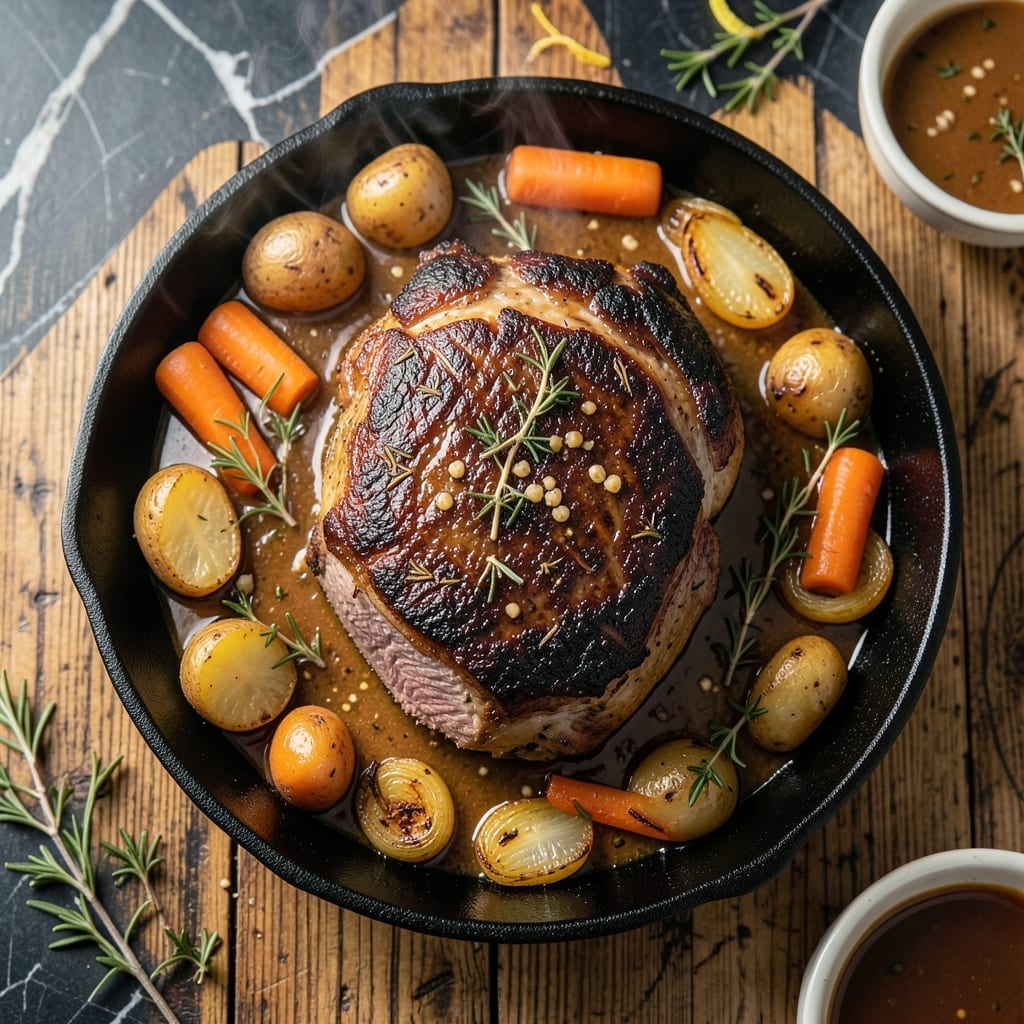
I’ve tried every method for oven roasts, and this one finally delivers that melt-in-your-mouth texture every time. The herb crust seals in juices while adding layers of savory flavor.
No fancy techniques—just a simple seasoning blend, low and slow heat, and patience. The result is tender, flavorful beef that falls apart with a fork.
Ingredients for Rump Roast Recipe Oven
A handful of fresh herbs and a well-seasoned roast deliver that fall-apart texture you crave.
| Ingredient | Amount | Notes |
|---|---|---|
| Beef Rump Roast 🥩 | 3 lb | Well-marbled, trimmed of excess fat |
| Kosher Salt 🧂 | 1 ½ tbsp | Diamond Crystal preferred for even seasoning |
| Freshly Ground Black Pepper 🌶️ | 1 tbsp | Coarse grind for texture |
| Garlic Cloves 🧄 | 6 cloves | Minced for maximum flavor infusion |
| Fresh Rosemary 🌿 | 2 tbsp | Finely chopped, stems removed |
| Fresh Thyme 🍃 | 2 tbsp | Leaves stripped from stems |
| Olive Oil 🫒 | ¼ cup | Extra-virgin for richness |
| Dijon Mustard 🟡 | 2 tbsp | For herb crust binding |
| Red Wine 🍷 | 1 cup | Dry variety like Cabernet Sauvignon |
| Beef Broth 🥣 | 1 cup | Low-sodium preferred for control |
| Carrots 🥕 | 3 whole | Peeled, cut into chunks |
| Yellow Onions 🧅 | 2 whole | Peeled, quartered through the root |
| Russet Potatoes 🥔 | 4 whole | Peeled, cut into large chunks |
[recipe_ingredient_scaler]
The beef is everything here. Look for well-marbled rump roast—the fat keeps it juicy during the long cook. Most butchers at Whole Foods or Local Grocery will trim and tie it for you if you ask. I always grab mine from Costco when I’m feeding a crowd (that place is a goldmine for big cuts). Avoid anything labeled ‘lean’—you want the marbling. If it’s on sale, buy extra and freeze it—roasts freeze beautifully for up to 6 months.
No red wine? Substitute beef broth with a splash of balsamic vinegar—it adds the acidity you need. Fresh herbs are ideal, but dried at one-third the amount works in a pinch (just rehydrate them in a little warm water first). The Dijon mustard in the crust can be swapped for whole-grain mustard if that’s what you’ve got. And the veggies? Totally flexible—parsnips or celery would be great additions.
The roast tastes even better the next day—honestly, it’s worth making extra. Leftovers keep in the fridge for 4-5 days or freeze for 3 months. I like to shred the beef and use it in sandwiches or tacos (trust me, it’s a game-changer).
Why You’ll Love This Recipe
- Set and Forget: I rub the roast with salt, pepper, garlic, and rosemary, pop it in the oven, and walk away—no babysitting required.
- Garlic-Rosemary Magic: The aroma of roasted garlic and fresh rosemary filling the kitchen is almost as good as the first bite.
- Sunday Dinner, Weeknight Leftovers: It’s impressive enough for company but gives me days of sandwiches and stews after.
- Budget-Friendly Feast: A rump roast feeds my whole family for less than steak, and honestly, it’s just as satisfying.
Step-by-Step Instructions for Rump Roast Oven
Here’s my method for achieving fall-apart tenderness with a fragrant herb crust.
Step 1: Create the Herb Crust for Maximum Flavor
In a small bowl, combine the 1.5 tbsp Kosher Salt, 1 tbsp Freshly Ground Black Pepper, minced 6 cloves Garlic Cloves, 2 tbsp Fresh Rosemary, and 2 tbsp Fresh Thyme. This aromatic blend forms the base of your crust.
Add the 0.25 cup Olive Oil and 2 tbsp Dijon Mustard to the herb mixture and stir to create a thick paste. The mustard acts as a binder, helping the herbs adhere to the beef rump roast while adding a subtle tang. Rub this mixture generously over all surfaces of the 3 lb Beef Rump Roast, pressing it into the meat.
Let the seasoned roast sit at room temperature for 30 minutes while you preheat the oven to 325°F. This allows the flavors to begin penetrating the meat and ensures even cooking from the start.
Step 2: Prepare the Vegetables and Begin Roasting
Place the 3 whole Carrots, 2 whole Yellow Onions, and 4 whole Russet Potatoes in the bottom of a large roasting pan. These vegetables will create a natural rack for the roast and absorb the delicious drippings.
Set the seasoned beef rump roast on top of the vegetables, fat side up. The rendered fat will baste the meat as it cooks. Pour the 1 cup Beef Broth into the pan, being careful not to wash off the herb crust. The broth will keep the vegetables moist and contribute to the pan juices.
Place the pan in the preheated oven. Roast uncovered for 2 hours, which allows the crust to form and the flavors to develop. You’ll start to smell the intoxicating aroma of herbs and roasting beef filling your kitchen.
Step 3: Add Wine and Continue Slow Roasting
After the initial 2 hours, carefully remove the pan from the oven. Pour the 1 cup Red Wine into the pan, taking care to avoid the hot oven and steam. The wine adds depth to the pan juices and complements the herb crust beautifully.
Return the pan to the oven and continue roasting for another 1.5 to 2 hours. The total cooking time will depend on your desired level of doneness, but for melt-in-your-mouth tenderness, you’re aiming for an internal temperature of 195-200°F.
Baste the roast with the pan juices every 30 minutes during this time. This step is crucial for building layers of flavor and ensuring the herb crust stays moist and doesn’t dry out. The beef rump roast is done when it easily pulls apart with a fork.
Step 4: Rest and Serve for Optimal Tenderness
Once the roast reaches your desired doneness, remove it from the oven and transfer the beef to a cutting board. The vegetables can stay in the pan to soak up more of the delicious juices. Tent the roast loosely with foil and let it rest for 20-30 minutes.
This resting period allows the juices to redistribute throughout the meat. If you were to slice into it immediately, all those precious juices would end up on your cutting board instead of in the meat. The internal temperature will also rise by about 5-10°F during this time.
Serve the rump roast sliced or shredded, surrounded by the roasted vegetables and plenty of the pan juices. The herb crust will have created a flavorful exterior, while the slow roasting ensures the interior is incredibly tender and juicy.
Pro Tips For Making Rump Roast Recipe Oven
- Start Hot, Finish Low: Sear the rump roast at 450°F for 15 minutes first, then drop the oven to 325°F to finish cooking. I learned this the hard way—skipping the high-heat start gives you a gray, flavorless crust.
- Score the Fat Cap: Cut shallow slits in the fat cap before seasoning so the salt, pepper, and garlic can penetrate deeper. Sounds weird, but it works: the flavors actually reach the meat instead of just sitting on top.
- Rest Under Foil: Let the roast rest under loose foil for at least 15 minutes after pulling it from the oven. My grandmother swore by this, and she was right: it keeps the juices from pooling on the cutting board.
- Use a Meat Thermometer: Pull the roast at 130°F for medium-rare—don’t rely on time alone. After overcooking three roasts by guessing, I finally bought one and never looked back.
Dietary Considerations for These Flavors
Gluten-Free Friendly
This recipe is naturally gluten-free, as all ingredients from the 3 lb beef rump roast to the herb crust components contain no wheat or gluten derivatives. Just ensure your Dijon mustard and beef broth are certified gluten-free—most major brands like Grey Poupon and Swanson meet this standard.
Low-Carb Option
For a lower-carb version, simply omit the 4 russet potatoes and double the carrots and onions. The beef and pan juices will still deliver incredible flavor without the extra starch. I often serve it with a side of sautéed greens instead.
Dairy-Free Naturally
There’s no dairy in this preparation, making it safe for those avoiding milk products. The olive oil and herb crust provide all the moisture and flavor needed. Just be mindful of any added ingredients when serving, like butter on the side. 💪
Allergen Awareness
The only common allergen here is mustard in the crust. If allergies are a concern, replace the 2 tbsp Dijon mustard with an equal amount of olive oil or red wine vinegar to maintain the binding effect without the allergen.
Keto Adaptations
To make this fully keto-friendly, skip the potatoes and carrots, and add low-carb vegetables like cauliflower or Brussels sprouts to the roasting pan. The beef itself is a perfect keto protein source.
Sodium Control
To reduce sodium, use low-sodium beef broth and cut the Kosher salt to 1 tbsp. The fresh herbs and garlic will still pack plenty of flavor. Taste the pan juices before serving and adjust seasoning as needed.
Nutrition Facts
Frequently Asked Questions
What temperature should the oven be set to?
Preheat your oven to 325°F for even cooking and to achieve that perfect fall-apart texture. This moderate heat allows the flavors to develop without drying out the meat.
How long should I cook a 3 lb roast?
For a 3 lb beef rump roast, plan for about 3.5 to 4 hours total. The first 2 hours develop the crust, then add the wine and roast another 1.5 to 2 hours until fork-tender.
Can I use dried herbs instead of fresh?
Yes, but reduce the amount to one-third and rehydrate them in warm water first. Dried herbs are more concentrated, so 2 tsp of dried rosemary or thyme will replace 2 tbsp of fresh.
What if my roast isn’t tender after the suggested time?
If it’s not fork-tender, continue roasting for another 30 minutes and check again. The key is low and slow cooking until it reaches an internal temperature of 195-200°F.

Trained in classic French technique but raised on slow-cooked ribs and spicy rubs, she blends culinary skill with smoke and soul.
- Meat Loaf Recipe With Beef And Pork: Homestyle Blend With Rich Gravy - October 3, 2026
- Hamburger Patty Recipe No Egg: Juicy Bind With Breadcrumbs and Milk - October 3, 2026
- Recipe for Oven Baked Halibut: Buttery White Fish with Zesty Lemon Topping - October 3, 2026