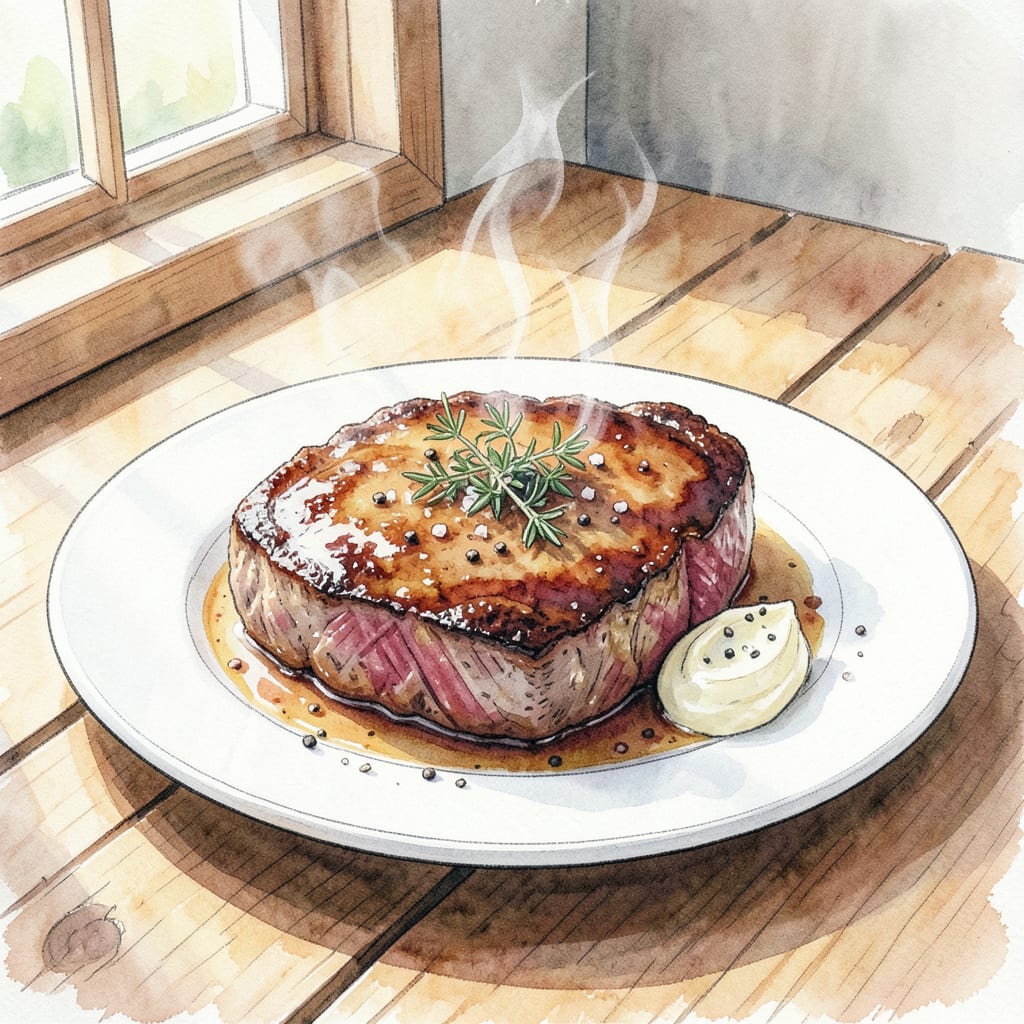
As a pitmaster with a passion for blending smoke-cooking tradition with classic French technique, I’m excited to share my take on the iconic Ruth Chris Steak Recipe. This restaurant-quality steakhouse flavor at home is achieved through a simple yet precise cooking method.
By combining high-quality ingredients with perfectly cooked steak and a signature sauce, you’ll be able to recreate the luxurious Ruth Chris experience in your own kitchen. Let’s get started with the recipe that will elevate your steak game to new heights.
Ingredients for Ruth Chris Steak
High-quality steak meets classic French technique with these essential ingredients.
| Ingredient | Amount | Notes |
|---|---|---|
| Ribeye Steaks 🥩 | 1 ½ lb | Dry-aged or prime ribeye |
| Unsalted Butter 🧈 | 4 tbsp | Softened for basting |
| Garlic Cloves 🧄 | 4 cloves | Peeled and minced |
| Fresh Thyme 🌿 | 2 tbsp | Chopped fresh leaves |
| Kosher Salt 🧂 | 1 tsp | Diamond Crystal or similar flake salt |
| Black Pepper 🌶️ | ½ tsp | Freshly cracked black peppercorns |
| Olive Oil 🫒 | 2 tbsp | Extra-virgin for high heat searing |
| Worcestershire Sauce 💧 | 1 tbsp | High-quality brand for depth |
| Cognac 🍸 | 2 tbsp | Optional, for flambéing |
| Beef Broth 🍜 | 1 cup | Low-sodium beef broth |
| All-Purpose Flour 🌾 | 1 tbsp | For sauce thickening |
| Fresh Parsley 🌿 | ¼ cup | Chopped for garnish |
[recipe_ingredient_scaler]
For the best results, choose dry-aged ribeye steaks from a reputable butcher or high-end grocery store. Prime ribeye is also an excellent choice if available. Make sure the steaks are at room temperature before cooking for even searing. I prefer to buy my steaks from Whole Foods or local butcher shops.
If you can’t find Diamond Crystal kosher salt, any flake salt will work, but adjust seasoning to taste. For the Worcestershire sauce, look for brands without artificial preservatives. Cognac is optional but adds depth when flambéing—just be sure to follow safety precautions when igniting. You can substitute it with a good brandy if needed.
Leftover steak can be stored in an airtight container in the refrigerator for up to 3 days. The sauce can be refrigerated separately for 5 days or frozen for 3 months. Reheat gently to avoid overcooking the steak. When reheating, add a splash of beef broth to loosen the sauce if needed.
Step-by-Step Instructions for Ruth Chris Steak
Master the art of cooking steakhouse-quality ribeye at home with these precise steps.
Step 1: Prepare the Steaks for Searing
Bring the 1.5 lb Ribeye Steaks to room temperature by letting them sit on the counter for 30-45 minutes before cooking. This step is crucial for even cooking throughout the steak. Meanwhile, preheat your skillet or cast-iron pan over high heat until it’s almost smoking hot – you should see a faint wisp of smoke rising from the surface.
Season both sides of the steaks generously with the 1 tsp Kosher Salt and 0.5 tsp Black Pepper. I like to press the seasoning into the meat to ensure it adheres properly. The salt will help draw out the natural juices and create a beautiful crust during searing.
Step 2: Sear the Steaks to Perfection
Add 2 tbsp Olive Oil to the preheated pan and swirl it around to coat the bottom. When the oil starts shimmering and almost reaches its smoke point, carefully place the seasoned steaks in the pan. Sear for 3-4 minutes per side for a 1.5-inch thick steak, depending on your desired level of crust formation. You want a deep golden-brown crust – this is where the magic happens.
After flipping, add 2 tbsp Unsalted Butter to the pan and let it melt. Use a spoon to baste the steaks continuously with the melted butter for the remaining cooking time. This basting step is crucial for achieving that signature Ruth’s Chris flavor and helps keep the steak juicy.
Step 3: Finish with Garlic Butter and Thyme
During the last minute of cooking, add the 4 cloves minced Garlic Cloves and 2 tbsp chopped Fresh Thyme to the butter in the pan. Continue basting the steaks with this aromatic garlic-thyme butter mixture. The garlic will become fragrant and slightly caramelized, infusing the steak with incredible flavor.
Cook the steaks to your desired level of doneness. For medium-rare, aim for an internal temperature of 130-135°F. Use a meat thermometer to check the temperature in the thickest part of the steak, avoiding any fat or bone.
Step 4: Rest and Prepare the Pan Sauce
Once cooked to your liking, remove the steaks from the pan and transfer them to a plate to rest for 5-10 minutes. Tent them loosely with foil to keep warm. Don’t skip this resting period – it’s essential for letting the juices redistribute throughout the meat.
While the steaks rest, prepare the pan sauce. If using 2 tbsp Cognac, carefully add it to the hot pan (away from your face) and ignite it with a match or lighter. Let the flames burn for 30 seconds to 1 minute until they extinguish themselves, scraping up any browned bits from the pan bottom. If not using cognac, simply deglaze the pan with a splash of 1 cup Beef Broth, scraping up all the flavorful browned bits.
Step 5: Serve with Pan Sauce and Garnish
Strain the pan sauce into a clean saucepan, discarding any excess fat. Whisk in 1 tbsp All-Purpose Flour to thicken the sauce, then simmer over medium heat until it reaches your desired consistency. Stir in any remaining butter from the resting plate to enrich the sauce.
Slice the rested steaks against the grain into 1/2-inch thick slices. Serve immediately with the hot pan sauce spooned over the top. Garnish with additional chopped Fresh Parsley if desired. The combination of the perfectly cooked steak, rich pan sauce, and fresh herbs will transport you straight to a steakhouse experience in the comfort of your own home.
Troubleshooting This Recipe
Common Steak Cooking Issues
One of the most common problems when cooking steak is achieving the perfect doneness. Overcooking can make the steak tough and dry, while undercooking can leave it raw in the center. To avoid this, use a meat thermometer to check the internal temperature. For medium-rare, aim for 130-135°F. I always keep a thermometer handy to ensure accuracy. 🔥
Pan Searing Challenges
Getting a good sear on the steak can be tricky. If the pan isn’t hot enough, the steak will steam instead of sear. Make sure your skillet or cast-iron pan is preheated over high heat until it’s almost smoking. Add 2 tbsp Olive Oil and let it heat until shimmering before adding the steak. This helps create a crusty exterior.
Sauce Preparation Problems
Preparing the pan sauce can be tricky, especially when deglazing the pan. If you’re using Cognac, be careful when igniting it, as the flames can be high. Keep a safe distance and have a lid handy to extinguish the flames if needed. If not using Cognac, simply deglaze with 1 cup Beef Broth, scraping up the browned bits for added flavor.
Resting Mistakes
Not letting the steak rest long enough can cause the juices to run out when sliced. After cooking, transfer the steak to a plate and tent it loosely with foil. Let it rest for 5-10 minutes to allow the juices to redistribute. This step is crucial for a tender and juicy steak. I learned this the hard way after forgetting to rest my steaks once – it was a mess!
Slicing Errors
Slicing the steak against the grain is essential for tenderness. Identify the direction of the muscle fibers and slice perpendicular to them. Use a sharp knife and cut into 1/2-inch thick slices. This makes a big difference in the overall texture and enjoyment of the steak.
Additional Tips
To enhance your steak-cooking experience, always use high-quality ingredients. Choose dry-aged ribeye steaks for the best flavor.

Trained in classic French technique but raised on slow-cooked ribs and spicy rubs, she blends culinary skill with smoke and soul.
- Recipe for Boneless Pork Chops in Cast Iron Skillet: Sear and Baste to Juicy Perfection - October 3, 2026
- Recipe for Boneless Cross Rib Roast: Slow-Roasted Beef with Herb Crust - October 3, 2026
- Hamburgers in Sauce Recipe Crock Pot: Slow-Cooked Savory Delight - October 3, 2026