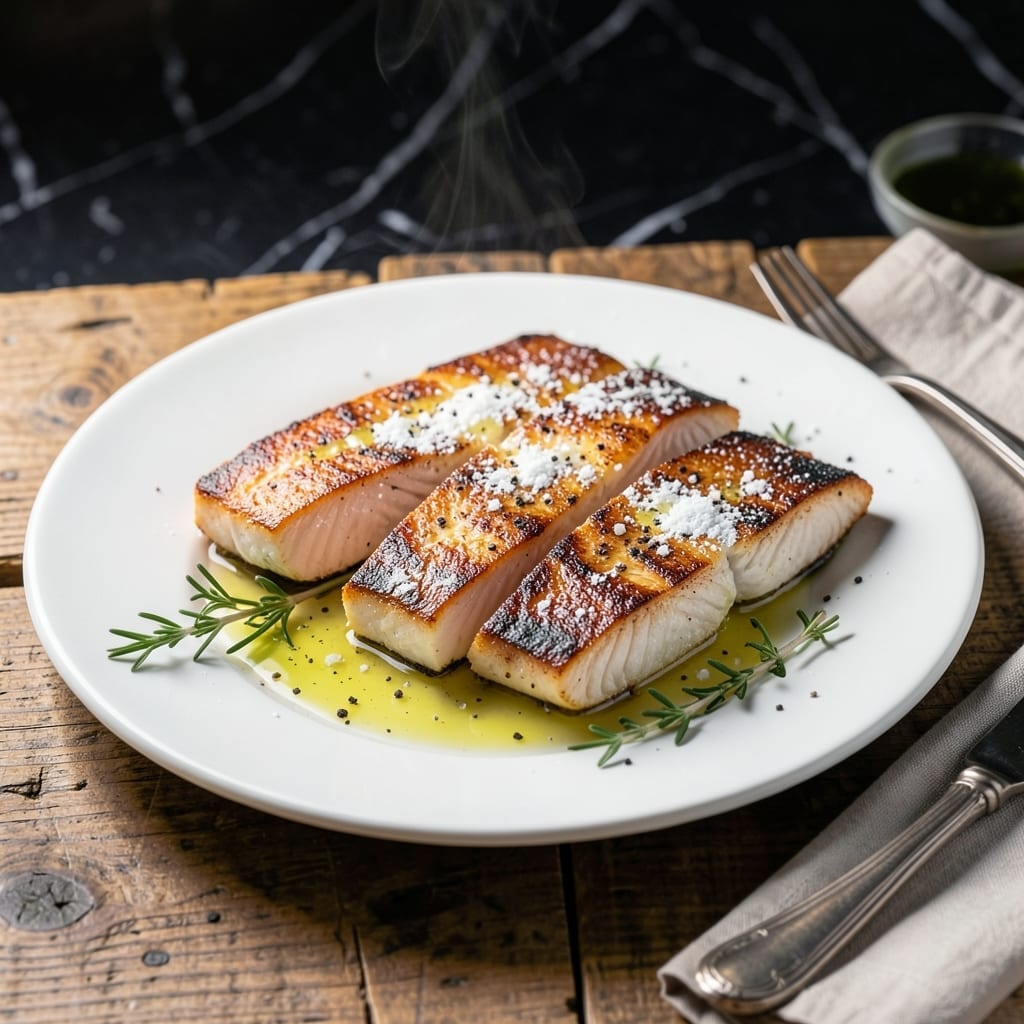
There’s an art to cooking sable fish that delivers crispy skin and tender flesh every time. This method relies on patience and precision—key for a dish that feels restaurant-worthy at home.
I’ve perfected this technique through trial and error, learning that high heat and a dry surface are non-negotiable. The fish cooks quickly, so timing is everything to avoid overcooking its delicate texture.
The result is a fillet with a golden, shatteringly crisp skin and flesh so buttery it nearly melts on contact. A simple seasoning lets the natural richness shine.
Serve it with a squeeze of lemon or a light sauce to complement its natural depth. Here’s how to achieve it perfectly.
Ingredients for Sable Fish Recipe Pan Fried
Patience and precision start with these quality ingredients for perfectly crisp pan-fried sable fish.
| Ingredient | Amount | Notes |
|---|---|---|
| Sable Fish Fillets 🐟 | 4 whole | Skin-on, about 6 oz each |
| Kosher Salt 🧂 | 1 tsp | Diamond Crystal preferred |
| Freshly Ground Black Pepper 🌶️ | ½ tsp | Coarse grind ideal |
| All-Purpose Flour 🌾 | ¼ cup | For dusting skin |
| Neutral Oil 🫒 | 3 tbsp | High smoke point, like avocado or grapeseed |
| Unsalted Butter 🧈 | 2 tbsp | Cold, cubed for basting |
| Fresh Lemon 🍋 | 1 whole | For serving, cut into wedges |
| Garlic Cloves 🧄 | 2 cloves | Smashed, optional for aromatics |
| Fresh Thyme Sprigs 🌿 | 3 whole | Optional for basting |
| Paper Towels 🧻 | 0 piece | For patting fish dry |
[recipe_ingredient_scaler]
The sable fish is the star here—skin-on fillets are essential for that shatteringly crisp finish. Look for fillets with vibrant color and a slight sheen at a reputable fishmonger or the seafood counter at Whole Foods. Ask for center-cut pieces if possible, as they cook more evenly. The flour for dusting should be fine and fresh; King Arthur is a reliable brand for consistent results.
No sable fish? Black cod is nearly identical (in fact, sable fish is often marketed as black cod in the US). For a leaner option, halibut or cod work but won’t have the same buttery richness. The neutral oil must have a high smoke point—skip olive oil here. If avoiding dairy, swap butter for more oil, though you’ll lose some depth of flavor.
Pat the fish dry just before cooking—don’t do it ahead as it’ll rewet in the fridge. Leftovers (rare for this dish) keep 1-2 days in the fridge, but the skin loses its crispness. Best eaten immediately. The butter can be pre-cubed and kept cold until ready to use.
Why You’ll Love This Recipe
- One Pan Magic: I just season, dredge in flour, and pan-fry—no fancy techniques, no mess.
- Buttery Crisp: That flour crust gets golden and shatters with every bite, while the fish stays tender.
- Weeknight Hero: Honestly, it’s my go-to when I need a restaurant-worthy dinner in 20 minutes flat.
- Budget Luxury: Sable fish feels fancy but costs less than halibut, and leftovers (if any) reheat beautifully.
Step-by-Step Instructions for Pan Fried Sable Fish
Master the technique for achieving perfectly crisp skin and tender, buttery flesh with this method.
Step 1: Prepare and Season the Sable Fish Fillets
Begin by thoroughly patting the 4 whole Sable Fish Fillets completely dry with paper towels. Moisture on the skin prevents proper crisping, so be meticulous about this step. I press between layers of towels to absorb all surface liquid.
Season both sides evenly with the 1 tsp Kosher Salt and 0.5 tsp Freshly Ground Black Pepper. Use your fingers to gently press the seasoning into the flesh. This ensures the flavors penetrate and adhere properly during cooking.
Step 2: Dredge and Heat the Pan
Lightly dust the skin-side of each fillet with 0.25 cup All-Purpose Flour, shaking off any excess. The flour creates a fine coating that promotes even browning and adds texture to the crispy skin. Don’t overdo it—just a thin, even layer is sufficient.
In a large skillet, heat the 3 tbsp Neutral Oil over medium-high heat until it shimmers and a drop of water sizzles violently when flicked into the pan. This indicates the oil is at the optimal temperature for creating that perfect crust without burning the flour.
Step 3: Pan Fry to Crisp Perfection
Carefully place the fillets skin-side down in the hot oil. Press down gently with a fish spatula for the first 30 seconds to ensure full contact with the pan and prevent curling. Cook undisturbed for 4-5 minutes until the skin is deep golden brown and crisp.
Resist the urge to move the fillets. You’ll know they’re ready to flip when the edges appear opaque and the skin releases easily from the pan with a gentle nudge. The flesh should be mostly cooked through at this point, with just a slight translucency at the very center.
Step 4: Baste with Aromatics and Butter
Flip the fillets and immediately add the 2 tbsp Unsalted Butter, 2 cloves Garlic Cloves (smashed), and 3 whole Fresh Thyme Sprigs to the pan. Tilt the skillet slightly and spoon the foaming butter over the fish repeatedly for 1-2 minutes.
This basting technique infuses the fish with aromatic flavor while the butter contributes to the luxurious, silky texture of the flesh. The garlic and thyme are optional but highly recommended for an extra layer of sophistication. Remove the pan from heat when the fish is just cooked through—the internal temperature should reach 145°F.
Step 5: Rest and Serve Immediately
Transfer the sable fish to a warm plate and let it rest for 2-3 minutes to allow the juices to redistribute. This brief rest ensures the flesh remains moist and tender when you cut into it.
Serve immediately with wedges from the 1 whole Fresh Lemon for a bright, acidic contrast to the rich fish. The skin should remain crisp, the flesh should flake easily with a fork, and each bite should deliver that signature buttery texture that makes sable fish so prized.
Pro Tips For Making Sable Fish Recipe Pan Fried
- Pat Fillets Dry: Use paper towels to thoroughly dry the sable fish before seasoning—this guarantees a crisp crust instead of a soggy one.
- Heat the Pan First: Get your pan screaming hot for at least 2 minutes before adding oil, then wait another 30 seconds before cooking the fish.
- Skip Overcrowding: I learned this the hard way—pan fry in batches if needed, as too many fillets drop the oil temp and lead to steamed fish.
- Season the Flour: Mix a pinch of salt and pepper into the flour before dredging for even seasoning that sticks to every bite.
Essential Equipment for Great sable fish recipe pan fried
The Right Pan
For pan-frying sable fish, I swear by my 12-inch cast iron skillet—it retains heat beautifully and creates that perfect crust. A stainless steel skillet works too, but avoid nonstick for high-heat cooking. Look for heavy-bottomed options at Portland farmers markets. 🔥
Precision Thermometer
An instant-read thermometer is non-negotiable for perfect doneness. I use the ThermoWorks Thermapen—it reads in 2-3 seconds and gives accurate temps every time. Aim for 145°F internal temperature for perfectly cooked fish.
Fish Spatula
A thin, flexible fish spatula is essential for flipping delicate fillets without breaking them. I love the Mercer Culinary model—its thin edge slides easily under the skin. The slight angle helps press the fish down for even crisping.
Paper Towels
You’ll need high-quality paper towels for drying the fillets thoroughly before cooking. I prefer Bounty for its absorbency. Press between layers to remove all moisture—this step makes or breaks your crispy skin.
Basting Spoon
A heatproof silicone basting spoon lets you safely spoon hot butter over the fish. I keep mine from OXO in the pan drawer. The long handle prevents burns while the deep bowl holds plenty of aromatic butter.
Tongs for Aromatics
Use kitchen tongs to add and remove garlic and thyme from the hot pan. My 12-inch tongs from New Seasons Market give me precise control. They’re also perfect for adjusting the fillets without piercing the flesh.
Nutrition Facts
Frequently Asked Questions
What’s the best oil for crispy skin?
Use a neutral oil with a high smoke point like avocado or grapeseed. These handle medium-high heat without burning, creating that perfect golden crust. Avoid olive oil as it can impart unwanted flavor.
How do I prevent the fish from sticking?
Ensure the pan is ripping hot before adding fillets and don’t move them for the first 4-5 minutes. The skin will release naturally when properly crisped. A well-seasoned cast iron skillet works best.
Can I skip the butter basting step?
You can, but the butter adds rich flavor and helps cook the fish evenly. If avoiding dairy, use more oil and add aromatics like garlic and thyme directly to the pan.
What’s the ideal internal temperature?
Aim for 145°F at the thickest part. Use an instant-read thermometer for accuracy—the fish will continue cooking slightly after removal from heat.

Trained in classic French technique but raised on slow-cooked ribs and spicy rubs, she blends culinary skill with smoke and soul.
- Beef Brisket Beer Recipe: Smoky, Beer-Braised Beauty in 6 Hours - October 15, 2026
- Smoked Whitefish Recipe: Wood-Fired Flakes with Herbed Butter Drizzle - October 15, 2026
- Smoked Teriyaki Beef Jerky Recipe: Umami-Deep Flavor in Every Chewy Bite - October 15, 2026