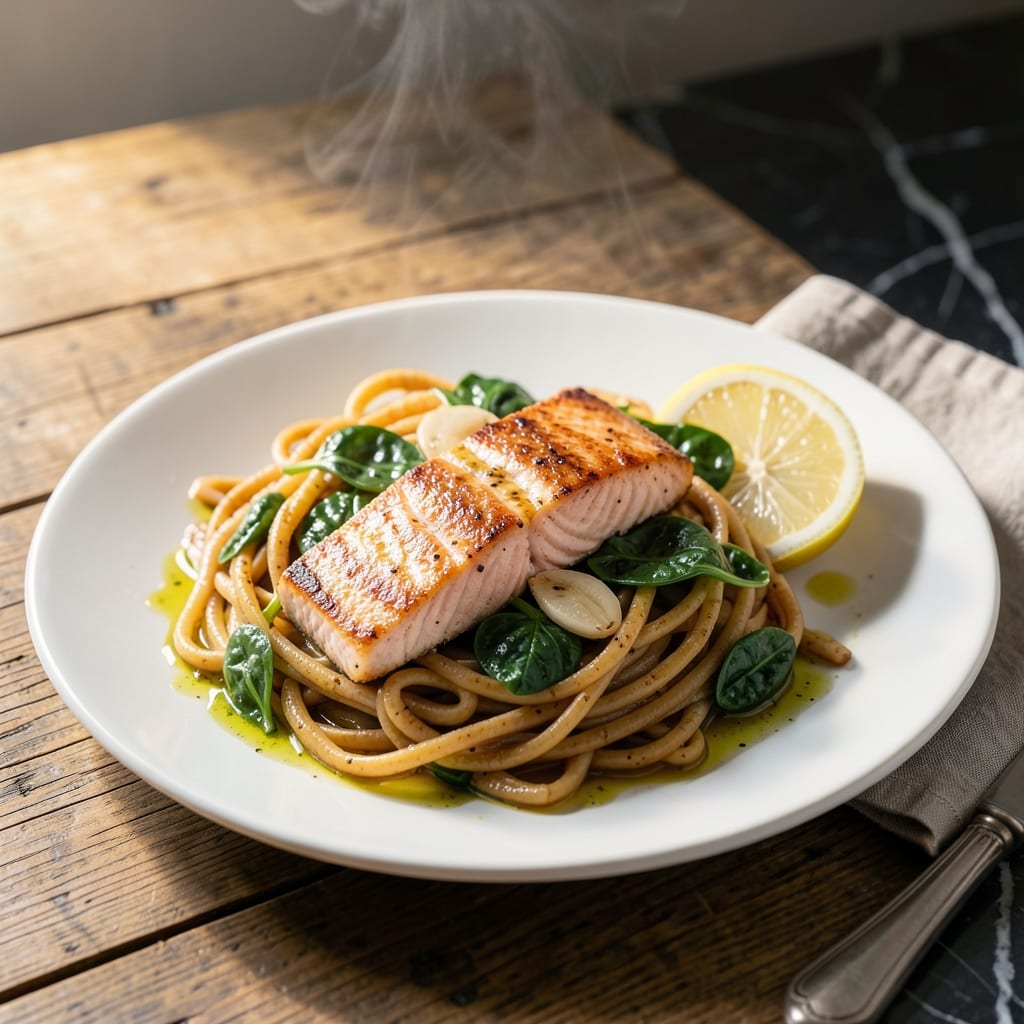
This dish proves healthy eating doesn’t mean sacrificing flavor. I developed this recipe after testing countless variations in my small Boston kitchen, always looking for that perfect balance of nutrition and taste.
The key is using fresh salmon, whole wheat pasta, and a light lemon-garlic sauce that enhances without overpowering. Every ingredient serves a purpose, from the omega-3 rich fish to the bright citrus that cuts through richness.
What you get is a satisfying meal that’s as good for you as it is delicious. The salmon stays tender, the pasta soaks up the sauce, and the garlic adds depth without heaviness.
Ready in 30 minutes, it’s a weeknight solution that feels special. Here’s how to make it.
Ingredients for Salmon Pasta Recipe Healthy
Fresh salmon, whole wheat pasta, and bright lemon-garlic come together beautifully here.
| Ingredient | Amount | Notes |
|---|---|---|
| Whole Wheat Pasta 🍝 | 12 oz | Any short shape works well |
| Fresh Salmon Fillets 🐟 | 1 ½ lb | Skin-on or skinless, boneless |
| Extra-Virgin Olive Oil 🫒 | 3 tbsp | Divided for cooking and sauce |
| Garlic Cloves 🧄 | 4 cloves | Minced for maximum flavor |
| Fresh Lemon 🍋 | 2 whole | Zested and juiced |
| Fresh Spinach 🥬 | 4 cups | Baby spinach preferred |
| Low-Sodium Chicken Broth 💧 | ½ cup | Or substitute vegetable broth |
| Grated Parmesan Cheese 🧀 | ½ cup | Freshly grated for best texture |
| Fresh Parsley 🌿 | ¼ cup | Chopped for garnish |
| Salt 🧂 | 1 tsp | Sea salt or kosher preferred |
| Black Pepper 🌶️ | ½ tsp | Freshly ground for best flavor |
| Red Pepper Flakes 🔥 | ¼ tsp | Optional for heat |
[recipe_ingredient_scaler]
The salmon is the star—look for wild-caught at Whole Foods or Market Basket (the one near my Boston apartment always has great quality). Whole wheat pasta soaks up sauce better than white, and Barilla or De Cecco hold their shape well. For the lemon, grab ones that feel heavy for their size—they’ll give you more juice.
No fresh salmon? Frozen works in a pinch (just thaw overnight in the fridge). Out of whole wheat? Regular pasta is fine, but it won’t have that nutty bite. The Parmesan can be swapped for Pecorino Romano—it’s saltier, so use a bit less. If spinach isn’t your thing, try baby kale or arugula instead.
Leftovers keep for 3-4 days in the fridge—salmon stays tender if you store it gently. The sauce will thicken as it cools, so add a splash of broth when reheating. Freezes beautifully for up to 3 months if you omit the pasta (cook fresh when serving).
Why You’ll Love This Recipe
- One Pan Wonder: I love that everything cooks together—pasta, salmon, and that garlicky olive oil—so cleanup is a breeze.
- Bright & Zesty: The fresh lemon and garlic make the salmon taste so vibrant, it never feels heavy.
- Meal Prep Star: It reheats beautifully, so I pack leftovers for lunch the next day without a second thought.
- Budget Friendly: Honestly, a little salmon goes a long way when paired with whole wheat pasta and simple pantry staples.
Step-by-Step Instructions for Salmon Pasta
This method keeps the dish light yet flavorful while locking in all those healthy omega-3s.
Step 1: Cook the Whole Wheat Pasta
Bring a large pot of salted water to a rolling boil. Add the 12 oz whole wheat pasta and cook according to package directions until al dente. I always taste-test a minute before the suggested time—whole wheat can turn mushy quickly.
Reserve ½ cup of pasta water before draining. This starchy liquid is your secret weapon for creating a silky sauce later. Drain the pasta but don’t rinse it; the surface starch helps the sauce cling better.
Step 2: Pan-Sear the Salmon Fillets
While the pasta cooks, heat 1 tbsp extra-virgin olive oil in a large skillet over medium-high heat. Season the 1.5 lb fresh salmon fillets with ½ tsp salt and ¼ tsp black pepper. Here’s the thing—salmon cooks fast, so don’t walk away.
Add the fillets skin-side up and sear for 4-5 minutes until the bottom is golden brown and crispy. Flip carefully and cook for another 2-3 minutes until the salmon flakes easily with a fork. Transfer to a plate—it’ll stay warm while you finish the dish.
Step 3: Sauté Aromatics and Spinach
In the same skillet, add the remaining 2 tbsp extra-virgin olive oil. Sauté the 4 cloves minced garlic cloves for 30 seconds until fragrant. Toss in the 4 cups fresh spinach and cook until just wilted, about 2 minutes.
Pour in the ½ cup low-sodium chicken broth and the juice from 1 fresh lemon. Let it simmer for 1-2 minutes to meld the flavors. If you like heat, sprinkle in the ¼ tsp red pepper flakes now.
Step 4: Combine Everything and Finish
Return the drained pasta to the skillet with the spinach mixture. Add ½ cup grated parmesan cheese and the remaining lemon juice (from the second fresh lemon). Toss everything together, adding reserved pasta water 1 tbsp at a time until the sauce coats the pasta beautifully.
Gently flake the seared salmon into large chunks and fold them into the pasta. Taste and adjust seasoning with the remaining ½ tsp salt and ¼ tsp black pepper if needed. Garnish with the ¼ cup chopped fresh parsley just before serving.
Pro Tips For Making Salmon Pasta Recipe Healthy
- Skin-Side Down First: Start the salmon fillets skin-side down in a hot pan with olive oil—this guarantees crispy skin and prevents sticking. I learned this the hard way after peeling half the fillet off the pan in my first few attempts.
- Salt the Pasta Water: Use about 1 tablespoon of salt per 4 quarts of water for the whole wheat pasta. Sounds like a lot, but it seasons the pasta itself, not just the surface.
- Skip Overcooked Salmon: Pull the salmon off the heat when it’s still slightly translucent in the center—it’ll finish cooking while resting. My grandmother swore by this, and she was right: dry salmon ruins the dish.
- Zest Before Juicing: Grate the lemon zest before cutting it open for juice. It adds a bright, aromatic punch to the sauce that juice alone can’t deliver. I was skeptical until I tried it—now I never skip it.
Essential Equipment for This Dish
Essential Skillet
I always reach for my 12-inch stainless steel skillet—it’s the workhorse in my small Boston kitchen. A good skillet distributes heat evenly, which is crucial for searing salmon without hot spots. I love All-Clad for its durability, but any heavy-bottomed pan works. 💪
Large Pasta Pot
For the 12 oz whole wheat pasta, you need a pot that can hold at least 5 quarts of water. I use a stainless steel stockpot with a tight-fitting lid. The pasta needs room to move while cooking, and a large pot prevents sticky clumps.
Sharp Chef’s Knife
A 8-inch chef’s knife makes quick work of mincing the 4 cloves garlic and chopping the ¼ cup fresh parsley. I’ve had my Wüsthof for years—it’s still my go-to. Keep it sharp; a dull knife is more dangerous than a sharp one.
Microplane for Zest
For the 2 fresh lemons, a Microplane grater extracts the maximum zest with minimal effort. The fine holes create fluffy zest that melts into the dish. I also use it for Parmesan when I’m feeling fancy.
Tongs for Flipping
Salmon can be delicate when flipping, so I use 12-inch locking tongs. They give me the control to turn the fillets without breaking them. Look for ones with silicone tips to avoid scratching your skillet. 🍋
Wooden Spoon
A wooden spoon is perfect for stirring the sauce and tossing the pasta without damaging your cookware. It also won’t conduct heat, so it’s safe to leave in the pan while you work. I keep one in every size for different tasks.
Nutrition Facts
Frequently Asked Questions
Can I use frozen salmon for this?
Yes, thaw it overnight in the fridge first. Pat it very dry before cooking to get a good sear.
What if I don’t have whole wheat pasta?
Regular pasta works fine, but reduce cooking time by 1-2 minutes. The dish will be slightly less nutty in flavor.
How do I prevent the salmon from breaking apart?
Use a spatula to flip, not tongs. Sear it skin-side down first for 4-5 minutes to create a crust.
Can I make this ahead of time?
Store components separately in the fridge for up to 2 days. Reheat gently, adding a splash of broth to revive.

Trained in classic French technique but raised on slow-cooked ribs and spicy rubs, she blends culinary skill with smoke and soul.
- Best Smoked Oxtail Recipe: Deep-Rich Flavor After Low-and-Slow Cooking - October 14, 2026
- Pit Boss Smoked Prime Rib Roast Recipe: Bark-to-Bone Crispness in 4 Hours - October 14, 2026
- Smoked Tuna Steak Recipe: Seared Crust Meets Silky Centers - October 14, 2026