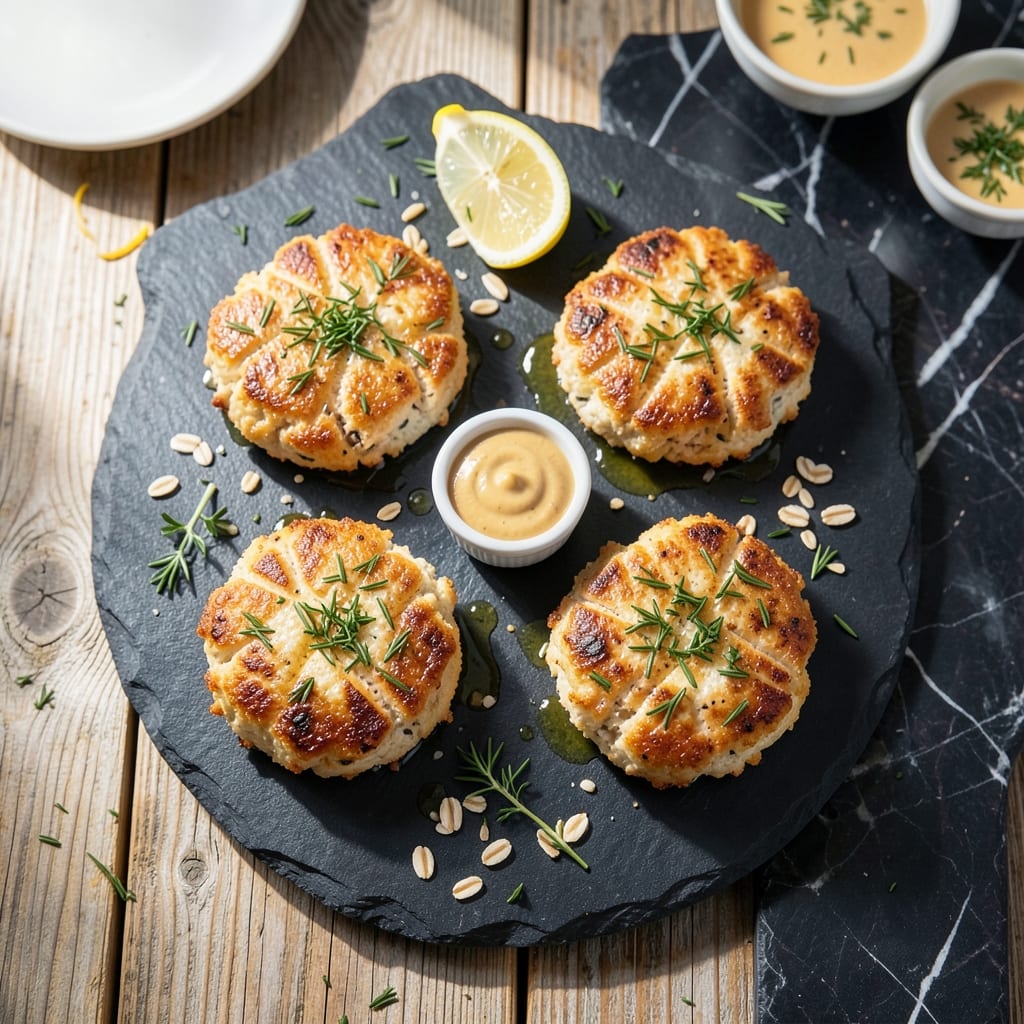
I developed this method after years of testing different binders and cooking techniques to achieve the ideal texture. The combination of canned salmon with simple pantry staples creates a dish that’s both economical and impressive.
The secret lies in draining the salmon thoroughly and using just enough binder to hold the patties together without making them dense. A hot skillet ensures crispy edges while keeping the centers flaky and moist.
These patties come together quickly with minimal effort, making them perfect for weeknight dinners. The result is a golden exterior giving way to tender, flavorful salmon that holds its shape beautifully.
Serve them hot with lemon wedges or your favorite sauce. This approach delivers consistent results every time.
Ingredients for Salmon Patties Recipe with Canned Salmon
Canned salmon meets pantry staples for crispy, flaky patties ready in minutes.
| Ingredient | Amount | Notes |
|---|---|---|
| Canned Salmon 🐟 | 2 cans | Wild-caught, drained and flaked |
| Large Eggs 🥚 | 2 whole | Lightly beaten for binding |
| Old-Fashioned Oats 🌾 | ½ cup | Quick oats work too |
| All-Purpose Flour 🌾 | ¼ cup | For light crispiness |
| Dijon Mustard 🟡 | 2 tbsp | Or regular yellow mustard |
| Lemon Juice 🍋 | 1 tbsp | Freshly squeezed preferred |
| Green Onions 🧅 | ¼ cup | Finely chopped, whites and greens |
| Fresh Dill 🌿 | 2 tbsp | Chopped, or 2 tsp dried |
| Salt 🧂 | ½ tsp | Or to taste |
| Black Pepper 🌶️ | ¼ tsp | Freshly ground preferred |
| Olive Oil 🫒 | ¼ cup | For frying patties |
| Garlic Powder 🧄 | ½ tsp | Or 1 clove fresh minced |
| Worcestershire Sauce 💧 | 1 tsp | Vegan version if needed |
| Lemon Wedges 🍋 | 4 pieces | For serving |
[recipe_ingredient_scaler]
The salmon is the star here. Wild-caught canned salmon (like Alaska or Trident brands) has better flavor and texture than farmed. Drain it thoroughly—squeeze out every bit of liquid in a fine-mesh strainer. This keeps the patties from falling apart. I grab mine at Costco or Trader Joe’s for the best prices. Look for skinless, boneless varieties to save time (or pick out the bones yourself—it’s easy).
No Dijon? Regular yellow mustard works fine, or skip it entirely if you’re out. Out of fresh dill? Dried dill at one-third the amount gets you close. Oats not in the pantry? Crushed saltine crackers or breadcrumbs are great substitutes. The egg can be swapped for a flax egg (1 tbsp ground flax + 3 tbsp water) if you need it binder-free. And if you’re avoiding fish sauce in Worcestershire, soy sauce adds a similar umami kick.
Patties keep in the fridge for 2 days (they’re best fresh, though). To freeze, cook them first, then cool completely before wrapping individually. They’ll last up to 3 months frozen. Reheat in a skillet or oven—microwave makes them soggy (and nobody wants that).
Why You’ll Love This Recipe
- No-Fuss Mixing: I just dump the canned salmon, oats, egg, and Dijon in a bowl—no chopping, no pre-cooking, and they come together in minutes.
- Crave-Worthy Crisp: That Dijon mustard gives them a tangy kick, while the oats keep the inside tender and the outside perfectly golden.
- Meal Prep Hero: I make a double batch on Sunday and reheat them all week—great in wraps, on salads, or straight from the fridge.
- Pantry Savior: Honestly, I always have these ingredients on hand, and it’s way cheaper than fresh salmon but just as satisfying.
Step-by-Step Instructions for Salmon Patties
Here’s how I achieve that perfect balance of crispy edges and tender, flaky centers every time.
Step 1: Prepare and Mix the Salmon Base
Start by draining the 2 cans Canned Salmon thoroughly and flaking it into a large bowl with a fork. I like to remove any visible skin or bones, though wild-caught varieties usually have fewer to pick through.
Add the 2 whole Large Eggs, 0.5 cup Old-Fashioned Oats, 0.25 cup All-Purpose Flour, 2 tbsp Dijon Mustard, 1 tbsp Lemon Juice, 0.25 cup Green Onions, 2 tbsp Fresh Dill, 0.5 tsp Salt, 0.25 tsp Black Pepper, 0.5 tsp Garlic Powder, and 1 tsp Worcestershire Sauce.
Mix gently just until combined—overmixing will make the patties dense. The mixture should hold together when pressed but still be slightly loose.
Step 2: Shape and Chill the Patties
Divide the salmon mixture into 4 equal portions (about ½ cup each) and shape them into patties roughly ¾-inch thick. I find using my hands works best, but wet them slightly to prevent sticking.
Place the patties on a plate and refrigerate for 15-20 minutes. This chilling step is crucial—it helps the patties hold their shape during frying and prevents them from falling apart in the pan. You’ll notice they firm up significantly after resting.
Step 3: Pan-Fry to Golden Perfection
Heat the 0.25 cup Olive Oil in a large skillet over medium heat until it shimmers. You want it hot enough to sizzle when the patties hit the pan, but not smoking. Carefully place the chilled patties in the oil, leaving space between them.
Cook for 4-5 minutes per side until deep golden brown and crispy. Watch for the edges to turn that perfect shade of brown—that’s your visual cue to flip. Press down lightly with a spatula during the first minute to ensure even contact with the pan, but don’t press too hard or you’ll squeeze out the moisture.
Step 4: Drain and Serve with Fresh Garnish
Transfer the cooked patties to a paper towel-lined plate to drain any excess oil. I always let them rest for 2-3 minutes before serving—this allows the interior to set slightly while keeping the exterior crisp.
Serve immediately with the 4 pieces Lemon Wedges on the side for a bright, zesty finish. The acid from the lemon cuts through the richness beautifully. Each patty should have a crispy, golden crust giving way to a flaky, moist interior that holds together perfectly.
Pro Tips For Making Salmon Patties Recipe With Canned Salmon
- Drain the Salmon: Press the canned salmon in a fine-mesh strainer for 30 seconds to remove excess liquid—I learned this the hard way after my first batch fell apart in the pan.
- Chill Before Cooking: Let the patty mixture rest in the fridge for 15-20 minutes so the oats absorb moisture and bind everything together.
- Skip Overmixing: Fold the ingredients just until combined; overworking the mixture makes the patties dense and tough.
- Use Medium Heat: Cook the patties over medium heat with about 2 tablespoons of oil to get a golden crust without burning the outside before the inside cooks.
Make-Ahead Tips for This salmon patties recipe with canned salmon
Prep Ahead Strategy
Mix your salmon base and shape patties up to 24 hours in advance. Store them covered in the fridge on a plate separated by parchment. This lets flavors meld while keeping the texture perfect. 💡
Chill Before Cooking
Even if prepping ahead, always chill shaped patties for at least 15 minutes before frying. This prevents crumbling in the pan. I learned this the hard way after my first few fell apart.
Freezer-Friendly Method
Cook patties completely, cool on a rack, then freeze between parchment sheets in a ziplock bag. They’ll keep for 3 months. This works better than freezing raw.
Reheating Techniques
For best results, thaw frozen patties overnight. Reheat in a skillet over medium heat for 3-4 minutes per side until crispy. The microwave works in a pinch but sacrifices texture.
Day-Of Shortcut
If short on time, mix ingredients the night before but shape patties morning-of. The egg binder needs fresh contact with dry ingredients for optimal hold.
Make-Ahead Sauce
Combine Dijon mustard with extra lemon juice and a touch of honey for a quick dipping sauce. This keeps for 1 week in the fridge. 🍋
Nutrition Facts
Frequently Asked Questions
Can I use fresh salmon instead of canned?
Yes, but cook and flake 1 lb fresh salmon first. Canned salmon’s pre-cooked texture works better for binding, so fresh may need extra 1-2 tbsp flour or egg.
Why do my patties fall apart when frying?
Usually from not draining the salmon well or skipping the 15-20 minute chill. Press out all liquid and ensure the oil is hot before adding patties.
What’s a good egg substitute for binding?
A flax egg (1 tbsp ground flax + 3 tbsp water) works well. Let it thicken for 5 minutes before mixing into the salmon base.
How do I know when they’re done cooking?
Look for deep golden brown edges and a firm texture when pressed. Cook 4-5 minutes per side over medium heat.

Trained in classic French technique but raised on slow-cooked ribs and spicy rubs, she blends culinary skill with smoke and soul.
- Smoked Teriyaki Beef Jerky Recipe: Umami-Deep Flavor in Every Chewy Bite - October 15, 2026
- Stewed Beef Brisket Recipe: Deep-Rich Flavor After 8 Hours of Slow Simmering - October 15, 2026
- Beef Brisket Rolls Recipe: Flaky Layers and Smoky Sweet Filling - October 15, 2026