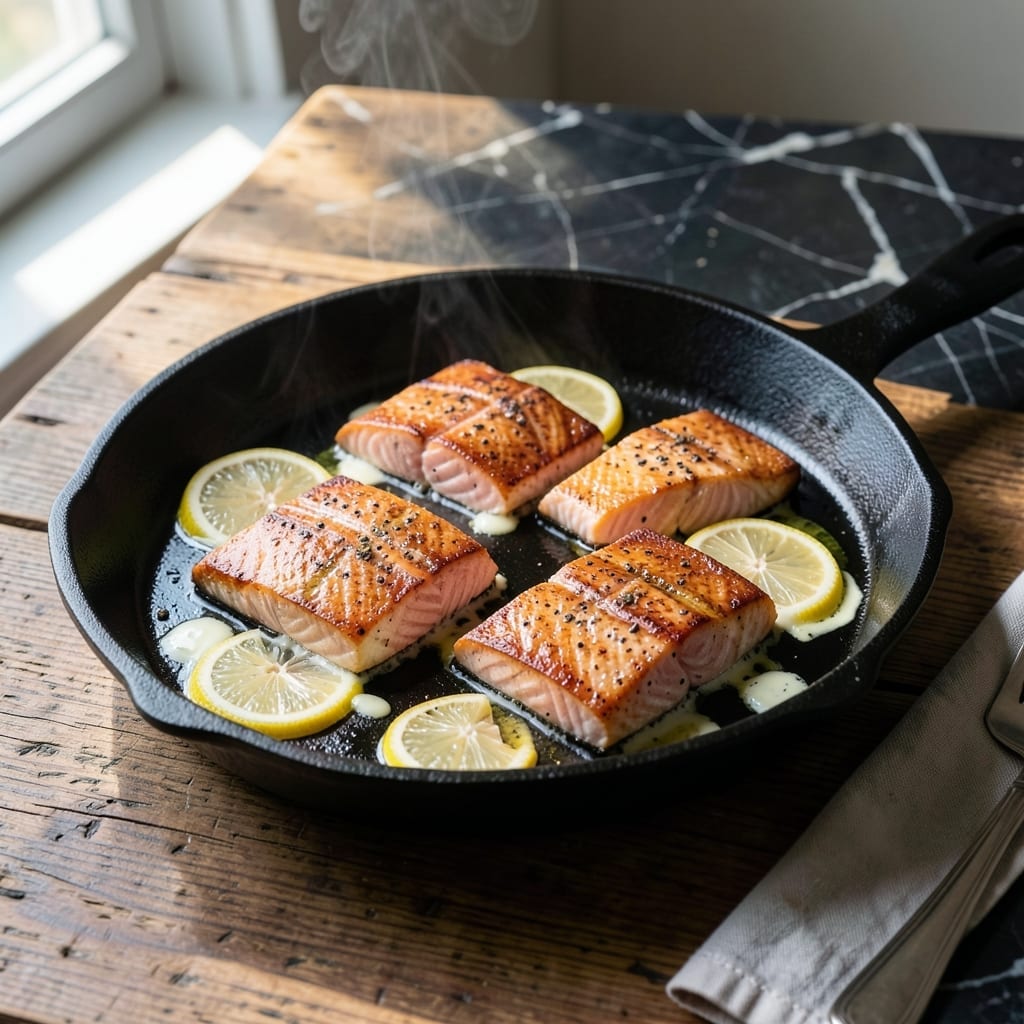
Mastering pan-seared salmon with crispy skin is a game-changer for home cooks. This method delivers restaurant-quality results with minimal effort and maximum flavor.
The key lies in proper heat control and patience. Start with a cold pan and dry salmon skin to ensure even browning without sticking. The lemon herb finish adds a bright, fresh contrast to the rich fish.
You’ll achieve perfectly cooked fillets with golden, shatteringly crispy skin and tender, flaky flesh. The technique works consistently with just a few simple steps and standard kitchen tools.
Serve immediately for the best texture. This approach transforms everyday salmon into something extraordinary.
Ingredients for Salmon Recipe Pan
Quality salmon and fresh herbs create this restaurant-worthy dish with minimal ingredients.
| Ingredient | Amount | Notes |
|---|---|---|
| Salmon Fillets 🐟 | 4 pieces | Skin-on, 6-8 oz each, patted dry |
| Kosher Salt 🧂 | 1 tsp | Diamond Crystal preferred for even seasoning |
| Freshly Ground Black Pepper 🌶️ | ½ tsp | Coarse grind for texture |
| Olive Oil 🫒 | 2 tbsp | High smoke point variety |
| Unsalted Butter 🧈 | 2 tbsp | Cold, cubed for basting |
| Fresh Lemon 🍋 | 1 whole | Zested and juiced, about 2 tbsp juice |
| Fresh Thyme Sprigs 🌿 | 4 sprigs | Stems removed, leaves only |
| Fresh Rosemary Sprig 🍃 | 1 sprig | Finely chopped, about 1 tbsp |
| Garlic Cloves 🧄 | 2 cloves | Minced for aromatic base |
| Shallot 🧅 | 1 whole | Finely diced, about 2 tbsp |
[recipe_ingredient_scaler]
The salmon quality is paramount here. Wild-caught sockeye or king salmon yields the best texture and flavor for pan-searing. Look for fillets with vibrant color and no fishy odor—Whole Foods or local seafood markets are ideal sources. Ensure the skin is intact and scales have been removed. For consistent results, select fillets of uniform thickness (about 1 inch).
Substitutions are limited but possible. Skin-off fillets work but won’t achieve the same crispiness—add extra oil to compensate. If fresh herbs aren’t available, dried at one-third the amount works, though the flavor profile will be less bright. Vegetable oil can replace olive oil if needed, but avoid butter substitutes as they lack the necessary milk solids for proper basting.
Store salmon in the coldest part of your refrigerator and use within 2 days for optimal freshness. The finished dish is best served immediately but can be gently reheated in a 300°F oven for 8-10 minutes. Leftovers keep for 1 day refrigerated—reheating beyond this compromises texture.
Why You’ll Love This Recipe
- One Pan Wonder: I toss the salmon in, let the butter and olive oil work their magic, and dinner’s done in one go.
- Buttery Perfection: That rich, golden butter bath with a crack of black pepper? It turns simple salmon into something restaurant-worthy.
- Weeknight Hero: It’s my go-to for busy evenings—ready before the kids start asking what’s for dinner.
- Leftovers Win: Honestly, cold salmon on salad the next day tastes just as good, if not better.
Step-by-Step Instructions for Pan-Seared Salmon
Master the technique for perfectly crispy skin and flaky, moist fillets every time.
Step 1: Season and Prepare the Salmon Fillets
Pat the 4 pieces salmon fillets completely dry with paper towels, ensuring no moisture remains on the skin or flesh. This is the first and most critical step for achieving that coveted crispiness. Season both sides evenly with the 1 tsp kosher salt and 0.5 tsp freshly ground black pepper, pressing the seasoning gently into the surface.
Let the seasoned fillets sit at room temperature for 10-15 minutes while you prepare the remaining ingredients. This allows the salt to penetrate slightly and the fish to cook more evenly. Meanwhile, remove the stems from the 4 sprigs fresh thyme sprigs and finely chop the 1 sprig fresh rosemary sprig.
Step 2: Sear the Skin Side for Maximum Crispiness
Heat the 2 tbsp olive oil in a large skillet over medium-high heat until it shimmers but doesn’t smoke. Place the fillets skin-side down in the pan, ensuring they’re not crowded. Press down gently with a fish spatula for the first 10 seconds to prevent curling and ensure full contact with the pan.
Cook undisturbed for 5-6 minutes until the skin is deep golden brown and crisp. You’ll notice the edges becoming opaque and the skin lifting slightly from the pan when it’s ready to flip. Resist the urge to move them—this is how you get that perfect crispy texture.
Step 3: Finish Cooking and Infuse with Aromatics
Flip the fillets and immediately add the 2 tbsp unsalted butter, minced 2 cloves garlic cloves, and finely diced 1 whole shallot to the pan. As the butter melts, tilt the pan slightly and use a spoon to baste the fish with the foaming butter, garlic, and shallot mixture for the remaining 3-4 minutes of cooking.
Sprinkle the chopped thyme and rosemary over the fillets during the last minute of cooking. The herbs will crisp slightly in the hot butter, infusing the fish with their aromatic oils. The salmon is done when it flakes easily with a fork and reaches an internal temperature of 145°F.
Step 4: Rest and Serve with Lemon Finish
Transfer the fillets to a warm plate, skin-side up to preserve crispiness. Squeeze the juice from the 1 whole fresh lemon over the top and garnish with any remaining herbs from the pan. The acidity from the lemon cuts through the richness of the butter and enhances the natural flavors of the fish.
Let the salmon rest for 2-3 minutes before serving. This brief rest allows the juices to redistribute throughout the fillets, ensuring each bite is moist and flavorful. Serve immediately while the skin is still crisp and the herbs are fragrant.
Pro Tips For Making Salmon Recipe Pan
- Dry the Fillets: Pat the salmon fillets completely dry with paper towels before seasoning—this guarantees a good sear instead of steaming in the pan.
- Hot Pan, Cold Oil: Heat the pan until very hot, then add the olive oil right before adding the salmon to prevent the oil from burning.
- Skin Side Down First: Start with the skin side down in the pan for 4-5 minutes to render the fat and crisp it up before flipping.
- Baste with Butter: Tilt the pan slightly and spoon the melted butter over the salmon repeatedly for the last 2 minutes to add flavor and moisture.
Perfect Pairings for salmon recipe pan
Wine Pairings
A crisp Sauvignon Blanc from New Zealand pairs beautifully with this dish, as its bright acidity complements the lemon herb finish. I recommend Kim Crawford or Oyster Bay for their consistent quality and citrus notes that echo the lemon in the recipe. 🍷
Beer Options
A light Belgian witbier like Hoegaarden or Blue Moon offers a refreshing contrast to the rich, buttery salmon. The citrus and coriander notes in the beer harmonize with the herbs, while the effervescence cleanses your palate between bites.
Side Dish Ideas
Serve with a simple asparagus salad—toss blanched spears with 1 tbsp olive oil and shaved Parmigiano-Reggiano. Alternatively, roasted baby potatoes with rosemary and garlic make a hearty, complementary pairing that soaks up the pan juices.
Starch Pairings
Jasmine rice or couscous works wonderfully as a neutral base to let the salmon shine. For a more flavorful option, try wild rice pilaf with toasted almonds. I often use Lundberg Family Farms for their high-quality grains.
Vegetable Sides
Sautéed spinach with garlic and a squeeze of lemon mirrors the flavors in your main dish. Or try roasted Brussels sprouts with a balsamic glaze—their caramelized edges add a nice textural contrast to the tender salmon. 🌱
Bread Options
A crusty baguette or sourdough is perfect for soaking up any leftover butter and herb sauce. Warm the bread in a 350°F oven for 5 minutes before serving. I prefer Acme Bread Company for their artisan quality.
Nutrition Facts
Frequently Asked Questions
Why pat the salmon dry before cooking?
Moisture causes steam, preventing crispy skin. Thoroughly patting dry ensures even browning and that coveted shatteringly crispy texture. Think of it as the foundation for perfect pan-searing.
What heat level works best for searing?
Use medium-high heat to achieve a deep golden crust without burning the butter. Too high heat can scorch the herbs, while too low results in soggy skin. Consistency is key for restaurant-quality results.
Can I use frozen salmon?
Yes, but thaw overnight in the fridge first. Pat extra dry since frozen fish releases more moisture. Never cook from frozen—it leads to uneven cooking and rubbery texture.
How do I prevent the salmon from sticking?
Ensure your pan is very hot before adding the fish, and don’t move the fillets for at least 5 minutes. The skin will release naturally when it’s ready to flip. Patience pays off here!

Trained in classic French technique but raised on slow-cooked ribs and spicy rubs, she blends culinary skill with smoke and soul.
- Best Smoked Oxtail Recipe: Deep-Rich Flavor After Low-and-Slow Cooking - October 14, 2026
- Pit Boss Smoked Prime Rib Roast Recipe: Bark-to-Bone Crispness in 4 Hours - October 14, 2026
- Smoked Tuna Steak Recipe: Seared Crust Meets Silky Centers - October 14, 2026