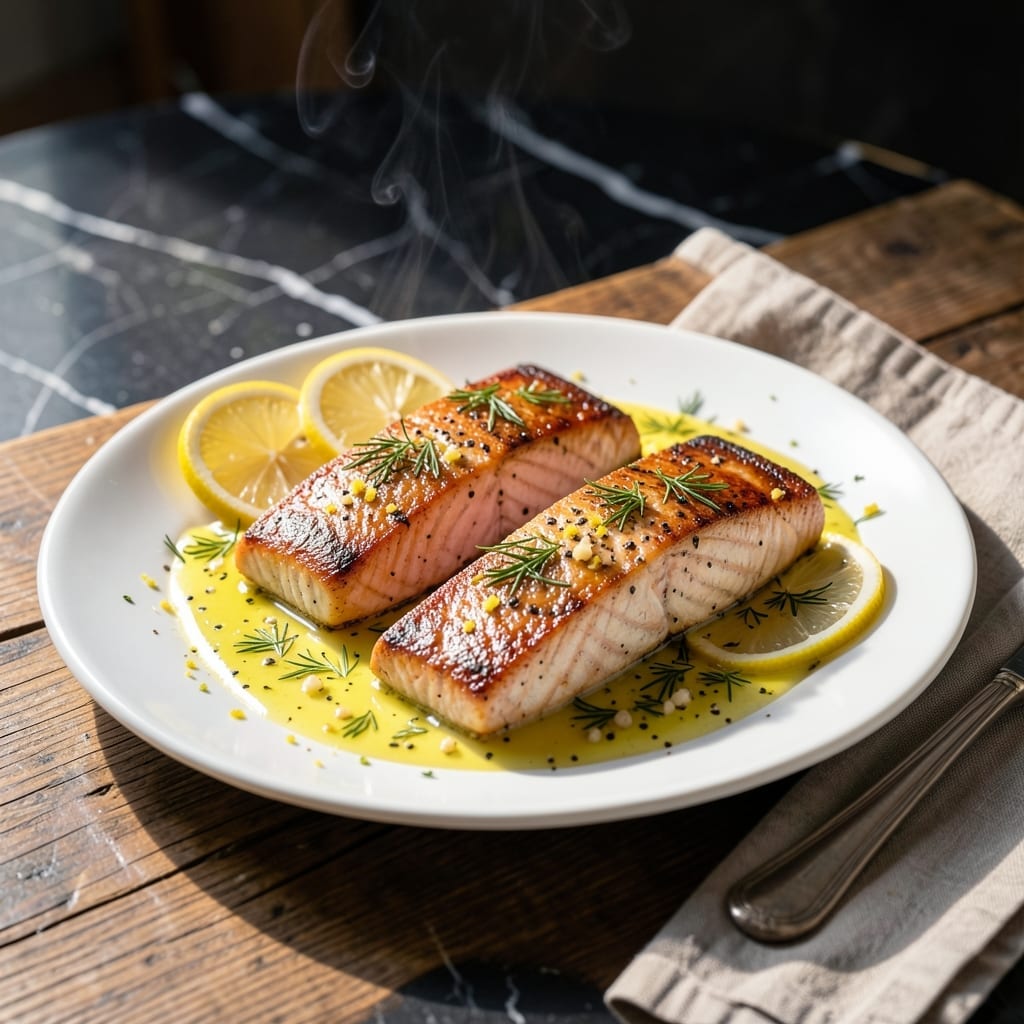
This pan-seared lemon salmon delivers restaurant-quality results with minimal effort. The citrus brightens the rich fish, creating a balanced dish that feels special yet simple.
I developed this method to maximize flavor while keeping the process streamlined. A hot pan ensures a golden crust, while the lemon butter sauce adds a silky finish in minutes.
The result is tender, flaky salmon with a vibrant, tangy glaze. The technique is foolproof, making it perfect for weeknight dinners or impressive meals.
Serve with roasted vegetables or a fresh salad for a complete, bright and satisfying meal.
Ingredients for Lemon Salmon Recipe Pan
Restaurant-quality ingredients deliver bright citrus flavor in minutes with minimal effort.
| Ingredient | Amount | Notes |
|---|---|---|
| Salmon Fillets 🐟 | 1 ½ lb | Skin-on, center-cut preferred |
| Unsalted Butter 🧈 | 6 tbsp | Divided for cooking and sauce |
| Fresh Lemon Juice 🍋 | ¼ cup | From 2-3 large lemons |
| Lemon Zest 🍋 | 1 tbsp | Finely grated from fresh lemons |
| Garlic Cloves 🧄 | 3 cloves | Minced for sauce |
| Fresh Dill 🌿 | 2 tbsp | Chopped, for garnish |
| Fresh Parsley 🌿 | 2 tbsp | Chopped, for garnish |
| Olive Oil 🫒 | 2 tbsp | For searing salmon |
| Kosher Salt 🧂 | 1 tsp | Diamond Crystal preferred |
| Black Pepper 🌶️ | ½ tsp | Freshly ground for best flavor |
| Dijon Mustard 🟡 | 1 tsp | For depth in sauce |
| Shallot 🧅 | 1 whole | Finely diced for sauce |
| White Wine 🍷 | ¼ cup | Dry variety for deglazing |
[recipe_ingredient_scaler]
The salmon quality is paramount for this dish. Wild-caught sockeye or king salmon offers the best flavor and texture. Source from reputable seafood counters at Whole Foods or local fishmongers—look for fillets with vibrant color and no fishy odor. Skin-on fillets provide structure and prevent the fish from sticking during searing. The butter should be European-style for superior richness in the sauce.
Substitute ghee for butter if avoiding dairy. No white wine? Use chicken or vegetable stock with a splash of lemon juice for deglazing. Fresh herbs are ideal, but dried dill or parsley at one-third the amount works in a pinch. Shallots can be replaced with red onion for a slightly sharper flavor. For a non-alcoholic option, apple cider vinegar provides similar acidity.
Store raw salmon in the coldest part of your refrigerator and use within 1-2 days of purchase. Cooked salmon keeps for 3-4 days when refrigerated in an airtight container. The lemon butter sauce can be prepared separately and stored for up to 1 week—reheat gently to avoid separation.
Why You’ll Love This Recipe
- One Pan Magic: I toss the salmon, butter, and garlic in a single pan—no messy stacks of dishes afterward.
- Bright and Zesty: That punch of fresh lemon juice and zest cuts through the rich salmon like a dream.
- Weeknight Hero: Honestly, it’s my 20-minute dinner lifesaver when the fridge is otherwise bare.
- Leftovers Win: The flavors deepen overnight, so lunch the next day tastes even better.
Step-by-Step Instructions for Lemon Salmon
Master this technique for perfectly cooked fillets with vibrant citrus notes.
Step 1: Prepare and Season the Salmon
Pat the 1.5 lb Salmon Fillets completely dry with paper towels to ensure optimal browning. Place them on a plate and season both sides evenly with 1 tsp Kosher Salt and 0.5 tsp Black Pepper. I always use Diamond Crystal kosher salt for its clean, consistent flavor.
Let the seasoned fillets sit at room temperature for 10 minutes while you prepare the remaining ingredients. This brief rest allows the salt to penetrate slightly, enhancing the natural flavor of the fish without overpowering it.
Step 2: Sear the Salmon to Golden Perfection
Heat 2 tbsp Olive Oil in a large skillet over medium-high heat until it shimmers but doesn’t smoke. Carefully place the salmon fillets skin-side down in the hot pan. Press down gently with a fish spatula for 10 seconds to prevent curling and ensure even contact with the pan.
Cook undisturbed for 4-5 minutes until the skin is crisp and golden brown. You’ll know it’s ready to flip when the edges appear opaque and the fillet releases easily from the pan. Flip and cook for another 2-3 minutes until the salmon is just cooked through but still tender.
Step 3: Create the Lemon Garlic Butter Sauce
Reduce heat to medium and add 2 tbsp Unsalted Butter to the same skillet. Once melted, add the finely diced 1 whole Shallot and minced 3 cloves Garlic Cloves. Sauté for 1-2 minutes until fragrant but not browned.
Pour in 0.25 cup White Wine and 0.25 cup Fresh Lemon Juice, scraping up any browned bits from the bottom of the pan. Add 1 tbsp Lemon Zest and 1 tsp Dijon Mustard, then whisk in the remaining 4 tbsp Unsalted Butter one piece at a time until the sauce is smooth and slightly thickened.
Step 4: Finish and Garnish
Return the salmon fillets to the skillet, spooning the lemon butter sauce over each piece. Simmer for 1 minute to allow the flavors to meld and the fish to absorb some of the sauce. The salmon should flake easily with a fork and have an internal temperature of 145°F.
Transfer the fillets to serving plates and drizzle with the remaining sauce. Garnish with chopped 2 tbsp Fresh Dill and 2 tbsp Fresh Parsley for a pop of color and fresh herbal notes. Serve immediately while the sauce is still glossy and fragrant.
Pro Tips For Making Lemon Salmon Recipe Pan
- Skin Down First: Always sear the salmon skin-side down first in a hot pan—this guarantees crispy skin and prevents sticking. I learned this the hard way after peeling half the fillet off the pan mid-flip.
- Room Temp Salmon: Pull the salmon out of the fridge 15 minutes before cooking. Cold fillets seize up in the pan and cook unevenly, leaving you with dry edges and a raw center.
- Zest Before Juicing: Grate the lemon zest first, then cut it in half for juicing. Sounds obvious, but I used to juice first and end up with a slippery, hard-to-zest rind.
- Butter Last: Add the butter, garlic, and lemon juice only in the last 2 minutes of cooking to avoid burning the butter. This keeps the sauce rich and golden instead of bitter and blackened.
Common Mistakes When Making This Recipe
Overcrowding the Pan
Resist the urge to fit all fillets in one batch. I learned this the hard way—crowding lowers pan temperature, causing salmon to steam instead of sear. Use a 12-inch skillet and cook in batches if needed. 2 fillets at a time ensures proper browning.
Cold Salmon in Hot Pan
Never add cold salmon straight from the fridge. The temperature shock causes uneven cooking and potential curling. Let fillets sit at room temperature for 10 minutes after seasoning. This simple step prevents tough, rubbery fish.
Skipping the Dry
Wet salmon won’t brown—it’ll boil in its own moisture. Pat fillets completely dry with paper towels before seasoning. I use 3-4 sheets per fillet to absorb all moisture. This guarantees that beautiful golden crust. 💡
Frequent Flipping
The skin needs time to crisp. Don’t poke or flip constantly. Cook skin-side down for 4-5 minutes undisturbed. When it releases easily, it’s ready to flip. Patience here creates that perfect crispy skin.
Overcooking the Fish
Salmon continues cooking off heat. Remove it when it reaches 140°F internal temperature—it’ll hit 145°F while resting. Use an instant-read thermometer for accuracy. 2-3 minutes per side is usually perfect.
Sauce Separation
High heat can break your lemon butter emulsion. Keep the sauce at a gentle simmer when adding butter. Whisk constantly and add butter 1 tbsp at a time. If it separates, remove from heat and whisk vigorously to re-emulsify. 🔥
Nutrition Facts
Frequently Asked Questions
What type of pan works best?
Use a heavy-bottomed skillet like stainless steel or cast iron for even heat distribution. Avoid nonstick for high-heat searing as it won’t develop the same crust. A 12-inch pan prevents crowding.
Can I use frozen salmon?
Yes, thaw overnight in the fridge first. Pat completely dry before cooking. Never cook from frozen—it’ll steam instead of sear, ruining the texture.
How do I know when it’s done?
Salmon is ready at 145°F internal temperature. Look for opaque flesh that flakes easily with a fork. Remove at 140°F—it’ll finish cooking while resting.
What if my sauce breaks?
Remove from heat and whisk vigorously to re-emulsify. If needed, add 1 tsp cold water while whisking. Keep heat low when adding butter.

Trained in classic French technique but raised on slow-cooked ribs and spicy rubs, she blends culinary skill with smoke and soul.
- Recipe for Boneless Pork Chops in Cast Iron Skillet: Sear and Baste to Juicy Perfection - October 3, 2026
- Recipe for Boneless Cross Rib Roast: Slow-Roasted Beef with Herb Crust - October 3, 2026
- Hamburgers in Sauce Recipe Crock Pot: Slow-Cooked Savory Delight - October 3, 2026