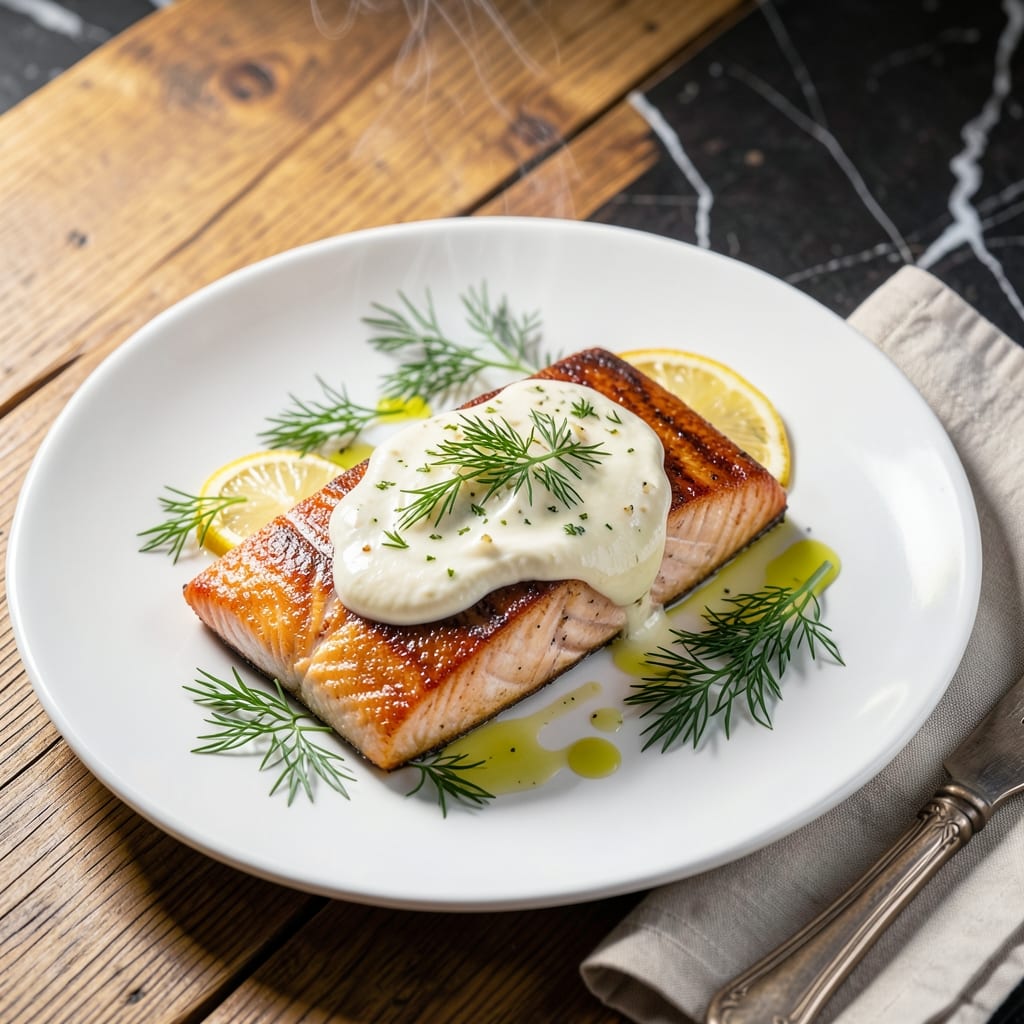
This salmon dish transforms an ordinary weeknight dinner into something extraordinary. I developed this method through multiple tests, ensuring the cream cheese melts into a velvety sauce that perfectly complements the fish.
The secret lies in baking the salmon at 375°F until just flaky, then adding dollops of cream cheese that soften into a rich, creamy topping. It’s a foolproof technique that delivers restaurant-quality results at home.
Each bite offers tender salmon with a luscious, tangy cream cheese layer that blends beautifully with the fish’s natural richness. The flavors are balanced and indulgent without being heavy.
Serve with roasted vegetables or a fresh salad for a complete meal. Here’s how to make it.
Ingredients for Salmon with Cream Cheese
Fresh salmon and a few pantry staples create this elegant dish with minimal effort.
| Ingredient | Amount | Notes |
|---|---|---|
| Salmon Fillets 🐟 | 1 ½ lb | Skin-on or skinless, center-cut preferred |
| Cream Cheese 🧀 | 8 oz | Full-fat, softened to room temperature |
| Lemon 🍋 | 1 whole | Zested and juiced for brightness |
| Fresh Dill 🌿 | ¼ cup | Chopped, stems removed |
| Garlic Cloves 🧄 | 3 cloves | Minced finely for even distribution |
| Olive Oil 🫒 | 2 tbsp | Extra-virgin for superior flavor |
| Dijon Mustard 🟡 | 1 tbsp | Smooth, no seeds for texture |
| Honey 🍯 | 1 tbsp | Or substitute maple syrup |
| Salt 🧂 | 1 tsp | Diamond Crystal kosher for precision |
| Black Pepper 🌶️ | ½ tsp | Freshly ground for maximum aroma |
| Shallot 🧅 | 1 whole | Finely diced for delicate onion flavor |
| White Wine 🍷 | ¼ cup | Dry variety like Sauvignon Blanc |
[recipe_ingredient_scaler]
The salmon quality is paramount here. Wild-caught sockeye or king salmon from Whole Foods or a trusted fishmonger ensures the best texture and flavor. Avoid previously frozen fillets if possible—they can release excess moisture. The cream cheese should be full-fat Philadelphia brand (or equivalent) for that ultra-smooth melt. Never use reduced-fat here; it separates and ruins the sauce.
No white wine? Substitute chicken or vegetable broth with 1 tsp apple cider vinegar. Swap dill for fresh tarragon or chives if preferred. For a tangier sauce, increase the lemon juice by half. The honey can be replaced with agave nectar or maple syrup at a 1:1 ratio. If using frozen salmon, thaw completely and pat dry before seasoning.
This dish holds beautifully for 2-3 days refrigerated in an airtight container. The cream cheese sauce thickens as it cools—reheat gently with a splash of milk to restore creaminess. For best results, consume within 24 hours of preparation.
Why You’ll Love This Recipe
- One Pan Wonder: I toss the salmon, cream cheese, and garlic on a single sheet pan—cleanup’s a breeze.
- Weeknight Hero: Honestly, it’s fancy enough for guests but simple enough for a Tuesday.
- Leftovers? Yes Please: The flavors deepen overnight, so I actually make extra for lunch the next day.
Step-by-Step Instructions for Salmon With Cream Cheese
Master this technique for restaurant-quality results with a velvety sauce that complements the fish beautifully.
Step 1: Prepare the Salmon and Cream Cheese Mixture
Pat the 1.5 lb salmon fillets dry with paper towels to ensure proper searing. Season both sides with 1 tsp salt and 0.5 tsp black pepper. This step is crucial for developing flavor and achieving a golden crust.
In a bowl, combine the 8 oz cream cheese, 1 tbsp Dijon mustard, 1 tbsp honey, zest of the 1 whole lemon, and 0.25 cup fresh dill. Mix until smooth. The cream cheese should be fully softened to room temperature for a lump-free consistency.
Step 2: Sauté Aromatics for Depth of Flavor
Heat 2 tbsp olive oil in a large oven-safe skillet over medium heat. Add the finely diced 1 whole shallot and cook for 2-3 minutes until translucent and fragrant. Avoid browning the shallot—it should soften without color.
Add the minced 3 cloves garlic cloves and cook for an additional 30 seconds until just fragrant. The garlic should not take on any color, as burnt garlic will impart a bitter taste to the dish. Remove the skillet from heat temporarily if needed to control the cooking process.
Step 3: Cook the Salmon and Build the Sauce
Return the skillet to medium-high heat and add the seasoned salmon fillets, skin-side down if applicable. Sear for 4-5 minutes until the bottom develops a golden crust and the fish releases easily from the pan. Flip the fillets and cook for an additional 3-4 minutes until the salmon is opaque and flakes easily with a fork.
Transfer the salmon to a plate and set aside. Reduce the heat to medium-low and deglaze the pan with 0.25 cup white wine, scraping up any browned bits from the bottom. Let the wine reduce by half, about 2-3 minutes.
Step 4: Finish with Cream Cheese Mixture and Lemon
Reduce the heat to low and stir in the cream cheese mixture. Cook, stirring constantly, for 2-3 minutes until the sauce is smooth and slightly thickened. The sauce should coat the back of a spoon but remain pourable.
Return the salmon fillets to the skillet, spooning the sauce over the top. Squeeze the juice from the 1 whole lemon into the sauce and gently stir to combine. Simmer for an additional 1-2 minutes to allow the flavors to meld together.
Step 5: Serve Immediately
Transfer the salmon to serving plates, spooning any remaining sauce over the top. Garnish with additional fresh dill if desired. The salmon should be moist and flaky, with a rich, creamy sauce that enhances its natural flavor.
Serve with crusty bread or steamed vegetables to soak up the delicious sauce. This dish is best enjoyed immediately while the sauce is still warm and velvety.
Pro Tips For Making Salmon With Cream Cheese
- Pat Salmon Dry: I learned this the hard way—moisture on the fillets makes the cream cheese slide right off. A quick pat with paper towels guarantees a better grip for the topping.
- Room Temp Cream Cheese: Sounds weird, but it works: let the cream cheese sit out for 20 minutes before spreading. It blends smoothly into the salmon instead of clumping.
- Skip Overcooking: Salmon keeps cooking after it leaves the oven, so pull it at 130°F internal temp. After burning three batches, I finally figured out timing is everything.
- Zest Before Juicing: My grandmother swore by this, and she was right: grate the lemon zest first, then juice. You’ll get more flavor with half the effort.
Common Mistakes When Making This Recipe
Overcooking the Salmon
Salmon continues cooking after you remove it from heat. Pull it off at 130-135°F internal temperature—it’ll reach 145°F while resting. I learned this the hard way in my tiny Boston kitchen after one too many dry fillets. 💡
Cold Cream Cheese
Using cream cheese straight from the fridge creates lumps in your sauce. Always let it sit at room temperature for 30-60 minutes before mixing. I recommend Philadelphia full-fat for the smoothest texture.
Skipping the Deglaze
Those browned bits in your pan are pure flavor. After removing the salmon, deglaze with 0.25 cup white wine and scrape them up. This step adds depth that’s impossible to replicate otherwise.
High Heat for Cream Cheese
Never boil the cream cheese sauce. Keep heat at low and stir constantly to prevent separation. If it starts to break, remove from heat immediately and whisk vigorously.
Uneven Fillet Thickness
If your fillets vary in thickness, fold the thinner ends under before cooking. This ensures even cooking—4-5 minutes per side for 1-inch thick pieces. My fishmonger at the local market always trims them evenly for me.
Overcrowding the Pan
Give each fillet 2 inches of space in the pan. Crowding steams the fish instead of searing it, leading to a rubbery texture. Use a 12-inch skillet for 4 fillets. 🔥
Nutrition Facts
Frequently Asked Questions
Can I use a different type of fish?
Try this with cod or halibut for a milder flavor, but reduce cooking time to 3-4 minutes per side. The sauce works beautifully with any flaky white fish.
What if I don’t have white wine?
Substitute 0.25 cup chicken broth with 1 tsp vinegar. The acidity mimics wine’s role in balancing the richness. Avoid skipping this step entirely.
How can I make this ahead of time?
Prepare the cream cheese mixture up to 2 days in advance. Store the uncooked salmon in the fridge for 1 day max. Reheat gently with a splash of milk.
Why did my sauce separate?
This happens if the cream cheese was cold or the heat was too high. Always use room-temperature cream cheese and keep the heat at low while stirring constantly.

Trained in classic French technique but raised on slow-cooked ribs and spicy rubs, she blends culinary skill with smoke and soul.
- Recipe for Boneless Pork Chops in Cast Iron Skillet: Sear and Baste to Juicy Perfection - October 3, 2026
- Recipe for Boneless Cross Rib Roast: Slow-Roasted Beef with Herb Crust - October 3, 2026
- Hamburgers in Sauce Recipe Crock Pot: Slow-Cooked Savory Delight - October 3, 2026