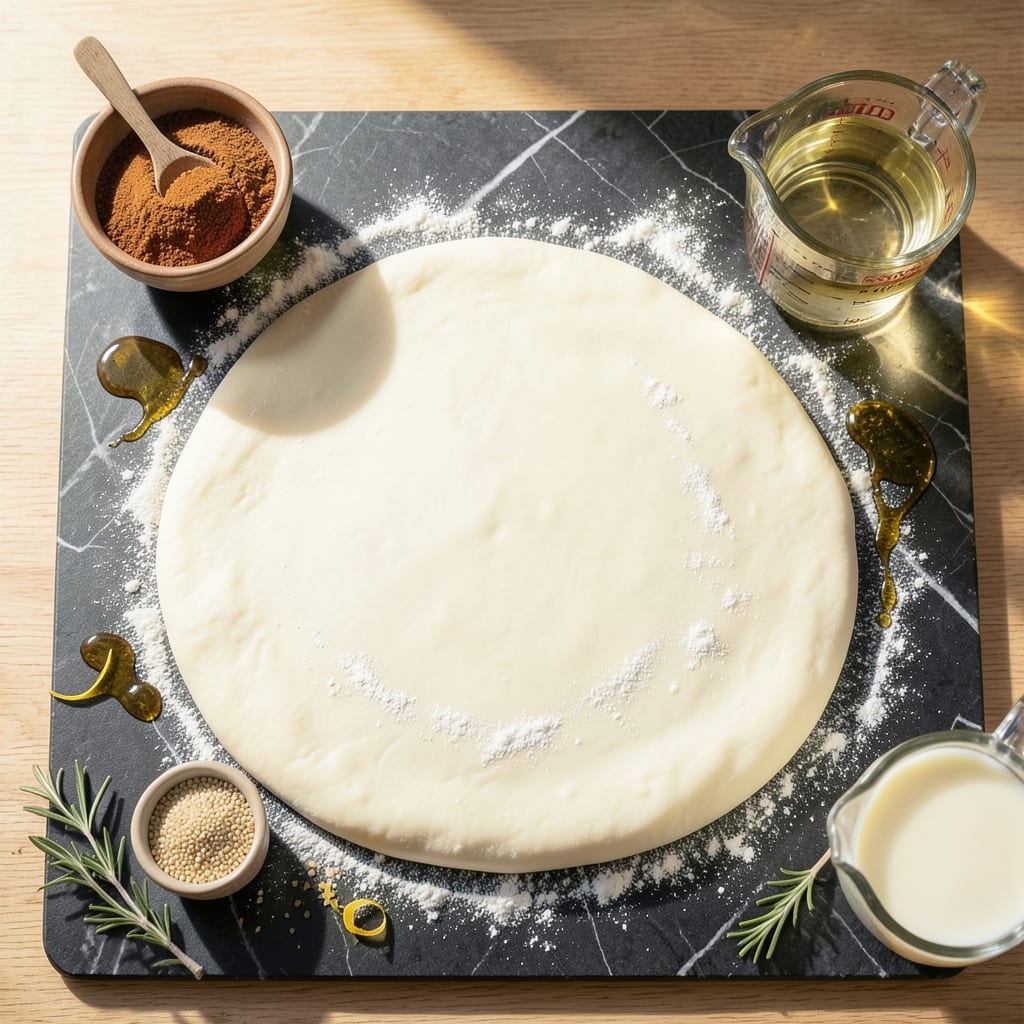
Creating a light and airy pizza crust without salt is absolutely possible with the right technique. This dough proves that omitting salt doesn’t mean sacrificing texture or flavor.
I developed this recipe after testing multiple versions in my small Boston kitchen, focusing on perfecting the hydration and resting time. The result is a crust that bakes up tender with just the right amount of chew.
The key lies in precise measurements and allowing the dough to rise slowly in the refrigerator. This builds flavor naturally without relying on salt.
Whether you’re avoiding salt for health reasons or simply curious, this dough delivers a restaurant-quality base for your favorite toppings.
Ingredients for Salt Free Pizza Dough
Ten simple pantry staples create a tender, flavorful crust without a single grain of salt.
| Ingredient | Amount | Notes |
|---|---|---|
| Bread Flour 🌾 | 3 ½ cups | High protein content preferred |
| Active Dry Yeast 🍞 | 2 ¼ tsp | One standard packet |
| Granulated Sugar 🍚 | 2 tsp | Feeds the yeast for rise |
| Warm Water 💧 | 1 ½ cups | 110-115°F for yeast activation |
| Extra-Virgin Olive Oil 🫒 | 2 tbsp | For dough elasticity |
| Unsweetened Almond Milk 🥛 | ¼ cup | Vegan liquid for hydration |
| Nutritional Yeast 🌿 | 1 tbsp | Adds umami without salt |
| Dried Oregano 🍃 | 1 tsp | For Italian flavor profile |
| Garlic Powder 🧄 | 1 tsp | Enhances savory notes |
| Onion Powder 🧅 | 1 tsp | Adds depth to flavor |
| Cornmeal 🌽 | ½ cup | For dusting and crispness |
[recipe_ingredient_scaler]
The flour is non-negotiable here. King Arthur Bread Flour (available at Whole Foods or most supermarkets) gives you that perfect chew. I always keep a bag in my Boston kitchen—it’s the difference between good dough and great dough. Warm water temperature matters: too hot kills the yeast, too cold slows activation. A kitchen thermometer takes the guesswork out (worth the $5 investment at Target).
No bread flour? All-purpose in a pinch, but you’ll sacrifice some texture. Skip the almond milk? Any plant milk works—soy or oat have similar protein content. Out of nutritional yeast? White miso paste at half the amount adds that umami kick, but it’s saltier so reduce other seasonings. The oregano can be substituted with fresh basil (use three times the amount).
Dough rises best in the fridge—cover tightly with plastic wrap. Keeps 3 days refrigerated, or freeze the ball for up to 1 month. Let it come to room temp before shaping (about 2 hours on the counter). Always dust your surface with that cornmeal to prevent sticking.
Why You’ll Love This Recipe
- One Bowl Wonder: I mix everything right in the same bowl—no fancy equipment, just bread flour, yeast, and warm water coming together effortlessly.
- Rich, Not Salty: The olive oil gives it this deep, buttery richness that makes every bite satisfying without needing salt to carry the flavor.
- Endless Topping Fun: Honestly, it’s the perfect blank canvas for whatever I’m craving—sweet or savory, thick or thin crust, it handles it all.
Step-by-Step Instructions for Salt Free Pizza Dough
Here’s the method. Straightforward, tested, works every time.
Step 1: Activate the Yeast and Proof the Mixture
In a large mixing bowl, combine the 1.5 cups warm water, 2 tsp granulated sugar, and 2.25 tsp active dry yeast. Stir gently and let it sit for 5-7 minutes until the mixture becomes frothy and doubles in volume.
This step confirms your yeast is alive and active. If it doesn’t foam, your yeast may be expired—start over with fresh yeast. The sugar feeds the yeast, jumpstarting the fermentation process that’ll give your dough its rise.
Step 2: Combine Wet and Dry Ingredients
Add the 0.25 cup unsweetened almond milk, 2 tbsp extra-virgin olive oil, 1 tbsp nutritional yeast, 1 tsp dried oregano, 1 tsp garlic powder, and 1 tsp onion powder to the yeast mixture. Stir to combine, then gradually incorporate the 3.5 cups bread flour, mixing until a shaggy dough forms.
The nutritional yeast and spices add depth and umami without salt, while the bread flour’s high protein content ensures a chewy, elastic crust. Don’t worry if the dough looks rough at this stage—it’ll come together during kneading.
Step 3: Knead Until Smooth and Elastic
Turn the dough out onto a lightly floured surface and knead for 8-10 minutes by hand, or use a stand mixer fitted with a dough hook on medium speed for 6-8 minutes. The dough should become smooth, elastic, and slightly tacky but not sticky.
If it sticks to your hands or the surface, add a dusting of bread flour, 1 tbsp at a time. Proper kneading develops the gluten, which gives the dough structure and helps it trap air for a light, airy texture.
Step 4: Let the Dough Rise Until Doubled
Lightly grease a large bowl with extra-virgin olive oil, place the dough inside, and turn to coat it evenly. Cover the bowl with a damp kitchen towel and let it rise in a warm, draft-free place for 1-2 hours, or until the dough has doubled in size.
I like to preheat my oven to the lowest setting, turn it off, and place the bowl inside with the door slightly ajar—this creates the perfect environment for rising. The dough is ready when it springs back slowly when pressed with a finger.
Step 5: Shape and Prepare for Baking
Punch down the risen dough to release the air, then divide it into 4 equal portions for individual pizzas. On a surface dusted with 0.5 cup cornmeal, roll or stretch each portion into a ¼-inch thick round.
The cornmeal prevents sticking and adds a pleasant crunch to the crust. If the dough resists stretching, let it rest for 5-10 minutes to relax the gluten, then try again. Transfer the shaped dough to a baking sheet or pizza peel dusted with more cornmeal, cover loosely, and let it rest for 15-20 minutes before adding toppings.
Pro Tips For Making Salt Free Pizza Dough
- Warm the Water Right: Use water at 105-110°F—any hotter kills the yeast, any cooler slows activation. I learned this the hard way after my first few doughs refused to rise.
- Knead Longer Than Expected: Bread flour needs 8-10 minutes of kneading to develop gluten properly. After underworking my first batch, I ended up with a dense, chewy crust.
- Skip Cold Ingredients: Make sure your olive oil and water aren’t cold—chilled liquids slow yeast activity. Sounds obvious, but I’ve ruined dough by pulling ingredients straight from the fridge.
- Let It Double: Give the dough a full 1-2 hours to rise until truly doubled. My grandmother swore by this, and she was right: rushing it leaves you with a flat, tough base.
Best Sauces and Condiments for This Recipe
Tomato-Based Sauces
Classic San Marzano tomato sauce works beautifully with this dough. Simmer 1 can (28 oz) crushed tomatoes with 3 minced garlic cloves and 1 tbsp olive oil for 20 minutes. The natural sweetness complements the crust’s subtle flavors. 🍅
Pesto Variations
Basil pesto adds vibrant color and herbaceous notes. Blend 2 cups fresh basil, ¼ cup pine nuts, ½ cup olive oil, and 2 tbsp nutritional yeast for a salt-free version. I love how the nutty aroma fills my tiny Boston kitchen.
White Sauce Options
For a creamy base, blend 1 cup cashews (soaked 4 hours) with 1 cup water, 2 tbsp lemon juice, and 1 tsp garlic powder. This vegan béchamel pairs perfectly with roasted vegetables.
Olive Oil Infusions
Infuse ½ cup extra-virgin olive oil with 3 rosemary sprigs and 2 crushed garlic cloves over low heat for 10 minutes. Strain and brush on dough before baking for a fragrant, golden crust. 💛
Spicy Kicks
Mix ¼ cup olive oil with 1 tbsp chili flakes and 1 tsp smoked paprika. Drizzle over the pizza before baking for a smoky, spicy finish. This reminds me of the fiery flavors Nonna sometimes sneaked into her cooking.
Dipping Condiments
Serve with balsamic glaze or a mix of olive oil and modena vinegar for dipping. These enhance the dough’s natural flavors without overpowering it. I keep small bottles of each in my pantry for quick access.
Nutrition Facts
Frequently Asked Questions
Why omit salt from pizza dough?
Some people avoid salt for health reasons or dietary restrictions. The recipe compensates with umami-rich ingredients like nutritional yeast and garlic powder to build flavor naturally.
Can I use all-purpose flour instead?
Yes, but bread flour is ideal for its higher protein content. All-purpose will work in a pinch, though the crust may be slightly less chewy. Add 1-2 tbsp extra flour if the dough feels too sticky.
How do I prevent the dough from sticking?
Dust your work surface and baking sheet generously with cornmeal. This adds texture and creates a barrier. If shaping is difficult, let the dough rest for 5-10 minutes to relax.
Can I make this dough ahead of time?
Prepare the dough, cover tightly, and refrigerate for up to 3 days. For longer storage, freeze the dough ball for up to 1 month. Thaw in the fridge overnight before using.

Trained in classic French technique but raised on slow-cooked ribs and spicy rubs, she blends culinary skill with smoke and soul.
- Recipe for Boneless Pork Chops in Cast Iron Skillet: Sear and Baste to Juicy Perfection - October 3, 2026
- Recipe for Boneless Cross Rib Roast: Slow-Roasted Beef with Herb Crust - October 3, 2026
- Hamburgers in Sauce Recipe Crock Pot: Slow-Cooked Savory Delight - October 3, 2026