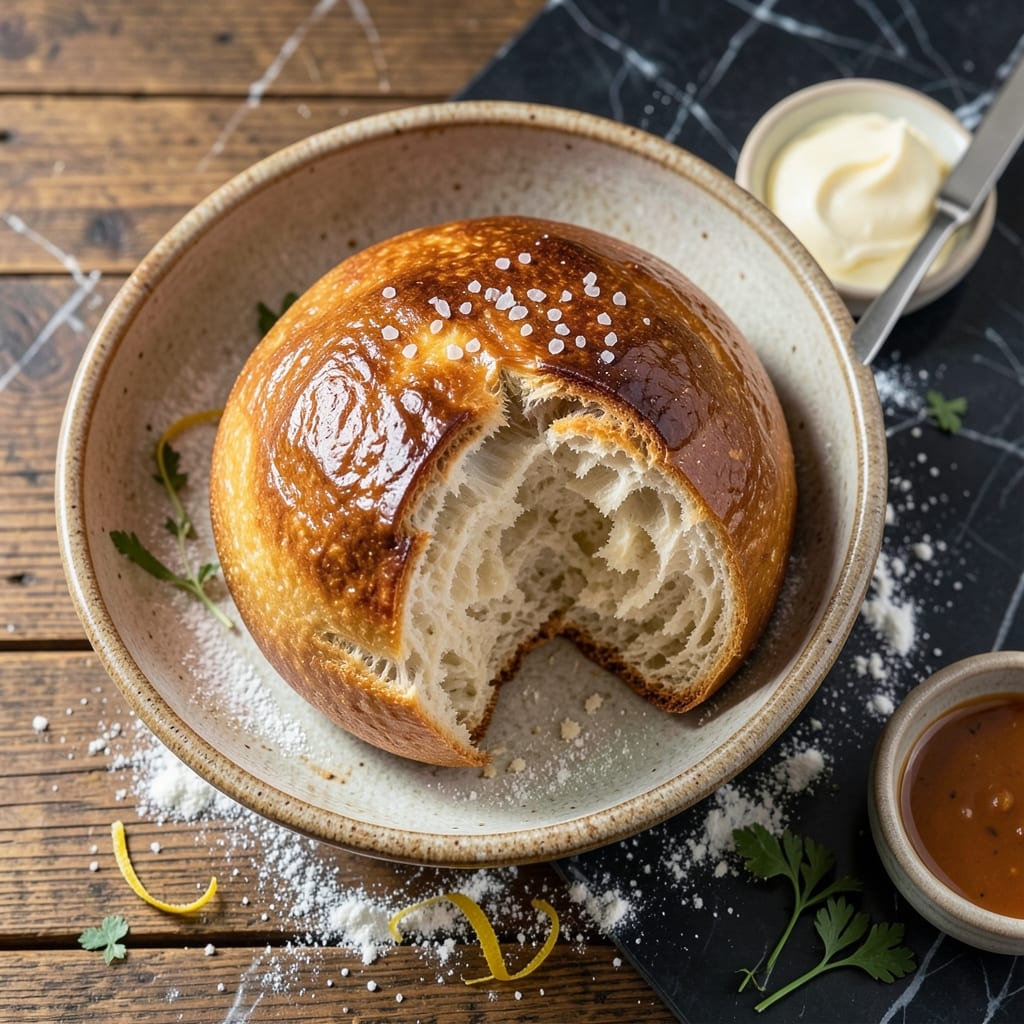
This recipe brings the warm, buttery taste of Texas steakhouse bread to your own kitchen. I developed it after too many attempts at recreating that signature flavor at home.
The secret lies in a simple combination of ingredients that create a soft, slightly sweet bread with a golden crust. The dough comes together quickly and bakes up light and fluffy every time.
What you get is a loaf that’s perfect alongside steaks or as a comforting snack on its own. The aroma alone will make it hard to wait for it to cool.
Serve it warm with extra butter for the full experience. Here’s how to make it.
Ingredients for Saltgrass Bread
Soft, buttery, and slightly sweet. Just like your favorite Texas steakhouse.
| Ingredient | Amount | Notes |
|---|---|---|
| All-Purpose Flour 🌾 | 4 cups | Plus extra for dusting |
| Granulated Sugar 🍚 | ¼ cup | For subtle sweetness |
| Active Dry Yeast 🍞 | 2 ¼ tsp | One packet, proofed in warm water |
| Salt 🧂 | 2 tsp | Fine sea salt preferred |
| Whole Milk 🥛 | 1 cup | Warm, about 110°F |
| Unsalted Butter 🧈 | ½ cup | Melted and cooled slightly |
| Large Egg 🥚 | 1 whole | Room temperature |
| Honey 🍯 | 2 tbsp | For golden color and flavor |
| Bread Flour 🌾 | 1 cup | For extra softness |
| Olive Oil 🫒 | 1 tbsp | For greasing bowl |
[recipe_ingredient_scaler]
The flour blend is key here—all-purpose plus bread flour gives that perfect soft texture you remember. I grab King Arthur from the grocery store (any major brand works). The yeast needs to be fresh—check the expiration date. Warm milk activates it best, but don’t go over 110°F or you’ll kill the yeast. Butter should be melted but not hot (test on your wrist like a baby bottle).
No honey? Maple syrup or agave works in a pinch. Short on bread flour? Use all all-purpose—texture will be slightly denser. The egg adds richness, but you can skip it (add 2 tbsp extra milk). Whole milk is ideal, but 2% works fine. For a lighter color, reduce honey to 1 tbsp. Saltgrass uses a touch of sugar in their dough—don’t skip it.
Dough rises best in a warm spot—try the oven with the light on. Baked loaf stays fresh wrapped in foil for 2 days, but honestly it’s gone in hours. Freeze slices for up to 1 month (toast to revive). Always serve warm with extra butter dripping down the sides.
Why You’ll Love This Recipe
- Minimal Effort: I just mix flour, sugar, yeast, salt, and warm milk—no fancy steps, no special tools.
- Buttery Richness: The whole milk gives it that tender crumb and subtle sweetness that’s just right.
- Breakfast to Dinner: It’s my go-to for sandwiches at lunch and toast with jam in the morning.
- Budget Friendly: Five pantry staples and I’ve got fresh bread for pennies—no last-minute store runs.
Step-by-Step Instructions for Saltgrass Bread
Here’s the method that creates that signature Texas steakhouse flavor in your own kitchen.
Step 1: Activate the Yeast in Warm Milk
Start by warming the whole milk to about 110°F—it should feel just warm to the touch, not hot. In a large mixing bowl, combine the whole milk, 0.25 cup granulated sugar, 2.25 tsp active dry yeast, and 2 tbsp honey.
Let this mixture sit for 5-7 minutes until it becomes foamy and bubbly. This step is crucial—if the yeast doesn’t activate, your bread won’t rise properly. You’ll see the surface turn frothy, which means the yeast is alive and ready to work.
Step 2: Mix the Dough with All Flours
Once the yeast is active, whisk in the large egg and 0.5 cup unsalted butter (melted and cooled slightly). Then gradually add the 4 cups all-purpose flour and 1 cup bread flour, along with the 2 tsp salt.
Use a wooden spoon or dough whisk to combine everything into a shaggy dough. The mixture will be sticky—that’s normal. I like to let the dough rest for 5 minutes at this stage, which makes kneading easier.
Step 3: Knead Until Smooth and Elastic
Turn the dough out onto a lightly floured surface and knead for 8-10 minutes until it becomes smooth and elastic. You’ll know it’s ready when you can stretch a small piece thin enough to see light through it without tearing (the windowpane test).
If the dough feels too sticky, add a little more all-purpose flour, 1 tablespoon at a time, but be careful not to add too much—you want a slightly tacky dough for soft bread. The process should leave you with a smooth, pliable ball of dough.
Step 4: First Rise Until Doubled in Size
Lightly grease a large bowl with the 1 tbsp olive oil, then place the dough inside, turning to coat all sides. Cover the bowl with a clean kitchen towel and let it rise in a warm, draft-free place for 1 to 1.5 hours, or until doubled in size.
I usually place mine near a sunny window or on top of the refrigerator for consistent warmth. The dough should spring back slowly when poked with a finger. If it springs back quickly, it needs more time.
Step 5: Shape, Second Rise, and Bake to Golden Perfection
Punch down the risen dough and divide it into 4 equal portions. Shape each into a round loaf and place them on a baking sheet lined with parchment paper. Cover and let rise again for 30-45 minutes until puffy.
Preheat your oven to 375°F. Bake the loaves for 18-22 minutes until they’re golden brown and sound hollow when tapped on the bottom. Brush the tops with a little extra melted butter right after baking for that signature Saltgrass sheen.
Pro Tips For Making Saltgrass Bread
- Bloom the Yeast: Dissolve the yeast in warm whole milk (110°F) with a pinch of sugar first—if it doesn’t foam within 5 minutes, your bread won’t rise. I learned this the hard way after wasting a whole batch.
- Measure Flour Right: Spoon the all-purpose flour into your measuring cup and level it off—scooping directly from the bag packs it down and makes your bread dense.
- Salt Last: Add the salt after the yeast has started foaming, or it can inhibit activation. Sounds weird, but it works.
- Use Room-Temp Milk: Cold whole milk slows down yeast activity, so take it out of the fridge 30 minutes before starting. My grandmother swore by this, and she was right.
Wine and Beer Pairings for This Recipe
White Wine Pairings
A crisp Chardonnay from California pairs beautifully with the buttery richness of this bread. I love Kendall-Jackson Vintner’s Reserve—its balanced acidity cuts through the soft texture. A lightly oaked version adds vanilla notes that complement the honey in the dough. 🍷
Red Wine Options
For red lovers, try a medium-bodied Pinot Noir from Oregon. Meiomi offers a fruit-forward option with bright cherry notes that won’t overpower the bread’s subtle sweetness. Serve slightly chilled for the best experience.
Craft Beer Selections
A wheat beer like Blue Moon enhances the bread’s softness with its citrusy, smooth profile. The orange slice garnish adds a refreshing contrast. For something darker, a brown ale like Newcastle brings caramel notes that mirror the golden crust. 🍺
Light Beer Choices
Simple is often best—an ice-cold Texas lager like Lone Star cleanses your palate between buttery bites. Its crisp finish and mild flavor let the bread shine. I always keep a few in my Boston fridge for just this purpose.
Nutrition Facts
Frequently Asked Questions
Can I use instant yeast instead of active dry?
Yes! Use the same amount but skip the proofing step. Just mix 2.25 tsp instant yeast directly with the dry ingredients. It’s faster and works just as well.
Why is my bread dense instead of fluffy?
Dense bread usually means the dough didn’t rise enough. Check your yeast freshness, ensure warm (110°F) milk, and give it full rising time in a warm spot.
Can I make this dough ahead of time?
Prepare the dough, let it rise once, then refrigerate overnight. Shape and bake the next day. This slow rise actually enhances flavor!
How do I store leftovers?
Wrap cooled bread in foil and keep at room temperature for 2 days. For longer storage, freeze slices and toast to revive. Always serve warm.

Trained in classic French technique but raised on slow-cooked ribs and spicy rubs, she blends culinary skill with smoke and soul.
- Recipe for Pan Fried: Golden Crust with Savory Depth - October 3, 2026
- Recipe For Fried Chicken In A Pressure Cooker: Crispy Golden Bites in Half the Time - October 3, 2026
- Recipe For Leftover Fried Fish: Crunchy Leftovers Transformed - October 3, 2026