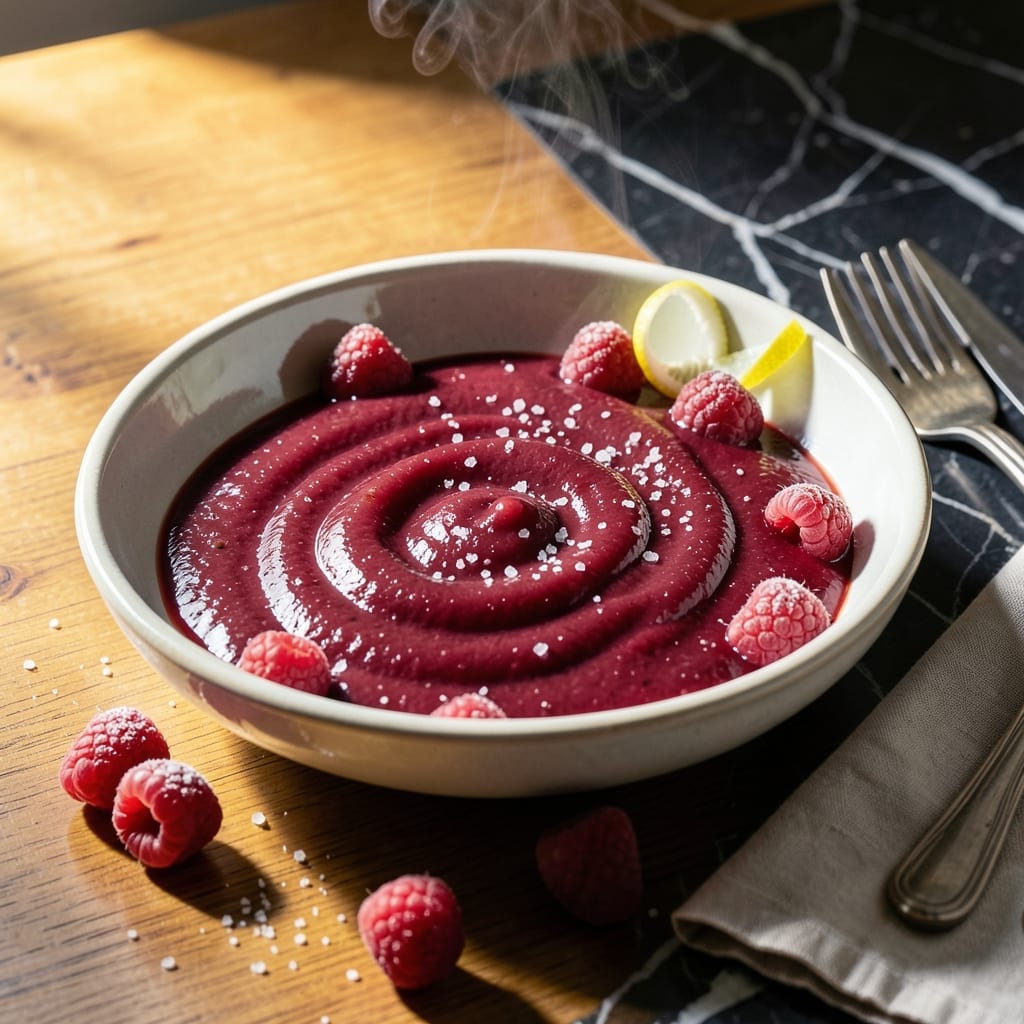
This vibrant sauce transforms fresh raspberries into a silky, seed-free condiment that elevates any dessert. A simple straining technique removes every seed while preserving the fruit’s bright, tangy essence.
The process is straightforward: cook the berries until soft, then press through a fine-mesh sieve. The result is a luscious smooth sauce with intense raspberry flavor and no unwanted texture.
Perfect for drizzling over cheesecake, swirling into yogurt, or pairing with chocolate desserts. Its versatility makes it a staple for both home cooks and professional pastry chefs.
Store in an airtight container in the refrigerator for up to 5 days, or freeze for longer preservation without compromising quality.
Ingredients for Seedless Raspberry Sauce
Six ingredients transform into a silky, vibrant sauce perfect for desserts and beyond.
| Ingredient | Amount | Notes |
|---|---|---|
| Fresh Raspberries 🍇 | 4 cups | Fully ripe for best flavor |
| Granulated Sugar 🍚 | ½ cup | Adjust to taste preference |
| Fresh Lemon Juice 🍋 | 2 tbsp | Brightens the berry flavor |
| Water 💧 | ¼ cup | Helps soften berries |
| Vanilla Extract 🌿 | 1 tsp | Pure for best quality |
| Salt 🧂 | 0.125 tsp | Fine grain preferred |
[recipe_ingredient_scaler]
Raspberries are the foundation, so source organic when possible—their flavor is more concentrated. Whole Foods and Trader Joe’s carry excellent options year-round, but local farmers markets have peak-season berries that are unbeatable. Avoid berries that are mushy or have mold, as they’ll affect the sauce’s texture and taste. The sugar should be fine white granulated for clean dissolving, but raw cane sugar works too.
No fresh raspberries? Frozen works beautifully—just thaw and drain excess liquid before cooking. Swap lemon juice for lime if you want a different citrus note. Maple syrup at a 1:1 ratio replaces sugar for a refined sweetener. The vanilla can be omitted, but it adds depth. For a thicker sauce, reduce cooking time slightly after straining.
Refrigerate in an airtight container for up to 5 days, or freeze for 3 months. The sauce separates slightly upon storage—just stir before using. For best results, bring to room temperature before serving to let the flavors shine.
Why You’ll Love This Recipe
- Fuss-Free Cooking: I just toss raspberries, sugar, and a splash of lemon juice into a pot—no fancy techniques or seed-straining hassle.
- Bright and Zesty: The tart raspberries and fresh lemon juice balance the sugar so well, you’ll want to drizzle it on everything.
- Endless Uses: Honestly, it’s my go-to for pancakes, yogurt, or even a quick dessert glaze.
Step-by-Step Instructions for Seedless Raspberry Sauce
Master this refined technique to create a velvety, seed-free sauce with professional results.
Step 1: Simmer Raspberries with Liquid
Combine the 4 cups Fresh Raspberries, 0.25 cup Water, and 2 tbsp Fresh Lemon Juice in a medium saucepan. Stir gently to distribute the berries evenly. Place the saucepan over medium heat and bring the mixture to a gentle simmer.
Allow the berries to cook for 5-7 minutes, stirring occasionally, until they begin to soften and release their juices. The mixture should look slightly broken down but not completely mushy. This controlled cooking preserves the bright berry flavor while preparing the fruit for straining.
Step 2: Sweeten and Season the Mixture
Stir in the 0.5 cup Granulated Sugar and 0.125 tsp Salt, ensuring they dissolve completely into the simmering berry mixture. The sugar should melt within 1-2 minutes, creating a glossy, slightly syrupy consistency.
Add the 1 tsp Vanilla Extract and stir to incorporate evenly. The vanilla should blend seamlessly, enhancing the natural sweetness of the raspberries without overpowering them. Continue simmering for another 2-3 minutes to allow the flavors to meld.
Step 3: Strain for a Silky Texture
Remove the saucepan from heat and let the mixture sit for 2 minutes to cool slightly. Position a fine-mesh sieve over a clean bowl or measuring cup. Pour the raspberry mixture into the sieve, using a silicone spatula to press gently against the solids.
Avoid pressing too hard, as this can force seeds through the mesh, defeating the purpose of a seedless sauce. The straining process should yield a smooth, vibrant liquid with no visible seeds or pulp. Discard the solids left in the sieve.
Step 4: Cool and Adjust Consistency
Let the strained sauce cool to room temperature, which should take about 20-30 minutes. As it cools, the sauce will thicken slightly. If it becomes too thick for your liking, whisk in a small amount of water, 1 teaspoon at a time, to reach the desired consistency.
Taste and adjust sweetness if necessary, though the initial balance of sugar and lemon should complement the natural tartness of the berries. The final sauce should coat the back of a spoon with a glossy sheen, perfect for drizzling or dipping.
Pro Tips For Making Seedless Raspberry Sauce
- Strain While Hot: Press the cooked raspberries through a fine-mesh sieve immediately after cooking—waiting lets the seeds absorb liquid, making straining harder. I learned this the hard way after wasting half a batch.
- Use Ripe Berries: Overripe raspberries break down faster and release more juice, so skip the firm ones. After burning a batch with underripe fruit, I now check for deep color and slight softness.
- Skip the Boil: Simmer gently instead of boiling to prevent the sauce from turning jammy or scorching. Sounds weird, but it works: low and slow keeps the texture smooth.
- Add Vanilla Last: Stir in the vanilla extract off the heat to preserve its flavor—high heat dulls its aroma. My grandmother swore by this, and she was right: it tastes fresher this way.
Troubleshooting Great seedless raspberry sauce
Sauce Too Thin
If your sauce is watery after straining, return it to the saucepan and simmer over medium-low heat for 3-5 minutes. Stir frequently to prevent scorching. I often add 1 tsp cornstarch mixed with water for a quicker thicken. 💡
Sauce Too Thick
If it thickens too much during cooling, whisk in warm water 1 tsp at a time until reaching your desired consistency. The sauce should ribbon off a spoon but still pour easily. I keep a spray bottle of water handy for precise adjustments.
Seeds in Final Sauce
If seeds slip through, you likely pressed too hard during straining. Next time, use a fine-mesh sieve and let gravity do the work—no pressing needed. For rescue, strain again through a coffee filter for ultra-smooth results.
Sauce Too Tart
Balance excess tartness with additional sugar, adding 1 tbsp at a time until the flavor harmonizes. I also like a pinch of salt to round out sharpness. Remember, raspberries vary in natural sweetness by season.
Sauce Separates
If your sauce separates after storage, simply stir vigorously or whisk until smooth again. This is natural due to the fruit’s pectin. For prevention, ensure complete cooling before refrigerating.
Cloudy Sauce
Cloudiness often means the mixture wasn’t strained while warm. Always strain immediately after cooking while the sauce is hot. If it happens, reheat gently and strain again through cheesecloth.
Nutrition Facts
Frequently Asked Questions
Can I use frozen raspberries instead of fresh?
Yes! Thaw and drain them well to remove excess liquid before cooking. This prevents a watery final product.
How do I adjust the sweetness?
Start with less sugar, then taste and add more 1 tbsp at a time until balanced. Tart berries may need extra sweetener.
What’s the best way to store leftover sauce?
Keep in an airtight container in the fridge for up to 5 days. For longer storage, freeze for 3 months.
Why is my sauce cloudy?
Cloudiness happens if not strained while hot. Reheat gently and strain again through cheesecloth for clarity.

Trained in classic French technique but raised on slow-cooked ribs and spicy rubs, she blends culinary skill with smoke and soul.
- Recipe for Boneless Pork Chops in Cast Iron Skillet: Sear and Baste to Juicy Perfection - October 3, 2026
- Recipe for Boneless Cross Rib Roast: Slow-Roasted Beef with Herb Crust - October 3, 2026
- Hamburgers in Sauce Recipe Crock Pot: Slow-Cooked Savory Delight - October 3, 2026