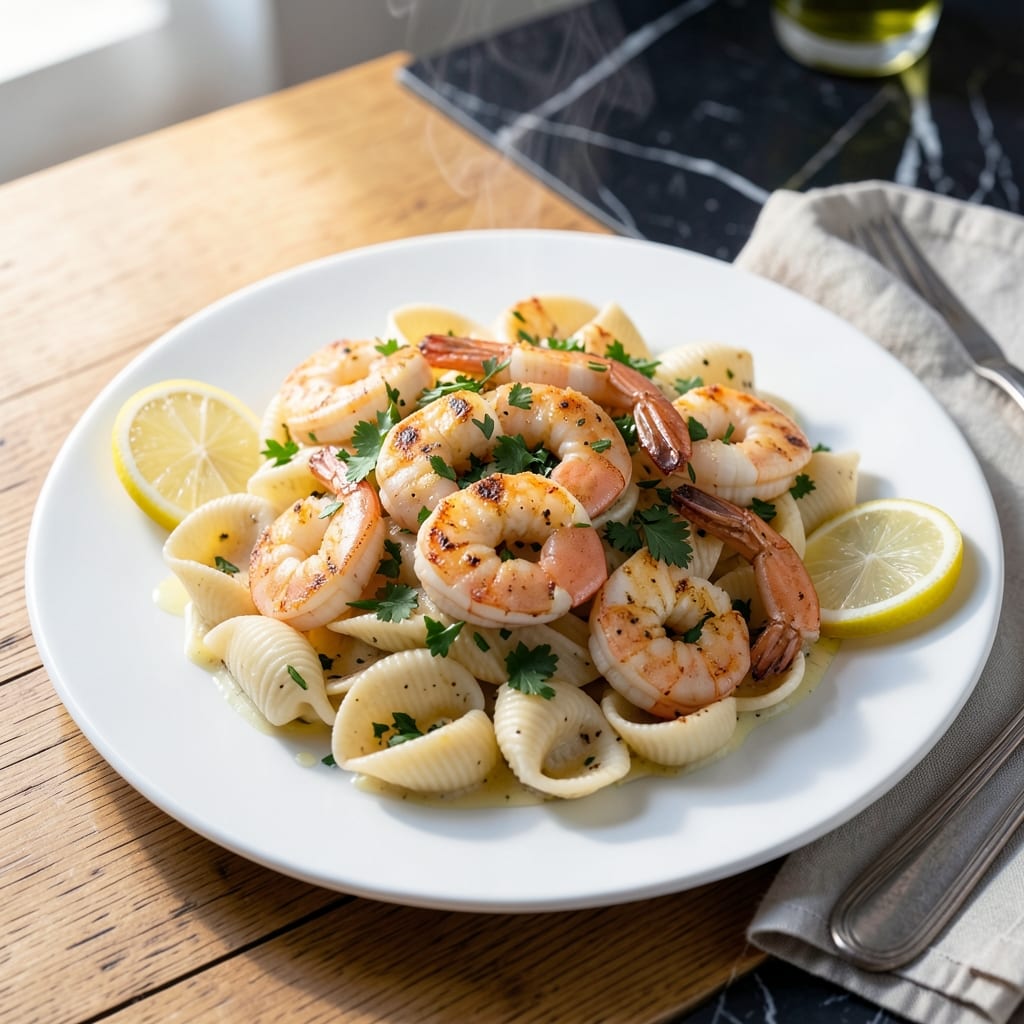
This dish brings coastal flavors to your kitchen with minimal effort. Shells pasta cups the succulent shrimp and garlic-butter sauce perfectly, creating a restaurant-quality meal at home.
I developed this recipe after testing multiple shrimp-to-pasta ratios in my small Boston kitchen. The key is cooking the shrimp just until opaque to maintain tenderness while the pasta absorbs the rich sauce.
The sauce comes together in minutes, with garlic infusing the butter as it melts. A splash of pasta water creates a silky finish that clings to every shell and shrimp.
Serve immediately for the best texture, garnished with fresh parsley and a squeeze of lemon. The flavors improve as it sits, making leftovers just as satisfying.
Ingredients for Shells Shrimp Pasta
Shells pasta, plump shrimp, and a creamy garlic-butter sauce come together for coastal flavors at home.
| Ingredient | Amount | Notes |
|---|---|---|
| Medium Shells Pasta 🍝 | 12 oz | About 3 cups dry |
| Large Shrimp 🍤 | 1 lb | Peeled, deveined, tails on or off |
| Unsalted Butter 🧈 | ½ cup | 1 stick, for sauce |
| Garlic Cloves 🧄 | 5 cloves | Minced for sauce |
| Fresh Parsley 🌿 | ½ cup | Chopped, for garnish |
| Fresh Lemon 🍋 | 1 whole | Juiced and zested |
| Kosher Salt 🧂 | 1 ½ tsp | Divided for pasta water and seasoning |
| Black Pepper 🌶️ | ½ tsp | Freshly ground preferred |
| Red Pepper Flakes 🔥 | ½ tsp | Optional for heat |
| Extra-Virgin Olive Oil 🫒 | 1 tbsp | For cooking shrimp |
| Dry White Wine 🍷 | ¼ cup | Optional for deglazing |
| Parmesan Cheese 🧀 | ½ cup | Freshly grated for serving |
[recipe_ingredient_scaler]
The shrimp are the star here. Wild-caught if you can swing it, but frozen from Trader Joe’s or Whole Foods works great too—just thaw them in cold water first. Look for shrimp labeled 16/20 count (that’s 16-20 shrimp per pound), which gives you nice, meaty pieces. For the pasta, any medium shell shape will do—Barilla or De Cecco are my go-tos. Don’t skip the kosher salt in the pasta water (it makes a difference).
No white wine? Sub chicken broth with a squeeze of lemon. Want extra richness? Add a splash of heavy cream to the sauce. Fresh parsley is ideal, but dried at one-third the amount works in a pinch. The Parmesan can be swapped for Pecorino Romano if you want a sharper flavor. And if you’re feeling fancy, a dash of Old Bay seasoning in the shrimp adds a nice coastal kick.
Leftovers keep 3-4 days in the fridge, though the pasta soaks up sauce over time. Reheat gently with a splash of water to loosen it up. Freezes for up to 1 month (without the shrimp—add those fresh when reheating). Garnish with extra parsley and lemon right before serving.
Why You’ll Love This Recipe
- One Pot Wonder: I toss everything in a single pan—shells, shrimp, butter, garlic—and it’s done before I can set the table.
- Garlic Butter Magic: The butter and garlic coat every shell and shrimp so well, even the leftovers taste fresh.
- Weeknight Hero: Honestly, it’s my go-to for busy evenings when I need something fast but still impressive.
- Budget Stretcher: Large shrimp feel fancy, but the pasta fills it out, so it feeds four without breaking the bank.
Step-by-Step Instructions for Shells Shrimp Pasta
Here’s how I make this dish with foolproof results every time.
Step 1: Cook the Pasta Al Dente
Bring a large pot of water to a rolling boil and add 1.5 tsp kosher salt. Add 12 oz medium shells pasta and cook according to package instructions for al dente, usually 8-10 minutes. You want the pasta just firm to the bite.
Reserve ½ cup of pasta water before draining. This starchy liquid is essential for adjusting the sauce consistency later. Drain the pasta but don’t rinse it—the surface starch helps the sauce cling beautifully to each shell.
Step 2: Sauté the Shrimp to Perfection
While the pasta cooks, heat 1 tbsp extra-virgin olive oil in a large skillet over medium-high heat. Add 1 lb large shrimp in a single layer and season lightly with black pepper and red pepper flakes.
Cook for 2-3 minutes per side until the shrimp turn opaque and pink with just a hint of curl. Remove the shrimp from the skillet and set aside—they’ll finish cooking in the sauce later.
Step 3: Create the Garlic-Butter Sauce
In the same skillet, melt ½ cup unsalted butter over medium heat. Add 5 cloves minced garlic cloves and cook for 1 minute until fragrant but not browned. Pour in ¼ cup dry white wine and let it simmer for 2 minutes to cook off the alcohol.
Squeeze in the juice from 1 whole fresh lemon and add its zest. The acidity brightens the rich butter sauce beautifully. Stir to combine all the flavors.
Step 4: Combine Everything with Love
Add the cooked pasta and shrimp to the skillet with the sauce. Toss gently to coat everything evenly. If the sauce seems too thick, add some of the reserved pasta water 1 tablespoon at a time until it reaches your desired consistency.
Sprinkle with ½ cup parmesan cheese and toss again. The cheese will melt slightly, creating a creamy coating that clings to every shell and shrimp.
Step 5: Finish with Fresh Herbs and Serve
Remove from heat and stir in ½ cup chopped fresh parsley. The bright green color and fresh flavor make this dish pop. Taste and adjust seasoning if needed—though the shrimp and parmesan are naturally salty.
Serve immediately while hot, with extra parmesan on the side. The shells capture the sauce perfectly, and each bite delivers a wonderful combination of garlic, butter, and succulent shrimp.
Pro Tips For Making Shells Shrimp Pasta
- Salt the Pasta Water: Use about 1-2 tablespoons of salt per pound of shells—it should taste like the sea. I learned this the hard way after serving bland pasta too many times.
- Pat Shrimp Dry: Blot the shrimp with a paper towel before cooking to prevent steaming and ensure a good sear. Sounds tedious, but it actually changes the outcome.
- Don’t Overcook Shrimp: Pull the shrimp off the heat as soon as they turn pink and opaque, usually 2-3 minutes per side. After burning three batches, I finally figured out they cook fast.
- Use Starchy Pasta Water: Add about ½ cup of the pasta cooking water to your sauce—it helps the butter and garlic cling to the shells and shrimp. My grandmother swore by this, and she was right.
Common Mistakes When Making shells shrimp pasta
Overcooking the Shrimp
Shrimp cook incredibly fast—just 2-3 minutes per side is all they need. I learned this the hard way in my Boston kitchen when I turned a pound of beautiful shrimp into rubbery nuggets. Pull them off the heat as soon as they turn opaque. 💡
Skipping the Pasta Water
That starchy ½ cup of reserved pasta water is liquid gold for your sauce. It helps create a silky texture that coats every shell. I always keep a measuring cup handy to scoop some out before draining the pasta.
Crowding the Pan
When cooking shrimp, use a large skillet and arrange them in a single layer. Crowding steams the shrimp instead of searing them, which affects both texture and flavor. I use my 12-inch cast iron for this.
Using Cold Shrimp
If using frozen shrimp, thaw them completely in cold water first. Adding cold shrimp to a hot pan lowers the temperature and can lead to uneven cooking. Pat them dry with a paper towel for the best sear.
Over-Salting the Sauce
The shrimp and parmesan are naturally salty, so go light on additional salt. I taste the sauce after adding the cheese and adjust carefully. You can always add more, but you can’t take it out. 🧂
Rinsing the Pasta
Never rinse cooked pasta—it washes away the starch that helps the sauce cling. Just drain it well in a colander. I shook my first batch of shells dry after rinsing and wondered why the sauce slid right off.
Nutrition Facts
Frequently Asked Questions
Can I use a different pasta shape?
While shells capture the sauce beautifully, penne or orecchiette work well too. Just adjust cooking time to 8-10 minutes for al dente.
How do I know when shrimp are done?
Look for opaque, pink flesh with a slight curl. They should reach 145°F internally and take only 2-3 minutes per side. Overcooking makes them rubbery.
What’s the best wine for deglazing?
A dry white like Pinot Grigio or Sauvignon Blanc adds brightness. Use ¼ cup and let it reduce for 2 minutes. Skip wine? Sub chicken broth with lemon juice.
Can I make this ahead?
Cook pasta and shrimp separately, then combine with sauce just before serving. Leftovers keep 3-4 days in the fridge. Reheat gently with a splash of water.

Trained in classic French technique but raised on slow-cooked ribs and spicy rubs, she blends culinary skill with smoke and soul.
- Recipe for Boneless Pork Chops in Cast Iron Skillet: Sear and Baste to Juicy Perfection - October 3, 2026
- Recipe for Boneless Cross Rib Roast: Slow-Roasted Beef with Herb Crust - October 3, 2026
- Hamburgers in Sauce Recipe Crock Pot: Slow-Cooked Savory Delight - October 3, 2026