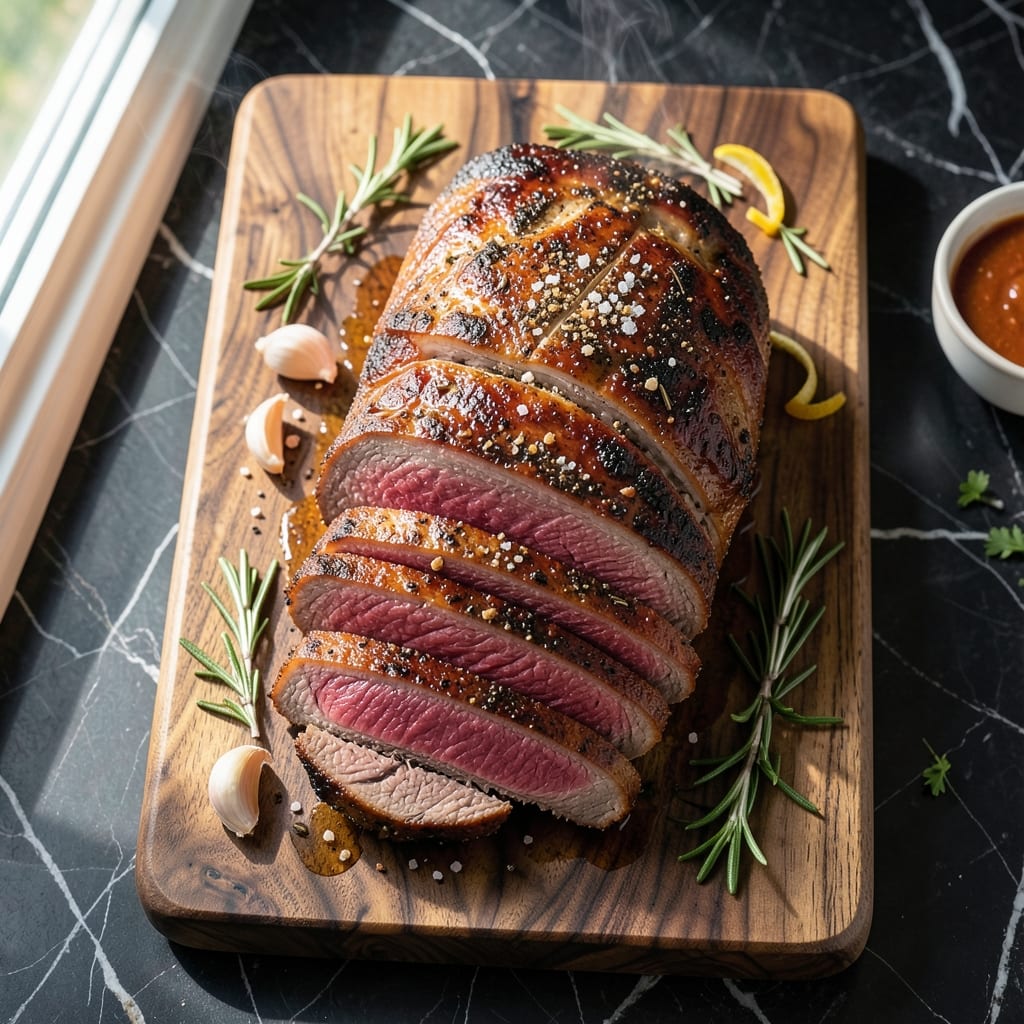
There’s a reason sirloin top roast remains a Sunday dinner classic—it delivers lean, tender results with minimal effort. I’ve tested this method in my small Boston kitchen until it consistently produces perfectly cooked beef every time.
The secret lies in proper seasoning and precise oven temperature. A simple rub of salt, pepper, and garlic powder enhances the natural flavor without overpowering. The key is letting the roast come to room temperature before going into a hot oven.
What emerges is juicy, flavorful meat with a beautiful crust. The internal temperature climbs steadily, ensuring even cooking throughout. Resting the roast after cooking allows the juices to redistribute for maximum tenderness.
Serve with roasted vegetables or mashed potatoes for a complete meal. This method guarantees impressive results for special occasions or family dinners.
Ingredients for Sirloin Top Roast
A lean sirloin top roast plus pantry spices and fresh aromatics create this Sunday classic.
| Ingredient | Amount | Notes |
|---|---|---|
| Sirloin Top Roast 🥩 | 3 lb | Trimmed of excess fat, room temperature |
| Kosher Salt 🧂 | 1 ½ tsp | Diamond Crystal preferred for even seasoning |
| Freshly Ground Black Pepper 🌶️ | 1 tsp | Coarsely ground for texture |
| Garlic Powder 🧄 | 1 tsp | Not garlic salt for pure flavor |
| Onion Powder 🧅 | ½ tsp | Balances the seasoning blend |
| Dried Rosemary 🌿 | ½ tsp | Crushed between fingers to release oils |
| Dried Thyme 🍃 | ½ tsp | Complements the beef’s natural richness |
| Olive Oil 🫒 | 2 tbsp | Extra-virgin for high-heat searing |
| Beef Broth 💧 | 1 cup | Low-sodium for controlled seasoning |
| Unsalted Butter 🧈 | 2 tbsp | For basting during roasting |
| Carrots 🥕 | 3 whole | Peeled, cut into thick chunks |
| Yellow Onions 🧅 | 2 whole | Quartered for roasting pan |
| Russet Potatoes 🥔 | 2 whole | Peeled, cut into large pieces |
| Fresh Garlic Cloves 🧄 | 4 cloves | Smashed but left whole for aroma |
| Fresh Rosemary Sprigs 🌿 | 2 whole | For garnish and added fragrance |
[recipe_ingredient_scaler]
The beef is the foundation—opt for USDA Choice or Prime sirloin top roast from a trusted butcher or Whole Foods for consistent quality. Look for even marbling and a bright red color; avoid any pieces with excessive fat caps. Bringing the roast to room temperature (about 1 hour on the counter) ensures even cooking. I always pat it dry with paper towels first—this helps the seasoning adhere and promotes better browning.
No garlic powder? Fresh minced garlic at double the amount works, though the powder distributes more evenly in the rub. Out of rosemary or thyme? Fresh herbs at triple the quantity (stripped from stems) can substitute, but dried is preferred for this application. For the broth, Better Than Bouillon paste mixed with hot water is a solid backup if you don’t have liquid broth on hand.
Store the raw roast in its original packaging on the coldest shelf of your refrigerator for up to 3-4 days. Once cooked, leftovers keep for 4-5 days in airtight containers. For longer storage, slice and freeze portions in heavy-duty freezer bags for up to 3 months—ideal for quick meals later.
Why You’ll Love This Recipe
- Set It and Forget: I rub the roast with salt, pepper, garlic and onion powder, pop it in the oven, and let it do its thing—no babysitting required.
- Sunday Supper Star: The crust from the garlic and onion powder makes every bite ridiculously good, and it’s the centerpiece my family actually waits for.
- Lunch All Week: One roast feeds us for days—sandwiches, tacos, or just sliced thin over greens. Honestly, it’s my meal prep secret weapon.
- Pantry Friendly: No fancy ingredients here. Just a solid cut of beef and spices I already have, so it’s ready whenever the craving hits.
Step-by-Step Instructions for Sirloin Top Roast
This method ensures a perfectly cooked roast with tender meat and rich pan juices every time.
Step 1: Season and Sear the Roast
Pat the sirloin top roast dry with paper towels to ensure a proper sear. In a small bowl, combine the kosher salt, freshly ground black pepper, garlic powder, onion powder, dried rosemary, and dried thyme. Rub this mixture evenly over the entire surface of the roast, pressing gently to adhere.
Heat the olive oil in a large oven-safe roasting pan or Dutch oven over medium-high heat. Once the oil shimmers, sear the roast on all sides for 2-3 minutes per side until deeply browned. This creates a flavorful crust and locks in juices.
Step 2: Prepare the Aromatics and Deglaze
Remove the roast from the pan and set it aside. Reduce the heat to medium and add the carrots, yellow onions, russet potatoes, and fresh garlic cloves to the pan. Sauté for 3-4 minutes, stirring occasionally, until the vegetables begin to soften and develop color.
Pour in the beef broth to deglaze the pan, scraping up any browned bits from the bottom with a wooden spoon. These bits contain concentrated flavor that will enrich your pan sauce. Return the roast to the pan, nestling it among the vegetables.
Step 3: Roast in the Oven
Preheat your oven to 375°F. Once preheated, transfer the pan to the oven and roast uncovered for 1 hour to 1 hour 15 minutes. Baste the roast with the pan juices every 20-25 minutes using a spoon or basting brush to ensure even cooking and maximum flavor.
The roast is done when an instant-read thermometer inserted into the thickest part reads 145°F for medium-rare. For medium doneness, cook until the thermometer reads 160°F. The internal temperature will continue to rise 5-10°F during resting.
Step 4: Rest and Serve
Transfer the roast to a cutting board, tent loosely with foil, and let it rest for 15-20 minutes. This allows the juices to redistribute throughout the meat, ensuring a moist and tender result when sliced.
While the roast rests, place the pan with the vegetables back on the stovetop over medium heat. Add the unsalted butter and stir until melted, then use the pan juices to create a simple au jus for serving. Garnish the roast with the fresh rosemary sprigs before slicing against the grain into ½-inch thick slices.
Pro Tips For Making Sirloin Top Roast
- Rest Before Slicing: Let the roast rest for at least 15 minutes after cooking—this keeps all those juices inside the meat instead of on your cutting board. I learned this the hard way after carving into a hot roast and watching the juices flood the platter.
- Dry the Surface: Pat the sirloin top roast completely dry with paper towels before seasoning. Sounds tedious, but it guarantees a better sear and helps the kosher salt and spices stick properly.
- Skip Cold Meat: Take the roast out of the fridge 30-45 minutes before cooking so it’s closer to room temperature. After burning the outside of a cold roast once, I finally realized how much more evenly it cooks when it’s not ice-cold.
- Season Generously: Don’t be shy with the kosher salt, garlic powder, and onion powder—this cut can handle bold flavor, and the seasoning forms a delicious crust. My first attempt was under-seasoned, and the roast tasted bland despite the long cook time.
Best Sauces and Condiments for This sirloin top roast
Classic Au Jus
After resting the roast, use the pan drippings to create a simple au jus. Skim off excess fat, then simmer the juices with 1 cup beef broth and 1 tbsp butter for 5 minutes. Strain before serving. 💫
Horse Radish Cream
Mix ½ cup sour cream with 2 tbsp prepared horseradish and 1 tsp lemon juice. Add ½ tsp salt and ¼ tsp black pepper. This tangy sauce cuts through the beef’s richness perfectly.
Red Wine Reduction
Deglaze the pan with 1 cup dry red wine (I use Cabernet Sauvignon) and ½ cup beef broth. Simmer until reduced by half, about 8-10 minutes. Finish with 1 tbsp cold butter for shine.
Garlic-Herb Butter
Blend ½ cup softened butter with 2 minced garlic cloves, 1 tbsp fresh rosemary, and 1 tbsp fresh thyme. Roll in parchment and chill. Slice a pat onto each serving.
Chimichurri Sauce
Combine 1 cup parsley, ¼ cup cilantro, 3 garlic cloves, ¼ cup olive oil, 2 tbsp red wine vinegar, and ½ tsp red pepper flakes in a food processor. Pulse until finely chopped.
Creamy Peppercorn
Whisk 1 cup heavy cream with 1 tbsp crushed black peppercorns and 1 tsp Dijon mustard in a saucepan. Simmer for 5 minutes until slightly thickened. Add ¼ cup pan drippings for depth. 🔥
Nutrition Facts
Frequently Asked Questions
What’s the ideal internal temperature for medium-rare?
Remove the roast when it reaches 145°F internally. The temperature will rise 5-10°F during resting, reaching perfect medium-rare. Use an instant-read thermometer for accuracy.
Why do I need to let the meat rest before slicing?
Resting for 15-20 minutes allows juices to redistribute. Cutting immediately causes moisture loss, resulting in dry meat. Tent with foil to keep warm during this crucial step.
Can I use fresh herbs instead of dried?
Yes, but use 3x the amount since fresh herbs are less concentrated. Strip leaves from stems and chop finely. Dried works better for rubs as it adheres more evenly.
How do I know when it’s overcooked?
Overcooked beef becomes tough and dry. If internal temp exceeds 160°F for medium, it’s likely overdone. Check 20 minutes before estimated finish time to avoid this.

Trained in classic French technique but raised on slow-cooked ribs and spicy rubs, she blends culinary skill with smoke and soul.
- Recipe for French Pork Spread Gorton: Savory Gallic Flavors in a Spreadable Delight - October 3, 2026
- Recipe for Pan Fried: Golden Crust with Savory Depth - October 3, 2026
- Recipe For Fried Chicken In A Pressure Cooker: Crispy Golden Bites in Half the Time - October 3, 2026