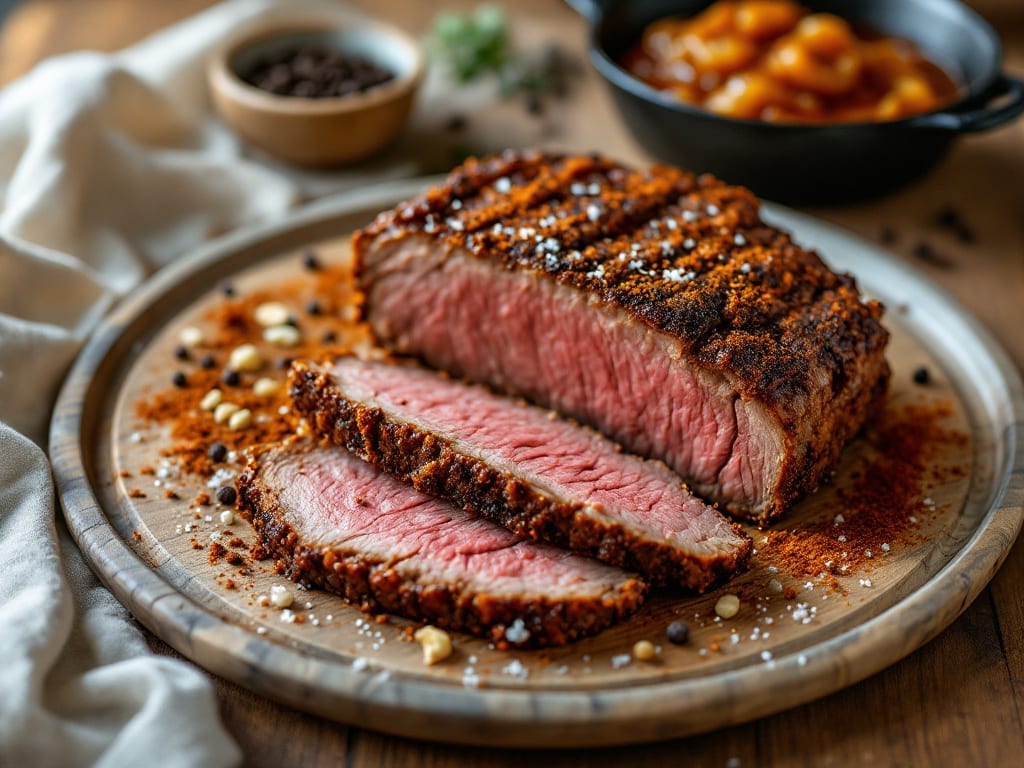
Mastering sliced beef brisket transforms tough cuts into melt-in-your-mouth bites that redefine barbecue night. 🌟 My first day at Johnson & Wales taught me how slow cooking unlocks unmatched tenderness, and this recipe delivers restaurant-quality results at home with precise techniques.
The secret lies in patience—letting the brisket break down over hours until it practically falls apart at a touch.
This method starts with a dry rub of smoked paprika and brown sugar, creating a flavorful bark that caramelizes beautifully. Then, the brisket cooks low and slow until the internal temperature reaches 203°F, ensuring that signature tender texture.
No fancy equipment needed—just time, attention, and a reliable thermometer to track progress. The result is a brisket so tender it slices effortlessly with a sharp knife, yielding perfect paper-thin shavings for sandwiches or plates.
What you’ll end up with is brisket that’s rich, smoky, and irresistibly tender—each bite bursting with deep, developed flavors. The key is slicing against the grain to maximize tenderness, and the optional garnish of fresh herbs adds a bright contrast to the smoky meat.
This recipe is designed for those who appreciate the art of slow cooking, where time and technique create something truly special.
Perfect for feeding a crowd or meal prepping for the week, this brisket keeps well and tastes even better the next day. Whether you’re serving it on toasted buns, over mashed potatoes, or as a standalone dish, the tenderness and flavor will leave everyone asking for seconds.
Let’s get started on creating your own showstopping brisket.
Ingredients for sliced beef brisket
Five pounds of brisket and a handful of pantry staples transform into restaurant-quality sliced beef brisket.
| Ingredient | Amount | Notes |
|---|---|---|
| Packer Beef Brisket 🥩 | 5 lb | Whole packer cut, fat cap intact |
| Smoked Paprika 🌶️ | ¼ cup | High-quality, not pre-mixed |
| Light Brown Sugar 🍚 | ¼ cup | Packed firmly, not granulated |
| Kosher Salt 🧂 | ⅛ cup | Diamond Crystal preferred |
| Ground Black Pepper 🌶️ | 1 tbsp | Freshly cracked, coarse grind |
| Garlic Powder 🧄 | 1 tbsp | Not garlic salt |
| Onion Powder 🧅 | 1 tbsp | Freshly ground preferred |
| Yellow Mustard 🍯 | 2 tbsp | For binder, not Dijon |
| Beef Tallow 🫒 | ¼ cup | Or substitute extra-virgin olive oil |
| Yellow Onion 🧅 | 1 whole | Thinly sliced, for bed |
| Fresh Thyme 🌿 | ¼ cup | Leaves only, chopped |
| Fresh Rosemary 🌿 | ⅛ cup | Needles only, chopped |
| Beef Broth 💧 | 2 cups | Low-sodium, for spritzing |
[recipe_ingredient_scaler]
The brisket is everything here—packer cut with fat cap intact for moisture and flavor. Costco or local butchers are your best bets for quality; avoid pre-trimmed cuts. Look for vibrant color and good marbling. If you can’t find packer, flat cut works but requires more careful timing. The dry rub needs Penzeys smoked paprika for authentic depth—regular grocery store brands lack the complexity. Store spices in airtight containers away from light to preserve their punch for future projects.
No smoked paprika? Substitute half chili powder and half sweet paprika—it won’t be identical but works in a pinch. Running low on beef tallow? Extra-virgin olive oil does the job, though it adds a slight fruity note. Fresh herbs wilt fast—dried thyme at one-third the amount works if you’re short on time. The yellow mustard acts as a binder; Dijon mustard adds tang but may alter the texture slightly. For the broth, low-sodium is key—you don’t want to over-salt your brisket during cooking. If you’re feeling adventurous, add 1 tsp liquid smoke to the rub for extra smokiness.
Prep the rub ahead and store it in an airtight container for up to 3 months—perfect for meal prep Sundays. The brisket itself keeps beautifully: 3-4 days in the fridge or 6 months frozen. For serving, slice against the grain with a sharp knife for those signature paper-thin shavings. Portion into containers with a little broth for reheating—microwave 2 minutes with a damp paper towel for best results. The leftovers? Even better the next day as the flavors meld further.
Why You’ll Love This Recipe
- Five-Ingredient Magic: I swear by this combo—just brisket, smoked paprika, brown sugar, salt, and pepper. That deep, smoky-sweet crust? It’s all in the dry rub, and it takes zero fuss to mix.
- Crowd-Pleaser Every Time: Between us, this is the dish my in-laws actually finish. The brisket’s tender when sliced, and that caramelized crust? Even picky eaters ask for seconds—no questions.
- Leftovers That Shine: Honestly, I make double batches because the second day is better. Cold slices in sandwiches? Heaven. Reheated with a splash of beef broth? Life-changing. It’s the ultimate meal prep win.
- Weeknight Hero: No slow cooker, no stress—just 30 minutes of oven time (or even a skillet if you’re in a hurry). That’s right: restaurant-quality brisket without the 12-hour commitment. (Yes, even on a Tuesday night.)
Step-by-step instructions for sliced beef brisket
Here’s how to transform tough brisket into melt-in-your-mouth slices with perfect texture and smoky depth.
👨🍳 Step 1: Create the Dry Rub and Prep the Brisket
In a medium bowl, combine the 0.25 cup smoked paprika, 0.25 cup light brown sugar, 0.125 cup kosher salt, 1 tbsp ground black pepper, 1 tbsp garlic powder, and 1 tbsp onion powder. Mix thoroughly until the spices are evenly distributed and the sugar crystals dissolve slightly into the dry ingredients.
Pat the 5 lb packer beef brisket completely dry with paper towels, removing any excess moisture from the surface. This step is crucial—wet surfaces prevent the rub from adhering properly and create steam that can make the bark soggy. Apply the rub generously to all sides of the brisket, pressing it firmly into the meat so it penetrates the surface. Don’t forget to season the fat cap as well, as this will render down beautifully during cooking.
🔥 Step 2: Sear and Smoke for Deep Flavor
Preheat your smoker to 225°F using hickory or oak wood chips for that classic brisket smoke flavor. Place the brisket fat-side up on the smoker grates and close the lid. Let it smoke undisturbed for 6 hours, maintaining the temperature between 225-250°F. This low-and-slow approach breaks down the tough connective tissue, transforming it into tender, fork-tender meat.
After 6 hours, check the internal temperature using a meat thermometer. When it reaches 165°F, remove the brisket from the smoker and wrap it tightly in butcher paper (not aluminum foil). Return it to the smoker and continue cooking until the internal temperature reaches 203°F, which should take an additional 4-6 hours. This “Texas crutch” technique helps push the brisket through the stall and maintains that beautiful bark.
🥘 Step 3: Prepare the Mustard-Tallow Binder
While the brisket rests, prepare the binder mixture by combining the 2 tbsp yellow mustard and 0.25 cup beef tallow in a small bowl. The mustard acts as a binder to help the brisket retain moisture during slicing, while the tallow adds richness. Whisk until the mixture is smooth and homogeneous. This step is optional but highly recommended for slicing—it keeps the meat slices from drying out.
Thinly slice the 1 whole yellow onion (about 1/8-inch thick) and set aside. Chop the 0.25 cup fresh thyme and 0.125 cup fresh rosemary finely, removing any woody stems. These herbs will add a bright, aromatic finish to your sliced brisket presentation.
⏰ Step 4: Rest, Slice, and Assemble
Remove the brisket from the butcher paper and let it rest at room temperature for 30 minutes before slicing. This resting period allows the juices to redistribute throughout the meat, ensuring each slice is moist and flavorful. Using a sharp slicing knife, cut the brisket against the grain into ¼-inch thick slices. The grain runs horizontally across the flat portion of the brisket, so adjust your angle accordingly for the most tender bites.
Arrange the sliced brisket on a serving platter, fanning the slices slightly to showcase their texture. Drizzle the mustard-tallow mixture lightly over the top, then sprinkle with the chopped thyme and rosemary. Serve immediately with the sliced yellow onion on the side for a fresh contrast. The brisket should be fork-tender with a smoky, slightly sweet bark that crumbles at the edges.
Pro Tips For Making Sliced Beef Brisket
- Trim the Fat First: That thick layer of fat on packer brisket isn’t just for looks—it renders down into flavor gold. Use a sharp knife to trim it to about ¼-inch thick before seasoning. I learned this the hard way when my first batch turned into a greasy mess instead of tender slices.
- Salt the Night Before: Don’t just sprinkle salt and call it a day. Apply the kosher salt (and a light dusting of smoked paprika) at least 12 hours ahead—this breaks down the meat fibers and keeps it juicy. (Yes, even if you’re impatient like me, skip this and you’ll regret it.)
- Watch the Sugar Burn: Light brown sugar caramelizes fast, and once it’s blackened, it’s game over. Keep the heat medium-low when searing, and stir the sugar into the paprika after the brisket hits the pan. After burning three batches, I finally figured out timing matters more than you’d think.
- Slice Against the Grain: That grainy texture in your slices? It’s not the meat—it’s your knife. Cut perpendicular to the grain for fork-tender bites. If you’re unsure which way is which, look for the long muscle fibers and slice at a 45-degree angle to them. (Your future self will thank you.)
Regional styles of this dish
Texas BBQ Tradition
In Texas, brisket reigns supreme as the king of barbecue, and sliced brisket is a must-have at any cook-off. The Central Texas style focuses on a simple dry rub of salt, pepper, and a touch of brown sugar, letting the meat’s natural beefy flavor shine.
I remember my first time at Franklin Barbecue in Austin—David and I stood in line for hours just to taste their legendary brisket, sliced so thin it practically dissolves on your tongue. Their secret? A 250°F smoker temperature for 12-16 hours until it reaches 203°F internal temp.
The result is a brisket so tender it slices with a butter knife, not a cleaver. 🔥
Kansas City Sweet & Smoky
Kansas City takes brisket in a sweeter direction, often using a rub packed with brown sugar and spices like cinnamon or cloves. The Arkansas Road style from KC pits adds a molasses or honey glaze that caramelizes beautifully during cooking.
I once made this version for Thanksgiving, using ½ cup molasses in the rub and spritzing the brisket with apple juice every 2 hours. The bark becomes glossy and sticky, with a deep caramelized crust that contrasts perfectly with the tender meat underneath.
Pair it with homemade white bread for the ultimate KC sandwich experience.
Carolina Vinegar-Pepper Style
Down in the Carolinas, brisket gets a tangy kick with vinegar-based sauces and cayenne pepper. The Lexington style from South Carolina involves cooking the brisket with a vinegar and pepper sauce that’s brushed on throughout the cook.
I adapted this by making a simple sauce with ½ cup apple cider vinegar, 2 tbsp hot sauce, and 1 tbsp black pepper, then basting the brisket every hour after the first 4 hours of smoking.
The acidity cuts through the richness, creating a bright, complex flavor profile that’s completely different from Texas-style brisket. Serve it with collard greens and cornbread for a true Southern feast. 🌶️
Modern Austin Fusion
Austin’s food scene has embraced brisket in creative new ways, blending traditional techniques with global flavors. I love experimenting with Korean-inspired brisket by adding 1 tbsp gochujang and 1 tbsp soy sauce to the dry rub, then finishing with a sesame glaze.
For a Mexican twist, I’ve wrapped the brisket in banana leaves during the last 2 hours of cooking and added 1 tsp cumin to the rub. These fusion approaches keep the brisket tender while adding exciting new dimensions to the classic dish.
The key is maintaining that 203°F internal temperature—no matter what flavors you add, the technique remains the same. 💫
North Texas Smoked & Sliced
In North Texas, particularly around Fort Worth, brisket is often cooked with a post-oak wood smoke that gives it a distinct earthy flavor. The Fort Worth style typically uses a simpler rub with more black pepper and less sugar, emphasizing the meat’s natural beefiness.
I’ve found that adding 1 tsp coffee grounds to the rub enhances the smokiness without overpowering the flavor. After slicing, I like to serve it with pickled jalapeños and white cheddar cheese on a toasted bun—this combination is a North Texas staple that’s become a favorite in our house.
The coffee grounds trick was actually David’s idea after he tasted it at a local BBQ joint. 💡
Nutrition facts
Frequently asked questions
How do I know when my brisket is ready to slice?
Your brisket is perfect to slice when it reaches an internal temperature of 203°F—this is the “probe-tender” stage where it practically falls apart. The bark should be dark and crispy, and the meat should pull away from the bone easily. Never slice before 203°F, or you’ll end up with tough, chewy pieces instead of tender slices.
What’s the best way to slice brisket for maximum tenderness?
Always slice against the grain using a sharp slicing knife. The grain runs horizontally across the flat portion of the brisket, so cutting perpendicular to these lines shortens the muscle fibers, making each bite melt-in-your-mouth tender. For ¼-inch thick slices, use a rocking motion with your knife to maintain even thickness. A 12-inch slicing knife works best for large briskets.
Can I cook brisket without a smoker?
Use your oven set to 225°F with a water pan on the bottom rack to create steam. Place the brisket on a rack in a roasting pan and cook until it reaches 165°F, then wrap it in butcher paper and continue cooking until 203°F. For smokiness, add wood chips to the pan or use a stovetop smoker. The key is maintaining low heat and patience—this method just takes longer than a dedicated smoker.
Why does my brisket turn out dry when sliced?
Dry sliced brisket usually happens from one of three issues: slicing too early (before 203°F), not resting properly, or using the wrong knife. Always let the brisket rest for 30 minutes before slicing to redistribute juices. Use a sharp slicing knife and cut against the grain. For extra moisture, brush slices with the mustard-tallow binder before serving. The binder helps prevent dryness while adding richness.
How long can I store sliced brisket?
Store sliced brisket in an airtight container in the fridge for 3-4 days or freeze for up to 6 months. For reheating, microwave slices for 2 minutes with a damp paper towel to retain moisture. Leftover brisket actually tastes better the next day as the flavors meld further. Portion into meal prep containers with a little beef broth to keep it juicy.

Trained in classic French technique but raised on slow-cooked ribs and spicy rubs, she blends culinary skill with smoke and soul.
- Best Smoked Oxtail Recipe: Deep-Rich Flavor After Low-and-Slow Cooking - October 14, 2026
- Pit Boss Smoked Prime Rib Roast Recipe: Bark-to-Bone Crispness in 4 Hours - October 14, 2026
- Smoked Tuna Steak Recipe: Seared Crust Meets Silky Centers - October 14, 2026