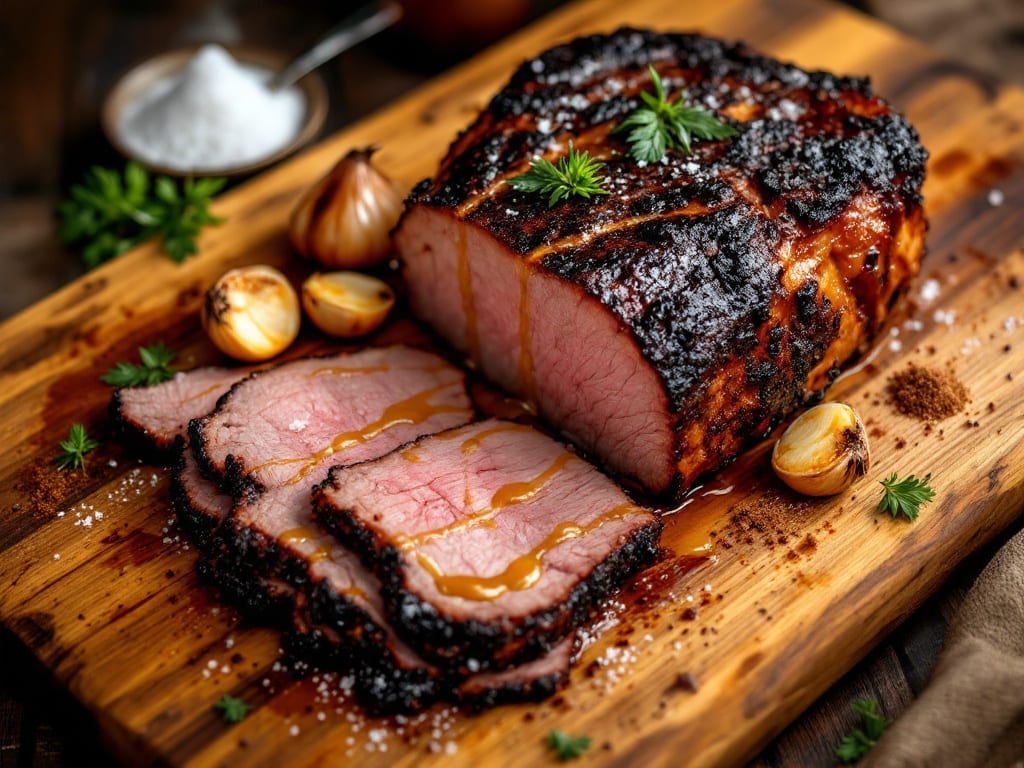
This classic beef brisket recipe delivers restaurant-quality results with a perfect balance of smoky bark and buttery tenderness after 12 hours of slow cooking. Growing up in Nana Mae’s Atlanta diner, I learned that great brisket requires patience—something this method delivers every time.
The secret lies in low-and-slow cooking at 225–250°F, where tough meat transforms into melt-in-your-mouth perfection.
The process starts with a dry rub that forms an irresistible bark while keeping the meat juicy inside. Unlike rushed methods, this recipe lets the collagen break down naturally, ensuring every bite is tender.
David—my official taste-tester—always requests seconds, and I’ve tested it on everything from smokers to ovens for foolproof results.
By the time you slice into this brisket, you’ll see a deep mahogany crust and juices that run clear, signaling perfect doneness. The aroma alone will have your kitchen smelling like a Texas BBQ joint.
Serve with classic sides like cornbread or coleslaw for a complete meal that tastes like home.
Whether you’re feeding a crowd or treating yourself, this brisket is worth the wait. The technique is simple but requires attention to detail—just like Nana Mae always said, “Good food takes time, but it’s time well spent.” Let’s get started on creating something truly special.
Ingredients for classic beef brisket
Nine essentials for brisket that tastes like Nana Mae’s diner—smoky, tender, and full of love.
| Ingredient | Amount | Notes |
|---|---|---|
| Beef Brisket 🥩 | 6 lb | Flat cut, trimmed of fat |
| Yellow Onion 🧅 | 2 whole | Sliced into wedges |
| Fresh Garlic 🧄 | 10 cloves | Minced, peeled |
| Yellow Mustard 🍯 | ½ cup | Dijon preferred |
| Brown Sugar 🍚 | ½ cup | Packed, light brown |
| Smoked Paprika 🌶️ | 2 tbsp | For authentic bark |
| Ground Black Pepper 🌶️ | 1 ½ tbsp | Freshly cracked |
| Kosher Salt 🧂 | ½ cup | Coarse grain preferred |
| Ground Cumin 🌿 | 1 tbsp | Toasted for depth |
| Black Peppercorns 🌶️ | 1 tsp | Crushed, whole |
| Apple Cider Vinegar 🍎 | 2 tbsp | For tenderizing |
| Beef Broth 🍲 | 2 cups | Low-sodium preferred |
| Wood Chips 🌳 | 1 package | Hickory or oak |
[recipe_ingredient_scaler]
The brisket is non-negotiable. Flat cut is key—it’s leaner and cooks more evenly than point cut. I always grab mine from Costco or Whole Foods when possible, but any trusted butcher will do. Look for good marbling—those little fat streaks keep the meat juicy during the long cook. Trim the fat to about ¼-inch so it renders nicely into the rub. The onions and garlic? Fresh is best, but frozen works in a pinch if you’re short on time. Just make sure the garlic cloves are peeled and minced—no one likes digging for bits halfway through cooking.
No smoked paprika? Regular paprika plus a pinch of liquid smoke gets you close. Running out of brown sugar? White sugar plus a splash of molasses mimics the depth. The mustard is there to help the rub stick—Dijon works best, but regular yellow mustard is fine if that’s what you’ve got. For the vinegar, apple cider adds a nice tang, but white vinegar or even lemon juice will do in a bind. The beef broth? Low-sodium is critical—you don’t want to over-salt your brisket. If you’re using a smoker, hickory or oak chips give that classic BBQ flavor, but fruitwoods like cherry add a nice twist.
This brisket tastes even better the next day, so make extra. Wrap the cooked brisket tightly in foil and refrigerate for up to 4 days, or freeze for 3 months in portions. The rub? Store it in an airtight container for 1 month—it’s perfect for other meats too. I always slice against the grain and serve with homemade cornbread and pickled onions. The leftovers? Sandwiches for days. Trust me, you’ll want seconds.
Why You’ll Love This Recipe
- Fewer Tools Needed: This brisket barely requires more than a knife and a pan. Slice the onion and garlic, toss them in with the brisket, and let the mustard and brown sugar work their magic—no fancy gadgets, no stress.
- Sweet-Savory Magic: That yellow mustard and brown sugar combo? It’s the secret weapon. The mustard gives it a tangy bite, while the sugar caramelizes into a sticky, irresistible glaze that makes every bite worth it.
- Leftovers That Shine: Between us, this brisket tastes even better the next day. Shred it for tacos, sandwiches, or just reheat it straight from the pan—it’s the kind of meal that keeps giving.
- Budget-Friendly Feast: A single brisket stretches across multiple meals without breaking the bank. It’s hearty enough for a family dinner but still feels special enough for company—without the restaurant price tag.
Step-by-step instructions for classic beef brisket
Here’s the method that delivers that perfect balance of smoky bark and melt-in-your-mouth tenderness.
Prepare the Brisket and Rub
Start by trimming the 6 lb beef brisket to remove any excess fat, leaving about ¼ inch of fat cap intact. This helps create that classic bark while preventing grease fires. Pat the meat dry with paper towels—this is crucial for the rub to adhere properly and for that perfect crust to form later.
In a large bowl, combine the 0.5 cup kosher salt, 1.5 tbsp ground black pepper, 2 tbsp smoked paprika, 1 tbsp ground cumin, and 1 tsp crushed black peppercorns. Add the 0.5 cup brown sugar and 0.5 cup yellow mustard, mixing until the sugar dissolves slightly. This blend creates the signature sweet-savory crust that makes this brisket unforgettable.
Generously coat the brisket with the rub mixture, pressing it firmly into the meat so it sticks. Place the brisket on a rack in a shallow pan, fat side up, and refrigerate uncovered for 12 hours. This slow seasoning process ensures deep flavor penetration and helps break down the tough muscle fibers for that classic tenderness.
Sear and Smoke the Brisket
Remove the brisket from the refrigerator 1 hour before smoking to bring it to room temperature. Preheat your smoker to 225°F using the 1 package wood chips (hickory or oak). Place a water pan in the smoker to maintain moisture and prevent the bark from drying out.
Once the smoker reaches temperature and you see clean, blue smoke, place the brisket fat side up on the smoker grates. Close the lid and resist the urge to check it frequently—each time you open it, you lose heat and moisture. Smoke the brisket for 6 hours, then add the 2 whole sliced yellow onion wedges and 10 cloves minced fresh garlic to the smoker around the brisket. This adds wonderful aroma and flavor to the cooking process.
Continue smoking until the internal temperature reaches 165°F. This is where you’ll hit the “stall”—the temperature stops rising as moisture evaporates. Don’t worry; this is normal and part of the process. The brisket should have a beautiful dark bark forming on the outside.
Wrap and Finish Cooking
When the internal temperature hits 165°F, wrap the brisket tightly in heavy-duty aluminum foil. This technique, known as the “Texas crutch,” helps the brisket cook through without drying out while maintaining that beautiful bark. Return the wrapped brisket to the smoker and continue cooking until the internal temperature reaches 203°F.
Add the 2 tbsp apple cider vinegar and 2 cups beef broth to the smoker pan to create a flavorful drippings sauce. The vinegar tenderizes the meat further, while the broth adds depth of flavor. Continue smoking until the brisket reaches 203°F and a probe slides in like butter with no resistance. This usually takes about 4-6 more hours.
Once done, remove the brisket from the smoker and let it rest in the foil for 1 hour. This resting period allows the juices to redistribute throughout the meat, ensuring every slice is moist and flavorful. The brisket should have a deep mahogany bark on the outside and a beautiful pink smoke ring just beneath the surface.
Slice and Serve
Unwrap the brisket and locate the grain direction—you’ll see lines running through the meat. Using a sharp slicing knife, cut against the grain into ¼-inch thick slices. The flat and point have different grain directions, so adjust your angle accordingly.
Serve immediately while still warm. The brisket should be tender enough to pull apart with a gentle tug, not so soft it falls apart, and not tough or chewy. Each slice should be packed with flavor from the rub, the smoky aroma from the wood chips, and the rich, buttery tenderness that makes this a classic.
Pro Tips For Making Classic Beef Brisket
- Trim the Fat First: That thick layer of fat on brisket isn’t just for looks—it renders down into flavor gold. Use a sharp knife to trim just the outer layer of hard fat (leave the softer fat cap intact), then score the fat in a crosshatch pattern. I learned this the hard way—skipping it means your pan sauce turns greasy instead of rich.
- Caramelize Onions Low: Your onions should turn deep amber, not burnt. Start them in a cold skillet with a splash of water, cover, and let them steam for 10 minutes first. Then crank the heat to medium-low and stir often—this recipe’s mustard and brown sugar need that sweet, jammy base to shine. I’ve ruined batches by rushing this step.
- Don’t Rush the Mustard: The mustard in this recipe isn’t just for tang—it’s the glue that binds the crust. Whisk it with the brown sugar before adding it to the meat, and let it sit for 15 minutes. That gives the mustard time to mellow out; otherwise, it’ll fight with the garlic instead of caramelizing with it. Trust me, your brisket will taste like it came from a pitmaster.
- Check Internal Temp Twice: Brisket’s tricky—it can look done on the outside but still be tough inside. Use a meat thermometer to probe the thickest part: aim for 195°F (203°F if you’re serving slices thin). Then, let it rest 30 minutes under foil. I’ve sliced into brisket at 190°F and regretted it every time—patience here makes all the difference.
Best sauces and condiments for these flavors
Classic BBQ Sauce
My go-to sauce for brisket is a simple homemade Kansas City-style BBQ sauce—thick, tangy, and just sweet enough to complement the smoky bark.
I simmer 1 cup tomato paste, ½ cup apple cider vinegar, ¼ cup molasses, 2 tbsp Worcestershire sauce, 1 tbsp smoked paprika, and 1 tsp black pepper for 20 minutes until thickened.
Brush this on the brisket during the last 1 hour of cooking for a glossy finish. 🌶️
Creamy Horseradish Sauce
For a bold kick, I blend ½ cup sour cream, 2 tbsp prepared horseradish (like Gourmet Garden), 1 tbsp Dijon mustard, and 1 tsp apple cider vinegar. This sauce cuts through the richness and adds a refreshing zing.
Serve it on the side or drizzle it over sliced brisket for a restaurant-worthy touch. David always requests this when we host game day gatherings.
Onion Gravy
Save those smoker drippings! After removing the brisket, scrape up the caramelized onions and garlic from the smoker pan, then whisk in 2 cups beef broth and 2 tbsp cornstarch to thicken.
Simmer until smooth—this gravy is perfect for pouring over brisket slices or serving alongside cornbread. I’ve perfected this trick after years of testing, and it’s a crowd-pleaser every time. 🍽️
Spicy Pepper Jelly
For a Southern twist, I make a quick pepper jelly by simmering 1 cup apple cider vinegar, ½ cup sugar, ½ cup sliced jalapeños, and 1 tsp red pepper flakes for 15 minutes.
Strain and let it cool before serving as a tangy condiment. This jelly adds heat and brightness that balances the brisket’s richness. I learned this from Nana Mae—she always said a little heat makes everything better.
Butter Baste
For extra richness, baste the brisket with melted butter and garlic during the last 30 minutes of cooking. I melt ¼ cup butter with 3 minced garlic cloves and brush it on the bark every 15 minutes**.
This creates a luscious, buttery sheen that enhances the smoky flavors. It’s a simple trick that elevates the dish to next-level deliciousness. 💛
Nutrition facts
Frequently asked questions
What’s the best cut of beef for this classic brisket?
Use the flat cut for this recipe—it’s leaner and cooks more evenly than the point cut. Look for good marbling (fat streaks) to keep the meat juicy during the long cook. A 6 lb brisket is ideal for 8 servings, but you can scale up or down as needed. Always trim excess fat to about ¼-inch to prevent grease fires while allowing the rub to form that perfect bark.
Why does the recipe call for a 12-hour rub time?
The long rub time—12 hours uncovered in the fridge—is key for deep flavor penetration and breaking down tough muscle fibers. This slow process creates a more complex, well-seasoned crust while tenderizing the meat. Don’t skip it! If you’re short on time, at least 4 hours will help, but the full 12 hours delivers restaurant-quality results.
Can I cook this brisket in an oven instead of a smoker?
Preheat your oven to 225°F and use a meat thermometer to monitor temperature. Place the brisket on a rack in a roasting pan with a water pan underneath to maintain moisture. Follow the same cooking times and temperature guidelines as the smoker method. For extra smokiness, add a few drops of liquid smoke to the rub or wrap the brisket in foil with wood chips during cooking.
What’s the ‘stall’ and why does it happen?
The stall occurs around 165°F when moisture evaporates from the meat, temporarily stopping temperature rise. This is normal and happens to all briskets. The solution? Wrap the brisket tightly in foil (the “Texas crutch”) to trap steam and push through to 203°F. This method keeps the meat tender while developing that beautiful bark. Don’t worry—it’s part of the process!
How do I know when the brisket is done?
Use a meat thermometer to check the internal temperature—it’s done when it reaches 203°F and a probe slides in like butter with no resistance. The bark should be deep mahogany, and juices should run clear when pierced. Let it rest for 1 hour before slicing to allow juices to redistribute. Pro tip: Look for a pink smoke ring just beneath the bark—this indicates perfect doneness.

Trained in classic French technique but raised on slow-cooked ribs and spicy rubs, she blends culinary skill with smoke and soul.
- Best Smoked Oxtail Recipe: Deep-Rich Flavor After Low-and-Slow Cooking - October 14, 2026
- Pit Boss Smoked Prime Rib Roast Recipe: Bark-to-Bone Crispness in 4 Hours - October 14, 2026
- Smoked Tuna Steak Recipe: Seared Crust Meets Silky Centers - October 14, 2026