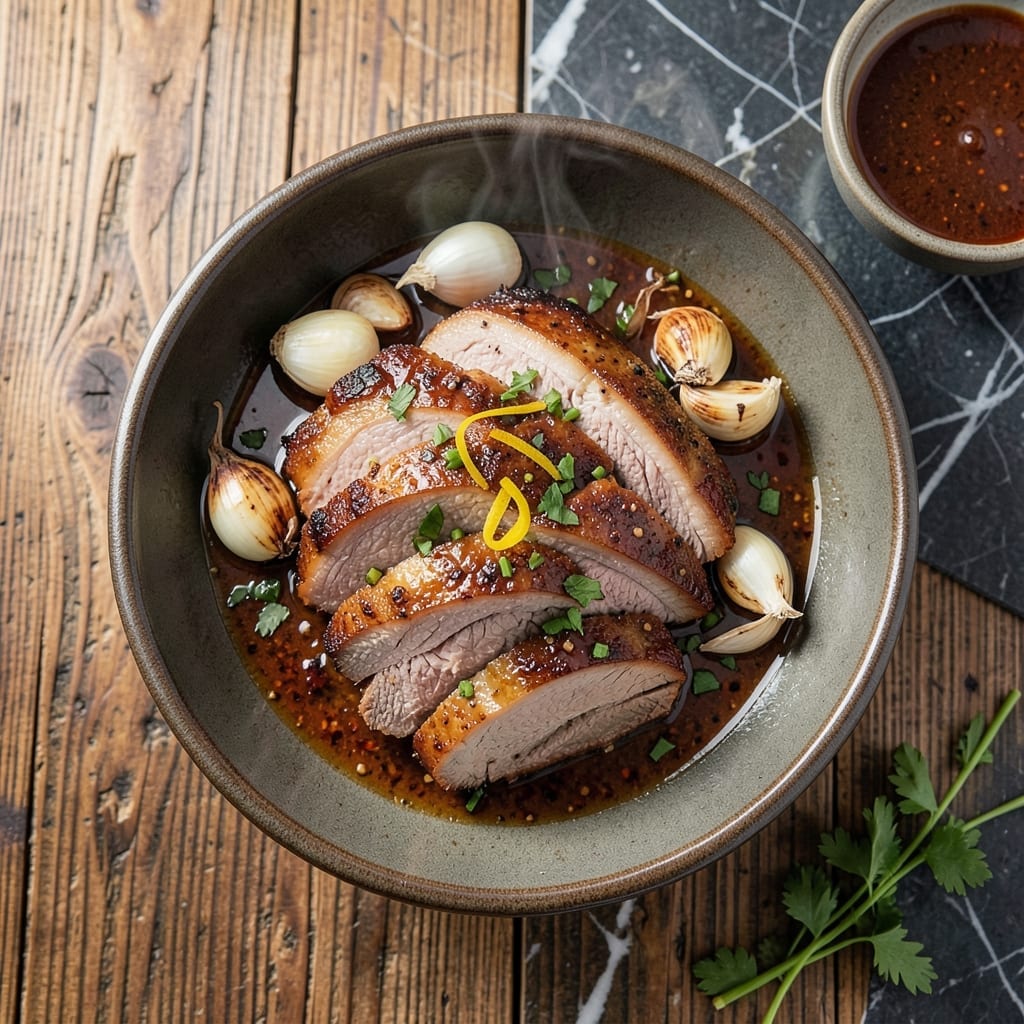
Achieving juicy oven-roasted pork butt requires patience and proper technique. I’ve refined this method over years of cooking for competitions and family gatherings.
The key is marinating the meat overnight to infuse deep flavor, then slow-roasting at 325°F until fork-tender. This ensures every slice stays moist and packed with taste.
You’ll end up with perfectly cooked pork that pulls apart easily, with a rich crust and tender interior. It’s ideal for sandwiches, tacos, or serving as a main course.
This approach guarantees consistent results, whether you’re cooking for a crowd or a quiet dinner. The process is straightforward but never rushed.
Ingredients for Sliced Pork Butt
Pantry staples meet a few fresh items for this slow-roasted masterpiece.
| Ingredient | Amount | Notes |
|---|---|---|
| Pork Butt 🥩 | 3 lb | Bone-in, well-marbled preferred |
| Kosher Salt 🧂 | 1 ½ tbsp | Diamond Crystal preferred |
| Black Pepper 🌶️ | 1 tbsp | Freshly ground coarse |
| Garlic Cloves 🧄 | 6 cloves | Peeled, smashed |
| Brown Sugar 🍚 | ¼ cup | Light or dark variety |
| Apple Cider Vinegar 🍏 | ¼ cup | Raw unfiltered preferred |
| Olive Oil 🫒 | ¼ cup | Extra-virgin for marinade |
| Smoked Paprika 🌶️ | 1 tbsp | Sweet or hot variety |
| Ground Cumin 🌿 | 1 tsp | Toasted for depth |
| Dried Oregano 🍃 | 1 tsp | Mediterranean preferred |
| Yellow Onion 🧅 | 1 whole | Large, thinly sliced |
| Chicken Stock 🍲 | 1 cup | Low-sodium preferred |
[recipe_ingredient_scaler]
The pork butt is non-negotiable here. Bone-in, well-marbled pieces from Costco or your local butcher yield the juiciest results. I always ask for the shoulder end—more fat, more flavor. Look for pieces with a nice fat cap (that’s where the magic happens). If buying pre-packaged, check the date and avoid anything with added solutions.
No pork butt? Pork shoulder is essentially the same cut—just ask the butcher to confirm. Out of brown sugar? Honey or maple syrup at equal volume works (though it’ll alter the crust slightly). Skip the apple cider vinegar? White wine vinegar or lemon juice in a pinch. The spices can be swapped for a pre-made Cajun or BBQ rub if you’re short on time.
Marinated pork keeps in the fridge for 3-4 days before cooking, or freeze for 3 months. Leftovers stay good for 1 week refrigerated—perfect for sandwiches or tacos. Always let it rest 15 minutes before slicing (don’t skip this part).
Why You’ll Love This Recipe
- Five Ingredients Only: I love that this comes together with just pork butt, salt, pepper, garlic, and brown sugar—no fancy shopping required.
- Sticky Sweet Crust: The brown sugar caramelizes with the garlic into this irresistible glaze that clings to every slice.
- Meal Prep Hero: I roast a big batch on Sunday and it transforms into tacos, sandwiches, or fried rice all week long.
- Budget Stretcher: Honestly, pork butt is so affordable and feeds my family for days with leftovers that taste even better.
Step-by-Step Instructions for Sliced Pork Butt
Here’s the method. Straightforward, tested, works every time.
Step 1: Prepare the Marinade
In a large bowl, whisk together the 0.25 cup olive oil, 0.25 cup apple cider vinegar, 0.25 cup brown sugar, 1.5 tbsp kosher salt, 1 tbsp black pepper, 1 tbsp smoked paprika, 1 tsp ground cumin, and 1 tsp dried oregano until the brown sugar fully dissolves. This creates a balanced sweet-tangy base with depth from the spices.
Add the 6 cloves garlic cloves (smashed) and 1 whole yellow onion (thinly sliced) to the marinade. The garlic infuses bold flavor, while the onion softens and sweetens as it marinates. Let this mixture sit for 10 minutes to allow the flavors to meld before adding the pork.
Step 2: Marinate the Pork Butt
Place the 3 lb pork butt in a large resealable bag or deep dish. Pour the marinade over the pork, ensuring it’s fully coated. I always press the meat into the marinade to eliminate air gaps—this guarantees even flavor penetration.
Refrigerate for at least 4 hours, but overnight is ideal. The longer it marinates, the deeper the flavor and the more tender the meat becomes. Turn the pork every 2-3 hours to redistribute the marinade for consistent results.
Step 3: Roast the Pork Butt
Preheat your oven to 325°F. Remove the pork from the marinade (reserve the marinade) and place it in a roasting pan or oven-safe dish. Pour the 1 cup chicken stock into the pan alongside the pork to prevent drying out during cooking.
Roast uncovered for 2.5 to 3 hours, basting with the reserved marinade and pan juices every 45 minutes. The pork is done when the internal temperature reaches 195°F and the meat pulls apart easily with a fork. The exterior should be caramelized and deeply browned.
Step 4: Rest and Slice
Transfer the pork to a cutting board and tent loosely with foil. Let it rest for 20 minutes—this allows the juices to redistribute, ensuring every slice is moist and flavorful. Skipping this step results in dry meat as the juices spill out when you cut.
Using a sharp knife, slice the pork against the grain into ½-inch thick slices. The grain runs in one direction, so cutting perpendicular to it shortens the muscle fibers for maximum tenderness. Serve immediately with the pan juices spooned over the top.
Pro Tips For Making Sliced Pork Butt
- Score the Fat: Cut 1/4-inch deep crosshatches into the fat cap before seasoning—this lets the salt, brown sugar, and garlic penetrate deeper into the pork butt.
- Low and Slow: Keep the oven at 275°F and give it 3-4 hours; I learned this the hard way when my first few tries came out tough instead of fall-apart tender.
- Don’t Trim Too Much: Leave a thin layer of fat on the pork butt—it renders down and bastes the meat, and skipping this step makes the slices noticeably drier.
- Rest Before Slicing: Tent the cooked pork with foil and let it rest 15 minutes—sounds tedious, but it keeps all the juices from running out when you slice.
Storing and Reheating This Dish
Refrigerator Storage
Once cooled, transfer sliced pork to airtight containers—I swear by glass Pyrex with snap-tight lids. It’ll keep beautifully for 4-5 days at 40°F or below. The flavors actually deepen overnight, making leftovers taste even better. ❄️
Freezer Storage
For longer storage, pack slices in heavy-duty freezer bags with parchment between layers to prevent sticking. Squeeze out all air before sealing—this prevents freezer burn. It’ll stay perfect for 3 months without quality loss.
Oven Reheating
Preheat to 300°F, wrap pork in foil with 2 tbsp chicken stock, and heat for 15-20 minutes. This method preserves moisture beautifully. I always check the internal temp hits 165°F for safety. 🔥
Skillet Reheating
For crispy edges, warm slices in a dry cast iron skillet over medium heat for 2-3 minutes per side. Add a splash of water and cover for the last minute to steam and restore moisture.
Microwave Shortcut
Place slices on a microwave-safe plate, cover with a damp paper towel, and heat on 50% power in 30-second bursts. Stir between intervals. This prevents rubbery texture while warming through quickly.
Nutrition Facts
Frequently Asked Questions
Can I use a different cut of pork?
Pork shoulder works perfectly as it’s the same cut. Avoid leaner options like tenderloin, as they dry out during long cooking.
How do I know when it’s done?
The internal temperature should reach 195°F and the meat should pull apart easily with a fork. This ensures tender, juicy slices every time.
What if I don’t have time to marinate overnight?
A minimum of 4 hours still delivers good flavor. For best results, turn the pork every 2-3 hours to distribute the marinade evenly.
Can I make this in a slow cooker?
Yes! Cook on low for 8-10 hours or high for 5-6 hours. Add ½ cup extra stock to prevent drying out.

Trained in classic French technique but raised on slow-cooked ribs and spicy rubs, she blends culinary skill with smoke and soul.
- Recipe for Boneless Pork Chops in Cast Iron Skillet: Sear and Baste to Juicy Perfection - October 3, 2026
- Recipe for Boneless Cross Rib Roast: Slow-Roasted Beef with Herb Crust - October 3, 2026
- Hamburgers in Sauce Recipe Crock Pot: Slow-Cooked Savory Delight - October 3, 2026