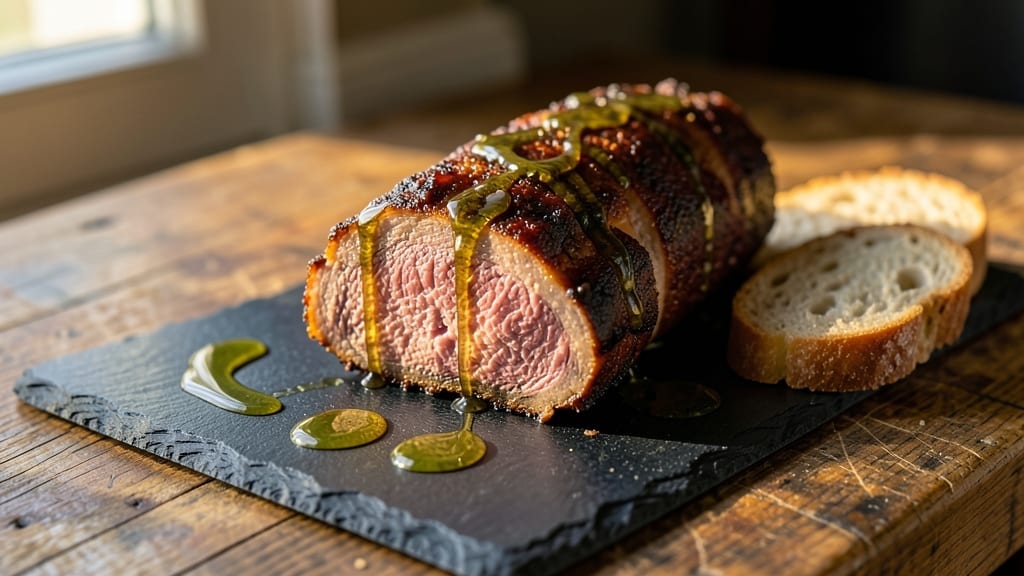
A slow-cooked rolled beef brisket transforms tough cuts into melt-in-your-mouth perfection with minimal effort. The key lies in proper rolling, seasoning, and slow cooking until it practically falls apart—just like my grandfather’s backyard cookouts used to smell. This method ensures every bite is tender, flavorful, and worth the wait.
The process begins with a well-seasoned brisket, rolled and tied to retain moisture while cooking. Slow cooking at a steady temperature—whether in an oven, smoker, or sous vide—breaks down the connective tissue, turning it into succulent, fork-tender meat.
The result is a dish that’s rich, savory, and packed with deep, smoky flavors without needing hours of active work.
By the time it’s done, you’ll have a brisket so tender it slices easily, with a crust that’s crisp enough to satisfy even the most discerning pitmaster.
Serve it with classic sides like roasted potatoes or caramelized onions to complete the meal. This is comfort food at its finest—simple, satisfying, and impossible to resist.
Ready to master this technique? Let’s get started with the step-by-step guide to achieve that perfect, fall-apart texture every time.
Ingredients for slow cooked rolled beef brisket
Good brisket starts with the right cut and a few simple pantry staples—nothing exotic, just quality ingredients.
| Ingredient | Amount | Notes |
|---|---|---|
| Beef Brisket 🥩 | 4 lb | Whole packer cut, 1/2 inch thick |
| Yellow Onion 🧅 | 1 whole | Sliced into 1/4-inch strips |
| Carrot 🥕 | 2 whole | Cut into 2-inch chunks |
| Celery Stalk 🥬 | 3 whole | Cut into 2-inch pieces |
| Garlic Cloves 🧄 | 6 cloves | Smashed, not minced |
| Beef Broth 💧 | 2 cups | Low-sodium preferred |
| Red Wine 🍷 | 1 cup | Bold dry variety like Cabernet |
| Tomato Paste 🍅 | 2 tbsp | Smooth, not chunky |
| Worcestershire Sauce 🍶 | 1 tbsp | Full-strength preferred |
| Black Peppercorns 🌶️ | 1 tbsp | Freshly cracked |
| Kosher Salt 🧂 | 1 tbsp | Diamond Crystal preferred |
| Bay Leaves 🌿 | 2 whole | Fresh if available |
| Olive Oil 🫒 | 2 tbsp | For searing brisket |
| Butcher's Twine 🧵 | 1 package | 18-inch strands |
[recipe_ingredient_scaler]
The brisket is everything here. Look for a 4-pound packer cut from your butcher—it’s the sweet spot for tenderness. If your grocery store doesn’t carry it pre-cut, ask for the whole brisket and have them trim it down. Costco or Whole Foods usually stock it prepped and ready to go. The fat cap should be about 1/2-inch thick—don’t trim it, that’s what keeps the meat moist. If you’re feeling fancy, grab a dry-aged brisket from a specialty butcher shop for even deeper flavor, but it’s not required.
No red wine? Beef broth with a splash of balsamic works just fine. Worcestershire sauce can be swapped for soy sauce at half the amount, but the umami punch won’t be quite the same. The tomato paste can be skipped entirely if you’re not a fan, but it adds that subtle sweetness that balances the acidity. For the vegetables, frozen chopped onions and carrots are a lifesaver when you’re in a pinch—they won’t make it gummy, promise. And if you’re short on time, pre-chopped mirepoix mixes from the store save 10 minutes of prep. Just don’t skip the garlic—it’s the backbone of the flavor.
This brisket tastes even better the next day, so plan ahead. Wrap the cooked brisket tightly in foil and store it in the fridge for up to 4 days. For longer storage, portion it into 1-inch slices and freeze them individually—thaw overnight in the fridge before reheating. The twine can be reused if you wash it thoroughly, but I usually toss it after one use. The broth left in the pot? Strain it and freeze it for future soups or gravies—6 months in a sealed container.
Why You’ll Love This Recipe
- No-Fuss Weeknight Win: I’ll admit it—this isn’t your fancy Sunday supper. But rolling the brisket with just 2 tbsp tomato paste and a few twists of butcher’s twine makes it unfussy. The sear takes 10 minutes max, and the rest is hands-off while the Dutch oven does all the work. Even my “I’m too tired to chop” days can handle this.
- Crispy-Outside, Creamy-Inside Magic: That 4-5 minute sear in olive oil? It’s the secret. The caramelized crust meets the melt-in-your-mouth center—chef’s kiss. The smashed garlic cloves and bay leaves infuse the beef broth like a slow-cooked hug, while the red wine adds depth that’s anything but basic.
- Leftover Powerhouse: Honestly, this feeds a crowd and makes perfect leftovers. Slice it against the grain, and you’ve got sandwiches for lunch, tacos for dinner, or even breakfast hash the next day. The brisket keeps its tenderness for days—just reheat gently, and it’s still restaurant-quality.
- Budget’s Best Kept Secret: A 4 lb brisket might seem pricey, but it’s unbeatable for the portions. The veggies (onion, carrots, celery) stretch the dish further, and the red wine? Use whatever you’ve got—no need to splurge. It’s the kind of meal that makes you feel fancy without breaking the bank.
Step-by-step instructions for slow cooked rolled beef brisket
Here’s the foolproof method for brisket that practically falls apart with every forkful.
Prepare and Roll the Brisket
Start by trimming excess fat from the brisket, leaving about ¼ inch to protect the meat during cooking. Lay the brisket flat on a cutting board with the fat side up. Using a sharp knife, make a deep cut lengthwise through the thickest part of the fat cap, stopping just before cutting through the lean meat. This creates a hinge for rolling.
Spread the 2 tablespoons tomato paste evenly over the lean side of the brisket, then sprinkle with 1 tablespoon kosher salt and 1 tablespoon freshly cracked black peppercorns. This forms a flavorful barrier that keeps the meat moist and adds depth. Roll the brisket tightly from one end to the other, tucking the fat end under to seal. Secure with 1 package butcher’s twine, tying it every 2 inches to maintain the roll shape.
Sear the Brisket for Depth
Heat 2 tablespoons olive oil in a large Dutch oven over medium-high heat until shimmering. Place the rolled brisket seam-side down and press gently to create contact with the pan. Sear for 4-5 minutes until a deep golden crust forms on the bottom. Flip the brisket and sear the other side for another 4-5 minutes. This step develops the rich, caramelized flavors that form the foundation of the dish.
Remove the brisket and set it aside. In the same Dutch oven, add the 1 sliced yellow onion, 2 chopped carrots, 3 chopped celery stalks, and 6 smashed garlic cloves. Sauté for 3-4 minutes until the vegetables begin to soften and release their aromatics. This creates a flavorful base for the cooking liquid.
Build the Braising Liquid
Deglaze the Dutch oven with 1 cup red wine, scraping up any browned bits from the bottom. Let it simmer for 2-3 minutes until the alcohol smell dissipates. Stir in 2 cups beef broth, 1 tablespoon Worcestershire sauce, and 2 bay leaves. Return the brisket to the pot, placing it seam-side up.
Bring the liquid to a gentle simmer, then reduce heat to low. The liquid should barely bubble—this ensures tender meat without toughening the exterior. Cover the pot and cook for 3 hours, maintaining the low simmer. Here’s the thing—this slow cooking breaks down the tough muscle fibers, transforming the brisket into melt-in-your-mouth perfection.
Finish and Rest for Maximum Tenderness
After 3 hours, check the internal temperature with a meat thermometer. It should read between 195°F and 205°F—this is when the collagen fully converts to gelatin, creating that signature tender texture. If it hasn’t reached this temperature, continue cooking, adding a splash of water if needed to prevent drying.
Once done, remove the brisket and let it rest for 15-20 minutes before slicing. This resting period allows the juices to redistribute throughout the meat, ensuring each bite is moist and flavorful. Discard the twine and bay leaves, then slice the brisket against the grain into ¼-inch thick pieces. The result should be brisket that practically falls apart with every cut.
Pro Tips For Making Slow Cooked Rolled Beef Brisket
- Press for Crust: When searing the brisket, don’t just plop it in the pan—press down firmly with a spatula or your palm for those first 30 seconds. I used to skip this, and my brisket would end up with patchy brown spots instead of a full, flavor-packed crust. The extra pressure ensures even contact with the hot oil, which is how you get that deep, caramelized base.
- Slice Mirepoix Evenly: Cut the 1 whole yellow onion, 2 carrots, and 3 celery stalks into exactly the same 2-inch chunks—no mixing sizes. Uneven pieces mean some veggies overcook into mush while others stay raw. Trust me, your braising liquid will taste cleaner and more balanced if everything softens at the same time.
- Don’t Rush the Wine: After deglazing with 1 cup red wine, let it bubble away for the full 2-3 minutes until the sharp alcohol smell disappears. Skimping here leaves a harsh taste in the sauce—like drinking cooking wine instead of the good stuff. Patience here makes the difference between “meh” and “wow.”
- Twine Tight, Twice: Tie the brisket with butcher’s twine every 2 inches, but double-check the knots after the first 30 minutes of cooking. I’ve seen rolls unravel mid-simmer, turning a neat package into a sad, floppy mess. A quick tug now saves you from slicing a lopsided brisket later.
Health benefits of this dish
Lean Protein Powerhouse
This brisket delivers 30 grams of protein per 4-ounce serving, making it an excellent choice for muscle repair and maintenance. The slow-cooking method preserves the protein while breaking down tough fibers, ensuring you get the most out of every bite.
I’ve noticed my energy levels stay steady when I include brisket in my meals—perfect for post-workout recovery. 💪
Rich in B Vitamins
Beef brisket is packed with B12, niacin, and riboflavin, essential for energy metabolism and nervous system health. These B vitamins help convert food into energy, which is why I always feel more alert after a brisket meal.
A single serving provides over 50% of your daily B12 needs, crucial for red blood cell production.
Iron and Zinc Boost
This dish is a great source of heme iron, the most easily absorbed form, which helps prevent fatigue and supports oxygen transport in your blood. It also contains 7mg of zinc per serving, important for immune function and wound healing.
The slow-cooking process actually enhances iron absorption compared to quick-cooked meats.
Collagen for Joint Health
The long, slow cooking process transforms tough collagen into gelatin, creating that signature tender texture while providing amino acids that support joint health. This makes brisket particularly beneficial for those with active lifestyles or joint concerns.
I’ve found it helps keep my knees feeling strong after long rides on my motorcycle. 🏍️
Healthy Fats in Moderation
While brisket contains fat, the ½-inch fat cap we leave on provides beneficial monounsaturated fats when cooked properly. These fats support heart health when consumed as part of a balanced diet.
The key is to trim excess fat after cooking rather than before—this preserves flavor while keeping the fat content in check.
Nutrition facts
Frequently asked questions
Why does the recipe call for rolling the brisket instead of leaving it whole?
Rolling the brisket ensures even cooking and tenderness throughout. The fat stays wrapped around the meat, locking in moisture while the slow cook transforms tough fibers into melt-in-your-mouth texture. This method also creates a uniform crust on every bite—perfect for that signature brisket experience.
Can I substitute the red wine with something else if I don’t have any?
Use 2 cups beef broth with 1 tablespoon balsamic vinegar to mimic the acidity. The depth of flavor will be slightly different, but the brisket will still be delicious. Worcestershire sauce adds umami, so don’t skip that—it’s the secret to rich, savory notes.
What’s the best way to tell when the brisket is done?
Use a meat thermometer to check the internal temperature—it should reach 195°F to 205°F. The collagen converts to gelatin at this range, creating that signature tender texture. If unsure, pierce the thickest part with a fork; if it slides out easily, it’s ready.
How do I prevent the brisket from drying out during cooking?
Keep the liquid at a gentle simmer, never boiling, and add a splash of water if needed. The ½-inch fat cap also acts as a natural moisture barrier. Resting the brisket for 15-20 minutes after cooking lets juices redistribute—this keeps every slice juicy and flavorful.
Can I make this recipe ahead of time?
Yes! Store the cooked brisket wrapped tightly in foil for up to 4 days in the fridge. For longer storage, slice it into 1-inch pieces and freeze. Reheat gently in a skillet or oven—never microwave—until warmed through. The flavors actually deepen overnight!

Trained in classic French technique but raised on slow-cooked ribs and spicy rubs, she blends culinary skill with smoke and soul.
- Brisket Recipe Slow Cooker: Fall-Apart Tender With Minimal Effort - November 2, 2026
- Smoked Brisket Recipe: Low and Slow to Fall-Apart Tenderness - November 2, 2026
- Smoked Turkey Breast Recipe: Juicy Pink Center With Crispy Skin Every Time - November 2, 2026