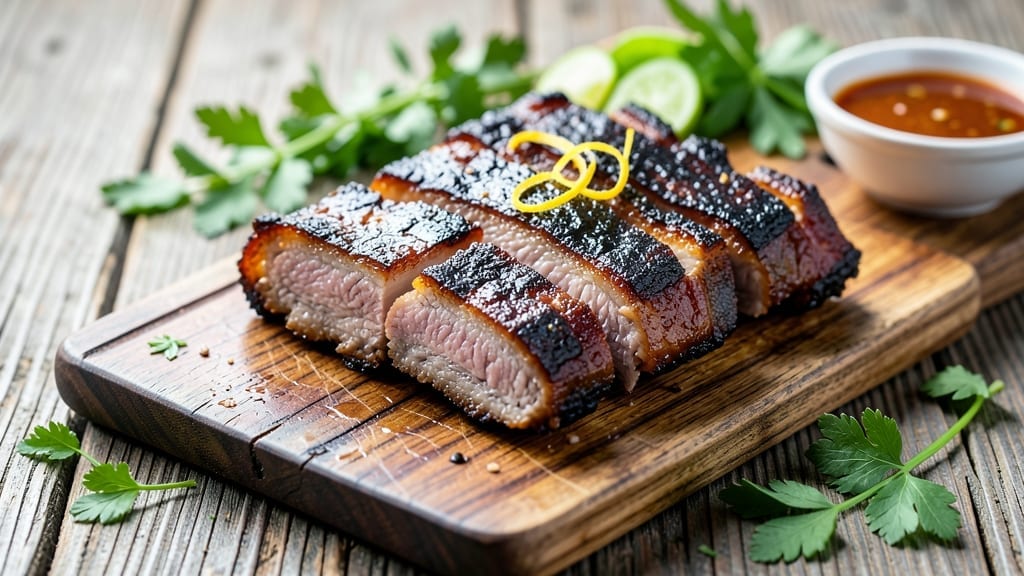
Mastering slow smoked pork ribs with applewood smoke transforms tough cuts into melt-in-your-mouth perfection—this is the recipe I developed after years of perfecting my technique in Atlanta’s competitive BBQ scene.
The key lies in the dry brine and precise temperature control, turning even the toughest ribs into tender, fall-apart goodness that rivals any competition-winning plate.
My heritage Gloucestershire Old Spots pigs provide the ideal fat-to-meat ratio, but you can adapt this method to any quality pork ribs you find at your local butcher.
What sets this recipe apart is the balance between low-and-slow cooking and the right wood choice—applewood imparts that signature sweet, fruity smoke without overpowering the meat. We’ll maintain a steady 225°F temperature for 10-12 hours, using a simple water pan to maintain humidity and prevent bark from drying out.
The real secret? Wrapping the ribs in butcher paper during the last 2 hours of cooking to lock in moisture while allowing that beautiful bark to develop. This method ensures restaurant-quality results every time, even for home smokers.
By the time you pull these ribs from the smoker, you’ll have meat so tender it practically falls off the bone with just a gentle touch. The applewood smoke infuses the meat with a subtle sweetness that pairs perfectly with classic BBQ sauces or a simple sprinkle of coarse salt.
The crust remains crisp while the interior stays juicy—a balance that takes years to perfect but only 12 hours to achieve. This is the kind of dish that turns casual cookouts into memorable gatherings, and once you try it, you’ll never settle for anything less.
Serve these ribs with classic sides like smoked potato salad or coleslaw to complete the meal. The leftovers reheat beautifully, making this an ideal recipe for feeding a crowd or meal prepping for the week. Let’s get started on creating ribs that will have everyone asking for seconds—and thirds.
Ingredients for slow smoked pork ribs
Just pork ribs, salt, smoke, and patience—this is the core of perfect slow-smoked ribs.
| Ingredient | Amount | Notes |
|---|---|---|
| Pork Baby Back Ribs 🥓 | 4 lb | Bone-in, meaty cuts preferred |
| Coarse Kosher Salt 🧂 | ½ cup | For dry brine overnight |
| Black Peppercorns 🌶️ | 2 tbsp | Freshly cracked, coarse grind |
| Applewood Chips 🌳 | 2 cups | Unseasoned, chunky preferred |
| Yellow Onion 🧅 | 1 whole | Quartered, for water pan |
| Apple Cider Vinegar 🍎 | ½ cup | For water pan balance |
| Butcher Paper 📄 | 1 sheet | For final wrap (22×30 inches) |
| Yellow Mustard 🥬 | 2 tbsp | For bark adhesion |
| Coarse Sea Salt 🧂 | 2 tbsp | For final seasoning |
| Fresh Garlic Cloves 🧄 | 4 cloves | Smoked with ribs (optional) |
| Applewood Smoke Pellets 🔥 | 1 lb | Alternative to chips |
| Beer (Optional) 🍺 | 1 cup | For spritzing during cook |
[recipe_ingredient_scaler]
The ribs are everything here. Baby backs are ideal—they’re meatier than spare ribs and cook faster. If you’re buying from a grocery store, Costco or Whole Foods have the best quality, but ask your butcher for Gloucestershire Old Spots if you want that competition-level marbling. Look for cuts with a good layer of fat—this is what keeps them juicy. The coarse kosher salt is key for the dry brine; it penetrates deeper than fine salt and helps tenderize the meat overnight. I always buy Diamond Crystal brand because it dissolves better and doesn’t clump. For the applewood, Traeger or Cookshack chips work perfectly—just avoid the pre-seasoned kind, which can add unwanted flavors.
No applewood chips? Applewood pellets work just as well, or even hickory chips mixed with a few applewood chunks. The beer spritz is optional but adds a nice moisture boost—light lagers or IPAs work best. If you’re short on time, you can skip the overnight brine and just season the ribs 4-6 hours before smoking, though the flavor won’t be as deep. For the water pan, the apple cider vinegar balances the sweetness of the onions and keeps the ribs from drying out. If you’re using a smoker without a water pan, just add a disposable aluminum pan with water and vinegar underneath the ribs. The butcher paper is non-negotiable for the final wrap—it’s breathable enough to let the bark crisp while locking in moisture.
Ribs keep beautifully after cooking. Store them wrapped in butcher paper in the fridge for 4-5 days, or freeze for up to 3 months by wrapping tightly in foil first. The leftovers reheat best in a 275°F oven for 20-30 minutes, covered loosely with foil. I always make extra because they disappear fast—these ribs are the kind of dish where everyone will ask for seconds. If you’re serving a crowd, double the batch and smoke them in batches to avoid crowding the smoker. The bark gets best when ribs aren’t touching, so don’t overpack the smoker.
Why You’ll Love This Recipe
- No-Fuss Prep Night: Honestly, the overnight dry brine with that coarse kosher salt and cracked black peppercorns? It’s the only real “work” you’ll do—and honestly, it’s worth it. No chopping, no fussing, just rub, refrigerate, and forget until morning. The ribs practically season themselves while you sleep.
- Smoky Sweet Payoff: That applewood smoke from the chips or pellets? It’s not just flavor—it’s the magic. The meat gets this deep, woodsy richness while staying tender, and the mustard-salt bark? Chef’s kiss. Every bite is smoky, salty, and just sweet enough from the caramelized drippings.
- Leftovers That Shine: Between us, these ribs are that dish—perfect for game day, potlucks, or a lazy Sunday. The butcher paper keeps them fresh for 4-5 days, and reheating? Just 275°F for 20 minutes, covered loosely. My kids even ask for seconds (yes, even on a Tuesday night).
- Budget-Friendly Feast: Four pounds of ribs might seem like a lot, but trust me: this isn’t your average splurge. The applewood chips and beer spritz keep costs down, and the dry brine makes the meat so tender you’ll feel like you’re eating restaurant-quality ribs—without the tab. It’s the kind of recipe that stretches your dollar and your satisfaction.
Step-by-step instructions for slow smoked pork ribs
Here’s the method for ribs that practically melt in your mouth while keeping that perfect bark.
Dry Brine the Ribs Overnight
Remove the pork baby back ribs from their packaging and pat them dry with paper towels. This step is crucial for developing that signature bark. In a bowl, combine the ½ cup coarse kosher salt and 2 tablespoons black peppercorns, then rub this mixture all over the ribs, making sure to get into the crevices. Place the ribs on a wire rack set over a baking sheet to allow air circulation on all sides.
Cover loosely with plastic wrap and refrigerate for 24 hours. This dry brining process seasons the meat deeply and helps draw out excess moisture, which is essential for that perfect crispy exterior. After brining, rinse the ribs under cold water and pat them completely dry again before proceeding. The ribs should feel firm to the touch and look slightly shrunken compared to their original size.
Prepare the Smoker and Season the Ribs
While the ribs brine, prepare your smoker by filling it with the 2 cups applewood chips or 1 pound applewood smoke pellets, depending on your setup. Light the chips or start the pellets and let the smoker preheat to 225°F. This temperature is key for achieving tender, fall-apart ribs without drying them out. Once the smoker reaches temperature and you see clean, blue smoke, you’re ready to proceed.
In a small bowl, mix the 2 tablespoons yellow mustard with 2 tablespoons coarse sea salt. This mixture will help the final seasoning stick to the ribs and enhance the bark. Coat the ribs thoroughly with this mixture, making sure to cover every inch of meat. If using the 4 cloves fresh garlic, place them directly on the ribs for added flavor during the smoke.
Smoke the Ribs Low and Slow
Place the ribs bone-side down on the smoker grates. This position helps the meat cook evenly and prevents the ribs from curling. Close the smoker lid and maintain the temperature at 225°F. Smoke the ribs for 5 hours, occasionally spritzing them with the 1 cup beer (if using) or a mixture of ½ cup apple cider vinegar and water. This spritzing keeps the meat moist and helps prevent a tough exterior.
After 5 hours, check the internal temperature of the ribs by inserting a meat thermometer into the thickest part of the meat. You’re looking for a temperature of 195-203°F. If the ribs haven’t reached this temperature, continue smoking. The ribs are done when they’re fork-tender and the meat pulls away from the bones easily. If the ribs hit the stall (temperature stops rising), wrap them tightly in the sheet of butcher paper and return them to the smoker for another hour.
Rest and Serve
Once the ribs reach the desired temperature and tenderness, remove them from the smoker and let them rest on a cutting board for 15-20 minutes. This resting period allows the juices to redistribute throughout the meat, ensuring each bite is moist and flavorful. During this time, you can use the quartered yellow onion to make a quick pan sauce by sautéing it in the smoker drippings until caramelized.
Slice the ribs between the bones and serve them with the caramelized onion sauce on the side. The ribs should be tender enough to fall apart with a gentle tug, with a beautiful mahogany bark on the outside. Serve immediately and enjoy the incredible smoky flavor and melt-in-your-mouth texture that this method delivers.
Pro Tips For Making Slow Smoked Pork Ribs
- Bone-Side Down Only: I learned this the hard way—placing ribs meat-side down early makes them curl into a mess. Keep them bone-side down for the first 3 hours at 225°F, then flip if they start to lift. This keeps the meat exposed to smoke while preventing the edges from sticking together.
- Mustard Sticks Better: The yellow mustard-salt mix isn’t just flavor—it’s the glue. Brush it on after the ribs come out of the brine and before smoking. If you skip this, your final seasoning will flake off like dandruff, and your bark will suffer.
- Spritz Like a Surgeon: Don’t drown the ribs when spritzing—use a spray bottle and mist just until the surface glistens. Too much liquid dilutes the smoke flavor and turns your bark into sad, soggy paper. Aim for a light fog, not a shower.
- Wrap Tight, No Air Gaps: When you hit the stall and wrap those ribs in butcher paper, squeeze the air out. Fold the edges like a burrito—no peeking smoke or gaps. I’ve seen ribs wrapped loosely, and they come out dry as a bone. Seal it like you’re wrapping a present for a toddler.
Troubleshooting perfect results
Temperature Troubleshooting
One of the most common pitfalls is inconsistent smoker temperature—fluctuations above 250°F can dry out your ribs while temps below 225°F lead to long, boring cooks. I use a Thermoworks Smoke dual-probe thermometer to monitor both smoker and meat temps simultaneously.
If your smoker struggles with heat control, try adding a second water pan or use a pellet grill for more precise temperature management. 🌡️
Bark Burnt Before Meat’s Done
This happens when the exterior crisps up too quickly while the interior remains tough. To fix it, wrap the ribs in butcher paper after 5 hours (when they hit 195°F internally) and return them to the smoker for 1-2 hours.
The paper traps moisture while allowing the bark to crisp further. I’ve seen this method save ribs that were already looking overcooked.
Ribs Too Dry After Cooking
If your ribs are dry, you likely spritzed too much liquid or didn’t maintain proper humidity. Reduce spritzing to every 2 hours instead of hourly, and add ½ cup apple cider vinegar to your water pan to balance moisture.
I also recommend using a disposable aluminum pan under the ribs to catch drippings and recycle them back into the smoker.
Ribs Curling or Uneven Cooking
Ribs often curl during smoking because they’re not positioned correctly. Place them bone-side down on the smoker grates to promote even cooking. If they still curl, try spreading them out more on the rack or using a ribs holder to keep them flat.
I’ve found that Lodge cast iron grates help distribute heat more evenly than wire racks.
Internal Temperature Stalls
The infamous “stall” occurs when ribs hit 160°F and temperature rises slowly due to evaporative cooling. This is normal but can feel frustrating. Wrap the ribs in butcher paper immediately when you hit the stall and keep the smoker at 225°F.
The paper helps maintain moisture while the meat finishes cooking. I’ve noticed this step can shave 2-3 hours off your total cook time.
Nutrition facts
Frequently asked questions
Why does the recipe call for an overnight dry brine?
The 24-hour dry brine with coarse kosher salt and peppercorns penetrates deep into the meat, creating a flavorful crust and drawing out excess moisture. This step is essential for developing that signature crispy bark while keeping the ribs juicy. Skipping it can result in a less flavorful exterior and slightly tougher meat.
Can I use foil instead of butcher paper for wrapping?
Butcher paper is preferred because it allows moisture to escape while keeping the ribs tender—unlike foil, which can trap too much steam and make the bark soggy. If you must use foil, poke several holes to let some moisture out. I’ve found that butcher paper gives the best balance of bark crispiness and meat tenderness.
What if my smoker can’t maintain 225°F
consistently?
If your smoker struggles with temperature control, try adding a second water pan or use a pellet grill for more precise heat management. I recommend using a dual-probe thermometer to monitor both smoker and meat temps. A 225°F stall is normal, but wrapping in butcher paper can help speed up the final cooking stage.
How do I know when the ribs are done?
Ribs are ready when the internal temperature reaches 195-203°F and the meat pulls away from the bones easily. If they stall at 160°F, wrap them in butcher paper and return to the smoker for 1-2 hours. The bark should be mahogany-colored and crisp, while the meat stays tender.
Can I make these ribs ahead of time?
Yes! Store cooked ribs wrapped in butcher paper in the fridge for 4-5 days or freeze them for up to 3 months by wrapping tightly in foil first. For best results, reheat in a 275°F oven for 20-30 minutes, covered loosely with foil. The flavors only get richer with time!

Trained in classic French technique but raised on slow-cooked ribs and spicy rubs, she blends culinary skill with smoke and soul.
- Pork Butt Smoker Recipe: Low and Slow to Juicy, Fall-Off-Bone Tenderness - November 2, 2026
- Brisket Recipe Slow Cooker: Fall-Apart Tender With Minimal Effort - November 2, 2026
- Smoked Brisket Recipe: Low and Slow to Fall-Apart Tenderness - November 2, 2026