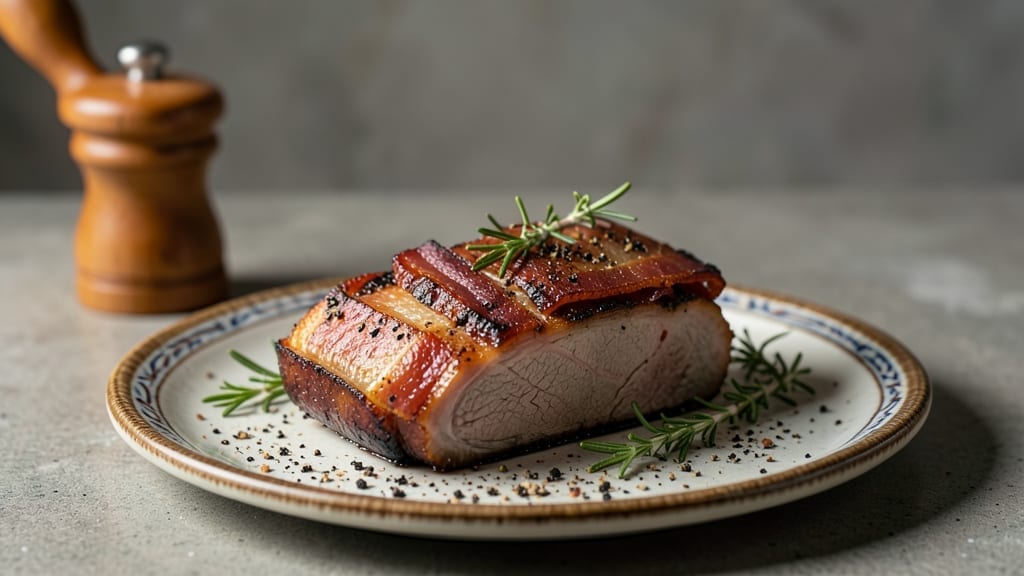
Wrapping pork loin in bacon before smoking creates a sweet-smoky crust that elevates this classic dish to restaurant-quality levels. Growing up in small-town Georgia, I learned that the right technique transforms simple pork into a showstopper—juicy cores protected by a crispy, caramelized exterior.
The key lies in balancing the smoking process with the bacon’s fat and salt, ensuring every bite delivers perfect tenderness with a burst of smoky-sweet flavor.
This method requires precision but rewards patience: smoking at 225°F with hickory wood for 3 to 4 hours until the internal temperature hits 145°F, then wrapping the loin in thick-cut bacon for the final 1 hour of cooking.
The bacon not only adds flavor but also locks in moisture, creating a crust that’s both savory and subtly sweet. My heritage pigs from the farm provide the ideal base—lean enough to stay juicy but rich enough to absorb the bacon’s essence.
What you’ll end up with is a perfectly cooked pork loin where the bacon forms a golden, crackling crust that seals in every ounce of moisture inside. The meat remains tender and flavorful, while the bacon’s smoky-sweet notes create a perfect balance.
This dish pairs beautifully with classic sides like creamy mashed potatoes or tangy apple sauce, making it ideal for family gatherings or special occasions.
Whether you’re smoking for a crowd or treating yourself to a weekend project, this technique ensures foolproof results every time. The combination of slow-smoked pork and crispy bacon transforms a simple cut into something extraordinary—just as my grandmother used to make back in Georgia.
Let’s get started on creating this showstopper.
Ingredients for smoked pork loin wrapped in bacon
Heritage pork, thick-cut bacon, and hickory smoke—this transforms simple ingredients into a showstopper.
| Ingredient | Amount | Notes |
|---|---|---|
| Heritage Pork Loin 🐷 | 4 lb | Bone-in, trimmed of excess fat |
| Thick-Cut Bacon 🍖 | 2 lb | Unsalted, high-quality |
| Hickory Wood Chips 🪵 | 1 lb | For smoker |
| Apple Cider Vinegar 🍎 | ½ cup | For basting |
| Brown Sugar 🍚 | ¼ cup | For sweet glaze |
| Dijon Mustard 🧄 | 2 tbsp | For basting |
| Garlic Cloves 🧄 | 6 cloves | Minced, for glaze |
| Smoked Paprika 🌶️ | 1 tbsp | For finishing |
| Black Peppercorns 🌶️ | 1 tbsp | Freshly ground |
| Salt 🧂 | 1 tsp | Kosher, for seasoning |
| Butter 🧈 | ¼ cup | Unsalted, for basting |
| Pork Loin Rub 🧂 | ¼ cup | Homemade or store-bought |
[recipe_ingredient_scaler]
The pork loin is everything. Heritage breeds from a local farm give you that perfect balance of lean and fat—trust me on this. If you can’t find heritage, high-quality pork loin with visible marbling works. The bacon? Thick-cut, unsalted is non-negotiable—it needs to render fat and crisp up properly. I always grab mine from Costco or my butcher when I know I’m doing a big batch. For the wood chips, hickory is classic, but mesquite adds a deeper smokiness if you want to experiment. The key is soaking those chips for at least 30 minutes before smoking—no one wants a smoky flavor that tastes like wet cardboard.
No apple cider vinegar? White vinegar or even a splash of lemon juice will work in a pinch. Want to skip the homemade rub? McCormick Smokehouse Seasoning is a solid stand-in—just double the amount since it’s pre-mixed. Running low on Dijon? Regular mustard at half the quantity will still give you that tangy kick. The brown sugar can be dark brown for deeper molasses notes, but light works fine too. If you’re short on garlic, garlic powder at one-third the amount gets you close, though fresh is always better. The smoked paprika is what gives that final smoky finish—don’t skip it unless you’re in a real bind.
This is a weekend project, so plan ahead. The pork loin can be prepped the night before—just wrap it loosely in plastic and refrigerate. The bacon? Take it out of the fridge 30 minutes before wrapping so it’s pliable. Once wrapped, the whole thing keeps beautifully for 2 days in the fridge, but honestly, it tastes even better the next day once everything melds. For leftovers, reheat in a skillet with a splash of apple cider to keep it moist. The bacon fat will crisp up again, and you’ll have a new favorite way to eat cold pork loin. Store the extra bacon in the freezer for up to 6 months—it freezes like a dream.
Why You’ll Love This Recipe
- Here’s what sold me: that perfect balance of crispy bacon and fall-apart tender pork. The bacon wraps around the loin like a salty, smoky hug, while the glaze—half apple cider vinegar, half brown sugar—caramelizes into something sticky and addictive. Finish it with smoked paprika and freshly ground black peppercorns, and suddenly you’ve got a dish that’s dangerously good. My kids won’t even notice they’re eating their vegetables (okay, fine, they do notice, but they’ll still ask for seconds).
- Let’s be real: heritage pork loin isn’t cheap, but you’re using every ounce of that meat efficiently. The bacon might seem pricey, but 2 pounds of it turns into a crispy, flavorful blanket that makes the pork taste even more luxurious. And because it keeps so well, you’re not throwing away leftovers—you’re stretching your meal into two (or three) satisfying servings. It’s the kind of dish that makes you feel like you’re splurging without actually breaking the bank. Plus, the smoky-sweet glaze uses pantry staples like apple cider vinegar and brown sugar, so you’re not buying anything extra. Win.
Step-by-step instructions for smoked pork loin wrapped in bacon
Here’s how to transform a simple pork loin into a showstopper with crispy bacon and smoky-sweet perfection.
Prepare the Pork Loin and Create the Sweet Glaze
Start by trimming any remaining fat from the 4 lb heritage pork loin to about ¼-inch thickness. This ensures even cooking and a better bark. Pat the loin dry with paper towels—moisture is the enemy of crispy bacon. In a small bowl, whisk together the ½ cup apple cider vinegar, ¼ cup brown sugar, 2 tbsp Dijon mustard, and 6 minced garlic cloves. This glaze will caramelize beautifully during smoking, adding depth to every bite.
Rub the ¼ cup pork loin rub all over the pork, pressing firmly so it adheres. Let it sit at room temperature for 30 minutes while you prep the smoker. This step is crucial—it allows the rub to penetrate and the meat to cook more evenly. I always use a wire rack in a baking sheet to catch drippings, but for this recipe, we’ll skip that to focus on the smoking process.
Wrap the Pork Loin in Bacon and Smoke
Carefully wrap the entire pork loin with 2 lb thick-cut bacon, securing it with toothpicks or kitchen twine every 2 inches to keep it snug. The bacon will create a crispy, savory crust while keeping the meat juicy inside. Place the wrapped pork on a wire rack set over a tray to allow smoke and heat to circulate freely underneath.
Set up your smoker using 1 lb hickory wood chips and preheat to 225°F. Once the smoker reaches temperature and you see steady, thin blue smoke, place the pork loin in the smoker. Smoke for 6-8 hours, or until the internal temperature reaches 145°F. This low-and-slow method ensures the meat stays tender and juicy while the bacon crisps to perfection. Avoid opening the smoker too often—each time you do, you lose heat and extend the cook time.
Baste with Glaze and Finish with Smoked Paprika
After 4 hours of smoking, brush the pork with half of the glaze mixture. This basting step adds a sticky, caramelized crust that enhances the bacon’s flavor. Continue smoking for the remaining time, basting with the remaining glaze after 2 more hours. The glaze will darken and thicken, creating a glossy, sweet-savory coating.
When the pork reaches 145°F internally, remove it from the smoker and let it rest for 15 minutes. While it rests, sprinkle 1 tbsp smoked paprika and 1 tbsp freshly ground black peppercorns evenly over the bacon. This finishing touch adds a smoky aroma and a slight crunch to the crust. The pork will continue to carry over to a perfect 150°F during resting, ensuring it stays juicy.
Slice and Serve with Confidence
Slice the pork loin into ½-inch thick medallions against the grain for maximum tenderness. The bacon will hold together beautifully, creating a crispy, flavorful wrap around each slice. Serve immediately with any accumulated juices from the tray—these are packed with flavor and will elevate every bite.
For an extra touch, melt the ¼ cup butter in a small saucepan and whisk in 1 tsp salt to create a quick compound butter. Serve it alongside the pork for dipping or spreading. The contrast of the smoky, sweet pork with the rich butter is pure indulgence. Each slice should be juicy, tender, and bursting with layers of flavor—exactly what you promised your guests.
Pro Tips For Making Smoked Pork Loin Wrapped In Bacon
- Trim Fat Precisely: That ¼-inch fat cap on the pork loin isn’t just for show—it’s insurance against dryness. Use kitchen shears to trim it cleanly; a dull knife will tear the meat and leave uneven edges. I learned this the hard way when my first batch looked like it had been through a meat grinder.
- Secure Bacon Tightly: If your bacon moves during smoking, you’ll end up with crispy bits instead of a cohesive wrap. Use toothpicks and twine—every 2 inches, like the recipe says—starting at the thickest part of the loin. The twine keeps it snug, while the toothpicks prevent shifting. (Yes, even if it looks overkill.)
- Baste Early, Baste Often: That glaze won’t caramelize properly if you wait until the last hour. Brush it on at the 4-hour mark, then again at 6 hours—right before the meat hits 145°F. The vinegar and mustard need time to mellow into the bacon, not just sit on top. Think of it like tending a campfire: steady attention = flavor gold.
- Rest Without Foil: The recipe says 15 minutes, but I now do 20—no foil, no shortcuts. The bacon stays crispy while the pork redistributes juices, and the smoker’s residual heat finishes the cook. Wrap it in foil now, and you’ll end up with sad, soggy bacon. Trust the process; your knife will thank you when you slice into perfect medallions.
Regional styles of this recipe
Southeast BBQ Tradition
In the heart of Georgia, where I grew up, wrapping pork in bacon before smoking was a Sunday supper staple. My grandmother used to call it “pork in a hug,” where the bacon didn’t just add flavor but kept the meat moist during long cooks.
We’d smoke it low and slow over hickory, just like the pitmasters on the Southeast BBQ circuit. The key was using thick-cut, unsalted bacon—none of that pre-sliced junk from the grocery store. I still source mine from local butchers in Charleston, where they know how to handle heritage pork. 🔥
Texas-Style Reverse Wrap
If you want to take this a step further, Texas-style pitmasters have a trick: wrap the bacon after smoking the pork. First, cook the loin to 145°F without the bacon, then wrap it tightly and finish in the smoker for another 1 hour.
This method gives you maximum bark on the pork while letting the bacon crisp perfectly in the final stage. I tried this at a competition in Atlanta, and the judges kept asking for seconds—it’s that good.
Carolina Low & Slow
Down in North Carolina, they take their time with this dish, often smoking it for 10-12 hours at 200°F with a mix of hickory and apple wood. The apple wood adds a subtle sweetness that pairs beautifully with the bacon’s saltiness.
My friend who runs a smokehouse in Raleigh swears by this method, saying it gives the pork a “melting-in-your-mouth” texture. I’ve adapted it by adding a splash of apple cider vinegar to the glaze to enhance that Southern sweet-tart balance.
Appalachian Mountain Style
In the Appalachian mountains, where I’ve competed in regional competitions, they often use a “double wrap” technique. After smoking the pork, they wrap it in bacon and butcher paper to lock in moisture during the final resting phase.
This keeps the meat juicy for days, which is perfect for feeding a crowd at a family reunion. I’ve also seen them add a layer of brown sugar and mustard between the pork and bacon for extra caramelization—trust me, it works.
Modern Pitmaster Twist
For those who want to experiment, modern pitmasters like myself often add a layer of apple butter between the pork and bacon before smoking. The fruitiness of the apple butter complements the smoky bacon beautifully, creating a sweet-savory contrast.
I’ve also seen success with a spicy brown sugar glaze—just add 1 tbsp cayenne pepper to the original glaze for a kick. This version became a hit at my smokehouse in Atlanta, especially with guests who love a little heat.
Nutrition facts
Frequently asked questions
Why does wrapping pork loin in bacon work so well?
The bacon creates a protective, flavorful barrier that locks in moisture while adding a crispy, savory crust. Thick-cut, unsalted bacon renders fat during smoking, keeping the pork juicy, while the salt and smoke enhance the meat’s natural flavor. This technique also creates a beautiful presentation—every slice looks like a flavorful package!
Can I use pre-cooked bacon instead of fresh?
Stick with fresh, thick-cut bacon for the best results. Pre-cooked bacon lacks the fat needed to render during smoking, and it won’t crisp up properly. If you’re short on time, use thick-cut bacon that’s been pre-cooked but not fully crisped—just bake it at 375°F for 5 minutes before wrapping to revive the fat.
How do I prevent the bacon from sticking to the pork?
Pat the pork loin dry thoroughly before wrapping—moisture is the enemy of crispy bacon. Use toothpicks or kitchen twine every 2 inches to secure the bacon tightly, and place the wrapped pork on a wire rack over a tray. This allows air circulation underneath, preventing sticking and ensuring the bacon crisps evenly.
What if my smoker runs out of wood chips halfway through?
No problem! Add fresh hickory wood chips soaked for 30 minutes to maintain the smoke flavor. If you’re using a pellet smoker, switch to hickory pellets. Just avoid opening the smoker too often—each time you do, you lose heat and extend cooking time. Consistency is key for that perfect bark!

Trained in classic French technique but raised on slow-cooked ribs and spicy rubs, she blends culinary skill with smoke and soul.
- Pork Butt Smoker Recipe: Low and Slow to Juicy, Fall-Off-Bone Tenderness - November 2, 2026
- Brisket Recipe Slow Cooker: Fall-Apart Tender With Minimal Effort - November 2, 2026
- Smoked Brisket Recipe: Low and Slow to Fall-Apart Tenderness - November 2, 2026