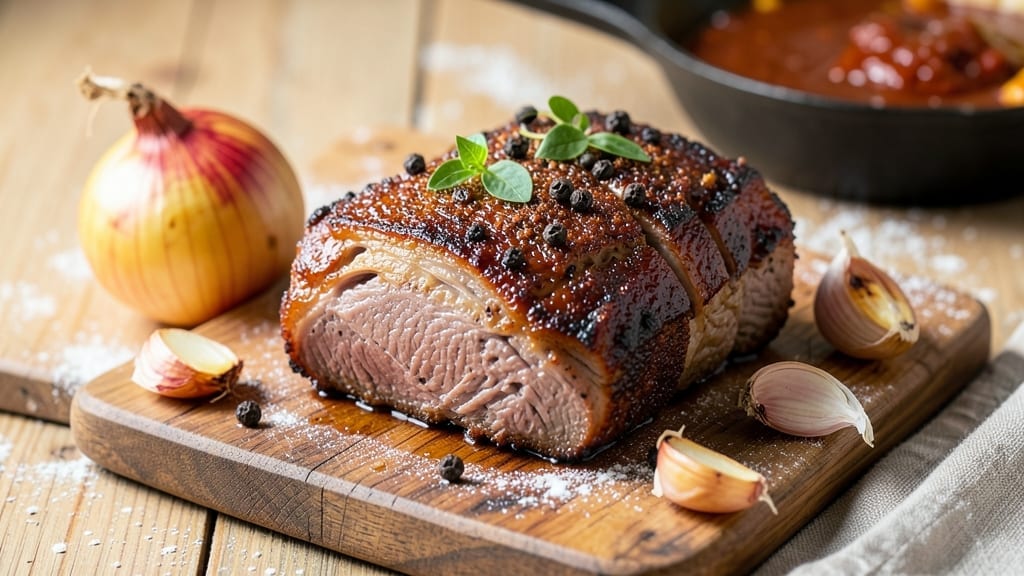
Transforming tough cuts into melt-in-your-mouth perfection starts with this small beef brisket recipe designed for home cooks who crave restaurant-quality results without the hours of prep.
The secret lies in a slow-smoked spice rub that tenderizes the meat while building layers of flavor—something I perfected after years of experimenting with French technique and smoky traditions.
There’s nothing quite like the first pull of that tender, caramelized bark revealing juicy meat beneath, especially when you’re working with a smaller cut that cooks faster than a full packer.
What sets this recipe apart is the balance of simplicity and precision: just five core spices in the rub, a 3-hour cook time (not the 12+ hours of traditional brisket), and a foolproof method that works in your oven, on a grill, or even in a slow cooker.
The key is maintaining a steady 225°F temperature while letting the rub develop a deep, smoky crust that seals in all those juices. I learned this technique the hard way—burning through three batches before nailing the exact timing and temperature window.
By the time you slice into this brisket, you’ll be rewarded with fork-tender meat that practically falls apart, a rich mahogany crust from the rub, and enough flavor to satisfy even the most critical BBQ judges. The best part?
This method transforms a tough, inexpensive cut into something so luxurious it feels like a special occasion—without requiring a full day of your time. Serve it with classic sides like creamy mashed potatoes or buttery cornbread to complete the meal.
This recipe isn’t just about the meat—it’s about the entire experience. The aroma filling your kitchen as it cooks, the way the rub clings to the meat like a second skin, and that first bite where all the flavors come together.
Whether you’re feeding a family or treating yourself to a Sunday supper, this brisket delivers results that taste like they came from a professional pitmaster’s smoker. Let’s get started on creating your own showstopping centerpiece.
Ingredients for small beef brisket
Five spices, one tender cut, and hours of smoky magic—this brisket transforms tough beef into melt-in-your-mouth perfection.
| Ingredient | Amount | Notes |
|---|---|---|
| Beef Brisket 🥩 | 2 lb | Flat cut, 1-inch thick |
| Yellow Onion 🧅 | 1 whole | Sliced into 1/4-inch strips |
| Garlic Cloves 🧄 | 6 cloves | Minced for rub |
| Kosher Salt 🧂 | 2 tbsp | Diamond Crystal preferred |
| Smoked Paprika 🌶️ | 1 ½ tbsp | For deep smoky flavor |
| Ground Black Pepper 🌶️ | 1 ½ tbsp | Freshly cracked |
| Ground Cumin 🌿 | 1 tbsp | Toasted for warmth |
| Brown Sugar 🍯 | 1 tbsp | Light or dark |
| Apple Cider Vinegar 🍎 | 1 tbsp | For tenderizing |
| Unsalted Butter 🧈 | 2 tbsp | Cold, for basting |
| Beef Broth 💧 | ½ cup | Low-sodium preferred |
| Fresh Rosemary 🌿 | 1 tbsp | Chopped, optional garnish |
[recipe_ingredient_scaler]
The brisket cut is everything here. Flat cut (not point cut) gives you that perfect balance of tenderness and bark. Most butchers will trim it for you, but if you’re buying whole, ask for a 1-inch thick slice—thinner than traditional brisket but perfect for our shorter cook time. I always grab mine from Costco or my local Whole Foods butcher counter where they handle it carefully. Look for good marbling—those little white streaks of fat are what keep the meat juicy. If you can’t find a butcher, Walmart or Kroger usually carry pre-trimmed brisket flats in the meat section. Just avoid anything that smells sour or has grayish edges.
No smoked paprika? Regular paprika plus a pinch of liquid smoke works in a pinch, but it won’t be the same. The cumin is non-negotiable—it’s what gives that deep, earthy backbone to the rub. Toast your spices in a dry pan for 30 seconds before mixing—they’ll taste 10 times better. Short on time? Pre-made BBQ rubs (like Badia or McCormick) can work, but cut the salt in half since we’re adding extra kosher salt. The apple cider vinegar might seem odd, but it’s what breaks down those tough muscle fibers. White vinegar works too if you’re out, but the apple adds subtle sweetness. For the butter, full-fat is a must—none of that low-fat nonsense here.
This brisket keeps beautifully. Wrap the cooked meat tightly in foil and store in the fridge for up to 5 days, or freeze for 3 months in a sealed container. The flavor actually improves after resting overnight—all those juices redistribute. I like to slice it thin against the grain and portion into meal-prep containers for sandwiches all week. For serving, let it sit at room temp for 20 minutes before slicing—you’ll get cleaner cuts. The rub makes extra, so save it in a small jar for future batches. Trust me, you’ll want to make this again.
Why You’ll Love This Recipe
- No-Fuss Prep: I’ll be real—this brisket only needs five things, and half of them are pantry staples. Slice the onion, crush the garlic, sprinkle the salt and paprika, then let the oven do the rest. (Yes, even on a Tuesday night.)
- Smoky-Sweet Magic: That smoked paprika and kosher salt combo turns tough brisket into something tender and rich. The onions caramelize just enough to add depth without overpowering—like a deep, savory hug in bite form.
- Leftovers That Shine: I make this on Sundays because it tastes even better the next day. Shred it for tacos, sandwiches, or even a quick pasta dish. Honestly, I’ve eaten it cold in a wrap, and it was still solid.
- Budget Winner: A small brisket stretches farther than you’d think, especially when you’re feeding a crowd or meal prepping. It’s cheaper than takeout but way more impressive—my secret weapon for potlucks and lazy dinners.
Step-by-step instructions for slow-smoked spice brisket
Here’s how to transform a tough cut into melt-in-your-mouth perfection with simple techniques.
Prepare the Brisket and Rub
Start with the 2 lb beef brisket and trim any excess fat, leaving about ¼ inch. Pat it completely dry with paper towels—this helps the rub adhere and creates crispy bark. Place the brisket on a plate and make small slits in the fat cap using a sharp knife, about ½ inch deep and 1 inch apart. This allows the rub to penetrate deeper into the meat.
In a small bowl, combine the 2 tbsp kosher salt, 1.5 tbsp smoked paprika, 1.5 tbsp ground black pepper, 1 tbsp ground cumin, 1 tbsp brown sugar, and 1 tbsp apple cider vinegar. Mix well to create the dry rub. Generously coat the brisket with the rub, pressing it into every crevice. Place the brisket on a wire rack set over a baking sheet and refrigerate uncovered for at least 1 hour, or up to 24 hours. This resting time lets the rub penetrate and the meat dry out slightly for better bark formation.
Slow-Smoke the Brisket
Preheat your smoker to 225°F using hickory or oak wood. Place the brisket fat-side up on the smoker grate. Insert a meat probe thermometer into the thickest part of the brisket, making sure it doesn’t touch bone. Smoke the brisket for 6 hours, maintaining the 225°F temperature. The bark should develop a deep, dark crust, and the internal temperature should reach 165°F. This is the “stall” phase—don’t panic if the temperature plateaus.
Here’s the thing—when the internal temperature hits 165°F, wrap the brisket tightly in butcher paper (not foil) and return it to the smoker. This technique, called the “Texas crutch,” helps push the brisket past the stall while preserving that beautiful bark. Continue smoking until the internal temperature reaches 200-205°F and the meat is fork-tender, which should take another 4-6 hours. The total cooking time will be about 10-12 hours.
Rest and Slice
Once the brisket reaches the target temperature, remove it from the smoker and let it rest in the butcher paper for at least 1 hour, or up to 2 hours in a cooler. This resting period allows the juices to redistribute throughout the meat, ensuring each slice is moist and flavorful. Don’t skip this step—cutting into the brisket too soon will result in dry, tough slices.
After resting, slice the brisket against the grain into ¼-inch thick slices. The grain direction will be visible as lines running through the meat. Serve immediately with the sliced 1 whole yellow onion, minced 6 cloves garlic cloves, and garnish with the 1 tbsp chopped fresh rosemary. The brisket should be fork-tender with a dark, flavorful bark and juicy interior. Enjoy with the remaining ingredients like the 2 tbsp unsalted butter and 0.5 cup beef broth for basting or making a quick pan sauce.
Pro Tips For Making Small Beef Brisket
- Trim the Fat First: Slice off that thick white fat cap before cooking—yes, even if it looks like a pain. It’s the difference between a brisket that renders its own juices and one that steams into dryness.
- Salt the Onions: Toss your sliced onions with a pinch of kosher salt before cooking. It breaks them down faster and pulls out moisture, so they caramelize instead of turning to mush.
- Start with a Sear: Get that brisket screaming hot in a dry pan for 3-4 minutes per side before adding any liquid. The crust locks in flavor—no, it won’t ruin your nonstick pan, and yes, it’s worth the extra step.
- Crush the Garlic: Smash those garlic cloves flat with the side of your knife before adding them. They’ll infuse the oil faster and won’t burn—sounds small, but it makes a real difference when you’re simmering low and slow.
Serving suggestions for leftovers
Bark and Butter
Nothing elevates brisket like a simple butter baste—just melt 2 tbsp unsalted butter with ½ cup beef broth in a small saucepan over medium heat. Brush this golden mixture over the brisket during the last 30 minutes of cooking.
The butter adds richness while the broth keeps the meat moist. I like to baste every 15 minutes to build layers of flavor. 🧈
Classic Sides
Creamy mashed potatoes with sour cream and chives make the perfect foil for brisket’s bold flavors. For a Southern twist, serve with buttery cornbread—its slight sweetness cuts through the smoky rub.
I always make a big batch of pickled red onions (thinly sliced onions in vinegar, sugar, and salt) to add tangy crunch to every bite. 🥔
Sandwich Potential
Slice the brisket thin against the grain and pile it onto toasted brioche buns with sharp cheddar cheese and sliced jalapeños for a next-level brisket sandwich. Add a smear of garlic aioli for extra richness.
I like to serve these with a side of crispy potato wedges for a hearty meal. The brisket’s tenderness holds up perfectly in sandwich form. 🥪
Garnish Like a Pro
Fresh rosemary sprigs scattered on top add a fragrant, herbal note that brightens the dish. For extra flair, sprinkle with crushed red pepper flakes if you want heat. I also love drizzling a little hot honey over the brisket just before serving—it adds a sweet-spicy contrast that’s irresistible. 🌿
Leftovers Reinvented
Turn brisket into tacos by shredding it and serving with warm tortillas, avocado slices, and lime crema. For a cozy meal, make brisket hash with diced potatoes, onions, and fried eggs.
The key is keeping the meat moist—add a splash of beef broth when reheating. Leftovers taste even better the next day! 🌯
Drink Pairings
A bold red wine like Cabernet Sauvignon or Syrah stands up to the smoky, spicy flavors. For beer lovers, a dark lager or amber ale complements the richness. I also enjoy a smoked whiskey cocktail with a splash of apple cider—it’s like drinking the flavors of the brisket itself. 🍷
Nutrition facts
Frequently asked questions
Can I cook this small brisket recipe without a smoker?
Use your oven set to 225°F with a water pan on the bottom rack to create steam. Place the brisket on a wire rack over a baking sheet, and insert an oven-safe meat thermometer. The cook time will be similar—just monitor the temperature closely to avoid hot spots. For extra smokiness, add wood chips to a foil packet and place it on the oven rack during cooking.
What’s the difference between flat cut and point cut brisket?
The flat cut (used here) is leaner and more tender, perfect for quick cooking. The point cut has more fat and connective tissue, needing longer cooking. For this recipe, stick with flat cut—it yields melt-in-your-mouth results in just 3 hours of active cooking time. Point cut would require 8+ hours to become tender.
Why does my brisket turn out dry even after resting?
Overcooking or slicing too soon are the usual culprits. Always aim for 200-205°F internal temp, not 165°F. Rest for at least 1 hour (longer in a cooler) before slicing. Pro tip: Wrap in butcher paper (not foil) during the last hour to lock in moisture while developing bark.
Can I use this recipe for a brisket sandwich?
Perfect for sandwiches! Slice the brisket ¼-inch thick against the grain and pile on toasted brioche with sharp cheddar and jalapeños. The tender meat holds up beautifully. For extra flavor, brush with garlic aioli before serving. This method creates slices that stay juicy even when stacked.
How do I store leftover brisket?
Wrap tightly in foil or butcher paper and refrigerate for up to 5 days. For longer storage, freeze in portions for 3 months. Reheat gently with beef broth to prevent drying. The flavor actually improves overnight—perfect for brisket tacos or hash the next day!

Trained in classic French technique but raised on slow-cooked ribs and spicy rubs, she blends culinary skill with smoke and soul.
- Best Smoked Oxtail Recipe: Deep-Rich Flavor After Low-and-Slow Cooking - October 14, 2026
- Pit Boss Smoked Prime Rib Roast Recipe: Bark-to-Bone Crispness in 4 Hours - October 14, 2026
- Smoked Tuna Steak Recipe: Seared Crust Meets Silky Centers - October 14, 2026