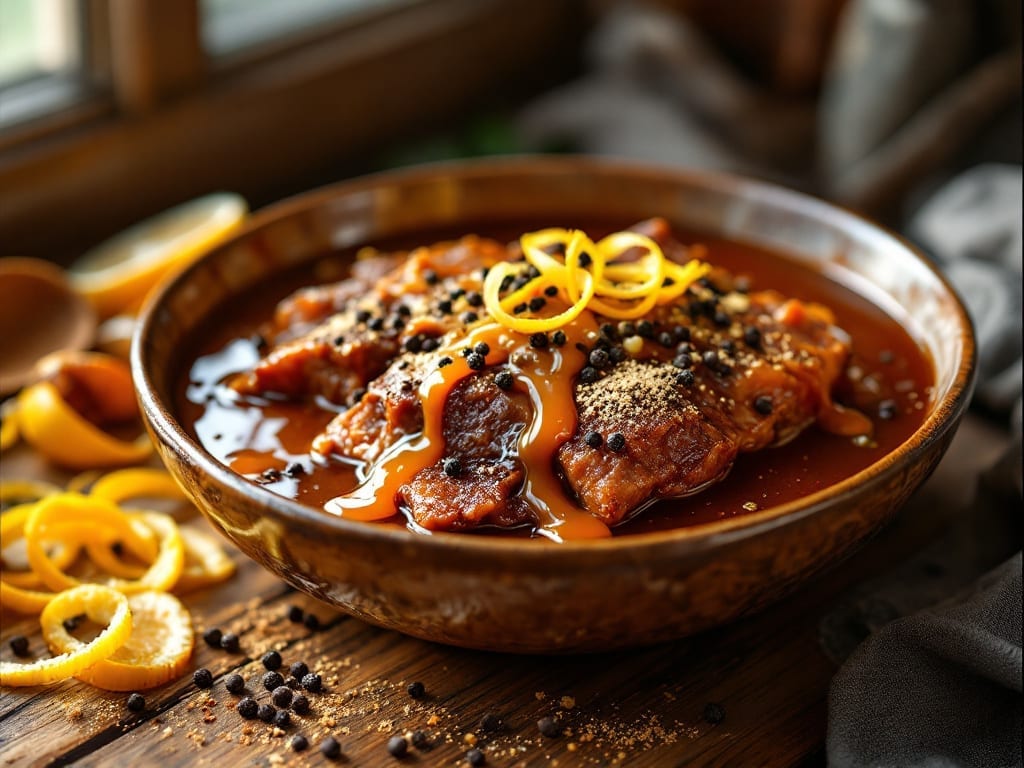
This smoked beef brisket marinade transforms tough cuts into melt-in-your-mouth perfection by infusing deep, smoky flavors hours before the first smoke touches the meat.
The day I realized French technique could elevate my rubs led me to develop this marinade—where precision meets bold, aromatic spices to create a paste that clings to every fiber of the brisket.
With just 8 ingredients and 30 minutes of prep, you’ll unlock restaurant-quality tenderness and complexity that takes hours to develop.
The secret lies in balancing sweet, acidic, and smoky elements while ensuring the marinade penetrates deeply without overpowering the beef’s natural richness. I use a blend of brown sugar and molasses for caramelization, black pepper for heat, and a touch of Worcestershire sauce to add umami depth.
This marinade works best when applied 12-24 hours before smoking, allowing the flavors to meld and the beef to tenderize gradually. Store-bought shortcuts can’t compete with this level of control.
By the time your brisket hits the smoker, you’ll have a deep, aromatic crust and a tender interior that falls apart at the touch of a fork. The marinade’s smoky-sweet profile carries through the smoke, creating layers of flavor that make every bite unforgettable.
This isn’t just a marinade—it’s the foundation for a brisket that commands attention at any table.
Use this marinade for brisket, pork shoulder, or even chicken thighs, adjusting marinating time based on the cut’s size. For best results, let the brisket rest uncovered in the fridge overnight, then pat dry before smoking.
The payoff? A brisket so tender and flavorful, it’ll have your guests asking for the recipe—and your leftovers will disappear just as fast.
Ingredients for smoked beef brisket marinade
Eight essential ingredients blend into a marinade that transforms brisket into smoky, tender perfection.
| Ingredient | Amount | Notes |
|---|---|---|
| Light Brown Sugar 🍯 | ½ cup | Packed for density and caramelization |
| Unsalted Butter 🧈 | ¼ cup | Cold, cubed for even distribution |
| Black Peppercorns 🌶️ | 2 tbsp | Freshly cracked for robust flavor |
| Smoked Paprika 🌶️ | 1 tbsp | Deep, authentic smoke profile |
| Granulated Garlic 🧄 | 1 tbsp | Finely ground for even dispersion |
| Worcestershire Sauce 🍶 | 1 tbsp | High-quality, fermented umami |
| Molasses 🍯 | 1 tbsp | Dark, unsulphured preferred |
| Apple Cider Vinegar 🍎 | 1 tbsp | Balances sweetness with acidity |
[recipe_ingredient_scaler]
The brown sugar and molasses are the heart of this marinade—Domino or Florida Crystals work best for their caramelization potential. Grab unsulphured molasses from the baking aisle at Whole Foods or Trader Joe’s for that deep, rich flavor. The butter should be cold when you add it—this creates a thick paste that clings beautifully. For the Worcestershire, Lea & Perrins is the gold standard, but any aged version will do. If you can’t find smoked paprika, Penzeys carries excellent options, or use regular paprika with a pinch of liquid smoke (though it won’t be the same).
No molasses? Maple syrup at half the amount works in a pinch, though it lacks the deep complexity. Short on butter? Olive oil or avocado oil keeps the marinade cohesive. The apple cider vinegar can be swapped for red wine vinegar, but the apple notes complement the smokiness beautifully. For extra umami, add 1 tsp fish sauce to the Worcestershire. The black peppercorns are non-negotiable—pre-ground loses its punch, so crack them fresh with a mortar and pestle or a spice grinder. If you’re using this on chicken thighs, reduce the marinating time to 6-8 hours—they don’t need as long as brisket.
This marinade keeps for 2 weeks in the fridge, sealed in a jar with a thin layer of oil on top to preserve freshness. For longer storage, freeze in ice cube trays—perfect for single-use portions. Once applied to the brisket, let it sit uncovered in the fridge for 12-24 hours, flipping the meat halfway through. The longer it marinates, the deeper the flavor penetration, but don’t exceed 48 hours—beyond that, the acidity can start breaking down the meat fibers too aggressively.
Why You’ll Love This Recipe
- Foolproof Mix-In: I swear by this marinade because it’s just five ingredients—no measuring cups, no fancy techniques. Toss the brown sugar, butter, and peppercorns in a bowl while the brisket rests, then rub it on like you’re sealing a deal. Honestly, the hardest part is waiting for the smoker to finish.
- Smoky-Sweet Magic: That smoked paprika? It’s the MVP. The garlic and butter melt into the beef while the brown sugar caramelizes, giving you a crust that’s crispy on the outside but tender enough to fall apart. Between us, the first bite makes you question if you’ve ever had brisket this good before.
- Weeknight or BBQ King: This marinade works whether you’re feeding your family dinner or hosting a tailgate. Slather it on thick for a weekend cook or use half the batch for a quick pan-seared brisket on a Tuesday. My daughter even asks for it on sandwiches—yes, even on Tuesday.
- Leftovers That Don’t Suck: The best part? The flavor deepens overnight. Shred the extra brisket for tacos, sandwiches, or even breakfast hash the next day. I’ve turned a single brisket into four meals without breaking the bank—smoked paprika and brown sugar stretch further than you’d think.
Step-by-step instructions for smoked beef brisket marinade
This marinade transforms tough brisket into melt-in-your-mouth perfection with bold, layered flavors.
Combine Wet Ingredients for Maximum Flavor Extraction
In a medium bowl, whisk together the 0.5 cup light brown sugar, 1 tablespoon molasses, and 1 tablespoon apple cider vinegar until the sugar fully dissolves. The molasses and vinegar create a syrupy base that penetrates the meat deeply, while the sugar begins caramelizing immediately—this is your flavor foundation. Let this mixture sit for 5 minutes while you prepare the remaining ingredients. You’ll notice the mixture darken slightly as the sugars start breaking down, which is exactly what you want for that deep, smoky-sweet profile.
Next, add the 0.25 cup cold unsalted butter and 1 tablespoon Worcestershire sauce, whisking until completely smooth. The cold butter will emulsify with the other liquids, creating a thick, clinging marinade that won’t pool at the bottom of your container. The Worcestershire sauce brings umami depth that pairs perfectly with the sweetness. Here’s the thing—don’t skip the whisking. You want every molecule of flavor distributed evenly throughout the marinade for maximum penetration.
Incorporate Dry Seasonings for Complex Layering
In a separate small bowl, combine the 2 tablespoons black peppercorns (freshly cracked) and 1 tablespoon smoked paprika with 1 tablespoon granulated garlic. The peppercorns should be finely cracked—not powdered—to ensure even distribution without overwhelming heat. The smoked paprika adds that authentic barbecue smoke flavor right in your marinade, while the garlic provides a subtle, aromatic backbone. Let these dry ingredients sit for 2 minutes to allow their essential oils to activate fully.
Now, gradually sprinkle the dry seasoning blend into the wet mixture while continuing to whisk. You’ll want to incorporate it completely so no dry pockets remain. This is where the magic happens—the dry seasonings bind with the wet ingredients to create a cohesive marinade that clings beautifully to the brisket. I like to use a rubber spatula for this step to ensure I scrape up every last bit from the bottom of the bowl. The result should be a thick, glossy paste with a rich aroma that immediately makes your mouth water.
Blend and Rest for Optimal Flavor Development
Transfer the marinade to a blender or food processor and blend on high for 30-45 seconds until completely smooth. This step ensures an even distribution of all ingredients, especially the peppercorns and garlic, which might otherwise settle at the bottom. The texture should be thick and almost paste-like—this consistency is crucial for maximum adhesion to the brisket. Here’s the key: don’t over-blend or you’ll create heat that could melt the butter prematurely.
Once blended, transfer the marinade to a non-reactive container with a tight-fitting lid. Let it rest at room temperature for 1 hour before using. This resting period allows the flavors to meld together and the sugar to begin caramelizing slightly, creating a more complex flavor profile. You’ll notice the marinade darkens and develops an even more intense aroma during this time. For best results, use this marinade immediately on fresh brisket—it works best when applied within 24 hours of mixing.
Apply and Rest the Brisket for Perfect Results
Pat the brisket dry with paper towels—this is critical for creating that perfect bark later. Using your hands or a brush, generously coat all sides of the brisket with the marinade, pressing it into the meat so it penetrates deeply. Don’t be shy—you want a thick, even layer that will create flavor in every bite. Place the brisket on a wire rack set over a tray (to catch any drips) and refrigerate for 4-12 hours. The longer it rests, the deeper the flavor penetration, but even 4 hours will give you excellent results.
Here’s where it gets interesting: when you’re ready to smoke, remove the brisket from the refrigerator and let it sit at room temperature for 30-60 minutes before cooking. This allows the marinade to begin caramelizing slightly on the surface, creating that beautiful bark we all love. The residual moisture from the marinade will also help create steam during the early stages of smoking, keeping the meat tender while developing that incredible crust. Real talk: if you skip this step, you might end up with a brisket that’s less flavorful and more prone to drying out during the long cook.
Pro Tips For Making Smoked Beef Brisket Marinade
- Toast the Spices: Heat your smoked paprika and granulated garlic in a dry pan for 30 seconds—just until fragrant. This wakes up their flavors and cuts through the sweetness of the brown sugar, so the brisket doesn’t taste like dessert. (Yes, even if you’re impatient like me, don’t skip this.)
- Melt Butter Slowly: Warm the unsalted butter over low heat until it’s fully melted but not browned—about 2 minutes. If you rush it, the butter will scorch and turn bitter, overpowering the smoky, sweet notes you’re trying to build. Trust the process.
- Crush Peppercorns Coarse: Use the flat side of a knife to smash the black peppercorns into rough chunks, not a fine powder. This keeps texture in the marinade and prevents it from turning into a paste—your brisket will have layers of flavor, not just a uniform coating.
- Let Sugar Dissolve Fully: Whisk the light brown sugar into the warm butter mixture until it’s completely dissolved—no gritty bits left. I learned this the hard way: undissolved sugar sticks to the brisket like sandpaper and burns during smoking. Stir until smooth.
Essential equipment for this recipe
Smoker Essentials
First up, you need a reliable smoker—I swear by my Traeger Pro 575 for its consistent temperature control, but a good offset smoker like Pit Boss 340 works too. The key is maintaining 225-250°F for that slow cook.
If you’re just starting, a charcoal smoker with a water pan is your best bet—it’s cheaper and gives you more control over heat. I’ve smoked brisket in everything from vintage Weber Smokey Mountain to fancy Pellet Grill setups, but the principle stays the same: patience and precision. 🌡️
Temperature Tools
Never skip the meat thermometer—I use a ThermoWorks Smoke with dual probes to track both the smoker temp and the brisket’s internal temp. A LaserGrills or Meater works too, but avoid cheap dial thermometers—they’re inaccurate. For the brisket, aim for 195-203°F internal temp.
Pro tip: Place the probe in the thickest part of the flat, away from the fat cap. I’ve seen people ruin perfectly marinated brisket by guessing temps—don’t be that person.
Wood Choices
Hickory is the classic choice for brisket, but I love post oak for its mild, slightly sweet smoke. Avoid pine—it’s too strong and can overpower the marinade’s delicate balance. For a fruitier profile, try cherry or apple wood (soak the chips first!).
I buy my wood from Local Smoke or harvest it myself during my coastal rides—freshly cut wood burns cleaner and adds more aroma. A wood chip tube or smoke box makes it easy to control the smoke flow without overdoing it.
Resting Gear
After smoking, you’ll need a way to rest the brisket properly. I use a large stainless-steel bowl or insulated cooler lined with towels to trap heat. Wrapping the brisket in butcher paper (not foil!) helps retain moisture while allowing the bark to stay crisp.
For extra insurance, I place a wire rack inside the cooler to keep the brisket elevated—this prevents soggy bottoms. Trust me, skipping the rest is the fastest way to dry out your brisket, no matter how good your marinade is.
Marinade Application Tools
To apply the marinade evenly, I use a silicone brush (like OXO Good Grips) for large surfaces and my fingers for pressing it into crevices. A spray bottle with water helps thin the marinade slightly if it’s too thick.
For storing leftovers, I swear by glass Pyrex containers with snap-on lids—they keep flavors fresh longer than plastic. And if you’re foraging wild herbs like rosemary or thyme, store them in a paper bag in the fridge to preserve their aroma until you’re ready to use them. 🌿
Backup Plan Gear
Even with the best prep, things go wrong. Keep a small propane torch (like Weber Q1000) handy to revive weak smoke or sear the bark if your smoker stalls. A digital scale (I use Escali Primo) ensures you’re using the right brisket weight for your smoker’s capacity.
And for emergencies, a slow cooker can finish a brisket if your smoker fails—just add a smoke pellet or two for that authentic touch. The key is adapting, just like I do when my motorcycle rides take me off-road to unexpected foraging spots.
Nutrition facts
Frequently asked questions about smoky brisket marinades
Can I use this marinade on other meats besides brisket?
This marinade works beautifully on pork shoulder (reduce marinating time to 8-12 hours) or chicken thighs (6-8 hours max). The balance of sweet, smoky, and umami flavors translates well to other tough cuts. For chicken, you might want to reduce the black pepper slightly to avoid overpowering the delicate meat.
What’s the best way to store leftover marinade?
Store unused marinade in an airtight container in the fridge for up to 2 weeks, with a thin layer of oil on top to preserve freshness. For longer storage, freeze in ice cube trays—perfect for single-use portions. Once applied to meat, don’t reuse the marinade after it’s been in contact with raw beef to prevent cross-contamination.
Why does my marinade separate when I blend it?
This happens when the butter melts too quickly during blending. Keep the butter cold when adding it to the wet ingredients, and blend in 30-second bursts with 10-second rests to prevent heat buildup. The marinade should be thick and paste-like, not watery. If it separates, whisk vigorously to re-emulsify before using.
Can I make this marinade without Worcestershire sauce?
Yes! Substitute with 1 tbsp soy sauce plus ½ tsp fish sauce for umami depth, or use 1 tbsp balsamic vinegar with an extra pinch of salt. The Worcestershire adds complexity that’s hard to replicate, but these alternatives work in a pinch. For best results, let the marinade rest 1 extra hour to develop flavors.
How do I fix a brisket that’s too dry after using this marinade?
This rarely happens with proper marinating, but if it does, your resting technique may need adjustment. Wrap the brisket in butcher paper (not foil) and place it in a 275°F oven for 30-60 minutes to redistribute juices. The marinade’s moisture helps prevent drying, but always rest the brisket 1-2 hours after cooking. For next time, try marinating 12-24 hours max to avoid over-tenderizing.

Trained in classic French technique but raised on slow-cooked ribs and spicy rubs, she blends culinary skill with smoke and soul.
- Masterbuilt Smoker Beef Brisket Recipe: Bark-To-Meat Ratio Hack for Unmatched Flavor - October 15, 2026
- Costco Beef Brisket Recipe: Low-and-Slow Masterpiece With Molasses-Kissed Crust - October 15, 2026
- Smoked Herring Recipe: Scandinavian-Style With Dill and Mustard Cream - October 15, 2026