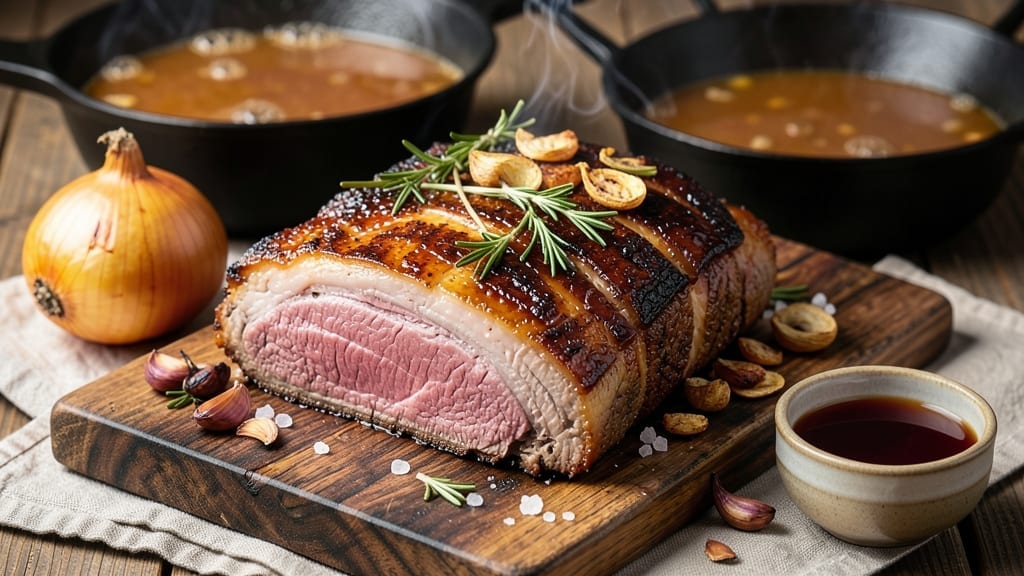
Mastering a smoking beef brisket recipe transforms tough cuts into fork-tender perfection that rivals any competition BBQ. The key lies in patience—low and slow, with just the right bark and wood smoke infusion.
I still remember the first time I nailed this technique at my family cookout, when the brisket fell apart at the touch of a fork.
This method delivers restaurant-quality results with a simple approach: a well-balanced dry rub, precise temperature control, and careful monitoring. The secret weapon is maintaining a consistent 225°F smoke for 12-16 hours, which breaks down collagen while building that prized dark bark.
I prefer using a mix of hickory and oak for that classic barbecue flavor without overpowering the beef.
By the time you’re done, you’ll have meat so tender it practically melts in your mouth, with a crust that’s perfectly balanced between crispy and chewy. The aroma alone will have everyone gathering around your grill, and each slice will reveal juicy, flavorful meat that’s worth every hour of smoking.
This is the kind of brisket that makes people ask for seconds before they’ve even finished their first plate.
Serve with classic sides like baked beans, coleslaw, or cornbread to complete the experience. Whether you’re hosting a backyard gathering or treating yourself to a special meal, this brisket delivers the kind of satisfaction that comes from true barbecue mastery. Let’s get started on creating your perfect brisket.
Ingredients for smoking beef brisket
Sixteen ingredients for the ultimate low-and-slow masterpiece that transforms tough beef into melt-in-your-mouth perfection.
| Ingredient | Amount | Notes |
|---|---|---|
| Beef Brisket 🥩 | 8 lb | Packaged flat cut, good marbling |
| Yellow Onion 🧅 | 1 whole | Yellow or red, sliced thick |
| Garlic Cloves 🧄 | 8 cloves | Peeled, whole for smoking |
| Apple Cider Vinegar 🍏 | ½ cup | For spritzing during smoke |
| Beef Broth 🍲 | 1 cup | Low-sodium preferred |
| Kosher Salt 🧂 | ½ cup | Coarse for crust development |
| Black Pepper 🌶️ | 2 tbsp | Freshly cracked preferred |
| Smoked Paprika 🌶️ | 2 tbsp | For deep bark color |
| Brown Sugar 🍯 | ¼ cup | Light or dark, packed |
| Ground Mustard 🌿 | 1 tbsp | Dry, for subtle tang |
| Garlic Powder 🧄 | 1 tbsp | Freshly ground preferred |
| Onion Powder 🧅 | 1 tbsp | For balanced flavor |
| Hickory Wood Chips 🌳 | 2 cups | Oak chips optional for blend |
| Butter 🧈 | ½ cup | Unsalted, softened for wrap |
| Fresh Parsley 🌿 | ¼ cup | Chopped, for garnish |
[recipe_ingredient_scaler]
The brisket is non-negotiable—look for a packaged flat cut with thick fat cap and good marbling. Costco or local butcher shops often have the best quality, but the regular supermarket will work if it’s fresh. An 8-pound brisket feeds a crowd (6 servings), but go bigger if you’re feeding hungry BBQ lovers. Trim excess fat if it’s too thick, but leave that fat cap—it protects the meat and renders down for flavor. The wood chips? Hickory is classic, but I like blending in oak for a smoother smoke. Soak them in water for 30 minutes before using—this prevents flare-ups and keeps the smoke steady.
No smoked paprika? Regular paprika plus a pinch of liquid smoke gets you close, though it won’t be as vibrant. Brown sugar substitutes? Turbinado or coconut sugar work, but they won’t caramelize the same way. Short on beef broth? Water plus a bouillon cube is fine, but add a splash of vinegar to mimic the acidity. The butter wrap at the end is where the magic happens—use unsalted butter (salted can make the meat too salty) and let it soften to room temperature. For the rub, I always double-check the spices: if your black pepper looks like dust, toast it in a dry pan for 30 seconds to wake up the flavor. Fresh parsley is ideal, but dried works in a pinch (use half the amount).
This brisket is all about patience—plan for 12-16 hours of smoking time. The bark develops in the last 2-3 hours, so don’t rush it. Wrap the brisket in foil with the butter and beef broth after the first 6 hours to keep it moist (this is called the Texas crutch, and it’s a game-changer). Store leftovers in the fridge for up to 5 days, or freeze portions for 3 months. The meat gets even better the next day as the flavors meld. For serving, slice against the grain—this is the secret to tender bites every time. And save those juices! They’re perfect for gravy or drizzling over the slices.
Why You’ll Love This Recipe
- Foolproof First Timer: I swear by this recipe because it turns a tough cut into something tender without requiring a PhD in smoking. The vinegar and broth do most of the work while you sip coffee—no fiddling with wood chips or temperature swings.
- Deep Umami Magic: That slow-smoked garlic and caramelized onions? They melt into the beef like a flavor bomb. The apple cider vinegar adds just enough tang to cut through the richness—trust me, your taste buds will thank you.
- Budget Beef That Impresses: A whole packer costs less than takeout but feeds a crowd. The onions and broth stretch the flavor so you’re not just eating meat—you’re eating meal. Honestly, my wallet and guests are both happier.
Step-by-step instructions for smoking beef brisket
Here’s the method I’ve perfected for brisket that’s fork-tender inside with a deep, smoky bark.
Prepare the Brisket with Dry Rub
Start by trimming the fat cap of the 8 lb beef brisket to about ¼ inch thickness using a sharp boning knife. Leave the fat on the sides and edges for flavor and moisture protection. Pat the entire surface dry with paper towels – this helps the rub adhere and creates a better bark.
In a small bowl, combine the 0.5 cup kosher salt, 2 tbsp black pepper, 2 tbsp smoked paprika, 0.25 cup brown sugar, 1 tbsp ground mustard, 1 tbsp garlic powder, and 1 tbsp onion powder. Mix well until evenly distributed. Generously apply this dry rub all over the brisket, pressing it into the meat so it sticks. Place the rubbed brisket on a wire rack set over a baking sheet and refrigerate uncovered for 12-24 hours. This resting period allows the rub to penetrate deeply and the meat to dry slightly for better bark formation.
Set Up the Smoker for Low and Slow Cooking
Soak the 2 cups hickory wood chips in water for 30 minutes before using. Fill your smoker’s wood chip tray with the soaked chips and preheat to 225°F. I’ve found this low temperature is crucial for tenderizing the tough brisket fibers without drying it out. Place a water pan in the smoker to maintain moisture levels during the long cook.
When the smoker reaches 225°F and you see clean, blue smoke (not thick white steam), it’s ready. Position the brisket fat-side up on the smoker grates. This orientation allows the rendered fat to baste the meat as it cooks, adding flavor and moisture. Close the lid and resist the temptation to open it frequently – every time you peek, you lose heat and extend cooking time.
Smoke Until Probe-Tender with the Texas Crutch
Smoke the brisket undisturbed for 6-8 hours, or until the internal temperature reaches 165-170°F. This is when you’ll hit “the stall” – a period where the internal temperature stops rising as moisture evaporates. Don’t panic; this is normal and expected with brisket. The reason we wait until this point to wrap is that we want maximum bark development before protecting the meat.
At the stall, wrap the brisket tightly in butcher paper (not foil) with the 0.5 cup softened butter spread evenly over the surface. This technique, called “the Texas crutch,” helps power through the stall while maintaining some bark. Return the wrapped brisket to the smoker and continue cooking until the internal temperature reaches 200-205°F, which should take another 4-6 hours. You’ll know it’s done when a meat probe slides in like butter with no resistance.
Rest and Slice for Maximum Juiciness
Remove the brisket from the smoker and let it rest in the butcher paper for at least 1 hour (I prefer 2 hours). This resting period is crucial as it allows the juices to redistribute throughout the meat. During this time, the internal temperature will rise about 5-10°F, which is perfect for serving. While it rests, prepare your serving platter and gather the 0.25 cup fresh parsley for garnish.
Unwrap the brisket and locate the grain direction – you’ll see lines running through the meat. Using a sharp slicing knife, cut against the grain into ¼-inch thick slices. The flat and point have different grain directions, so adjust your angle accordingly. Serve immediately with the apple cider vinegar spritzed over the top for brightness and the beef broth on the side for dipping. Each slice should be fork-tender with a beautiful mahogany bark on the outside.
Pro Tips For Making Smoking Beef Brisket
- Trim the Fat Cap: That thick layer of fat on the brisket? Don’t cut it off—leave it intact. It’ll render down during smoking, self-basting the meat and keeping it juicy, especially when you’re dealing with a tougher cut like the flat. (Yes, even if it looks messy at first.)
- Sear Before Smoke: Hit the brisket with a hot cast-iron or grill pan for 3-4 minutes per side before it goes on the smoker. The crust locks in flavor and prevents the rub from washing off when you add liquid later. I learned this the hard way—skipping it means a weaker bark and less depth in the final sauce.
- Vinegar First, Not Last: Add the apple cider vinegar to the beef broth early—right when you start the smoke. It tenderizes the meat over time instead of just adding acid at the end. (Your future self will notice the difference when slicing into fork-tender brisket.)
- Don’t Crowd the Pan: When deglazing the onions and garlic, spread them out in a single layer. Piling them up leads to burning and bitter flavors, especially with the vinegar in play. A little patience here means a smoother, sweeter base for your brisket sauce.
Dietary considerations for these flavors
Gluten-Free Adaptations
Brisket itself is naturally gluten-free, but watch your dry rub ingredients. Regular brown sugar often contains anti-caking agents with gluten traces, so opt for certified gluten-free brown sugar like Anthony’s or Wholesome!.
Double-check your smoked paprika and spices for cross-contamination warnings. I always keep a separate spice rack for gluten-free cooking to avoid mix-ups. 🌾
Low-Carb Options
To make this brisket keto-friendly, skip the brown sugar in the rub and replace it with 1 tbsp erythritol or monk fruit sweetener. Use 1 tbsp coconut aminos instead of soy sauce if you’re also avoiding gluten.
The butter wrap remains perfect for low-carb diets—just ensure your beef broth is sugar-free. This version delivers all the smoky goodness without the carb load.
Dairy-Free Substitutes
For those avoiding dairy, replace the butter wrap with ½ cup olive oil or avocado oil at room temperature. I like Avocado Brands for its neutral flavor. Spread it evenly over the brisket before wrapping in butcher paper.
The oil provides moisture and helps develop a beautiful bark. Don’t forget to use dairy-free beef broth for spritzing during the cook.
Allergen-Friendly Tips
For nut allergies, ensure your smoked paprika isn’t processed in facilities with tree nuts. I always check labels on Penzeys spices for allergen warnings. For soy allergies, avoid any soy-based marinades or sauces—stick to the dry rub and beef broth only.
When in doubt, I keep a separate set of measuring spoons for allergen-sensitive recipes to prevent cross-contamination.
Sodium Control
If you need to reduce sodium, cut the kosher salt to ¼ cup and add 1 tbsp lemon juice to the beef broth for flavor depth. Use low-sodium beef broth** and check your spices for added salt.
I’ve found that a well-balanced rub still delivers great flavor even with less salt. Taste as you go—you might be surprised how little you need once the smoky flavors develop.
Nutrition facts
Frequently asked questions
What’s the best wood choice for smoking brisket?
Hickory is the classic choice for its bold, strong flavor, but I recommend blending it with oak (50/50 ratio) for a smoother, more balanced smoke. Avoid fruit woods like cherry or apple—they can overpower the beef’s natural taste. For a milder profile, try pecan or post oak, which work beautifully with brisket’s rich flavor.
How do I know when brisket is done?
Use a meat thermometer to check internal temps: 203-205°F at the thickest part is perfect for fork-tender results. The probe should slide in like butter with no resistance. Never judge by time alone—briskets vary by size and fat content. The bark should be dark mahogany but not burnt.
Why does my brisket get tough instead of tender?
Overcooking is the #1 cause—brisket needs patience at 225°F until it reaches 203°F. Another common mistake is cutting with the grain (not against it). Also ensure you’re using a packaged flat cut with good marbling, and don’t skip the 12-24 hour dry brine before smoking.
Can I smoke brisket without wrapping?
Yes, but expect less tender results. The Texas crutch (butter wrap) after 6-8 hours helps push through the stall while keeping moisture. For unwrapped bark lovers, smoke until 195°F internal temp, then rest 2 hours. The bark will be thicker but the meat may be slightly drier.
What’s the best way to reheat leftover brisket?
Slice the brisket and reheat in a 350°F oven for 10-15 minutes with a splash of beef broth to keep it moist. Never microwave—it makes the meat rubbery. For sandwiches, warm the meat separately and assemble fresh. Leftovers keep well for 5 days refrigerated or 3 months frozen.

Trained in classic French technique but raised on slow-cooked ribs and spicy rubs, she blends culinary skill with smoke and soul.
- Smoking Beef Brisket Recipe: Low-and-Slow Bark with Fork-Tender Meat - October 15, 2026
- Chinese Beef Brisket With Daikon Recipe: Slow-Braised Richness With Silky Root Harmony - October 15, 2026
- Smoked Apples Recipe: Caramelized Sweetness With Smoky Depth - October 15, 2026