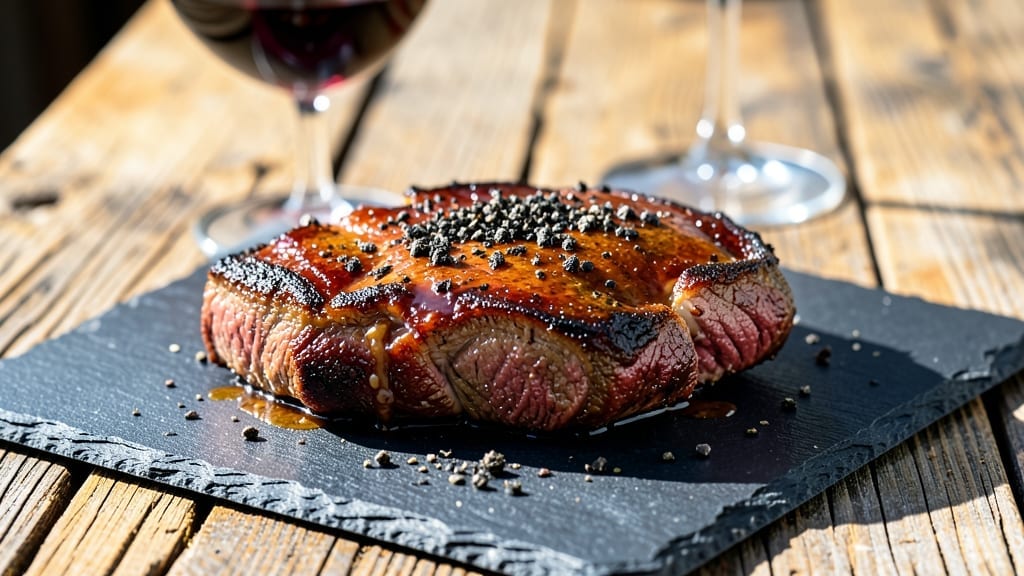
This American beef brisket recipe delivers the kind of melt-in-your-mouth tenderness that turns casual dinners into legendary meals. The secret lies in low-and-slow smoking with a bark-on crust that cracks like glass when sliced—something home cooks can achieve with patience and precision.
I’ve perfected this method over years of trial and error, ensuring every bite is juicy, flavorful, and free from dryness.
The process begins with a simple yet effective dry rub—coarse salt, black pepper, and a touch of garlic powder—that clings to the meat while the smoker works its magic. The Texas Crutch (wrapping in butcher paper at the halfway mark) locks in moisture without sacrificing that coveted crust.
Most importantly, internal temperature is everything: pull it at 203°F for fork-tender perfection.
What you’ll end up with is a brisket so tender it practically falls apart, with a deep mahogany bark that adds texture and flavor in every bite. The aroma alone will have guests gathering at the table before the meat even comes out of the smoker.
Serve with classic sides like creamy coleslaw or buttery cornbread to complete the experience.
This recipe scales beautifully for gatherings, and the leftovers reheat just as well as the first slice. Whether you’re a pitmaster in training or a weekend warrior with a smoker, these steps will give you restaurant-quality results at home. Let’s get started on that first perfect brisket.
Ingredients for american beef brisket
A whole brisket, a smoker, and patience. This is how legendary tenderness is born.
| Ingredient | Amount | Notes |
|---|---|---|
| Beef Brisket (whole packer cut) 🥩 | 8 lb | Fat cap left intact, trimmed |
| Coarse Kosher Salt 🧂 | 2 tbsp | Diamond Crystal preferred |
| Freshly Ground Black Pepper 🌶️ | 1 ½ tbsp | Medium-coarse grind |
| Garlic Powder 🧄 | 1 tbsp | Not garlic salt |
| Brown Sugar (light or dark) 🍚 | 1 tbsp | Packed, for sweetness |
| Smoked Paprika 🌶️ | 1 tbsp | For bark color |
| Butcher Paper (for wrapping) 📄 | 4 sheets | Unbleached, 18×24" |
| Butcher Twine 🧵 | 1 piece | Food-safe, 1" width |
| Apple Wood Chips 🍎 | 2 lb | For smoker flavor |
| Pecan Wood Chips 🌰 | 1 lb | For depth of flavor |
| Pork Butt (for injection) 🐖 | ½ lb | Fat trimmed, optional |
| Beef Injection (or broth) 💧 | 1 cup | For moisture boost |
| Butter (unsalted) 🧈 | ¼ cup | For basting |
| Meat Thermometer 🔥 | 1 whole | Instant-read preferred |
[recipe_ingredient_scaler]
The brisket is king here—look for packer cuts with visible fat cap (usually the larger, cheaper cut). Costco or local butcher shops often carry whole packer briskets; if not, ask for the ‘flat’ portion and double the cooking time. The fat cap should be at least ¼ inch thick for proper bark development. I always buy mine a day ahead to let it acclimate to room temperature before smoking—this reduces cooking time and prevents cracking. For the dry rub, Diamond Crystal kosher salt is non-negotiable—it’s coarse enough to cling and season deeply without dissolving too quickly.
No butcher paper? Heavy-duty aluminum foil works in a pinch, though it won’t create the same bark texture. The pork butt injection is optional but game-changing—it adds moisture and richness. If you skip it, double the beef injection amount and inject directly into the brisket. Smoked paprika can be swapped for regular paprika, but you’ll lose that deep mahogany color. For the wood chips, apple and pecan blend is my go-to, but hickory or cherry also work—just avoid strong flavors like mesquite. The thermometer is non-negotiable; instant-read only—probe-style thermometers won’t give you the precision needed for perfect doneness.
Brisket reheats beautifully—wrap slices in butcher paper and reheat in a 250°F oven for 15-20 minutes. The leftovers keep for 5 days in the fridge or freeze for 3 months. I portion mine into containers so lunches are sorted for the week. The bark dries out slightly when reheated, so spritz with apple juice before serving to restore moisture. Store the butcher twine in a cool, dry place—it lasts indefinitely. The wood chips should be soaked for 30 minutes before use, but if you’re in a hurry, just sprinkle them directly on hot coals—just don’t let them burn.
Why You’ll Love This Recipe
- No-Fuss Smoking: Honestly, this isn’t one of those recipes that requires you to stand over the stove for hours. Just trim that fat cap to ¼ inch, slap on the rub, and let it dry-brine overnight—no fancy prep. The real magic happens while you’re asleep or watching TV, thanks to the smoker and that clever butcher paper wrap.
- Chewy Bark, Creamy Center: That deep mahogany bark from the smoked paprika and pecan wood chips? It’s crispy enough to hold its own, but the meat inside is so tender you’ll be pulling it apart with your hands. The pork butt injection makes it juicy enough to lick the plate—trust me, it’s that good.
- Game-Day or Leftovers: You can serve this up for a crowd at your next tailgate or barbecue, but here’s the thing: I make it once and eat it for days. The leftovers keep for five days in the fridge, and honestly? The second day is when it hits its stride. Slice it thin, pile it on buns, or just eat it straight off the plate.
- Budget-Friendly Beast: An 8-pound brisket isn’t cheap, but this recipe stretches it into enough servings to feed a small army. The pork butt injection and wood chips add depth without breaking the bank, and the dry rub costs pennies. Plus, freezing it for three months means you can always have a backup for those “I forgot to meal prep” nights.
Step-by-step instructions for slow-smoked brisket
Here’s how to transform an 8 lb brisket into melt-in-your-mouth perfection with a deep mahogany bark.
Prepare the Brisket for Smoking
Begin by trimming the fat cap of the 8 lb beef brisket to about ¼ inch thickness using a sharp boning knife. This preserves moisture while allowing smoke penetration. Pat the entire surface dry with paper towels—this step is critical for developing that coveted bark.
Create your dry rub by combining the 2 tbsp coarse kosher salt, 1½ tbsp freshly ground black pepper, 1 tbsp garlic powder, 1 tbsp brown sugar, and 1 tbsp smoked paprika in a small bowl. Mix thoroughly until evenly distributed. Generously coat the brisket with this rub, pressing it into every crevice. Let it sit uncovered in the refrigerator for 12-24 hours—this dry-brining process ensures maximum flavor penetration and tenderness.
Set Up the Smoker and Inject the Brisket
Soak the 2 lb apple wood chips and 1 lb pecan wood chips separately in water for 30 minutes before using. Set your smoker to 225°F and add the soaked wood chips to the smoker box. Maintain this temperature using the meat thermometer to monitor internal heat.
While the smoker preheats, prepare the injection marinade by combining the ½ lb trimmed pork butt (finely chopped) with the 1 cup beef injection or broth. Using a meat injector, work this mixture into the brisket at multiple injection points—about 1 inch apart. The pork butt adds fat and moisture that prevents drying during the long cook. Place the brisket fat-side up on the smoker grates and close the lid immediately to maintain temperature.
Smoke Until the Stall Phase Begins
Smoke the brisket undisturbed for 6-8 hours, or until the internal temperature reaches 165-170°F using your meat thermometer. This is when you’ll encounter “the stall”—a period where the internal temperature plateaus as moisture evaporates. Don’t panic; this is normal and essential for developing texture.
Here’s where the 4 sheets butcher paper come into play. Once you hit the stall, wrap the brisket tightly in the butcher paper (not aluminum foil) and secure with the 1 butcher twine. This technique, known as the “Texas crutch,” helps the brisket push through the stall while preserving that beautiful bark. Return it to the smoker and continue cooking.
Finish Cooking to Probe-Tender Perfection
Continue smoking until the internal temperature reaches 200-205°F, which typically takes an additional 4-6 hours. The brisket should be fork-tender with a deep mahogany bark. If the bark appears too thin, you can baste it with the ¼ cup unsalted butter melted in a small saucepan—brush it on during the final hour of cooking.
Remove the brisket from the smoker and let it rest for 1-2 hours before slicing. This resting period allows the juices to redistribute, ensuring each slice remains moist and flavorful. The brisket should pull apart easily with minimal resistance when sliced against the grain.
Pro Tips For Making American Beef Brisket
- Trim That Fat Cap Right: The ¼-inch fat cap isn’t just decoration—it’s the brisket’s built-in moisture shield. I used to leave it too thick, and the meat would dry out before the bark ever formed. Trim it cleanly but don’t go too aggressive; you want that fat acting as a barrier, not a sacrifice.
- Salt Early, Salt Often: That 2 tbsp coarse kosher salt isn’t just seasoning—it’s the difference between flavor and forgettable. I learned this the hard way by skipping the 12-hour dry-brine. The salt needs time to work its magic into the meat, so don’t rush it. And yes, even if you’re impatient like me.
- Wrap When It Hits 165°F: The stall isn’t your enemy—it’s the brisket’s way of telling you it’s ready for the butcher paper. Wrapping too early means you’ll trap steam and end up with mushy meat. Too late, and you’ll fight the stall for hours. Hit that 165-170°F range, wrap tight with the butcher paper, and let it do its thing.
- Butter the Bark Last Hour: That ¼ cup unsalted butter isn’t just for basting—it’s the secret to a glossy, crackling crust. Melt it first, then brush it on during the final hour. I used to add it earlier, and the bark would soften before it could get that deep mahogany color. Timing is everything.
Common mistakes when making this dish
Skipping the Dry-Brine
One of the most common mistakes is skipping the 12-24 hour dry-brine step. This process allows the rub to penetrate deep into the meat, ensuring maximum flavor and tenderness.
I’ve seen briskets that were rubbed but not brined turn out dry and flavorless—trust me, this step is non-negotiable for home cooks. 💡
Ignoring the Fat Cap
Trimming too much fat from the brisket is a big no-no. The ¼ inch fat cap is essential for moisture retention and bark development. If you trim it all away, you’ll end up with a dry, tough piece of meat.
Keep that fat intact—it’s what makes the difference between mediocre and legendary brisket.
Wrong Wood Chips
Using the wrong wood chips can ruin your brisket’s flavor profile. Apple and pecan are my go-to for a balanced, sweet-smoky taste, but some beginners opt for hickory or mesquite, which can overpower the meat. Stick to mild woods like apple, cherry, or pecan to let the brisket shine. 🌰
Not Using a Thermometer
Guessing the doneness of your brisket is a recipe for disaster. A meat thermometer is your best friend—it tells you exactly when the brisket is ready.
Without it, you risk undercooking (tough meat) or overcooking (dry, rubbery texture). I’ve burned more briskets than I can count by relying on touch alone.
Wrapping Too Early
Wrapping your brisket in butcher paper too early can steal that coveted bark. The Texas Crutch should only happen once you hit the stall phase—around 165-170°F. Wrapping it too soon can lead to a soggy, flavorless result. Patience is key here; let the bark develop before you intervene.
Rushing the Rest
Skipping the 1-2 hour rest after smoking is a mistake that costs you juiciness. Resting allows the brisket’s juices to redistribute, ensuring every slice is moist and flavorful. Slicing too soon means dry, disappointing bites.
I’ve seen people rush this step and end up with a brisket that falls apart like wet cardboard. Don’t be that person.
Nutrition facts
Frequently asked questions
Why does my brisket need a dry-brine?
The 12-24 hour dry-brine lets the coarse kosher salt and spices penetrate deep into the meat, ensuring maximum flavor and tenderness. Skipping this step often results in dry, flavorless slices—this process is what transforms a simple cut into a showstopper.
Can I use aluminum foil instead of butcher paper for wrapping?
Aluminum foil works in a pinch, but it won’t preserve that coveted bark texture. The butcher paper allows steam to escape while keeping the brisket moist during the stall phase. For best results, stick with unbleached butcher paper—it’s the secret to that perfect mahogany crust.
How do I know when the brisket has reached the stall?
The stall occurs when the internal temperature hits 165-170°F and stops rising despite continued cooking. This is normal as moisture evaporates—your meat thermometer will show a plateau for 1-3 hours. This is when you apply the Texas Crutch with butcher paper.
What’s the best way to reheat brisket leftovers?
Wrap slices in butcher paper and reheat in a 250°F oven for 15-20 minutes. Avoid microwaving, as it dries out the meat. Spritz with apple juice before serving to restore moisture—this keeps every bite juicy and flavorful.
Can I skip the injection step entirely?
Yes, but you’ll need to double the beef injection amount and inject directly into the brisket. The pork butt injection adds fat and moisture, but the pork itself is optional. If skipping, focus on trimming excess fat to maintain tenderness.

Trained in classic French technique but raised on slow-cooked ribs and spicy rubs, she blends culinary skill with smoke and soul.
- Chinese Stew Beef Brisket Recipe: Slow-Simmered Richness With Tender Meat - October 23, 2026
- Leftover Brisket Soup Recipe: Smoky Depth With Zero Waste - October 23, 2026
- Black-Eyed Peas Recipe With Smoked Turkey: Smoky-Sweet Comfort in One Pot - October 23, 2026