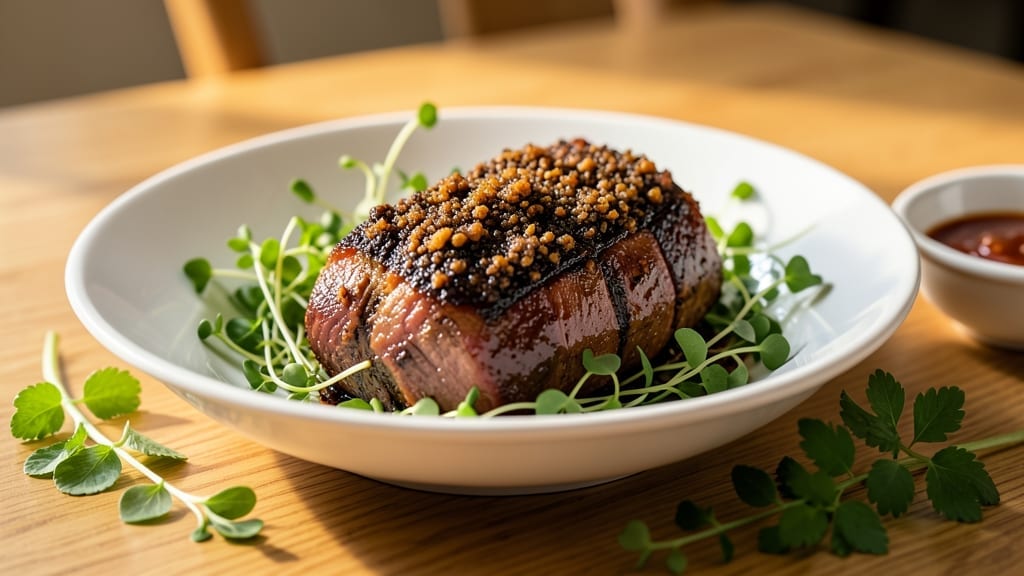
This smoked beef roast rub recipe transforms tough cuts into melt-in-your-mouth perfection with a crispy, caramelized crust that rivals any competition-winning pitmaster.
The coarse-grain blend I developed after years of experimenting—inspired by my family’s backyard cookouts—balances sweet, smoky, and savory notes for a bark so addictive you’ll want to eat it by the spoonful. Every tablespoon of this mix carries layers of flavor that penetrate deep while creating that coveted crust.
The secret lies in the texture: coarse-ground spices cling to the meat, while brown sugar and smoked paprika work together to form that irresistible caramelized shell. I designed this blend specifically for storage in airtight jars, so you can keep it on hand for spontaneous smoking sessions or holiday roasts.
Unlike fine-ground rubs that dissipate, this coarse version locks in flavor and delivers consistent results every time.
What you’ll achieve is a roast with a crispy, crackling crust that gives way to tender, juicy meat beneath—a contrast that makes every bite unforgettable.
The rub’s complexity comes from balancing sweetness, heat, and umami, ensuring your beef stands out whether you’re smoking it low and slow or roasting it in the oven. This isn’t just a seasoning; it’s the foundation of a showstopping centerpiece.
Make a big batch and store it in a cool, dark place for up to six months—your future smoked beef roasts will thank you. Here’s exactly how to mix it for that perfect crust.
Ingredients for smoked beef roast rub
A coarse-grain blend designed to cling and caramelize perfectly on beef roasts.
| Ingredient | Amount | Notes |
|---|---|---|
| Coarse-Ground Brown Sugar 🍚 | ¾ cup | Lightly packed, for caramelization |
| Smoked Paprika 🌶️ | 3 tbsp | Spanish variety preferred |
| Garlic Powder 🧄 | 2 tbsp | Not garlic salt |
| Onion Powder 🧅 | 2 tbsp | Fresh ground preferred |
| Coarse-Ground Black Pepper 🌶️ | 1 ½ tbsp | Freshly ground preferred |
| Dried Thyme 🌿 | 1 tbsp | Mexican oregano alternative |
| Kosher Salt 🧂 | 1 ½ tbsp | Diamond Crystal preferred |
| Ground Cumin 🌿 | 1 tbsp | Toasted for depth |
| Cayenne Pepper 🔥 | 1 tsp | Adjust for heat tolerance |
| Ground Coriander 🌿 | 1 tbsp | Balances earthiness |
[recipe_ingredient_scaler]
The secret to this rub’s addictive crust lies in its texture—coarse-ground spices cling to the meat like a second skin, while Spanish smoked paprika adds that smoky depth. Penzeys Spices carries a fantastic selection of coarse-ground brown sugar and spices, but your local grocery store’s bulk bins work too—just check the dates. I always grab Diamond Crystal kosher salt for its coarse texture, which dissolves slower and enhances the crust’s crackle. For the cumin and coriander, toast them lightly in a dry pan for 30 seconds before grinding if you’ve got whole spices—worth the extra minute for that nutty aroma.
No smoked paprika? Regular paprika plus 1 tsp liquid smoke gets you close, though it won’t be quite as flavorful. Short on cayenne? Red pepper flakes at half the amount work, but the heat won’t be as even. Dried thyme is ideal, but dried oregano at one-third the amount is a fine swap—just keep the ratio in mind. If you’re using pre-ground spices, sift them through a coarse sieve to mimic the coarse texture. The brown sugar should be light and packed—dark muscovado or demerara work too, but they’ll add more molasses notes.
Store this rub in an airtight glass jar away from light and heat—it’ll keep for up to 6 months if sealed properly. I portion mine into small jars for easy access, and it’s perfect for gifting. The coarse texture means it won’t clump like fine-ground rubs, so no need to worry about consistency. Just shake before using, and trust that each tablespoon will deliver that coveted crust—no matter how you cook it.
Why You’ll Love This Recipe
- No-Pot Necessary: Honestly, this rub is my secret weapon for lazy Sundays. Just toss everything in a bowl, whisk it together, and boom—you’ve got a flavor bomb ready to transform your beef. The ¾ cup of coarse-ground brown sugar ensures that caramelized crust without needing to babysit a pan.
- Crispy Bark, Creamy Center: That combination of smoked paprika and cumin? It’s like a flavor hug for your taste buds. The 1 teaspoon cayenne pepper adds just enough kick to keep things interesting, while the garlic and onion powders give you that savory depth that makes every bite sing. Trust me, the crispy edge with the creamy center is chef’s kiss.
- Leftovers? More Like Leftovers Magic: I always make extra rub because, let’s be real, it’s that good. Use it on chicken, potatoes, or even popcorn for a smoky twist. The 1½ tablespoons of kosher salt and the ground coriander make it versatile enough to elevate any dish. Plus, it keeps for months—so you’re never stuck without flavor.
- Budget-Friendly Smoker: Smoking beef can feel like a splurge, but this rub makes it feel like a steal. A few spices and a little brown sugar go a long way, and you’ll get a restaurant-quality result without breaking the bank. The 3 tablespoons of smoked paprika alone add so much depth, you’ll forget you’re not at a BBQ joint.
Step-by-step instructions for smoked beef roast rub application
This blend transforms simple beef into showstopping smoked masterpieces.
Combine Dry Ingredients for Maximum Adhesion
In a large mixing bowl, add the ¾ cup coarse-ground brown sugar, 3 tablespoons smoked paprika, 2 tablespoons garlic powder, 2 tablespoons onion powder, 1½ tablespoons coarse-ground black pepper, 1 tablespoon dried thyme, 1½ tablespoons kosher salt, 1 tablespoon ground cumin, 1 teaspoon cayenne pepper, and 1 tablespoon ground coriander. Here’s the thing—don’t just eyeball the measurements. Use a kitchen scale for the brown sugar to ensure it’s lightly packed, as packed sugar creates a denser crust.
Using a whisk or fork, blend the ingredients until completely homogeneous. You’ll notice the brown sugar clumps slightly at first, but keep mixing until every particle is evenly distributed. This step ensures the rub sticks to the beef during smoking, preventing it from falling off when you handle the roast. The coarse grind of the brown sugar is crucial—it creates those deep caramelized crusts while the spices penetrate the meat for maximum flavor infusion.
Apply Generously and Press Firmly for Crispy Results
Pat the beef roast dry with paper towels—this is non-negotiable for crispy bark. Working in batches if needed, apply the rub generously to all sides of the roast, including the fat cap. I like to use my hands here; the warmth helps the spices adhere better than a brush would. Press the rub firmly into the meat, especially in crevices and along the grain, so it penetrates the surface.
Don’t be shy with the application—this is where the magic happens. The ¾ cup coarse-ground brown sugar will caramelize beautifully during smoking, creating that prized crust. The 3 tablespoons smoked paprika and 1 tablespoon ground cumin add depth, while the 1 teaspoon cayenne pepper brings subtle heat that balances the sweetness. Real talk: if you’re using a large roast, you might need to make an extra batch of this rub to ensure full coverage.
Rest Before Smoking for Even Flavor Distribution
Once the roast is fully coated, let it sit at room temperature for 1 hour before smoking. This resting period allows the rub to penetrate the meat and develop a slightly tacky surface, which helps it stick during the cook. I know it seems like a long wait, but trust me—this step prevents the rub from washing off when you handle the roast later.
During this time, the 1½ tablespoons kosher salt will begin drawing out moisture from the surface, creating the ideal conditions for that crispy bark. The 2 tablespoons garlic powder and 2 tablespoons onion powder will start to mingle with the meat’s natural juices, building layers of flavor. Don’t skip this step, even if you’re eager to get to the smoker. Your patience will be rewarded with a roast that’s perfectly seasoned from edge to edge.
Smoke Low and Slow for Perfect Crust Development
Place the rubbed roast on your smoker and cook at 225°F until the internal temperature reaches 195-203°F. This low-and-slow approach is critical—it allows the ¾ cup coarse-ground brown sugar to caramelize gradually while the spices penetrate deeply. You’ll see the rub darken and develop a glossy sheen as it cooks, which is your visual cue that the crust is forming.
Here’s where it gets fun—the bark should develop a deep mahogany color with crispy edges by the time the roast is done. The 1 tablespoon dried thyme and 1 tablespoon ground coriander add herbal complexity that shines through in the final product. Don’t rush this process; the sugar needs time to break down and create that signature smoked beef texture. If your smoker runs hot, reduce the temperature slightly to prevent burning the crust before the meat is fully tender.
Pro Tips For Making Smoked Beef Roast Rub
- Weigh That Sugar: I learned this the hard way—packing the ¾ cup coarse-ground brown sugar by volume leads to clumps that won’t caramelize evenly. Use a scale for accuracy; lightly packed means about 120 grams (not the 150+ grams of tightly packed sugar). Trust me, your crust will thank you.
- Toast the Cumin First: The 1 tablespoon ground cumin in this rub needs to sing, not just sit there. Dry-toast it in a skillet over medium heat for 30 seconds until fragrant—just until you smell that nutty depth. Let it cool before mixing; this small step makes a real difference in the final flavor.
- Press Like You Mean It: When you apply the rub, don’t just dust it on—dig in. Use your fingers to work the spices, especially the 1.5 tablespoons coarse-ground black pepper and 3 tablespoons smoked paprika, into the crevices and fat cap. This isn’t just seasoning; it’s locking in flavor where it matters most.
- Skip the Rush to Smoke: That 1-hour rest before smoking isn’t optional—it’s the glue that keeps the rub from sliding off when you handle the roast. The 1.5 tablespoons kosher salt will draw out surface moisture, and the spices will start bonding with the meat. I know, I know, but trust the process—your future self will thank you.
Essential equipment for great smoked beef roast rub
Precision Measuring Tools
For this rub, a digital kitchen scale is non-negotiable—especially for the ¾ cup coarse-ground brown sugar. I swear by my OXO Good Grips Digital Scale, which lets me pack the sugar precisely to create that perfect crust.
Without it, you risk uneven caramelization or clumping. A measuring spoon set works for the spices, but I prefer the OXO Good Grips Nesting Measuring Spoons—they’re durable and easy to clean after handling spices like cayenne. 🔥
Mixing Essentials
A sturdy mixing bowl (I use Le Creuset ceramic) prevents the coarse brown sugar from sticking to the sides. For blending, a balloon whisk or sturdy fork works best—it helps break up clumps while distributing the spices evenly.
If you’re mixing a large batch, a stand mixer with a paddle attachment makes quick work of it, but don’t overmix or the sugar will turn into a paste.
Storage Containers
An airtight glass jar is a must—Ball Mason Jars are my go-to because they’re durable and keep out light and moisture. I portion mine into 4-ounce jars for easy access, and the coarse texture stays perfect without clumping.
Avoid plastic containers—they can absorb odors and degrade over time. Label your jars with the date to track freshness. ✨
Application Tools
For applying the rub, I skip brushes—they don’t get enough traction on the coarse mixture. Instead, I use my clean hands (warm them first to help the spices adhere better) or a rubber spatula for stubborn crevices.
If you’re working with a large roast, a food-safe paintbrush (like Grater’s) can help, but it’s slower and less effective than hands-on application.
Smoker Accessories
A digital meat thermometer like the Thermoworks Smoke is essential for tracking the roast’s internal temperature. The probe should read 195-203°F for perfect doneness.
I also use aluminum foil tenting during the final hour to protect the crust if my smoker runs hot—just be sure to remove it before the last 30 minutes to let the bark crisp up.
Nutrition facts
Frequently asked questions
Why does this rub use coarse-ground brown sugar instead of fine sugar?
The coarse grind is key—it creates that prized crispy, caramelized crust while helping spices cling to the meat. Fine sugar dissolves too quickly during smoking, leaving you with a sticky mess instead of that perfect bark. The texture also prevents clumping when stored, ensuring every application is consistent.
Can I make this rub without a kitchen scale?
For the ¾ cup coarse-ground brown sugar, use your hands to lightly pack it into a measuring cup—don’t scoop and level. For spices, a measuring spoon set works fine, but shake off excess to avoid over-seasoning. The 1½ tablespoons measurements are especially critical for salt and pepper.
What if I don’t have smoked paprika?
Use regular paprika plus 1 teaspoon liquid smoke to approximate the smoky depth. The flavor won’t be identical, but it’ll get you close. For extra richness, toast your paprika in a dry pan for 30 seconds before using. The 1 teaspoon cayenne pepper will still provide that subtle heat balance.
How do I prevent the rub from falling off during smoking?
Pat the beef dry first—moisture is the enemy of adhesion. Press the rub firmly into crevices and fat caps, then let it rest 1 hour at room temperature before smoking. This creates a tacky surface that locks the spices in place. Avoid handling the roast too much during cooking!
Can I use this rub for other meats besides beef?
It works beautifully on pork shoulder, lamb chops, or even chicken thighs. For poultry, reduce the salt by 1 teaspoon to avoid overpowering. The coarse texture still creates a delicious crust, though the cooking time will vary by meat. Adjust your smoking temperature accordingly.

Trained in classic French technique but raised on slow-cooked ribs and spicy rubs, she blends culinary skill with smoke and soul.
- Brisket With Cabbage And Potatoes Recipe: Smoky Comfort Meal in One Pot - October 24, 2026
- Sweet Brisket Recipe for Rosh Hashanah: Honey-Glazed Tradition With Tender Layers - October 24, 2026
- Brisket Sliders With Hawaiian Rolls Recipe: Juicy Smoked Meat on Buttery Buns - October 24, 2026