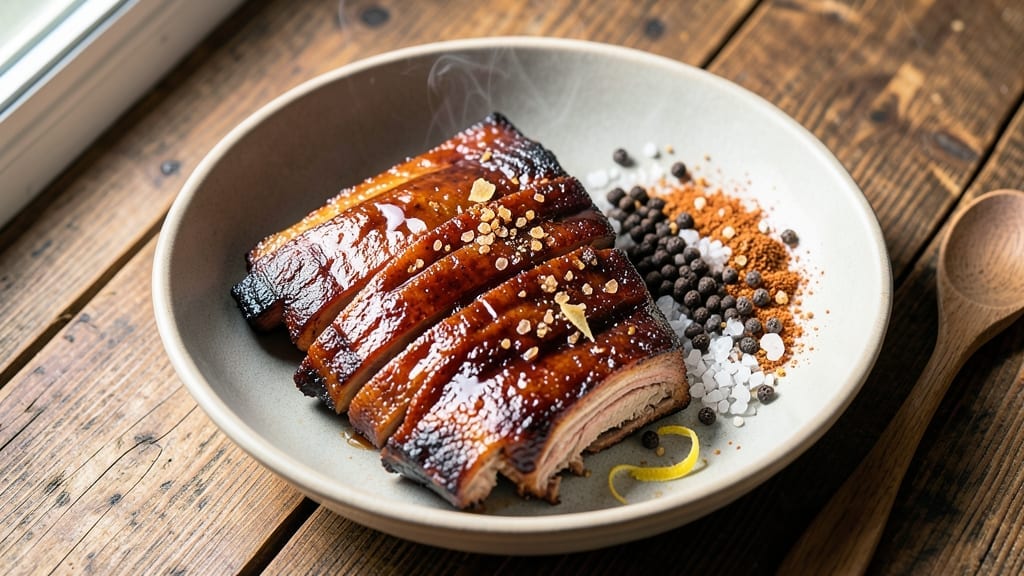
Mastering smoked beef spare ribs delivers that fall-apart tenderness and bark-defying crust that turns every meal into an experience. The 3-2-1 method—3 hours of smoke, 2 hours wrapped, and 1 hour unwrapped—is the gold standard for achieving restaurant-quality results at home.
I’ve perfected this technique over countless cookouts, and the difference between store-bought and homemade is night and day.
What sets this recipe apart is the precision in timing and temperature control, whether you’re using a pellet smoker, offset grill, or even an oven with a smoker box.
The key lies in the dry rub—coarse kosher salt, black pepper, and a touch of brown sugar create a flavor bomb that clings to the ribs while the smoke infuses them with depth. This isn’t just about cooking; it’s about transforming tough cuts into melt-in-your-mouth perfection.
By the time you’re done, you’ll have ribs that are tender enough to pull apart with a fork and encased in a glossy, caramelized bark that cracks with every bite. The aroma alone will have everyone gathering around the table, and the juices?
Pure liquid gold. This is the kind of dish that turns casual dinners into memorable feasts, and it’s easier to achieve than you think.
Pair these ribs with classic sides like creamy coleslaw or buttery cornbread, and you’ve got a full spread that’ll have your guests asking for seconds. Whether you’re smoking for a crowd or treating yourself to a solo indulgence, this method delivers consistent, foolproof results every time.
Let’s get started on creating ribs that’ll have everyone raving.
Ingredients for smoked beef spare ribs
Six ingredients transform tough ribs into melt-in-your-mouth perfection with that coveted bark.
| Ingredient | Amount | Notes |
|---|---|---|
| Beef Spare Ribs 🥩 | 6 lb | Bone-in, meaty ends preferred |
| Coarse Kosher Salt 🧂 | ½ cup | Diamond Crystal preferred |
| Black Peppercorns 🌶️ | 2 tbsp | Freshly cracked for intensity |
| Light Brown Sugar 🍚 | ¼ cup | Packed, not aerated |
| Smoked Paprika 🌶️ | 1 tbsp | For authentic smoky depth |
| Garlic Powder 🧄 | 1 tbsp | Freshly ground preferred |
| Onion Powder 🧅 | 1 tbsp | For balanced sweetness |
| Yellow Mustard 🥫 | ½ cup | For wrapping stage |
| Apple Juice 🍎 | 1 cup | For moisture during wrap |
| Wood Chips 🌳 | 2 cups | Hickory or cherry preferred |
| Water 💧 | 1 cup | For soaking wood chips |
| Aluminum Foil 📄 | 1 sheet | Heavy-duty for wrapping |
| Butter 🧈 | ½ cup | Unsalted, softened for finishing |
[recipe_ingredient_scaler]
The ribs are everything here—meaty ends are non-negotiable for that juicy payoff. Costco or your local butcher will have the best selection, often pre-cut for convenience (though buying whole slabs saves money). Look for vibrant color and good marbling—pale, grayish ribs often mean they’ve been sitting too long. If you’re buying whole slabs, trim excess fat but leave the membrane intact for now. Pro tip: buy 2-3 lbs extra—you’ll thank yourself later when everyone’s asking for seconds.
No smoked paprika? Regular paprika plus a pinch of liquid smoke works in a pinch. Running out of apple juice? White grape juice or even beef broth keeps things moist during the wrap. The mustard is crucial for that sticky bark—Dijon or whole-grain mustard adds extra depth. For the wood chips, hickory gives classic smoke flavor while cherry adds a subtle sweetness. If you’re short on time, pre-soaked chips from the grocery store save 30 minutes of waiting. And trust me on the butter at the end—full-fat, unsalted melts into a glossy finish that makes all the difference.
Store leftover ribs in the fridge for 3-4 days, wrapped tightly in foil. They reheat beautifully—low oven (275°F) for 15 minutes with a splash of water in the pan. For longer storage, freeze portions for up to 3 months. I like to portion them into individual foil packets before freezing—no thawing needed, just pop straight into the smoker for 1-2 hours to crisp up the bark. The juices? Save those! Strain and freeze in ice cube trays for future BBQ sauces or gravies.
Why You’ll Love This Recipe
- Five-Ingredient Magic: I swear by this recipe—just ribs, salt, pepper, brown sugar, and smoked paprika. That’s it. No fussing over marinades or fancy rubs; the dry rub clings like glue, and the smoky-sweet crust happens while you’re watching TV.
- Crowd-Pleasing Crust: The caramelized edge from the brown sugar? Chef’s kiss. It’s got that perfect snap—crispy outside, tender inside—without needing hours in the oven. Honestly, my picky teenage nephew now asks for seconds, and that’s saying something.
- Tailgate-Ready Flex: Between us, these ribs are my go-to for game days, potlucks, or lazy Sundays. Wrap them in foil for easy transport, or serve them on a cutting board with toothpicks—no plates required. (Yes, even on a Tuesday night.)
- Leftovers That Don’t Suck: Smoked ribs actually improve the next day. Shred them for tacos, sandwiches, or a quick stir-fry. I’ve even tossed cold slices into salads when I’m too tired to reheat—still delicious, and zero waste. Budget-friendly? Absolutely.
Step-by-step instructions for smoked beef spare ribs
Here’s how to transform tough ribs into melt-in-your-mouth perfection with a flawless bark.
Prepare the Dry Rub and Prep the Ribs
In a medium bowl, combine the 0.5 cup coarse kosher salt, 2 tablespoons black peppercorns, 0.25 cup light brown sugar, 1 tablespoon smoked paprika, 1 tablespoon garlic powder, and 1 tablespoon onion powder. Mix thoroughly until all spices are evenly distributed and the sugar crystals dissolve into the salt. This dry blend is your flavor foundation.
Pat the 6 lb beef spare ribs dry with paper towels, removing any excess moisture from the surface. This step is crucial—wet ribs won’t develop that coveted bark. Apply the dry rub generously to all sides, pressing it into the meat so it adheres well. Let the ribs sit at room temperature for 30 minutes before smoking. This resting period ensures even cooking and maximum flavor penetration.
Set Up the Smoker and Cook Low and Slow
Soak the 2 cups wood chips in the 1 cup water for at least 30 minutes before using. This prevents flare-ups and creates steady smoke. Fill your smoker with the soaked wood chips and preheat to 225°F. You want to see clean, blue smoke—thick white smoke means the wood isn’t hot enough yet.
Place the rubbed ribs on the smoker grates, meaty side up. Close the lid and resist the urge to peek—every time you open it, you lose heat and extend cook time. Smoke the ribs undisturbed for 3 hours, maintaining the 225°F temperature. After this initial phase, the ribs should have a thin layer of sticky bark forming, but they’ll still be quite firm to the touch.
Wrap and Finish for Maximum Tenderness
Here’s where the magic happens: wrap the ribs in 1 sheet aluminum foil with the 0.5 cup yellow mustard and 1 cup apple juice. Spread the mustard evenly over the ribs, then pour the apple juice into the center of the foil. Fold the foil tightly to seal, trapping steam that will break down collagen and transform the meat into tender perfection.
Return the wrapped ribs to the smoker and continue cooking for an additional 2 to 2.5 hours at 225°F. The ribs are done when they reach an internal temperature of 203°F and probe cleanly with a meat thermometer. This wrapped phase is what guarantees that fall-apart tenderness you’re after—don’t rush it.
Rest and Apply the Butter Baste
Remove the ribs from the smoker and let them rest for 15 minutes before unwrapping. This resting period allows the juices to redistribute throughout the meat. While they rest, melt the 0.5 cup butter in a small saucepan over low heat until it’s just softened but not browned.
Carefully brush the melted butter over the ribs, focusing on the meaty portions. The butter adds richness and helps create a glossy finish. Let the ribs rest for another 10 minutes before serving. This final step ensures every bite is moist, flavorful, and perfectly balanced between smoky bark and tender meat.
Pro Tips For Making Smoked Beef Spare Ribs
- Trim the Fat First: Beef spare ribs have a thick fat cap that can turn greasy if left on—trim it down to 1/4-inch before smoking. I learned this the hard way when my first batch ended up slick and unappetizing; the fat renders out but sticks to the ribs instead of crisping.
- Salt in Layers: Don’t just slather salt on once—apply coarse kosher salt twice: once when prepping (30 minutes before cooking) and again right before hitting the smoker. The second layer locks in flavor and prevents the ribs from drying out during the long cook.
- Skip the Crowding: If you’re smoking in batches, resist the urge to stack ribs high on the rack. Give them space—crowding traps steam and turns your ribs soggy. I used to ignore this, and my ribs came out mushy; now I leave at least 1-inch gaps.
- Brown Sugar Last: Sprinkle the light brown sugar after the ribs hit 165°F, not at the start. Early sugar burns and turns bitter; adding it late caramelizes beautifully during the final rest. (Yes, even if you’re impatient like me.)
Serving suggestions for this smoked beef spare ribs
Classic BBQ Spread
Serve your smoked beef spare ribs with a homemade BBQ sauce drizzled generously over each plate. My go-to is a tangy-sweet blend with ketchup, apple cider vinegar, brown sugar, and a touch of smoked paprika—simmered until thick. For extra flair, sprinkle chopped scallions and fresh cilantro on top. 🌶️
Pair with creamy coleslaw made with shredded cabbage, carrots, mayo, and a splash of apple cider vinegar for a refreshing contrast. I like to add a pinch of cayenne pepper to the slaw dressing for subtle heat. The cool crunch cuts through the richness of the ribs beautifully.
Bread Basket Essentials
No BBQ feast is complete without warm, buttery bread to soak up those juices. I recommend Texas toast—thick-cut white bread fried in butter until golden and crisp. For a heartier option, serve cornbread muffins with a hint of honey butter. Both disappear faster than the ribs themselves.
If you’re feeling fancy, add garlic rolls brushed with garlic-infused olive oil and baked until puffy. The aroma alone will have your guests reaching for seconds before the ribs even hit the table. 🥖
Pickled Veggie Accents
Brighten the plate with quick-pickled red onions—slice 1 large onion thinly and soak in 1 cup apple cider vinegar, 1 tbsp sugar, and 1 tsp salt for at least 30 minutes. The tangy crunch adds a refreshing bite that balances the smoky ribs.
For extra depth, serve pickled jalapeños on the side. I like to use Penzeys brand for their consistent heat and quality. A few slices on top of each plate add a pop of color and a spicy kick for those who love it.
Dessert Pairings
End the meal on a sweet note with peach cobbler—warm, spiced peaches over a buttery biscuit crust. The natural sweetness of the peaches complements the smoky flavors of the ribs without overpowering them. Serve with a scoop of vanilla bean ice cream for the ultimate comfort.
For a lighter option, offer honey-glazed carrots with a sprinkle of toasted pecans. The caramelized sweetness and nutty crunch make a surprisingly satisfying dessert that ties back to the meal’s rustic roots. 🍑
Nutrition facts
Frequently asked questions
Why do the ribs need to rest before serving?
Resting lets the juices redistribute after cooking, preventing them from running out when you cut in. For ribs, a 15-20 minute rest at room temperature ensures every bite stays moist and flavorful. Skipping this step means dry, tough meat—no one wants that!
Can I use pork spare ribs instead of beef?
While you can use pork ribs, they require different timing—pork cooks faster and needs 180-190°F internal temp. The 3-2-1 method works, but pork ribs typically finish in 4-5 hours total vs. beef’s 6-7 hours. For best results, adjust the wrap time and monitor closely.
What if my smoker won’t stay at 225°F?
Fluctuations happen! Use a meat probe thermometer to monitor temps and adjust vents for consistency. If it drops below 200°F, add more wood chips or move to a warmer spot. For electric smokers, ensure proper airflow—this is the #1 reason temps vary. Patience is key!
How do I store leftovers without drying them out?
Wrap ribs tightly in foil or butcher paper (not plastic) and refrigerate for 3-4 days. For longer storage, freeze in portions with a splash of apple juice to retain moisture. Reheat in a 275°F oven for 15-20 minutes with foil, then crisp the bark under a broiler for 2 minutes.
What’s the deal with the mustard wrap?
The mustard creates a sticky barrier that helps form the bark while the apple juice adds moisture. Yellow mustard works best—it’s mild enough not to overpower but sticky enough to bind. For extra tenderness, add a 1/4 cup beef broth to the wrap mix. It’s science and flavor magic!

Trained in classic French technique but raised on slow-cooked ribs and spicy rubs, she blends culinary skill with smoke and soul.
- Smoked Beef Spare Ribs Recipe: Bark-Defying Crust and Fall-Apart Tenderness - October 15, 2026
- Brisket Mop Sauce Recipe: Smoky-Sweet Glaze That Penetrates Every Layer - October 15, 2026
- Food and Wine Brisket Recipe: Smoked Bark Meets Molasses-Kissed Tenderness - October 15, 2026