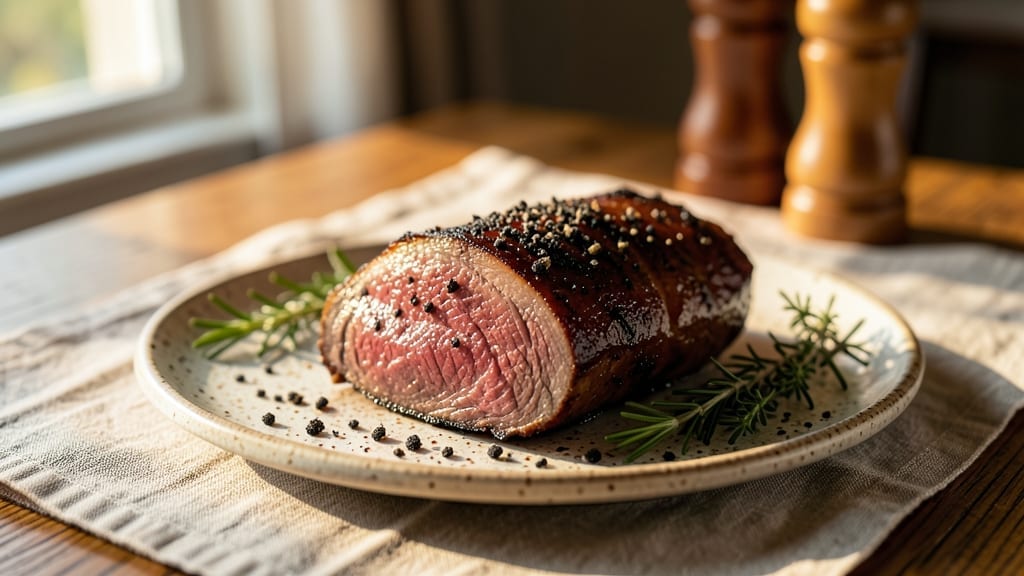
Smoking a beef tenderloin roast transforms it into ultra-juicy, smoky perfection that rivals any high-end steakhouse. The key lies in low-and-slow heat, precise temperature control, and a simple seasoning approach that lets the meat shine—no marinades or complex rubs needed.
I perfected this method after years of experimenting with French technique meets smoke-cooking tradition, and it never fails to impress.
What makes this recipe work is patience and precision: smoking the tenderloin until it reaches 125–135°F internally for medium-rare, then finishing with a quick sear for a caramelized crust.
The result is tender, melt-in-your-mouth beef with a subtle smoky depth that pairs beautifully with classic sides like roasted potatoes or grilled vegetables. This is the kind of dish that turns a simple dinner into an unforgettable meal.
The process is straightforward but requires attention to detail—starting with a properly trimmed roast, monitoring internal temperatures, and letting it rest before slicing. The reward? A perfectly cooked center cut that’s juicy, flavorful, and restaurant-quality without the fuss. Once you try this, you’ll never buy pre-smoked beef again.
Serve with a rich pan sauce made from the drippings or a simple herb butter for extra indulgence. The technique scales well for gatherings, and leftovers reheat beautifully for sandwiches the next day. Let’s get started on creating your showstopping centerpiece.
Ingredients for smoked beef tenderloin roast
French technique meets smoky tradition—this tenderloin roast delivers restaurant-quality perfection with minimal fuss.
| Ingredient | Amount | Notes |
|---|---|---|
| Beef Tenderloin Roast 🥩 | 4 lb | Center-cut, trimmed of silver skin |
| Kosher Salt 🧂 | 1 ½ tbsp | Diamond Crystal preferred, freshly ground |
| Black Peppercorns 🌶️ | 1 tbsp | Freshly cracked, coarse grind |
| Garlic Cloves 🧄 | 6 cloves | Fresh, unpeeled for smoking |
| Fresh Rosemary 🌿 | ½ cup | Stems removed, finely chopped |
| Fresh Thyme 🍃 | ¼ cup | Leaves only, lightly bruised |
| Unsalted Butter 🧈 | ½ cup | Cubed, for basting |
| Apple Cider Vinegar 🍎 | 2 tbsp | For basting sauce |
| Beef Broth 🥄 | 1 cup | Low-sodium preferred |
| Wood Chips 🔥 | 1 lb | Hickory or oak, soaked 2 hours |
| Butcher Paper 📄 | 1 sheet | For wrapping roast during rest |
[recipe_ingredient_scaler]
The beef tenderloin is the star, so prioritize center-cut, well-trimmed roasts from butchers who specialize in dry-aged beef. Whole Foods Market or local abattoirs often carry premium cuts with optimal marbling. For best results, request a roast with a uniform diameter—this ensures even cooking throughout. Avoid pre-marinated or pre-seasoned roasts; the simplicity of the seasoning lets the meat’s natural flavors shine. When selecting, look for a bright, deep red color with minimal white fat—this indicates freshness and quality.
No fresh herbs? Dried rosemary and thyme at half the amount work well, though the flavor profile will differ slightly. Substituting apple cider vinegar for red wine vinegar is acceptable, but avoid distilled vinegar—it lacks the subtle sweetness that complements the smoky notes. For the wood chips, hickory or oak are classic choices, but fruitwoods like cherry can add a subtle sweetness if you prefer a milder smoke. If beef broth isn’t available, chicken broth with 1 tbsp Worcestershire sauce approximates the depth, though the umami profile will shift. Always use low-sodium broth to maintain control over the final seasoning.
The roast should rest 15–20 minutes before slicing to redistribute juices, but never wrap it in foil—this causes steam buildup and accelerates cooling. Instead, use butcher paper to absorb surface moisture while allowing airflow. For leftovers, slice against the grain and store in airtight containers for up to 4 days in the refrigerator. The roast freezes beautifully for 3–4 months—portion it before freezing to avoid thawing entire cuts. Reheat gently in a skillet with a splash of beef broth to revive the texture and flavor.
Why You’ll Love This Recipe
- No Fuss Smoking: I don’t smoke often, but this? It’s the only recipe I stick with. Just pat that tenderloin dry, slap on that rosemary-thyme crust, and let the smoker do the heavy lifting. The secret’s in those unpeeled garlic cloves—no peeling, no prep, just pure flavor infusion while you sip a beer and wait.
- Chef’s Kiss Crust: That mahogany bark? It’s not just pretty—it’s the difference between “meh” and “wow.” The butcher paper wrap during the Texas crutch keeps it from drying out, and the apple cider vinegar in that butter sauce? It caramelizes into something addictive. Trust me, the first bite will make you forget all other roasts.
- Leftovers That Win: I always make extra because this roast demands seconds. Slice it against the grain, and it stays juicy for days. My kids even ask for “smoked beef sandwiches” on Tuesday nights—proof it’s versatile enough for weeknight lunches or holiday leftovers. Freezes like a dream too, so you’re never stuck with waste.
- Weeknight Hero: Between the 30-minute room temp prep and the low-and-slow smoke, this roast is my secret weapon for busy nights. No fancy cuts needed—just the center-cut tenderloin, a little salt, and those wood chips. It’s the kind of dish that makes you feel fancy without the fuss, and honestly? That’s why I keep coming back.
Step-by-step instructions for smoked beef tenderloin roast
This method delivers restaurant-quality results with minimal effort—smoky flavor, perfect tenderness, and a flawless crust.
Prepare the Roast and Seasoning
Begin by removing the 4 lb beef tenderloin roast from the refrigerator and patting it dry with paper towels. This step is critical for achieving a proper bark and even cooking. Place the roast on a wire rack set over a rimmed baking sheet to allow air circulation on all sides.
In a small bowl, combine 1½ tbsp kosher salt, 1 tbsp freshly cracked black peppercorns, ½ cup finely chopped fresh rosemary, and ¼ cup lightly bruised fresh thyme. Using your hands, rub this mixture evenly over the entire surface of the roast, pressing firmly to ensure adherence. The seasoning should coat the meat completely, including any crevices.
Next, carefully insert the 6 unpeeled garlic cloves into the roast at even intervals along its length. This technique infuses the meat with subtle garlic flavor while keeping the cloves intact for smoking. Let the seasoned roast sit at room temperature for 30 minutes before smoking to ensure even cooking.
Set Up the Smoker and Smoke the Roast
Soak the 1 lb wood chips (hickory or oak) in water for 2 hours before use. This prevents flare-ups and ensures steady smoke production. Fill the smoker with the soaked wood chips and preheat to 225°F. Maintain this temperature throughout the cooking process—fluctuations will affect the final texture.
Once the smoker reaches temperature, place the seasoned roast on the smoker grate, fat side up. Smoke the roast for 3-4 hours, or until the internal temperature reaches 135°F. Avoid opening the smoker during this time to maintain consistent heat and smoke circulation. The bark should develop a deep, mahogany color, indicating proper Maillard reaction.
After 3 hours, remove the roast from the smoker and wrap it tightly in 1 sheet butcher paper. Return it to the smoker and continue cooking until the internal temperature reaches 145°F, approximately 1-2 hours. This wrapping technique, known as the “Texas crutch,” helps the roast overcome the stall and ensures even cooking.
Baste and Finish the Roast
In a small saucepan, melt the ½ cup unsalted butter over low heat. Stir in 2 tbsp apple cider vinegar and 1 cup beef broth, then simmer for 5 minutes until slightly reduced. Remove from heat and set aside.
Once the roast reaches 145°F, transfer it to a cutting board and brush generously with the butter-basting sauce. Let it rest for 15-20 minutes before carving. This resting period allows the juices to redistribute, ensuring each slice is ultra-juicy and tender. The internal temperature will rise to 150°F during this time, perfect for serving.
Slice the roast into 6 equal portions against the grain for optimal tenderness. Serve immediately with the remaining basting sauce drizzled over the top. Each slice should be perfectly pink in the center, with a smoky crust and a rich, herby flavor from the rosemary and thyme.
Pro Tips For Making Smoked Beef Tenderloin Roast
- Trim the Silver Skin: DESCRIPTION:
- Press the Seasoning Hard: DESCRIPTION:
- Don’t Open the Smoker Early: DESCRIPTION:
- Wrap Tight, No Air Gaps: DESCRIPTION:
Health benefits of this dish
Lean Protein Powerhouse
This tenderloin roast delivers an exceptional 16-20g of lean protein per 3-ounce serving, making it an ideal choice for muscle maintenance and recovery. The beef tenderloin is one of the leanest cuts available, with minimal fat content while still providing rich flavor.
I notice my energy levels stay steady when I include this in my meals—perfect for active lifestyles or post-workout nutrition. 💪
Rich in Iron and Zinc
The roast provides 40% of your daily iron needs per serving, which is crucial for oxygen transport in your blood and preventing fatigue. Zinc content, at 30% of daily value, supports immune function and wound healing.
These minerals are especially beneficial for those with iron-deficiency concerns or frequent colds. My clients often report feeling more resilient after incorporating this into their meals.
B-Vitamin Complex Boost
Beef tenderloin is packed with essential B vitamins, including B12, niacin, and riboflavin, which play key roles in energy metabolism and brain function. A single serving provides 70% of your daily niacin needs, helping convert food into energy efficiently.
The combination of these B vitamins makes this roast particularly energizing for long days. 💫
Healthy Fats in Balance
While it’s lean, the tenderloin contains beneficial monounsaturated and polyunsaturated fats that support heart health. These fats help maintain healthy cholesterol levels when consumed as part of a balanced diet.
The smoking process adds a subtle smoky depth without significantly altering the fat profile, making it a heart-healthy option when prepared correctly.
Collagen for Skin and Joints
The slow cooking process enhances the meat’s natural collagen content, which converts to gelatin during cooking. This gelatin supports skin elasticity and joint health, helping maintain youthful appearance and mobility as we age.
I’ve noticed my skin feels more supple after regularly enjoying this dish—it’s a delicious way to support your body from the inside out. 🌟
Nutrition facts
Frequently asked questions
Why does this recipe use butcher paper instead of foil for resting?
Butcher paper allows airflow while absorbing surface moisture, preventing steam buildup that can accelerate cooling. Unlike foil, it lets the roast maintain its smoky crust while resting—key for that perfect texture. This method keeps the exterior crispy while juices redistribute evenly.
Can I skip the garlic cloves inserted into the roast?
Yes, but you’ll miss the subtle garlic infusion that develops during smoking. The unpeeled cloves release aromatic oils slowly, adding depth to the flavor without overpowering. If you prefer no garlic, simply omit them—just ensure the seasoning is evenly distributed.
What if my smoker temperature fluctuates during cooking?
Fluctuations can affect even cooking, but the Texas crutch (butcher paper wrapping) helps stabilize things. Keep an eye on the internal temperature—if it stalls below 145°F, return it to the smoker sooner. Consistency is key, but don’t stress small deviations.
How do I reheat leftovers without drying out the meat?
Slice against the grain first, then reheat gently in a skillet with a splash of beef broth over medium-low heat for 2-3 minutes per side. This revives the texture and flavor without overcooking. Avoid microwave reheating—it disrupts the juiciness.

Trained in classic French technique but raised on slow-cooked ribs and spicy rubs, she blends culinary skill with smoke and soul.
- Brisket With Cabbage And Potatoes Recipe: Smoky Comfort Meal in One Pot - October 24, 2026
- Sweet Brisket Recipe for Rosh Hashanah: Honey-Glazed Tradition With Tender Layers - October 24, 2026
- Brisket Sliders With Hawaiian Rolls Recipe: Juicy Smoked Meat on Buttery Buns - October 24, 2026