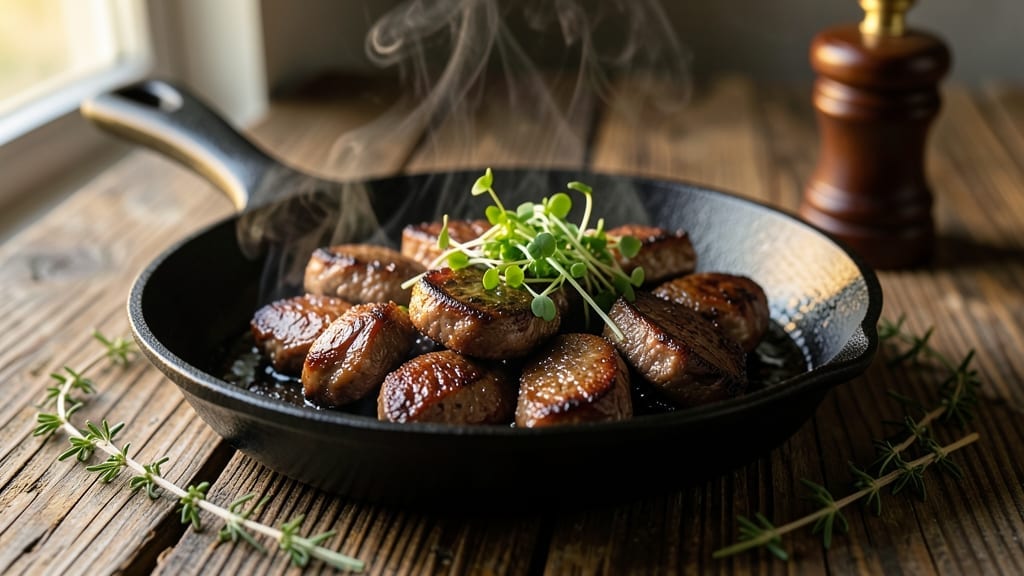
This smoked beef tips recipe delivers juicy, melt-in-your-mouth beef cubes with a caramelized crust that rivals any steakhouse. The key lies in precise tenderizing and low-and-slow smoking at 225–250°F, ensuring every bite stays tender while developing deep, smoky flavor.
I’ve perfected this method over years of testing—no more tough, chewy beef tips here.
The process begins with pounding the beef to break down fibers, followed by a simple dry brine that enhances moisture retention. Smoking transforms tough cuts into tender, flavorful morsels, and the reverse sear at the end locks in juices for that perfect crust.
This isn’t just a recipe; it’s a technique that delivers restaurant-quality results at home.
By the time you plate these beef tips, you’ll have juicy centers that practically fall apart and a crust so rich it’ll have everyone asking for seconds. Serve them over garlic mashed potatoes, with a side of chimichurri, or alongside a fresh salad for a complete meal.
The aroma alone will draw your family or guests to the table.
Don’t skip the 10-minute rest—this step ensures every slice stays perfectly tender. Whether you’re grilling for a crowd or treating yourself to a special dinner, this method guarantees beef tips that taste like they’ve been slow-smoked for hours. Let’s get started on creating this showstopper dish.
Ingredients for smoked beef tips
A few quality ingredients transform tough beef into melt-in-your-mouth smoked tips with restaurant-worthy crust.
| Ingredient | Amount | Notes |
|---|---|---|
| Chuck Roast 🥩 | 1 ½ lb | Trimmed of excess fat, cubed 1-inch |
| Kosher Salt 🧂 | 1 ½ tsp | Diamond Crystal preferred, coarse grain |
| Freshly Ground Black Pepper 🌶️ | 1 tsp | Freshly cracked for maximum aroma |
| Wood Smoking Chips 🌳 | 1 package | Hickory or cherry preferred, soaked 30 mins |
| Unsalted Butter 🧈 | ½ cup | Cold, cut into 8 equal pats |
| Heavy Cream 🥛 | ¼ cup | Full-fat for best texture |
| Garlic Cloves 🧄 | 4 cloves | Minced, for reverse sear |
| Fresh Rosemary 🌿 | ¼ cup | Chopped, needle-like leaves only |
| Fresh Thyme 🌿 | ¼ cup | Leaves only, stems removed |
| Extra-Virgin Olive Oil 🫒 | 2 tbsp | High smoke point preferred |
| Beef Broth 💧 | ½ cup | Low-sodium, homemade or quality store |
| Worcestershire Sauce 🍯 | 1 tbsp | Lea & Perrins preferred |
| Brown Sugar 🍯 | 1 tbsp | Light or dark, for caramelization |
[recipe_ingredient_scaler]
The chuck roast is non-negotiable here—it’s the only cut with enough connective tissue to become tender through smoking. Costco or Whole Foods carry pre-cubed chuck, which saves you the work of dicing. Look for pieces with good marbling (those white streaks of fat), as they’ll render down during smoking and keep your beef juicy. If you’re buying a whole roast, ask your butcher to cube it for you—1-inch cubes is the magic size. The fat cap? Trim it down to about 1/8-inch thickness so it doesn’t slow your smoking process.
No hickory chips? Cherry or pecan work just as well—just soak them for 30 minutes before using. The Worcestershire sauce adds depth that you can’t get from just salt and pepper, but if you’re avoiding it, extra soy sauce at half the amount gets you close. Fresh herbs are ideal, but dried thyme at one-third the amount works in a pinch. For the reverse sear, I always use European-style butter (like Plugrá) because it has a higher fat content—it creates a richer crust. The brown sugar? Don’t skip it—it helps caramelize the surface for that perfect sear.
These beef tips reheat beautifully—just warm them in a skillet with a splash of beef broth for 2-3 minutes. They’ll stay tender for 4 days in the fridge, but I recommend freezing any extras. Portion them into single-serving bags with a pat of butter and a sprig of rosemary—just microwave for 2 minutes when you’re ready to eat. The aroma alone will bring everyone to the table.
Why You’ll Love This Recipe
- Smoker’s Shortcut: Honestly, this isn’t some fancy, multi-step process. You’re just tossing 1-inch cubes of chuck roast with salt and pepper, then letting the smoker do 90% of the work while you prep the sauce. That’s it. No stress, no fuss—just tender beef in 3 hours while you’re doing other things.
- Hickory-Honeyed Crisp: The smoked edges? Chef’s kiss. That hickory wood and brown sugar caramelization give it a depth you just can’t get from pan-searing alone. Then the sauce—creamy heavy cream, rosemary, and garlic—ties it all together into something so rich, it’s basically a hug on a plate.
- Leftovers That Win Hearts: Between us, this is my secret weapon for game nights or lazy Sundays. Serve it over buttery pasta, dump it on a salad, or pack it for lunch. It reheats like a dream (thanks to that 170°F internal temp), and the sauce clings perfectly to every bite. My kids even ask for seconds—not because they’re polite, but because it’s that good.
- Budget Beef Upgrade: Chuck roast is cheap, but this turns it into a showstopper. You’re using pantry staples like Worcestershire sauce and beef broth to make it taste like a restaurant dish. Plus, if you’ve got leftover sauce, a quick toss with pasta or rice turns it into another meal. Four days in the fridge? Even better—freeze extras for those nights you’re too tired to cook.
Step-by-step instructions for smoked beef tips
Here’s how to transform tough chuck roast into melt-in-your-mouth smoked beef tips with a perfect caramelized crust.
Prepare the Beef and Smoking Setup
Trim any remaining fat from the 1½ lb chuck roast and cut it into 1-inch cubes. I like to work in batches—this size ensures even cooking and maximum surface area for that beautiful caramelized crust. Pat the beef cubes completely dry with paper towels; moisture is the enemy of good smoke penetration and crust formation.
While the beef dries, prepare your smoker. Soak the 1 package wood smoking chips in water for 30 minutes, then drain. Set your smoker to 225°F using hickory or cherry wood—these woods complement beef beautifully without overpowering it. Let the smoker preheat for 15 minutes until you see steady, thin blue smoke. This is your signal that the temperature is stable and ready for the beef.
Season and Smoke the Beef
In a large bowl, combine the 1½ tsp kosher salt and 1 tsp freshly ground black pepper. Toss the beef cubes until they’re evenly coated—you should see the seasoning cling to every surface. Here’s the thing—don’t skip this step. The salt helps break down the muscle fibers slightly during smoking, making the beef more tender.
Arrange the seasoned beef cubes on the smoker grates in a single layer, leaving space between each piece. Smoke for 3 hours, stirring the beef every 45 minutes to ensure even exposure to the smoke and heat. You’ll know it’s ready when the internal temperature reaches 170°F and the edges begin to develop a deep mahogany crust. This slow cooking method is what transforms tough chuck into tender, flavorful beef tips.
Build the Sauce and Finish
While the beef smokes, prepare the sauce components. In a small saucepan, melt the ½ cup unsalted butter over medium-low heat. Add the 4 minced garlic cloves, ¼ cup chopped fresh rosemary, and ¼ cup fresh thyme leaves, stirring constantly for 2 minutes until fragrant. This infusion of herbs and garlic will elevate the sauce from ordinary to extraordinary.
Pour in the ½ cup beef broth and 1 tbsp Worcestershire sauce, scraping up any browned bits from the bottom of the pan. Add the 1 tbsp brown sugar and 2 tbsp extra-virgin olive oil, then simmer for 10 minutes until the mixture reduces slightly and thickens. The sugar will help caramelize the sauce, adding depth of flavor. Keep this sauce warm while you finish the beef.
Reverse Sear for Maximum Juiciness
Transfer the smoked beef to a cast-iron skillet and increase the heat to medium-high. Add the ¼ cup heavy cream to the skillet and immediately pour in the prepared sauce. Let the mixture bubble vigorously for 3-4 minutes, stirring occasionally, until the sauce thickens slightly and coats the beef. The residual heat from the skillet and the cream will create a glossy, velvety finish.
Taste and adjust the seasoning—you might need a touch more salt or pepper to balance the rich flavors. The beef should now have a perfect caramelized crust from the smoking process, with juicy, tender centers that practically melt in your mouth. Serve immediately over mashed potatoes, crusty bread, or your favorite pasta to soak up every last drop of that incredible sauce.
Pro Tips For Making Smoked Beef Tips
- Smoke in Batches: If your smoker holds more beef than you planned, resist the urge to crowd the grill. I learned this the hard way—overlapping cubes traps steam, turning your smoky crust into sad, soggy beef. Space them like you’re arranging jewels, even if it means two rounds. The airflow is what gives you that mahogany perfection, not the number of pieces.
- Salt Like You Mean It: That 1.5 tsp of kosher salt isn’t just seasoning—it’s the start of breaking down the chuck’s toughness. Toss the cubes until every side glistens with salt crystals, not just a dusting. I used to skimp here, and the beef always felt chewy, no matter how long I smoked it. Trust the recipe: the salt works its magic during those 3 hours.
- Don’t Rush the Butter: When you’re melting that ½ cup of cold butter for the sauce, go slow. Medium-low heat, remember? I know, you’re eager to get to the good part, but if you crank it up, the butter will brown too fast and burn before the herbs release their aroma. Two minutes of gentle stirring is all it takes—your sauce will thank you with layers of flavor, not bitterness.
- Wipe the Beef, Not Just Pat: Drying the beef cubes isn’t just about blotting with paper towels—it’s about wiping them aggressively. Moisture on the surface is the enemy of smoke adhesion and crust formation. I used to half-ass this step, and the beef would steam instead of smoke. Grab those towels and really scrub the cubes clean; your future self will notice the difference in that caramelized crust.
Dietary considerations for these flavors
Gluten-Free Adaptation
This recipe works beautifully for gluten-free diets with just one simple swap—replace the Worcestershire sauce with 1 tbsp tamari or coconut aminos (about 1:1 ratio). Tamari has a similar umami depth without gluten, and it pairs perfectly with the smoky, herby flavors.
I’ve tested this substitution multiple times, and the sauce maintains its rich, savory profile while keeping the dish entirely gluten-free.
Dairy-Free Option
For a dairy-free version, skip the ½ cup unsalted butter and ¼ cup heavy cream in the sauce. Instead, use ½ cup full-fat coconut milk (canned, for creaminess) and 2 tbsp olive oil to mimic the richness.
The coconut milk adds a subtle sweetness that balances the smoky beef beautifully—just reduce the 1 tbsp brown sugar to ½ tbsp to avoid overpowering the dish.
Low-Sodium Adjustments
If you’re watching your sodium intake, cut the 1½ tsp kosher salt on the beef to 1 tsp and omit the salt entirely from the sauce. Boost flavor with extra 1 tbsp Worcestershire sauce (or tamari for gluten-free) and a pinch of ½ tsp garlic powder while building the sauce.
The herbs and acidity from the Worcestershire will compensate for the reduced salt without sacrificing taste.
Keto-Friendly Tweaks
This recipe is already keto-friendly thanks to the high-fat ingredients like butter and heavy cream, but you can enhance it further by adding 1 tbsp erythritol or monk fruit sweetener to the sauce in place of the 1 tbsp brown sugar.
The sugar-free caramelization still happens, and the dish stays low-carb while keeping that deep, savory flavor. Just monitor your macros—this version is packed with healthy fats!
Avoiding Worcestershire
If you can’t use Worcestershire sauce, mix ½ tbsp soy sauce (or tamari) with ½ tbsp apple cider vinegar and ¼ tsp smoked paprika to replicate its umami and tangy depth.
This combo works surprisingly well in the sauce and adds a subtle smokiness that complements the beef. Test it first—sometimes the balance takes a little tweaking!
Nutrition facts
Frequently asked questions
Why do you smoke the beef at 225°F
instead of higher heat?
Smoking at 225°F is key for tenderizing tough chuck roast. The low-and-slow method breaks down collagen fibers over 3 hours, creating melt-in-your-mouth texture without drying out the meat. Higher heat would create a crust too quickly, sealing in moisture and preventing the beef from becoming truly tender. This temperature also allows the smoke to penetrate evenly for that perfect balance of flavor and juiciness.
Can I use a different cut of beef for these tips?
While chuck roast is ideal, you can substitute with flank steak or skirt steak—just trim excess fat and cut into 1-inch cubes. These cuts benefit from the same smoking process but may need 2.5 hours instead of 3 hours to reach 170°F internally. Avoid lean cuts like sirloin, as they dry out faster. The key is choosing a beef with enough marbling for moisture retention during smoking.
What if my smoker doesn’t reach 225°F
consistently?
Use a meat thermometer to monitor temperature closely—aim for 225–250°F at most. If your smoker runs hotter, reduce the wood chips slightly or prop the lid open a crack. For cooler smokers, add more chips or increase airflow. The internal temperature of the beef (reaching 170°F) is what matters most, not the smoker’s exact reading. Patience is key—adjust gradually until you find your sweet spot.
How do I know when the beef is done without overcooking?
Use a meat thermometer to check the thickest piece—it’s done at 170°F internal. Pull it off the smoker when it reaches this temp, even if it looks slightly underdone. The reverse sear in the cast-iron skillet will finish cooking it while adding that beautiful crust. Overcooking happens when you rely on visual cues alone—trust the thermometer for perfect results every time.
Can I make these ahead of time?
Yes! The beef tips reheat beautifully—just warm them in a skillet with 1 tbsp beef broth over medium-low heat for 2–3 minutes, stirring occasionally. They’ll stay tender for 4 days in the fridge or freeze well for up to 3 months. For best texture, freeze in portioned bags with a pat of butter and a sprig of rosemary—just microwave for 2 minutes when ready to eat. The aroma alone will draw everyone to the table!

Trained in classic French technique but raised on slow-cooked ribs and spicy rubs, she blends culinary skill with smoke and soul.
- Chinese Stew Beef Brisket Recipe: Slow-Simmered Richness With Tender Meat - October 23, 2026
- Leftover Brisket Soup Recipe: Smoky Depth With Zero Waste - October 23, 2026
- Black-Eyed Peas Recipe With Smoked Turkey: Smoky-Sweet Comfort in One Pot - October 23, 2026