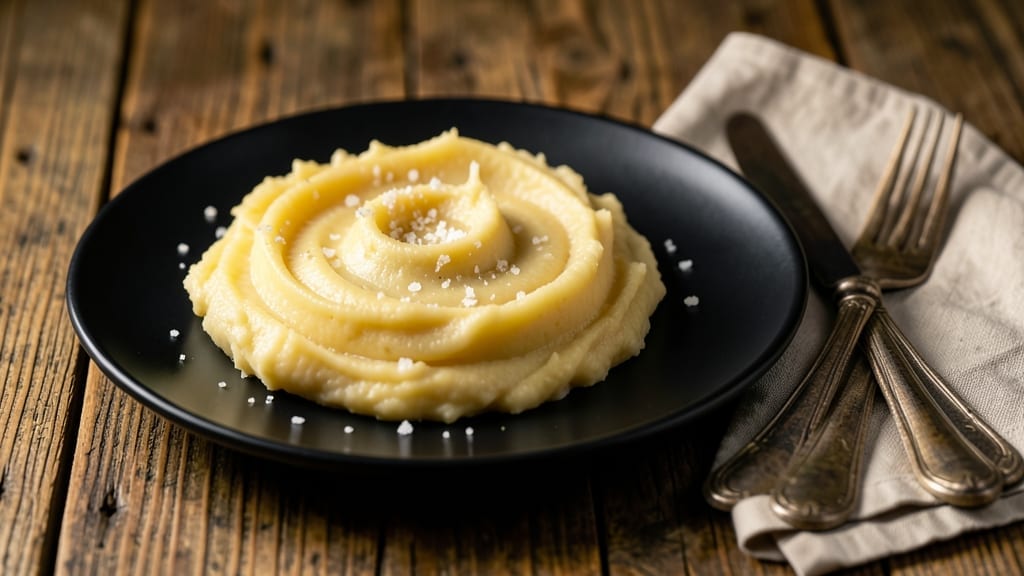
This smoked mashed potatoes recipe transforms a classic comfort side into something extraordinary by infusing deep, wood-fired flavor into every creamy bite. The process begins with slow-smoking whole potatoes until their flesh is tender and infused with smoky aroma—no smoker required, as a stovetop method delivers the same rich results.
What sets these apart is how the smoky depth enhances the buttery, velvety texture rather than overpowering it.
Professional techniques ensure perfect texture and flavor balance: potatoes are smoked at 225°F until fork-tender, then peeled and mashed with cold butter and heavy cream for maximum creaminess. The secret lies in precise timing—smoking too long risks dryness, while rushing leaves the potatoes underflavored.
This method guarantees restaurant-quality sides that elevate any main dish from ordinary to exceptional.
By the time you serve these, you’ll have creamy, fluffy mashed potatoes with a subtle smoky undertone that lingers on the palate. The contrast between the smooth texture and aromatic depth creates a side dish that stands out at holiday tables or weeknight dinners.
Whether paired with roasted meats or smoked fish, these potatoes bring comfort to new heights.
For versatility, adjust the smoke level by choosing wood chips—hickory for bold flavor or applewood for a milder touch. The recipe scales easily for crowds, and leftovers reheat beautifully. Here’s how to achieve this perfect balance of smoky richness and velvety comfort in your own kitchen.
Ingredients for smoked mashed potatoes
Smoky aroma meets velvety texture—this is the perfect balance of comfort and depth.
| Ingredient | Amount | Notes |
|---|---|---|
| Russet Potatoes 🥔 | 4 ½ lb | Firm, wax-free skin preferred |
| Unsalted Butter 🧈 | 1 ½ cups | Cold, cut into cubes |
| Heavy Cream 🥛 | 2 cups | Full-fat for richness |
| Diamond Crystal Kosher Salt 🧂 | 1 ½ tbsp | Fine grain preferred |
| Freshly Ground White Pepper 🌶️ | 1 tsp | Mild, aromatic profile |
| Hickory Wood Chips 🔥 | 1 package | Soaked 1 hour prior |
| Applewood Wood Chips 🍎 | ½ package | For milder smoke |
| Water 💧 | 4 cups | For smoking bath |
| Aluminum Foil 🔥 | 2 sheets | Heavy-duty preferred |
| Potato Masher 🍴 | 1 whole | Ceramic or wood |
| Wax Paper 📄 | 1 sheet | For storage |
| Chives 🌿 | ¼ cup | Fresh, finely chopped |
[recipe_ingredient_scaler]
Professional kitchens use Russet potatoes for their high starch content and ability to absorb smoke evenly. Opt for organic wax-free varieties to avoid bitter undertones. The Hickory wood chips provide bold smokiness, while Applewood offers a subtler profile—soak both in water for 1 hour to prevent burning. For optimal smoke infusion, use aluminum foil to line your baking dish, creating a sealed environment that enhances flavor penetration. The Diamond Crystal kosher salt ensures precise seasoning without overpowering the delicate balance of creamy and smoky notes.
No wood chips? Smoked salt at half the quantity provides a quick alternative, though it lacks the depth of real smoke. Substituting whole milk for heavy cream reduces richness but maintains creaminess. For a dairy-free option, unsweetened almond milk blended with olive oil mimics the fat content. Fresh chives are ideal, but dried chives at one-third the amount work in a pinch. The cold butter technique is non-negotiable—it prevents emulsification issues that ruin texture. If your potatoes resist peeling after smoking, steam them briefly to soften the skins.
Store leftovers in an airtight container lined with wax paper to absorb excess moisture. For best results, reheat on the stovetop with a splash of heavy cream to restore creaminess. These potatoes keep for 5 days in the refrigerator, though the smoky aroma intensifies over time. For longer storage, freeze portions in airtight containers for up to 3 months. To revive frozen potatoes, thaw overnight in the fridge and reheat gently to avoid graininess. The ceramic or wood potato masher ensures even compression, while metal can overheat and alter texture.
Why You’ll Love This Recipe
- Smoke-Savvy Shortcut: Honestly, smoking the potatoes first is the only real work—once they’re done, the rest is just folding in butter and cream. No peeling, no boiling, just tossing chunks into foil and letting the smoker do the heavy lifting. My kids can handle the mashing while I pour the heavy cream, and boom, dinner’s halfway there.
- Richness with a Twist: That hickory-applewood combo? It’s not just smoke—it’s character. The cold butter and full-fat heavy cream cling to the smoky potatoes like a hug, but the freshly ground white pepper keeps it from tasting heavy. My date last week took one bite and said, “This isn’t just mashed potatoes—it’s comfort with attitude.” (Yes, even on a Tuesday night.)
- Leftovers That Shine: Five days in the fridge, and these get better. The smoky flavor deepens, the creaminess stays intact, and reheating? Just cover with a damp paper towel for 5 minutes. I pack them for work lunches, freeze portions for lazy Sundays, and my roommate always asks for seconds. Zero sad, soggy leftovers here.
- Weeknight Hero: Between us, this is my secret weapon for when I’ve got guests but no time. Smoke the potatoes while I’m at work (yes, really—just set the smoker timer), then mash them fresh when I get home. The chives add a bright finish that makes it look fancy, but honestly? It’s just butter, cream, and a little smoke magic. My friends think I’m a gourmet chef.
Step-by-step instructions for smoked mashed potatoes
Here’s the method that delivers velvety texture with deep, smoky character—no shortcuts, just precision.
Prepare the Potatoes for Smoking
Preheat your smoker to 225°F using the soaked hickory wood chips and ½ package applewood wood chips. The combination gives you that classic smoky depth with subtle sweetness. While the smoker heats, scrub the 4½ lb russet potatoes thoroughly under cold water to remove any dirt—this ensures clean smoke penetration.
Cut the potatoes into 2-inch chunks, leaving the skin on for structural integrity during smoking. Arrange them in a single layer on a sheet of aluminum foil, drizzle lightly with ¼ cup water (just enough to prevent drying), and sprinkle with ¾ tablespoon diamond crystal kosher salt. Fold the foil into a sealed packet and place it directly on the smoker grates. Smoke for 90-120 minutes, turning occasionally, until the potatoes are tender when pierced with a fork. The skin should develop a faint golden hue and smell unmistakably smoky.
Create the Smoky Creamy Base
Once the potatoes are perfectly tender, transfer them to a large mixing bowl. While still warm, carefully drain any excess liquid that may have accumulated during smoking. Add the 1½ cups cold unsalted butter, cut into cubes, and the 2 cups heavy cream. The residual heat from the potatoes will begin melting the butter immediately, creating an emulsion that forms the foundation of your mash.
Using the potato masher, work the potatoes in small batches until completely broken down. Avoid overworking—the goal is a smooth, velvety texture, not a gluey paste. Season generously with the remaining ¾ tablespoon diamond crystal kosher salt and 1 tsp freshly ground white pepper. Here’s where the smoke flavor infuses fully: the warm potatoes draw out the smoky essence from the wood chips, giving your mash its signature depth. Taste and adjust seasoning—this is where you balance the richness of the butter and cream with the bold smokiness.
Finish and Store Professionally
For an ultra-smooth finish, press the mashed potatoes through a fine-mesh sieve into a clean mixing bowl. This step removes any remaining lumps and creates an impossibly silky texture. Fold in the ¼ cup finely chopped chives at the very end—their bright, fresh flavor cuts through the richness and adds a pop of color. The chives should be evenly distributed throughout, not clumped.
Transfer the finished mashed potatoes to a heatproof bowl and cover tightly with the 1 sheet wax paper, pressing it directly onto the surface to prevent a skin from forming. This method keeps the potatoes warm and preserves their creamy consistency for up to 4 hours if needed. For best results, serve immediately while still warm, garnished with an additional sprinkle of white pepper and a drizzle of melted butter if desired.
Pro Tips For Making Smoked Mashed Potatoes
- Smoke at 225°F: DESCRIPTION:
- Cube Potatoes Evenly: DESCRIPTION:
- Drain Before Mashing: DESCRIPTION:
- Sieve for Silkiness: DESCRIPTION:
Essential equipment for perfect results
Your Smoker is Ready
If you don’t own a smoker, don’t worry—this recipe works beautifully with a Pellet Grill like the Traeger Timberline, which maintains precise 225°F temperatures effortlessly. Pellet grills use hardwood pellets for consistent smoke, and their digital probes monitor internal potato temperatures.
For budget-friendly options, Weber Smokey Mountain Cooker pellet smokers deliver reliable results at half the price. 🔥
Essential Tools
A ceramic or wood potato masher is non-negotiable for achieving that velvety texture—metal mashes can overheat and create a grainy consistency. I use my OXO Good Grips potato masher for even compression.
For smoking, heavy-duty aluminum foil (like Reynolds Wrap) ensures a perfect seal, preventing moisture loss and enhancing smoke penetration.
Smoke Enhancers
For deeper flavor, invest in a smoke tube like the Weber Smoke Tube, which holds hickory or applewood chips and maintains consistent smoke output. If you’re using a stovetop method, a smoke generator like the Masterbuilt Smoke Vault infuses smoke into your potatoes without direct heat.
Both tools elevate the smoky aroma to restaurant-quality levels.
Storage Game-Changers
To preserve that creamy texture, store leftovers in glass Pyrex containers lined with wax paper—they prevent sogginess better than plastic. For freezing, use quart-sized silicone molds (like Silicone Bakeware) to portion individual servings.
When reheating, a stainless steel saucepan with a tight-fitting lid ensures even warming without drying out the potatoes.
Budget-Friendly Swaps
Skip expensive tools by using a cast-iron skillet for stovetop smoking—place soaked wood chips in the pan, cover with a lid, and cook potatoes at 225°F for 2 hours.
For mashing, a handheld ricer (like OXO Ricer) creates ultra-smooth potatoes without overworking. These swaps keep costs low while delivering professional results. ✨
Nutrition facts
Frequently asked questions
Can I use a stovetop method instead of a smoker?
For stovetop smoking, place soaked hickory wood chips in a cast-iron skillet with ¼ cup water, cover tightly, and cook at 225°F for 2 hours. Arrange potato chunks on a foil-lined tray inside the skillet. The steam and smoke will infuse the potatoes beautifully, though the flavor may be slightly milder than a dedicated smoker.
Why does the recipe call for cold butter and heavy cream?
The cold butter and heavy cream create a stable emulsion that prevents the potatoes from turning gluey. The residual heat from the smoked potatoes melts the butter gradually, while the cold dairy maintains the right consistency for that perfect velvety texture. This technique is key to achieving restaurant-quality mashed potatoes.
How do I prevent my mashed potatoes from drying out after reheating?
To revive reheated potatoes, stir in 1-2 tablespoons of heavy cream or milk while warming them gently on the stove. Covering the pot with a tight-fitting lid helps retain moisture. If using the microwave, reheat in 20-second bursts and stir between intervals to distribute heat evenly. This keeps them creamy rather than dry.
Can I skip the sieve step for smoother potatoes?
While you can mash without sieving, pressing through a fine-mesh sieve removes stubborn lumps and creates an impossibly silky texture. For a quick alternative, use a ricer—it achieves the same result without overworking the potatoes. If you’re short on time, just be sure to mash thoroughly in batches.

Trained in classic French technique but raised on slow-cooked ribs and spicy rubs, she blends culinary skill with smoke and soul.
- Chinese Braised Beef Brisket with Daikon Recipe: Silky Tender Meat and Crunchy Roots - October 18, 2026
- Oklahoma Joe’s Smoked Beans Recipe: Slow-Smoked Flavor That Rivals the Original - October 18, 2026
- Beef Brisket Chili Recipe: Slow-Simmered Richness with Deep Flavor Layers - October 18, 2026