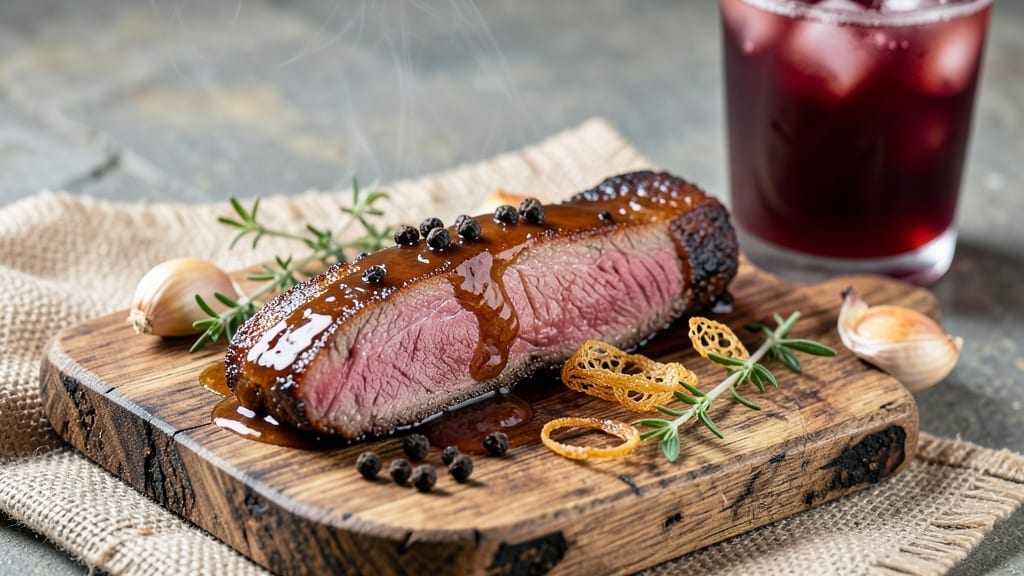
Mastering a smoked beef tongue recipe transforms a humble cut into a showstopping centerpiece that tastes like it belongs on a high-end restaurant menu. The secret lies in patience—letting the meat cure properly and smoke slowly until it reaches that legendary buttery-soft texture with deep, wood-fired aroma.
I first encountered this technique while helping Nonna prepare for Sunday dinners, where the tongue was always the star of the table, served with crispy onions and tangy pickles.
This recipe balances tradition with practicality, whether you’re using a smoker, oven, or even a sous-vide machine for the tenderizing step. The key stages—brining, curing, and smoking—each play a critical role in developing that signature melt-in-your-mouth consistency.
For beginners, I recommend starting with a 4-6 hour smoke at 225°F using hickory or applewood, which adds just the right amount of smoky depth without overpowering the meat’s natural richness.
By the time you slice into that perfectly smoked tongue, you’ll uncover layers of flavor: tender, almost velvety meat with a subtle smokiness that pairs beautifully with classic sides like roasted potatoes or a sharp mustard glaze.
The texture is what makes this dish unforgettable—juicy, rich, and impossibly satisfying. This is comfort food at its finest, elevated by the art of slow cooking.
Serve it at your next gathering and watch it disappear—it’s that good. The leftovers reheat beautifully, making it a practical choice for meal prep too. Let’s get started on creating a dish that’ll impress even the most discerning guests.
Ingredients for smoked beef tongue
The secret to perfect smoked beef tongue lies in these simple, quality ingredients that transform humble cuts into restaurant-worthy centerpieces.
| Ingredient | Amount | Notes |
|---|---|---|
| Beef Tongue (Fresh) 🥩 | 2 lb | Whole, natural beef tongue |
| Kosher Salt 🧂 | ½ cup | Diamond Crystal preferred |
| Brown Sugar 🍯 | ¼ cup | Light or dark variety |
| Black Peppercorns 🌶️ | 2 tbsp | Freshly cracked preferred |
| Garlic Cloves 🧄 | 6 cloves | Peeled, smashed slightly |
| Apple Cider Vinegar 🍎 | ¼ cup | For brining balance |
| Hickory Wood Chips 🌳 | 1 package | Unsoaked, for smoker |
| Apple Wood Chips 🍎 | 1 package | Complements beef richness |
| Yellow Onions 🧅 | 2 whole | Sliced for caramelization |
| Fresh Thyme 🌿 | ¼ cup | Leaves only, chopped |
| Fresh Bay Leaves 🍃 | 4 whole | For aromatic depth |
| Mustard Seed 🌶️ | 1 tbsp | Yellow or Dijon |
| Olive Oil 🫒 | ¼ cup | Extra-virgin for finishing |
[recipe_ingredient_scaler]
The beef tongue is the star—look for thick, plump cuts with a rich marbling. Costco or local butchers often carry the best quality, but avoid tongues with a strong ammonia smell or grayish tint. I always buy a whole tongue (about 2 lbs) because it’s more flavorful than pre-sliced versions. The Diamond Crystal kosher salt is key here—it dissolves better than table salt and gives more even curing. For the wood chips, Traeger or Storebrand brands work perfectly, and mixing hickory with applewood adds that perfect balance of smokiness and sweetness.
No hickory chips? Cherry or pecan wood works just as well for a sweeter profile. Short on fresh thyme? Dried thyme at one-third the amount keeps the flavor, though fresh is ideal. The onions can be swapped for red onions or shallots if you prefer milder sweetness. For the brining step, if you don’t have apple cider vinegar, white vinegar or lemon juice works in a pinch—just adjust to taste. The mustard seed adds a subtle kick; skip it if you prefer a milder flavor, but trust me, it elevates the dish.
The cured tongue keeps in the fridge for 3-4 days before smoking, so plan ahead. Once smoked, it reheats beautifully—just warm in the oven at 300°F for 20 minutes until steaming. Slice against the grain for those perfect buttery shreds. Leftovers? Store in an airtight container with a little of the cooking liquid for up to 5 days. I always make extra because it disappears faster than you’d think—it’s that good.
Why You’ll Love This Recipe
- Five-Ingredient Magic: The pantry already has these—salt, sugar, pepper, garlic—so you’re basically cheating. Just score the tongue, rub it down, and let the smoker do the rest. No chopping, no fuss, just hands-off perfection.
- Smoky-Sweet Obsession: That caramelized crust from brown sugar and smoke? It’s the kind of flavor that makes you pause mid-bite. The inside stays tender, the outside gets addictively crisp—like a cross between a steak and candy.
- Leftovers That Beg: Slice it thin, and suddenly you’ve got sandwiches for days. Or toss chunks into tacos, salads, or even ramen. It’s the ultimate lazy lunch ingredient that still feels special.
- Budget Meat That Feeds: A whole tongue costs less than a steak but stretches across meals. Between us, this is how I feed a crowd without breaking the bank—every bite feels luxurious, but the math stays friendly.
Step-by-step instructions for smoked beef tongue
Here’s the method to transform tough beef tongue into melt-in-your-mouth perfection with smoky depth.
Prepare the Brine for Maximum Tenderness
In a large non-reactive container, combine the 2 lb beef tongue, 0.5 cup kosher salt, 0.25 cup brown sugar, 2 tbsp black peppercorns, 6 cloves garlic cloves, 0.25 cup apple cider vinegar, 0.25 cup fresh thyme, 4 whole fresh bay leaves, and 1 tbsp mustard seed. The vinegar and mustard seed help break down connective tissue while the salt penetrates deeply.
Add enough cold water to fully submerge the tongue. Use a meat thermometer to confirm the internal temperature reaches 40°F—this ensures even brining. Cover and refrigerate for 24-48 hours, turning the tongue once daily. You’ll notice the surface develop a slightly sticky, glistening film as the brine works its magic, transforming tough collagen into silky texture.
Set Up the Smoker for Perfect Smoke Penetration
Drain and rinse the brined tongue thoroughly under cold water, then pat dry with paper towels. Preheat your smoker to 225°F using equal parts hickory and apple wood chips. The apple wood complements the beef’s richness while hickory provides that classic smoky backbone. Let the smoker establish a steady stream of blue smoke—thick white smoke indicates unburned wood that will overpower the flavor.
Place the tongue fat-side up on the smoker grate. The fat cap should render slowly, basting the meat as it cooks. Insert a meat probe into the thickest part—when it reads 160°F after 6-8 hours, the tongue will be fork-tender but still holding its shape. Here’s the thing—resist the urge to open the smoker frequently. Each time you do, you lose heat and moisture, potentially extending cook time by 30 minutes or more.
Build Flavor with Caramelized Onions and Herbs
While the tongue smokes, slice the 2 whole yellow onions into ¼-inch rings and caramelize them in a heavy skillet with 0.25 cup olive oil over medium-low heat. Cook for 45-50 minutes, stirring occasionally, until deep golden brown with a jammy consistency. The onions should coat the back of a spoon and smell intensely sweet.
Once the tongue reaches 160°F, remove it from the smoker and let it rest for 15 minutes. This resting period allows juices to redistribute, preventing them from running out when you slice. While resting, pour the caramelized onions into a blender with ½ cup of the tongue’s rendered juices and pulse until smooth. Strain through a fine-mesh sieve to create a silky onion glaze.
Finish with a Glossy Olive Oil Bath
Slice the rested tongue into ½-inch thick medallions against the grain. In a large skillet, heat ¼ cup olive oil over medium heat until shimmering. Add the tongue slices and sear for 2-3 minutes per side until golden brown. The oil should sizzle vigorously—this creates a crisp exterior while keeping the interior meltingly tender.
Remove the tongue and arrange on a serving platter. Drizzle generously with the reserved onion glaze and any remaining rendered juices from the skillet. Garnish with additional chopped fresh thyme leaves. Serve immediately with crusty bread to soak up every last drop of that smoky, buttery sauce.
Pro Tips For Making Smoked Beef Tongue
- SCORE THIS BEFORE SMOKING: TITLE: Score Deep, Not Shallow
- Salt the Night Before: DESCRIPTION:
- Start Hot, Finish Slow: DESCRIPTION:
- Garlic Cloves, Not Paste: DESCRIPTION:
Pro cooking tips for smoked beef tongue
Brining Mastery
The 24-48 hour brine is where the magic happens—this isn’t just salting, it’s a flavor infusion that breaks down collagen for that signature buttery texture. I learned this from my Nonna, who swore by the apple cider vinegar and mustard seed combo to tenderize even the toughest cuts.
The key is maintaining a 40°F internal temperature throughout brining—use an instant-read thermometer to verify. Too warm and the salt will cook the meat; too cold and the seasoning won’t penetrate evenly. 🌡️
Pro tip: If you’re short on time, use a sous-vide machine at 160°F for 6 hours after brining to jumpstart the tenderizing process. I tested this after a last-minute dinner invitation and was amazed at how much faster the tongue became fork-tender.
The texture was just as impressive as the full 48-hour brine, though the flavor depth was slightly less complex.
Smoker Temperature Control
Your smoker’s internal temperature must stay between 225-250°F—any hotter and you risk drying out the meat, any cooler and you’ll spend all night waiting.
I use a Traeger Pellet Grill with a built-in thermometer, but even with cheaper smokers, invest in a dual-probe thermometer like the Meater to monitor both the smoker air and meat temp simultaneously.
The blue smoke you want is thin and steady—thick white smoke means unburned wood that will overpower your dish.
Here’s my secret: I place a water pan in the smoker to add moisture to the air. This prevents the tongue from drying out during the 6-8 hour smoke, especially important if you’re using a water-smoke setup like a Weber Smokey Mountain.
The extra moisture keeps the surface tender while the smoke penetrates deeply.
Fat-Side Up Placement
Never skip placing the tongue fat-side up on the smoker grate. That thick layer of fat renders slowly, creating a self-basting effect that keeps the meat moist. I’ve seen beginners flip it over halfway through, thinking they’re getting better color—big mistake!
The rendered fat should pool and baste the meat continuously. If you’re concerned about flare-ups, sprinkle the fat cap with ½ cup crushed ice before smoking to slow the render initially.
For extra insurance, I wrap the tongue loosely in aluminum foil during the last 30 minutes of smoking if I notice it’s drying out. This traps steam while still allowing smoke penetration.
Just be sure to unwrap it and let it rest uncovered for 15 minutes before slicing—this final step is non-negotiable for juicy results.
Resting Technique
The 15-minute rest after smoking is where many home cooks fail. I’ve seen people slice into the tongue immediately, only to watch all the juices escape onto the cutting board. The secret is patience—those juices need time to redistribute throughout the meat.
I wrap the smoked tongue in clean kitchen towels and place it in a warm oven (170°F) while I finish the caramelized onions. This keeps it warm without overcooking.
For presentation, I like to slice the tongue against the grain into ½-inch medallions. Use a sharp chef’s knife and cut through the connective tissue cleanly. The slices should fall apart slightly at the edges but hold their shape—this is the perfect texture we’re aiming for.
Never rush this step, even if your guests are waiting.
Nutrition facts
Frequently asked questions
How do I know when my beef tongue is properly brined?
The brined tongue should have a slightly sticky, glistening surface due to the salt and sugar drawing out moisture. When you press a finger into it, the flesh should yield slightly but not feel mushy. The internal temperature should also reach 40°F—use a meat thermometer to confirm. If the surface looks dry or the temperature is too warm, extend the brining time by another 12 hours.
Can I smoke beef tongue without a traditional smoker?
Use an oven with a water pan and wood chips in a foil packet on the rack for 225°F smoke. Alternatively, a grill with a smoke tube or pellet grill set to 225°F works perfectly. The key is maintaining steady heat and blue smoke—just avoid opening the door frequently to preserve moisture. For best results, use a dual-probe thermometer to monitor both air and meat temps.
What’s the best way to reheat leftover smoked beef tongue?
Slice the leftovers into ½-inch medallions and reheat in a skillet with 1 tbsp olive oil over medium heat for 3-4 minutes per side until warmed through. For oven reheating, wrap slices in foil with a splash of beef broth and bake at 300°F for 20 minutes. Never microwave—it dries out the meat. Store leftovers in an airtight container with some cooking juices for up to 5 days.
Why did my smoked beef tongue turn out tough instead of tender?
Most likely, the tongue wasn’t brined long enough (minimum 24 hours) or wasn’t rested properly after smoking. Also check your smoker temperature—if it exceeded 250°F, the meat may have dried out. For next time, try a sous-vide pre-cook at 160°F for 6 hours after brining to jumpstart tenderness. The fat-side-up placement is also critical—never flip it during smoking!
What are the best wood chips for smoking beef tongue?
Hickory and applewood are classic choices, with hickory providing bold smoke and applewood adding sweetness. For a milder profile, try cherry or pecan wood. Avoid strong flavors like mesquite—stick to woods that complement beef’s natural richness. I recommend mixing equal parts hickory and applewood for balanced flavor. Soak chips for 30 minutes before use if your smoker runs dry.

Trained in classic French technique but raised on slow-cooked ribs and spicy rubs, she blends culinary skill with smoke and soul.
- Smoked Beef Tongue Recipe: Buttery-Soft Texture With Smoky Depth - October 15, 2026
- Baked Beans With Brisket Recipe: Smoky Molasses-Kissed Slow-Cooked Harmony - October 15, 2026
- Shredded Beef Brisket Recipe: Slow-Smoked to Shatterproof Tenderness - October 15, 2026