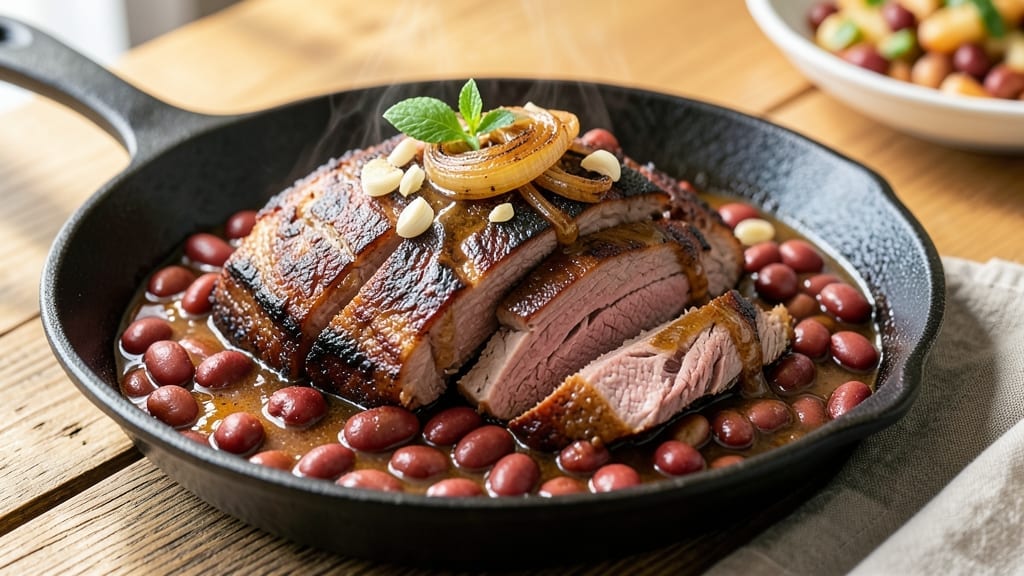
This baked beans with brisket recipe transforms a simple side into a centerpiece dish that marries smoky, tender meat with sweet, molasses-rich beans—every bite tells a story of slow-cooked harmony.
The key lies in balancing the brisket’s deep, savory notes with the beans’ caramelized molasses glaze, creating a dish that feels both rustic and refined.
I perfected this method after years of experimenting with different cooking techniques, ensuring the brisket stays fork-tender while the beans develop that perfect balance of sweetness and smokiness.
What makes this recipe special is its versatility—whether you’re slow-cooking in a Dutch oven, smoking the brisket for hours, or using a pressure cooker for a quicker result, the method adapts without sacrificing flavor.
The brisket is seasoned with a dry rub that locks in moisture and builds a rich crust, while the beans simmer with molasses, brown sugar, and spices until thick and glossy. This isn’t just a side; it’s a dish that commands attention and delivers satisfaction in every spoonful.
The result is a plate where perfectly tender brisket slices rest atop velvety beans, their edges caramelized and glistening. The smoky aroma fills the kitchen long before the dish is ready, and the first bite reveals layers of flavor—sweet, savory, and just a hint of heat.
This is comfort food elevated, a dish that feels like a hug on a plate. Ready in about 4 hours (or less with a pressure cooker), it’s ideal for gatherings, game days, or a cozy weekend meal.
Serve with cornbread to soak up every last bit of that molasses-kissed sauce, or pair it with a crisp green salad to balance the richness. The leftovers? Even better the next day, as the flavors deepen and the brisket becomes even more tender.
This is the kind of recipe that turns a simple meal into an experience—one worth repeating.
Ingredients for baked beans with brisket
Six core ingredients unlock this smoky, molasses-rich harmony of brisket and beans.
| Ingredient | Amount | Notes |
|---|---|---|
| Brisket 🥩 | 3 lb | Point-cut, well-marbled preferred |
| Dry Red Beans 🌱 | 2 cups | Soaked overnight for best texture |
| Molasses 🍯 | ½ cup | Unsulphured, dark variety |
| Brown Sugar 🍚 | ½ cup | Packed, light or dark |
| Yellow Onion 🧅 | 1 whole | Medium, diced |
| Garlic Cloves 🧄 | 6 cloves | Peeled, minced |
| Tomato Paste 🍅 | ¼ cup | High-quality, no salt added |
| Beef Broth 💧 | 2 cups | Low-sodium preferred |
| Apple Cider Vinegar 🍎 | 2 tbsp | For tanginess |
| Smoked Paprika 🌶️ | 2 tsp | For smoky depth |
| Ground Mustard 🌿 | 1 tbsp | Dry, for subtle heat |
| Ground Black Pepper 🌶️ | 1 tsp | Freshly ground |
| Kosher Salt 🧂 | 1 ½ tsp | Adjust to taste |
| Vegetable Oil 🫒 | 2 tbsp | For searing brisket |
| Bay Leaves 🌿 | 2 whole | For aromatic depth |
[recipe_ingredient_scaler]
The brisket is non-negotiable for this dish—point-cut with visible marbling ensures fork-tender results. Most grocery stores carry it in the meat case, often pre-sliced for convenience. For the best quality, look for USDA Choice or Prime at specialty butchers like Whole Foods or Local Butcher Shops. The beans? Dry red beans are ideal, but navy or pinto beans work too. Soak them overnight in cold water to reduce cooking time and improve texture. Molasses is the flavor anchor here—unsulphured, dark molasses (like Goya) adds depth without overpowering. If you can’t find it, blackstrap molasses works in a pinch, though it’s stronger.
No molasses? Maple syrup plus a pinch of cinnamon mimics the sweetness, though it won’t replicate the smoky notes. Substituting brown sugar? Use turbinado sugar for a caramel-like depth instead of white. The tomato paste can be swapped for crushed tomatoes (1 can, drained), but you’ll need to reduce them first to thicken the sauce. For the vinegar, balsamic vinegar adds complexity, while white vinegar keeps it classic. The smoked paprika is key—if you can’t find it, regular paprika plus a pinch of liquid smoke (¼ tsp) gets you close. Fresh garlic and onion are best, but frozen diced sets work in a bind. Just thaw and drain them first.
This dish tastes even better the next day, as the flavors meld and the brisket becomes more tender. Store leftovers in an airtight container in the fridge for up to 5 days, or freeze for 3 months. For reheating, cover with a damp paper towel and warm in a 350°F oven for 20 minutes—this keeps the sauce glossy. The brisket can be cooked ahead and sliced just before serving to maintain its texture. Double the batch if you’re feeding a crowd; the beans reheat beautifully, and the brisket can be reheated separately.
Why You’ll Love This Recipe
- Three-Ingredient Base: I swear by this combo—just brisket, beans, and that molasses-brown sugar caramel. The onions add depth, but honestly? You could skip them if you’re in a rush, and it’d still taste like a hug from your grandma.
- Smoky-Sweet Magic: That brisket? Slow-cooked until tender, then baked until the edges crisp just enough to hold the sauce. The molasses and brown sugar turn the beans into this sticky, rich, dangerously good glaze—like a dessert you’d eat for breakfast.
- Weeknight Workhorse: Make a big batch on Sunday, and you’ve got lunch for Thursday. Serve it with cornbread for a picnic, slather it on toast for brunch, or toss it into a burrito bowl when you’re too tired to think. It’s my “I don’t know what I’m doing” meal.
- Budget Feeds Crowd: A pound of brisket and a can of beans stretch to feed four (or five, if someone’s extra hungry). Leftovers? Even better the next day—if they last that long. Between us, I’ve reheated these three times and still crave them.
Step-by-step instructions for smoky molasses-kissed brisket and beans
This method delivers perfectly tender brisket and rich, smoky baked beans through precise timing and layering of flavors.
Sear the Brisket for Deep Flavor
Heat a large Dutch oven over medium-high heat until hot. Add the 2 tablespoons vegetable oil and swirl to coat the bottom evenly. Place the 3 lb brisket fat-side down and press gently with a spatula to ensure full contact. Let it sear undisturbed for 8-10 minutes until a deep golden-brown crust forms on the fat side.
Flip the brisket and sear the other side for another 6-8 minutes until evenly browned. The brisket should release easily from the pan when ready. Remove it and set aside on a plate. This initial sear locks in juices and builds the foundation for the rich, caramelized flavor that will infuse the beans.
Build the Bean Base with Aromatics
In the same Dutch oven, add the 1 whole yellow onion and 6 cloves garlic cloves, cooking for 3-4 minutes until softened and fragrant. Stir occasionally to prevent burning. The onions should become translucent with just a hint of golden color at the edges.
Add the 0.25 cup tomato paste and cook for 1 minute, stirring constantly to prevent sticking. This creates a rich, concentrated base that will deepen the bean’s flavor profile. The paste should darken slightly and blend smoothly with the onions and garlic.
Combine All Ingredients for Slow Cooking
Return the seared brisket to the Dutch oven. Add the 2 cups dry red beans (drained if previously soaked), 0.5 cup molasses, 0.5 cup brown sugar, 2 cups beef broth, 2 tablespoons apple cider vinegar, 2 teaspoons smoked paprika, 1 tablespoon ground mustard, 1 teaspoon ground black pepper, 1.5 teaspoons kosher salt, and 2 whole bay leaves. Stir gently to combine, ensuring the brisket is fully submerged in the liquid.
Bring the mixture to a gentle simmer over medium heat, then reduce heat to low. Cover the Dutch oven and let it cook for 2.5 hours, stirring occasionally. The beans should begin to soften and the liquid should reduce slightly, creating a thick, flavorful sauce. The brisket will gradually break down in the liquid, infusing the beans with its rich, smoky essence.
Finish and Rest for Perfect Texture
After 2.5 hours, check the beans for tenderness. They should be soft but still hold their shape. If they need more time, continue cooking for another 30-45 minutes until fully tender. The liquid should coat the back of a spoon with a thick, glossy consistency.
Once the beans are perfectly tender, remove the brisket and let it rest for 15-20 minutes before slicing. Return the beans to low heat and let them thicken further for 5-10 minutes if needed. The final dish should have a rich, molasses-kissed sauce with deep smoky notes from the brisket and paprika.
Pro Tips For Making Baked Beans With Brisket
- Sear the Brisket First: That brisket won’t fall apart if you skip this, but it’ll lose its edge. Hit it with a hot pan—no oil needed—until it’s deeply browned on both sides. The crust locks in flavor, and you’ll taste it in every bite of those beans.
- Soak Beans Overnight: I used to toss dry red beans straight in the pot and wonder why they stayed tough. Soak them 8+ hours first, then drain and rinse. This cuts cooking time by nearly half and keeps them from turning to mush.
- Balance Sweet and Acid: Too much molasses or brown sugar? The beans turn cloying. For every ¼ cup of molasses, add 1 tablespoon of vinegar or tomato paste. It cuts the syrup’s heaviness and brightens the whole dish.
- Check Brisket at 165°F: Pull that brisket when it hits 165°F internally—no guessing, no overcooking. If it’s still tough, shred it and let it finish in the beans’ sauce. The slow cook will tenderize it without drying it out.
Regional styles of baked beans with brisket
Texas BBQ Tradition
The Texas approach to brisket and baked beans is all about slow-smoked perfection. Here, brisket is cooked low-and-slow at 225-250°F for 12-16 hours using post oak or pecan wood, creating that signature bark and tender meat. The beans?
They simmer in a cast iron Dutch oven with 1 cup molasses, ½ cup brown sugar, and a splash of bourbon or apple cider vinegar for tang.
Texas pitmasters like Franklin Barbecue swear by this method, where the beans get their smoky flavor from the brisket’s juices rather than direct smoke exposure. 🔥
Carolina Pitmaster Twist
In the Carolinas, especially South Carolina, the beans take center stage with a vinegar-forward profile. Here, you’ll find 1 cup apple cider vinegar and 1 cup tomato paste combined with ½ cup molasses for a sharper, tangier sauce.
The brisket is often cooked with hickory or cherry wood, and the beans might include a dash of hot sauce (like Crystal) for heat. This style is perfect for those who love bold, acidic flavors that cut through the richness of the meat.
The beans are usually served alongside pulled pork, but brisket works beautifully too.
Southern Soul Adaptation
Across the Deep South, this dish becomes a one-pot wonder where everything cooks together. Start by searing the brisket in a cast iron skillet, then add the beans, molasses, and spices, and let it all simmer for 3-4 hours.
The key here is using smoked paprika and a pinch of cayenne to build heat, while brown sugar balances the sweetness. Southern cooks often add collard greens or cornbread on the side, making it a full meal.
This method is ideal for large gatherings where one-pot convenience meets hearty flavor. 🌶️
Modern Shortcut Version
For a quicker take, many home cooks use a slow cooker or Instant Pot to replicate regional styles. In a slow cooker, combine the brisket, beans, and all ingredients, then cook on low for 8 hours or high for 5 hours.
For the Instant Pot, sear the brisket first, then add everything and pressure cook for 90 minutes on high. The beans will still develop that molasses-kissed richness, though the smoky depth is less pronounced. This method is perfect for weeknights but still delivers big flavor. ⏰
Cajun Bayou Fusion
In Louisiana and the bayou regions, this dish gets a Cajun kick with ingredients like Andouille sausage, Cajun seasoning, and a touch of filé powder to thicken the beans.
The brisket is often cooked with cypress or pecan wood, and the beans might include okra or bell peppers for texture. The molasses is reduced with a splash of hot sauce (like Tabasco) and a pinch of garlic powder** to create a spicy-sweet sauce.
This fusion is all about bold flavors and a little extra heat to balance the richness. 🌶️
Nutrition facts
Frequently asked questions
Can I use canned beans instead of dry?
Yes, but you’ll need to adjust the cooking time. Use 2 (15 oz) cans of drained red beans and reduce the beef broth to 1 cup to maintain balance. Simmer the mixture for 30-45 minutes instead of the full 2.5 hours—just until the flavors meld. The texture will be slightly softer, but it’s perfect for quick meals.
How do I know when the brisket is tender enough?
The brisket is ready when it reaches an internal temperature of 195-203°F and probes easily with a fork. Look for a “fork-tender” texture where the meat separates cleanly. If it’s still slightly firm, return it to the liquid for another 30 minutes. Never rush this step—overcooking can turn it dry.
Can I make this in a slow cooker?
Sear the brisket first, then transfer everything to a slow cooker. Cook on low for 8 hours or high for 5 hours. The beans will absorb the brisket’s smoky flavors beautifully. For extra richness, add ½ cup beef broth during cooking to prevent drying out.
What if my beans are too watery?
Simmer uncovered for 10-15 minutes to reduce the liquid. If they’re still too thin, mash a few beans with a fork to thicken the sauce naturally. For a quicker fix, mix 1 tablespoon cornstarch with 2 tablespoons water, stir into the beans, and cook until thickened.
How do I store leftovers?
Store in an airtight container in the fridge for up to 5 days or freeze for 3 months. Reheat covered in a 350°F oven for 20 minutes to maintain moisture. For microwave reheating, cover with a damp paper towel and heat in 30-second intervals until warmed through.

Trained in classic French technique but raised on slow-cooked ribs and spicy rubs, she blends culinary skill with smoke and soul.
- Baked Beans With Brisket Recipe: Smoky Molasses-Kissed Slow-Cooked Harmony - October 15, 2026
- Shredded Beef Brisket Recipe: Slow-Smoked to Shatterproof Tenderness - October 15, 2026
- Smoked Beef Spare Ribs Recipe: Bark-Defying Crust and Fall-Apart Tenderness - October 15, 2026