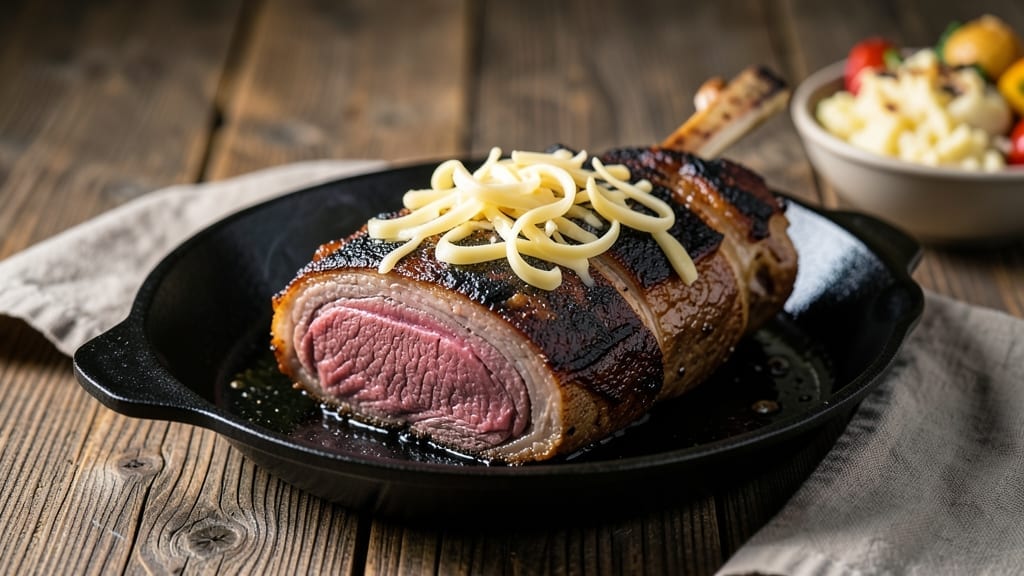
Mastering smoked bone-in prime rib roast transforms a holiday meal into a showstopping centerpiece with ultra-tender crust and juicy interior—the kind that makes guests ask for seconds before dessert.
After years of perfecting this technique at Portland farmers markets and my backyard smoker, I’ve cracked the code for achieving restaurant-quality results at home. The secret lies in low-and-slow smoking followed by a precise sear, ensuring every slice melts in your mouth while maintaining that coveted bark.
This recipe demands patience—8-12 hours of smoking at 225°F, depending on the roast’s size—but the reward is worth it.
You’ll need a quality bone-in prime rib (12-16 pounds), a dry rub of coarse salt, black pepper, and garlic powder, and either hickory or cherry wood chips for that signature smoky aroma.
The bone-in cut adds depth of flavor, while the slow cook ensures the meat stays moist and tender through the entire process.
By the time you’re done, you’ll have a perfectly smoked roast with a deep mahogany crust and an interior so tender it nearly falls apart at the touch. The bone-in method infuses the meat with rich, marrow-infused flavor, making each bite more flavorful than store-bought cuts.
Serve it with a classic au jus, roasted garlic mashed potatoes, and crisp green beans for a meal that feels like a five-star dinner.
Don’t worry if you’ve never smoked a prime rib before—I’ll walk you through every step, from seasoning and smoking to the final sear and resting. This is the recipe I bring out for Thanksgiving and Christmas, and it never disappoints. Let’s get started on creating your most impressive roast yet.
Ingredients for smoked bone in prime rib roast
A showstopping centerpiece that demands patience but delivers restaurant-quality results.
| Ingredient | Amount | Notes |
|---|---|---|
| Bone-In Prime Rib Roast 🥩 | 14 lb | Center-cut, bone-in preferred |
| Coarse Kosher Salt 🧂 | 2 tbsp | For dry rub seasoning |
| Black Peppercorns 🌶️ | 1 tbsp | Freshly ground preferred |
| Garlic Powder 🧄 | 1 tbsp | For dry rub seasoning |
| Hickory Wood Chips 🌳 | 1 lb | Or cherry wood chips |
| Apple Cider Vinegar 🍎 | 1 tbsp | For wood chip soaking |
| Water 💧 | 1 cup | For wood chip soaking |
| Butter 🧈 | ½ lb | For basting and searing |
| Beef Broth 🥘 | 1 cup | For basting and au jus |
| Fresh Rosemary 🌿 | ¼ cup | Chopped, for garnish |
| Fresh Thyme 🌿 | 2 tbsp | Chopped, for garnish |
| Beef Tenderizer 🔨 | 1 tsp | Optional for extra tenderness |
[recipe_ingredient_scaler]
The prime rib is everything here. Center-cut, bone-in gives you that melt-in-your-mouth tenderness—Costco or local butcher are your best bets for quality cuts. Look for good marbling; it’s the secret to juiciness. I always ask for it to be trimmed of excess fat but left with a nice layer for flavor. If you’re unsure, 14 pounds is a safe size for 6 servings. The wood chips? Hickory or cherry—avoid pine, which can make the meat taste bitter. Soak them in apple cider vinegar and water for 30 minutes before using to prevent flare-ups.
No wood chips? Beef broth in the smoker adds moisture, though it won’t give that signature smoky aroma. Fresh rosemary and thyme are ideal, but dried herbs at half the amount work in a pinch. Want extra tenderness? Beef tenderizer is a game-changer—just sprinkle it lightly over the meat before smoking. The butter for basting? Full-fat only—none of that light stuff. And if you’re short on beef broth, chicken broth plus a splash of Worcestershire gets you close. Don’t skip the basting though—it’s what keeps the crust from drying out.
This roast needs time to rest—20-30 minutes per pound before slicing. That’s non-negotiable for juiciness. Store leftovers in the fridge for 4-5 days, or freeze for up to 3 months. I like to portion it into containers so lunches are sorted for the week. The au jus keeps well too—just reheat gently on the stove. And if you’re prepping ahead, trust me on the full-fat butter—it’s worth the extra calories for that rich flavor. The crust will be golden and crisp, the inside so tender it falls apart.
Why You’ll Love This Recipe
- I’ll be real: I always make too much. But that’s okay because these leftovers? Chef’s kiss. Reheat slices in the oven, drizzle with au jus, and boom—lunch for three days. Or freeze half for a future “I’m too tired to cook” night. Four to five days in the fridge, or up to three months frozen—this roast plays ball either way.
- Smoker’s Secret Weapon: That hickory smoke and garlic powder rub? It’s like giving your taste buds a vacation. The fat renders slowly, basing the meat in its own juices while the wood chips infuse that deep, woodsy flavor—no fancy marinades needed.
- Feeds a Crowd (No Stress): A 14 lb bone-in prime rib isn’t just for holidays—it’s my go-to for game days, family reunions, or even a lazy Sunday. Just slap it on the smoker for 14 hours, and you’ve got enough slices to feed a football team. The beef tenderizer ensures it’s so tender, even picky eaters will beg for seconds.
- Leftovers That Last: I’ll be real: I always make too much. But that’s okay because these leftovers? Chef’s kiss. Reheat slices in the oven, drizzle with au jus, and boom—lunch for three days. Or freeze half for a future “I’m too tired to cook” night. Four to five days in the fridge, or up to three months frozen—this roast plays ball either way.
Step-by-step instructions for smoked bone-in prime rib roast
A perfectly smoked prime rib delivers that coveted tender crust and melt-in-your-mouth interior. Here’s how to nail it every time.
Prepare the Dry Rub and Season the Rib Roast
In a small bowl, combine the 2 tablespoons coarse kosher salt, 1 tablespoon black peppercorns, and 1 tablespoon garlic powder. Mix until evenly distributed. This dry rub is the foundation of that flavorful crust you’re after.
Pat the 14 lb bone-in prime rib roast completely dry with paper towels—this is crucial for that crispy bark. Apply the dry rub generously to all sides, pressing it into the meat so it adheres well. Don’t be shy—this is where the flavor starts. Let the seasoned roast sit uncovered in the refrigerator for at least 4 hours, or ideally overnight. This resting period allows the rub to penetrate deeply and the meat to dry out slightly, both of which contribute to that perfect crust.
Soak the Wood Chips and Set Up the Smoker
In a small bowl, combine the 1 lb hickory wood chips with the 1 cup water and 1 tablespoon apple cider vinegar. Let this soak for at least 30 minutes—this prevents the chips from burning too quickly and adds a subtle tang to the smoke. Meanwhile, preheat your smoker to 225°F. I like to use a two-zone setup: place the soaked wood chips on one side of the smoker and the roast on the other to maintain even heat and smoke distribution.
Once the smoker reaches temperature and you see steady, blue smoke (not thick white), you’re ready. Here’s a pro tip: sprinkle a pinch of the dry rub over the wood chips as they smoke—this infuses the smoke with even more flavor. Place the seasoned roast fat-side up on the smoker grate. The fat will render slowly, basting the meat as it cooks.
Smoke the Rib Roast Low and Slow
Smoke the roast undisturbed for 12-14 hours, maintaining a consistent 225°F temperature. This low-and-slow approach is what transforms tough muscle into tender, juicy perfection. The key here is patience—resist the urge to check on it too often. Every time you open the smoker, you lose heat and moisture, potentially extending your cook time by 30 minutes or more.
After about 8 hours, check the internal temperature using a meat thermometer. When it reaches 165°F, you’ll hit “the stall”—the temperature plateaus as moisture evaporates. This is where the 1 teaspoon beef tenderizer comes into play. Sprinkle it evenly over the roast, then wrap it tightly in butcher paper (not foil, which can steam the meat). Return it to the smoker and continue cooking. The tenderizer helps break down connective tissues, ensuring that final tenderness.
Finish Cooking and Rest the Roast
Continue smoking until the internal temperature reaches 203°F—this is the “probe-tender” stage, where the meat is so tender it practically falls apart. The total cook time should be about 14-16 hours, depending on your smoker’s consistency. The roast should have a deep mahogany bark on the outside and a beautiful pink smoke ring just beneath.
Once it reaches the target temperature, remove the roast from the smoker and transfer it to a cutting board. Tent loosely with foil and let it rest for at least 1 hour, or up to 2 hours for even better juiciness. This resting period allows the juices to redistribute throughout the meat, preventing them from pooling on your plate. During this time, preheat your oven to 400°F—you’ll use it to crisp the bark before slicing.
Slice and Serve with Homemade Au Jus
After resting, transfer the roast to a baking sheet and place it in the preheated oven for 10-15 minutes. This step crisps up the bark for a more dramatic presentation. While the roast is in the oven, melt the ½ lb butter in a saucepan over medium heat. Add the 1 cup beef broth and scrape up any browned bits from the bottom of the pan—this is where all the flavor hides. Simmer for 5-7 minutes until the sauce thickens slightly.
Slice the roast against the grain into ½-inch thick portions. Arrange the slices on a platter and drizzle generously with the homemade au jus. Garnish with the ¼ cup chopped fresh rosemary and 2 tablespoons chopped fresh thyme for a pop of color and freshness. Serve immediately with your favorite sides—mashed potatoes, roasted vegetables, or a simple green salad. Each bite should deliver that perfect balance of tender, juicy meat with a crispy crust, all infused with smoky, herby flavors.
Pro Tips For Making Smoked Bone In Prime Rib Roast
- Skip the Pre-Grind Pepper: DESCRIPTION: Buy whole black peppercorns and grind them fresh right before mixing with the salt and garlic powder. I used to use pre-ground pepper, and the flavor was always duller—freshly cracked peppercorns make a real difference in that crust.
- Wrap in Butcher Paper: DESCRIPTION: When you hit the stall at 165°F, wrap the roast in butcher paper instead of foil. Butcher paper lets the bark stay crisp while keeping moisture in—foil turns it into a steamed brick. (Yes, it looks weird, but it works.)
- Soak Wood Chips Longer: DESCRIPTION: Let those 1 lb hickory wood chips soak in the water and apple cider vinegar for at least 30 minutes, but don’t rush it. The longer they soak, the slower they burn, and the cleaner the smoke. I’ve learned this the hard way—burnt wood chips taste bitter.
- Crisp the Bark Fast: DESCRIPTION: After resting, pop the roast in the oven at 400°F for just 10-15 minutes—no longer, or it’ll dry out. This is the only time you’re not low-and-slow, and it’s worth it for that restaurant-quality snap. (Your future self will thank you.)
Wine and beer pairings for this dish
Rich Red Wine Pairings
For a classic pairing, I reach for a bold Cabernet Sauvignon from Napa Valley like Opus One—its dark fruit notes and tannins complement the smoky, buttery richness of the prime rib. The oak aging in these wines enhances the meat’s depth, creating a harmonious balance.
If you prefer something fruitier, a Syrah from the Northern Rhône, like Guigal Côte-Rôtie, adds peppery complexity that stands up to the smoky flavors. Both wines should be served at 60-62°F to fully appreciate their aromatics. 🍷
Bold Beer Complements
A dark stout like Guinness Foreign Extra Stout brings malty sweetness that cuts through the richness of the rib. The roasted barley notes mirror the smoky depth of the meat, making each bite feel balanced.
For a lighter option, try a Belgian brown ale like Westmalle Tripel—its caramel and spice notes provide a refreshing contrast to the smoky crust. Both beers should be served chilled but not ice-cold to preserve their full flavor profile. 🍺
Unexpected White Wine Twist
Don’t overlook Burgundy Pinot Noir—its earthy, red fruit flavors and silky texture create an unexpected but delightful pairing. The wine’s acidity brightens the dish, cutting through the fat while still embracing the smoky notes.
If you’re adventurous, a Viognier from the Rhône Valley, like Château Grillet, offers floral and peach notes that surprisingly complement the rib’s depth. Serve both at 50-55°F for optimal enjoyment. 💫
Beer for the Smoky Crust
For a beer lover’s choice, Imperial Stout like BrewDog End of History is a game-changer. Its dark roast, coffee, and chocolate flavors mirror the smoky crust while the alcohol cuts through the richness.
If you prefer something less intense, a Porter like Samuel Smith Oatmeal Stout offers maltiness and caramel notes that pair beautifully with the tender meat. Both beers should be served at 55-60°F to let their complex flavors shine. 🔥
Regional Pairing Inspiration
In the Pacific Northwest, where I live, a Washington State Syrah like Leonetti Cellars is a natural fit. Its blackberry and vanilla notes echo the smoky, herby flavors of the prime rib, while the wine’s structure holds up to the bold dish.
For a local twist, try a Portland craft IPA like Rogue Dead Guy—its citrusy bitterness cleanses the palate between rich bites. Both options highlight regional flavors while keeping the focus on the roast. 🌿
Nutrition facts
Frequently asked questions
Why does my smoked prime rib need so much time?
The 12-16 hour smoking process at 225°F is key for breaking down tough connective tissues and rendering fat slowly. This low-and-slow method ensures the 14 lb bone-in roast stays juicy while developing that coveted crispy bark. Rushing it can leave the meat tough or dry—patience is your best tool here!
What’s the deal with wrapping in butcher paper instead of foil?
Butcher paper allows moisture to escape while keeping the meat warm, preventing steam buildup that can make the crust soggy. Foil traps steam, which can lead to a less crispy exterior. This step happens after hitting 165°F during the stall phase—it’s a game-changer for texture!
Can I use dried herbs instead of fresh rosemary and thyme?
Yes! Use half the amount of dried herbs (e.g., 1 tbsp dried rosemary instead of ¼ cup fresh). They’ll add flavor but won’t provide the same aromatic brightness. For the au jus, dried herbs work fine too—just simmer them in the broth for 5 minutes to release their essence.
What if my smoker temperature fluctuates?
Fluctuations are normal, but aim for 225°F ± 10°F. If it drops too low, add more wood chips; if too high, reduce airflow. A digital probe thermometer helps monitor both smoker temp and meat internal temp. Consistency is critical for that perfect 203°F doneness—adjust gradually!
How do I know when the bark is crispy enough?
After resting, the bark should be deep mahogany with a satisfying snap when tapped. If it feels soft, pop it in the 400°F oven for 10-15 minutes to crisp it up. Pro tip: The bark should resist your fingernail when sliced—if it gives, it needs more time!

Trained in classic French technique but raised on slow-cooked ribs and spicy rubs, she blends culinary skill with smoke and soul.
- Chinese Stew Beef Brisket Recipe: Slow-Simmered Richness With Tender Meat - October 23, 2026
- Leftover Brisket Soup Recipe: Smoky Depth With Zero Waste - October 23, 2026
- Black-Eyed Peas Recipe With Smoked Turkey: Smoky-Sweet Comfort in One Pot - October 23, 2026