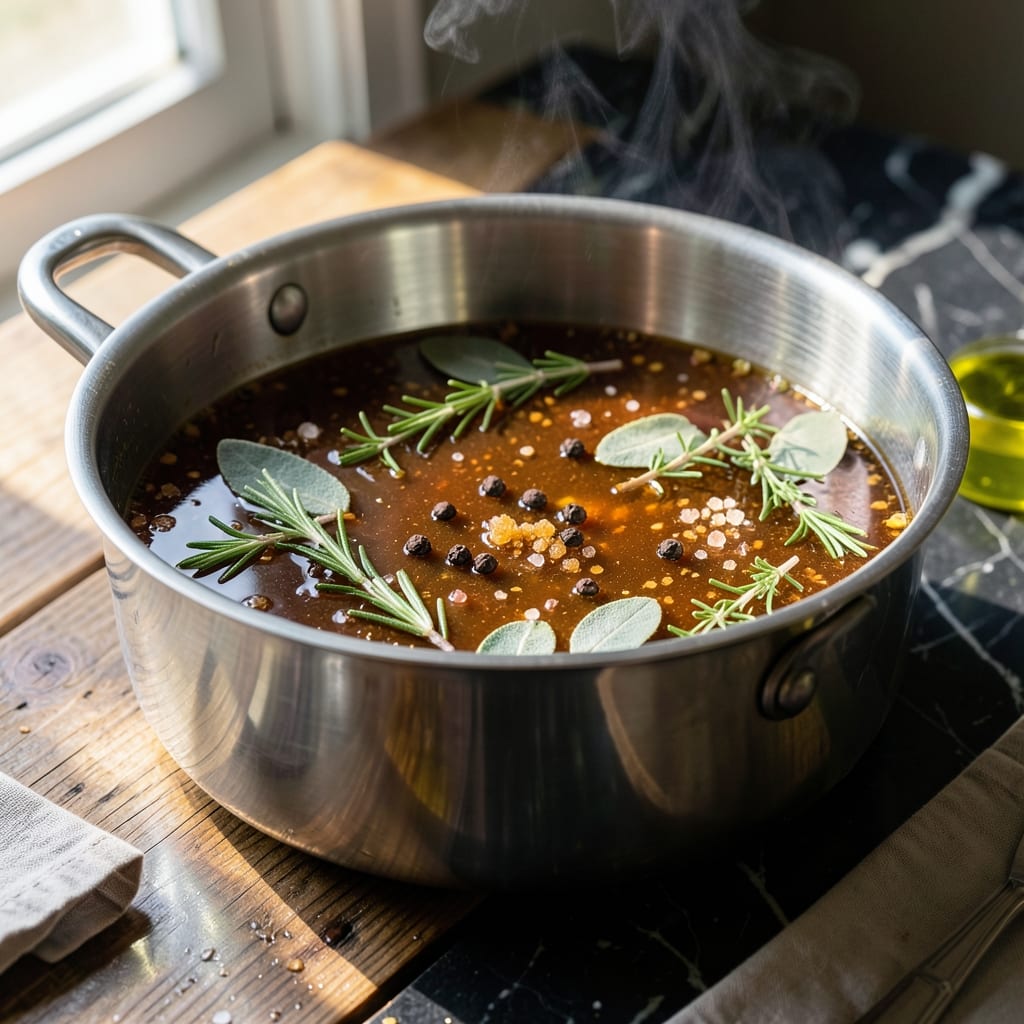
This brine transforms any turkey into a juicy, flavorful centerpiece without complicated techniques. I developed this method after years of dry, lackluster holiday birds, and it never fails to deliver moist results.
The secret lies in the balance of salt, sugar, and aromatic herbs that penetrate deep into the meat. A 12-24 hour soak ensures every bite stays succulent, while the spices infuse subtle complexity that complements the natural turkey flavor.
Unlike dry brines, this liquid method works consistently across different turkey sizes. The process is straightforward: combine ingredients, submerge the bird, and let time work its magic.
Your reward is perfectly seasoned meat with a golden, flavorful exterior. This is the difference between good turkey and unforgettable turkey.
Ingredients for Williams Sonoma Turkey Brine
Ten ingredients transform turkey into a juicy, herb-infused masterpiece with perfect seasoning balance.
| Ingredient | Amount | Notes |
|---|---|---|
| Kosher Salt 🧂 | 1 cup | Diamond Crystal preferred for brining |
| Light Brown Sugar 🍚 | ½ cup | Packed, for sweetness balance |
| Fresh Rosemary Sprigs 🌿 | 4 pieces | Stems intact, roughly bruised |
| Fresh Thyme Sprigs 🍃 | 6 pieces | Stems intact, gently crushed |
| Fresh Sage Leaves 🍃 | 12 pieces | Whole leaves, no stems |
| Black Peppercorns 🌶️ | 1 tbsp | Whole, lightly crushed |
| Dried Bay Leaves 🌿 | 3 pieces | Whole, for aromatic depth |
| Garlic Cloves 🧄 | 8 cloves | Smashed, peeled |
| Orange Zest 🍊 | 1 tbsp | Freshly grated, no pith |
| Water 💧 | 1 cup | For dissolving salt and sugar |
[recipe_ingredient_scaler]
The salt and sugar ratio is critical here. Diamond Crystal kosher salt dissolves cleanly without bitterness, while light brown sugar adds caramel notes that complement the turkey. For herbs, Williams Sonoma carries excellent fresh bundles, but any grocery store with a decent produce section will work. Look for vibrant green sprigs—wilted herbs lose their aromatic punch during the long soak.
No fresh herbs? Dried at one-third the amount, but fresh is exponentially better for brine. Swap oranges for lemons if preferred—the zest adds bright acidity. The peppercorns can be pre-ground in a pinch (1 tsp per tbsp whole), but whole cracked version releases flavor more slowly. Always use filtered water to avoid chlorine off-flavors that can affect the final result.
The brine can be made 24 hours ahead and refrigerated. It keeps for 3 days before use, but herbs start losing potency after that. Discard after brining—never reuse. For best results, chill completely before adding the turkey to maintain food safety standards.
Why You’ll Love This Recipe
- Five-Minute Setup: I dump the salt, sugar, and herbs in water and walk away—no fuss, no stress.
- Herb-Infused Magic: The rosemary, thyme, and sage soak into the turkey, making every bite taste like a holiday.
- Thanksgiving MVP: This brine works for a 25-pound bird or a weeknight roast, and it’s always a hit.
- Leftovers for Days: The turkey stays juicy for sandwiches and soups all week—no dry meat here.
Step-by-Step Instructions for Herb-Infused Turkey Brine
This method ensures maximum moisture retention and deeply seasoned, aromatic meat every time.
Step 1: Dissolve Salt and Sugar Base
In a large pot, combine the 1 cup Kosher Salt and 0.5 cup Light Brown Sugar with the 1 cup Water. Place over medium-high heat and stir constantly until both the salt and sugar fully dissolve—this typically takes 3-5 minutes.
You’ll know it’s ready when the liquid becomes clear with no visible granules remaining. This brine base must be completely dissolved to ensure even distribution throughout the turkey and prevent any grittiness on the meat’s surface.
Step 2: Toast and Bloom Whole Spices
Reduce heat to medium and add the 1 tbsp Black Peppercorns, 3 pieces Dried Bay Leaves, and 1 tbsp Orange Zest. Toast for 1-2 minutes, stirring constantly, until the mixture becomes fragrant and the peppercorns begin to darken slightly.
This toasting process releases the essential oils in the spices, creating a more complex and aromatic foundation for your brine. The orange zest will become more pronounced, adding bright citrus notes that balance the richness of the turkey.
Step 3: Infuse with Fresh Herbs and Garlic
Remove the pot from heat and add the 4 pieces Fresh Rosemary Sprigs, 6 pieces Fresh Thyme Sprigs, 12 pieces Fresh Sage Leaves, and 8 cloves Garlic Cloves. Stir to combine and let the mixture steep for 10-15 minutes.
The residual heat will gently extract the herbs’ aromatic compounds without making the brine bitter. You’ll notice the liquid takes on a golden hue and the air fills with the scent of piney rosemary, earthy thyme, and warm garlic. This infusion is what gives the turkey its signature Williams Sonoma depth of flavor.
Step 4: Cool Completely Before Use
Allow the brine to cool to room temperature (this takes about 1 hour at room temperature or 30 minutes in an ice bath). It’s critical that the brine is completely cool before adding your turkey—hot brine will begin cooking the meat, resulting in a dry, overcooked bird.
You can test the temperature with a clean finger or thermometer; it should feel neither warm nor cold to the touch. Once cooled, the brine is ready to use. For best results, submerge the turkey completely and refrigerate for 12-24 hours to allow the flavors to fully penetrate the meat.
Pro Tips For Making Williams Sonoma Turkey Brine
- Chill the Brine: Always refrigerate the brine completely before adding the turkey—warm brine will start cooking the meat unevenly, and I learned this the hard way with a dry breast last Thanksgiving.
- Crush the Herbs: Lightly bruise the rosemary, thyme, and sage with a rolling pin or your palm before adding them to release their oils—it actually changes the outcome, making the flavors more pronounced.
- Use Enough Water: Make sure your brine fully submerges the turkey, even if it means using a bit more water than the recipe states; a floating bird means uneven seasoning.
- Skip the Iodized Salt: Stick with kosher salt as written—iodized salt can give the turkey a metallic aftertaste, and after ruining one bird, I never risk it again.
Common Mistakes When Making This Dish
Over-Salting Your Bird
Using table salt instead of Diamond Crystal kosher salt can make your turkey inedibly salty. Table salt is denser—1 cup contains nearly double the sodium. I learned this the hard way with a ruined Thanksgiving dinner. Always measure by weight if unsure: 1 cup Diamond Crystal = 192g. 💪
Skipping the Cool Down
Adding turkey to hot brine starts cooking the meat unevenly. The outside can reach unsafe temps while the inside stays raw. I chill my brine in an ice bath, stirring occasionally, until it reaches 40°F or below before submerging the bird.
Insufficient Brining Time
Less than 12 hours won’t fully penetrate a whole turkey. For birds over 14 lbs, aim for the full 24 hours. I set a reminder on my phone to avoid cutting this short during busy holiday prep.
Uneven Submersion
Parts above the brine won’t absorb flavor or moisture. Use a brining bag or a large pot with a weighted plate to keep the turkey fully submerged. I check every few hours and rotate the bird for even exposure. 🔥
Reusing Brine
Brining raw turkey introduces bacteria that multiply rapidly. Never reuse brine—it’s a food safety hazard. I discard mine immediately after use and sanitize all containers with hot, soapy water.
Ignoring Container Size
Your container must hold both the turkey and brine with room to spare. A 12-14 lb turkey needs at least a 5-gallon container. I use a clean cooler for large birds—it fits in my fridge and provides perfect insulation.
Nutrition Facts
Frequently Asked Questions
How long should I brine a turkey?
For optimal flavor and moisture, brine a whole turkey for 12-24 hours. Smaller birds (12 lbs) can use the shorter time, while larger ones benefit from the full 24 hours.
Can I use table salt instead of kosher salt?
No—table salt is denser and will over-season your bird. Stick with Diamond Crystal kosher salt or reduce table salt by half if absolutely necessary. 1 cup kosher = 192g.
What container works best for brining?
A food-grade 5-gallon bucket or brining bag fits most turkeys. For large birds, a clean cooler works well if it fits in your fridge. Always ensure full submersion.
Can I reuse the brine for another turkey?
Never reuse brine—it contains raw turkey bacteria. Discard it immediately after use and sanitize all equipment to prevent contamination.

Trained in classic French technique but raised on slow-cooked ribs and spicy rubs, she blends culinary skill with smoke and soul.
- Recipe for Boneless Pork Chops in Cast Iron Skillet: Sear and Baste to Juicy Perfection - October 3, 2026
- Recipe for Boneless Cross Rib Roast: Slow-Roasted Beef with Herb Crust - October 3, 2026
- Hamburgers in Sauce Recipe Crock Pot: Slow-Cooked Savory Delight - October 3, 2026