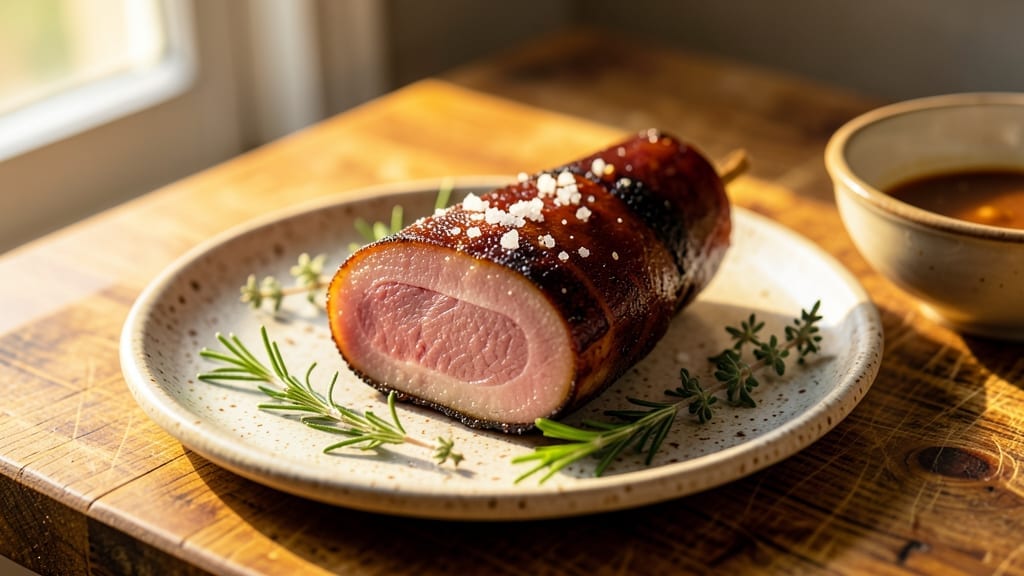
Transforming a simple ham hock into a centerpiece-worthy smoked masterpiece is what separates good barbecue from unforgettable. This slow-cooked technique unlocks deep, smoky flavors that turn tough cuts into melt-in-your-mouth perfection—something I perfected after years of test-kitchen experiments with my grandmother’s Sunday roast methods.
The key lies in patience and precision, where low-and-slow smoking builds layers of richness that no quick-cook method can match.
What makes this recipe work is the combination of proper preparation and controlled smoking. You’ll start with a wet brine to ensure juiciness, then apply a simple dry rub that enhances rather than overpowers the ham’s natural sweetness.
Using fruitwood like apple or cherry keeps the smoke flavor balanced and aromatic, while maintaining a steady 225°F for 12-14 hours guarantees tender results without drying out the meat. Every step builds on the last to create that signature smoky depth.
The final product is a ham hock with fall-apart tenderness and a glossy, caramelized exterior that makes it impossible to resist. The meat practically dissolves on the bone, releasing flavors that infuse every bite—perfect for serving with classic Southern sides like mashed potatoes or collard greens.
This isn’t just another smoked meat; it’s a showstopper that transforms ordinary meals into memorable gatherings.
Whether you’re preparing for a family dinner or a backyard BBQ, this method delivers restaurant-quality results with minimal effort after the initial setup. The beauty of smoked ham hock lies in its versatility—use it as-is for a hearty main course or shred it for sandwiches, tacos, or even pasta dishes.
Let’s get started on creating your next BBQ centerpiece.
Ingredients for smoked ham hock
A masterclass in slow-cooked perfection—ham hock transformed through smoke and patience.
| Ingredient | Amount | Notes |
|---|---|---|
| Bone-In Ham Hock 🐷 | 3 lb | Skin-on, preferably organic |
| Brown Sugar 🍚 | ½ cup | Lightly packed, for dry rub |
| Coarse Kosher Salt 🧂 | ¼ cup | Diamond Crystal preferred |
| Smoked Paprika 🌶️ | 2 tbsp | For aromatic depth |
| Garlic Powder 🧄 | 1 tbsp | Freshly ground preferred |
| Onion Powder 🧅 | 1 tbsp | For savory foundation |
| Black Pepper 🌶️ | 1 tsp | Freshly cracked preferred |
| Apple Wood Chips 🌳 | 2 lb | Soaked 4+ hours before use |
| Granulated White Sugar 🍚 | ¼ cup | For wet brine balance |
| Unsalted Butter 🧈 | ¼ cup | Cubed for glaze |
| Apple Cider Vinegar 🍎 | ¼ cup | For brine acidity |
| Chicken or Beef Broth 🍲 | 4 cups | Low-sodium preferred |
| Honey 🍯 | ¼ cup | For glaze sweetness |
| Fresh Thyme Sprigs 🌿 | ¼ cup | For aromatic infusion |
[recipe_ingredient_scaler]
The ham hock is the star, so opt for organic, skin-on cuts from specialty butchers like Whole Foods or Costco—they offer the best marbling and tenderness. Look for 3-4 lb pieces with visible fat cap; this ensures juiciness during the long cook. Butcher’s choice at Meijer often has excellent prices for bulk purchases. Store in the freezer until ready to use, as this allows the fat to firm up for cleaner slicing later.
Substituting apple wood chips? Cherry or hickory chips work well, though apple provides the most balanced sweetness. No fresh thyme? Use 1 tbsp dried thyme instead—it’s one-third the amount. For the brine, substitute white wine vinegar if apple cider isn’t available, but reduce to 0.125 cup to maintain balance. The butter glaze can be made with duck fat for a richer finish, though unsalted butter remains the standard. Always use low-sodium broth to control final salt levels.
The ham hocks should be brined for 12-24 hours in the refrigerator, then patted dry before smoking. Wipe down the smoker with a damp cloth before adding wood chips to prevent flare-ups. Apple wood chips should be soaked for 4+ hours—never use dry chips. After smoking, let the hocks rest 30 minutes before glazing to prevent cracking. Store leftovers in an airtight container in the fridge for 5-7 days or freeze for up to 3 months. For best results, reheat in a slow cooker with 1 cup broth to maintain moisture.
Why You’ll Love This Recipe
- No-Fuss Flavor Bomb: Honestly, this ham hock is my secret weapon for lazy weekends. Just mix up the dry rub with that half cup of brown sugar and quarter cup of coarse kosher salt—no fancy prep, just dump and coat. The smoked paprika and garlic powder do all the heavy lifting while you nap or binge your favorite show.
- Chewy Crust, Creamy Center: That crispy bark from the 12-14 hours of smoking? Chef’s kiss. But here’s the magic: the inside stays fork-tender because the fat cap renders into the meat like a natural basting. Top it with that honey-butter glaze (¼ cup honey + ¼ cup butter), and you’ve got a flavor contrast that’ll make your taste buds do backflips.
- Leftovers That Rule: I swear by this for meal prep. Cook once, eat twice—maybe three times. The ham hock keeps for up to 5-7 days in the fridge (or freeze it for months), and the broth? Rich, aromatic, and slightly sweet from the thyme. Use it for risotto, soup, or just sip it like liquid gold. My kids even ask for seconds.
- Budget-Friendly Feast: A 3-pound ham hock isn’t cheap, but it feeds a crowd and stretches into multiple meals. Pair it with cheap veggies or rice, and suddenly you’ve got a showstopper dinner for under $20. The apple wood chips add that fancy touch, but even the low-sodium broth keeps costs down—no waste, just pure flavor.
Step-by-step instructions for smoked ham hock
A methodical approach ensures tender, flavorful ham hock with a perfect bark and rich, aromatic broth.
Prepare the Dry Rub and Season the Ham Hock
In a medium bowl, combine the ½ cup brown sugar, ¼ cup coarse kosher salt, 2 tablespoons smoked paprika, 1 tablespoon garlic powder, 1 tablespoon onion powder, and 1 teaspoon black pepper. Mix thoroughly until the spices are evenly distributed and the sugar is fully incorporated into the dry blend.
Pat the 3 lb bone-in ham hock dry with paper towels, focusing on the skin to ensure maximum crispiness. Generously coat the entire surface with the dry rub, pressing it into the meat so it adheres evenly. Place the ham hock on a wire rack set over a baking sheet and refrigerate uncovered for at least 4 hours, or preferably overnight. This step allows the rub to penetrate deeply and develop a flavorful crust.
Here’s the thing—don’t skip the drying time. The longer it rests, the better the bark and the more concentrated the flavor. If you’re short on time, refrigerate it for at least 2 hours, but understand that the flavor will be slightly less developed.
Soak the Apple Wood Chips and Set Up the Smoker
Place the 2 lb apple wood chips in a large bowl and cover them completely with cold water. Let them soak for at least 4 hours before smoking. This ensures they produce a steady, clean smoke without burning too quickly. Drain the wood chips just before using them.
Preheat your smoker to 225°F using the soaked apple wood chips. I prefer a two-zone setup if possible, with the heat source on one side and the ham hock positioned to take advantage of indirect heat. This method promotes even cooking and prevents the outer bark from burning before the center is tender.
Once the smoker reaches the target temperature and you see thin, blue smoke (not thick white smoke), you’re ready to proceed. The smoke should be visible but not overwhelming—just enough to carry that fruity, aromatic flavor throughout the cooking process.
Smoke the Ham Hock Low and Slow
Place the seasoned ham hock on the smoker, positioning it with the fat cap facing up. This allows the rendered fat to baste the meat as it cooks, enhancing moisture and flavor. Close the lid and resist the urge to open it for at least 2 hours, as each time you peek, you lose heat and moisture.
Smoke the ham hock for a total of 12 to 14 hours, or until the internal temperature reaches 195°F at the thickest part of the meat. You’ll notice the bark darken and develop a deep, mahogany color—this is your visual cue that the exterior is properly rendered and flavorful. The meat should also pull away from the bone with minimal resistance when tested gently with a fork.
This long cook time is critical. It breaks down the collagen in the connective tissue, transforming it into gelatin that makes the meat fork-tender. Be patient; rushing this process will result in a tough, dry ham hock.
Prepare the Glaze and Finish Cooking
While the ham hock smokes, prepare the glaze by combining ¼ cup granulated white sugar, ¼ cup honey, ¼ cup apple cider vinegar, and ¼ cup unsalted butter in a small saucepan. Place the saucepan over medium heat and bring the mixture to a gentle simmer, stirring occasionally until the sugar and butter are fully dissolved and the glaze thickens slightly. This should take about 5 to 7 minutes. Remove from heat and set aside.
Once the ham hock reaches 195°F, transfer it to a cutting board and let it rest for 15 minutes. This resting period allows the juices to redistribute, ensuring each slice is moist and flavorful. During this time, brush the ham hock generously with the prepared glaze, making sure to coat all sides evenly. Return the ham hock to the smoker and smoke for an additional 30 to 45 minutes to set the glaze and deepen the color.
The glaze should caramelize slightly, creating a sticky, glossy finish that adds sweetness and depth to the flavor. If the glaze thickens too much during brushing, warm it gently over low heat and stir until it reaches a pourable consistency.
Rest and Serve with Aromatic Broth
Once the glaze is set and the ham hock has rested for the final 15 minutes, remove it from the smoker and let it rest on a cutting board for an additional 10 minutes. This final rest ensures the meat is juicy and tender when sliced. While the ham hock rests, place the smoker grate over a large pot and pour in the 4 cups chicken or beef broth. Add the ¼ cup fresh thyme sprigs and let the broth simmer gently for 10 minutes to infuse the flavors.
Slice the ham hock against the grain into ½-inch thick pieces and serve immediately with the infused broth ladled over the top. The broth should be rich, aromatic, and slightly sweet from the thyme and residual glaze. Each bite of the ham hock should be tender, flavorful, and infused with the smoky, sweet, and tangy notes from the cooking process.
Real talk: The broth is just as important as the meat. Don’t pour it down the drain—it’s the perfect companion to the ham hock and can be used in soups, stews, or even as a base for gravies. Store any leftovers in the refrigerator for up to 5 days or freeze for longer storage.
Pro Tips For Making Smoked Ham Hock
- Don’t Rush the Rub: I learned this the hard way—skipping the 4-hour (or overnight) fridge rest means the dry rub sits like dust on the ham instead of sticking deep. The sugar needs time to dissolve into the meat, not just cling to the surface. Trust me, the extra hour now saves you from a bland, dry bite later.
- Face the Fat Up: That fat cap isn’t just for looks—it’s the ham’s self-basting mechanism. Position it upward on the smoker grate so the rendered fat drips back over the meat, keeping it moist and rich. I used to ignore this, and my ham always came out slightly dry near the bone.
- Watch the Glaze Thickness: The glaze should coat a spoon like honey, not clump like caramel. If it thickens too much while brushing, give it a quick stir over low heat—just until it loosens. I’ve seen people force-set glaze with high heat, and it turns grainy. Keep it smooth, or you’ll scrape off chunks instead of a glossy finish.
- Test the Smoke Early: That thick white smoke at startup? It’s just steam burning off the wet wood chips. Wait until you see thin, blue smoke—like a campfire’s first real burn—before loading the ham. I’ve wasted hours smoking with wet wood, and the flavor was flat. Drain those chips right before use, and you’ll get that clean, fruity apple smoke from the get-go.
Serving suggestions for this recipe
Classic Southern Comfort
This ham hock pairs perfectly with creamy mashed potatoes—the buttery richness balances the smoky depth. I like using 2 lbs Yukon Gold potatoes boiled until fork-tender, then whipped with ½ cup whole milk, ¼ cup butter, and a pinch of Diamond Crystal salt.
The warm broth from the ham hock makes the ultimate topping. 🍽️
Collard Greens Sidekick
For a Southern twist, serve with slow-cooked collard greens. Sauté 1 lb collards with 2 tbsp smoked paprika and 1 tbsp apple cider vinegar, then simmer in 2 cups broth from the ham hock until tender. The smoky flavors marry beautifully with the greens’ earthiness.
Cornbread Crunch
A warm, homemade cornbread with 1 cup cornmeal and ½ cup honey soaks up the ham hock’s juices perfectly. I add 1 tbsp thyme to the batter for extra aroma. The slightly sweet, crumbly texture contrasts the rich meat wonderfully.
Pickled Vegetable Balance
Brighten the plate with quick-pickled vegetables—slice 1 cucumber and 1 red onion thinly, then soak in ½ cup apple cider vinegar with 1 tsp salt and 1 tsp honey for 1 hour. The tang cuts through the ham’s richness, creating a perfect bite.
Bread Basket Essentials
No BBQ is complete without bread. I always serve crusty sourdough loaves or buttery cornbread muffins for dipping. The warm, open texture soaks up the glaze and broth beautifully—just like my grandmother used to do for Sunday dinners. 💛
Nutrition facts
Frequently asked questions
Why does my smoked ham hock need such a long cook time?
The 12-14 hours at 225°F is essential because it breaks down collagen in the connective tissue, turning it into gelatin that makes the meat fork-tender. This slow process ensures every bite melts in your mouth while developing deep, smoky flavors. Skipping this step results in tough, dry meat—trust the process!
Can I use a different wood type for smoking?
Apple wood is ideal for its balanced sweetness, but you can substitute cherry or hickory for a fruitier or stronger flavor. Just avoid pine or cedar, as they can taste bitter. Soak the chips for 4+ hours regardless of type to prevent flare-ups.
What if I don’t have fresh thyme for the broth?
Use 1 tablespoon dried thyme instead—it’s one-third the amount of fresh. The dried version still infuses the broth with aromatic depth, though the flavor will be more concentrated. Just crush the dried sprigs lightly before adding.
How do I know when the ham hock is fully cooked?
Check the internal temperature with a meat thermometer—it should reach 195°F at the thickest part. The bark should darken to mahogany, and the meat should pull away from the bone easily when prodded. If unsure, wait until the temp is met; undercooking risks toughness.
Can I make the glaze ahead of time?
Yes! Prepare the glaze 1 day ahead and store it in an airtight container in the fridge. Reheat gently on the stovetop until pourable before brushing. The flavors deepen overnight, so it’s even better the next day.

Trained in classic French technique but raised on slow-cooked ribs and spicy rubs, she blends culinary skill with smoke and soul.
- Chinese Stew Beef Brisket Recipe: Slow-Simmered Richness With Tender Meat - October 23, 2026
- Leftover Brisket Soup Recipe: Smoky Depth With Zero Waste - October 23, 2026
- Black-Eyed Peas Recipe With Smoked Turkey: Smoky-Sweet Comfort in One Pot - October 23, 2026