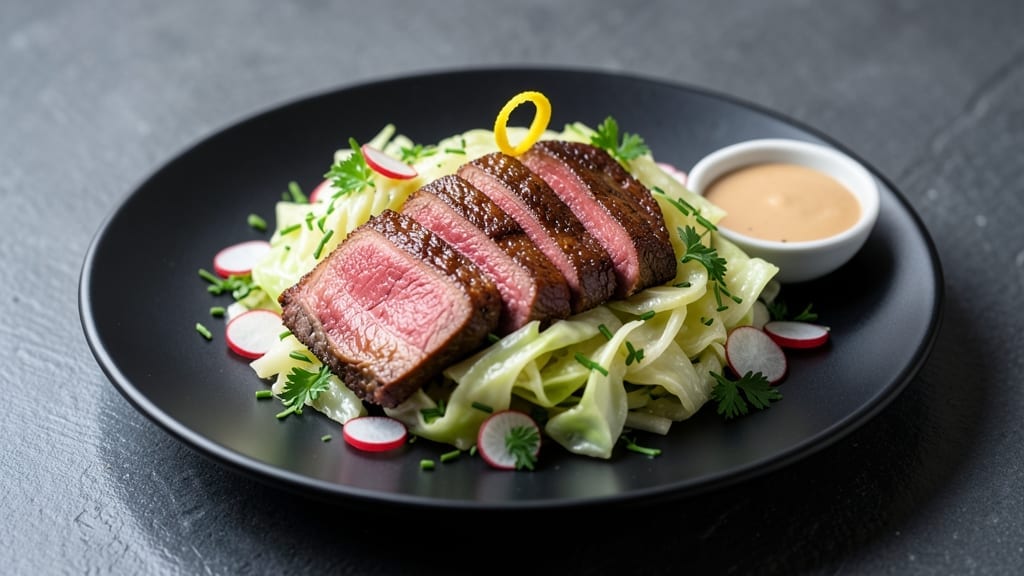
The smoked corned beef and cabbage recipe transforms a simple brisket into a masterpiece of tender, smoky richness paired with perfectly caramelized cabbage. This method preserves the dish’s cultural roots while delivering restaurant-quality results at home—no smoker required.
The key lies in precise seasoning and slow cooking, ensuring every bite is juicy and deeply flavorful.
What sets this recipe apart is the balance between tradition and technique. The corned beef brines overnight, developing its signature tang and tenderness, while the cabbage cooks until tender yet retains its natural sweetness.
The slow-smoking process infuses the meat with a deep, aromatic flavor that elevates this classic dish beyond standard pot-roasting methods.
By the time you serve it, you’ll have a dish that’s rich, satisfying, and packed with layers of flavor—crispy edges on the beef, caramelized cabbage with a hint of smokiness, and a savory broth that ties it all together.
This is comfort food at its finest, perfect for St. Patrick’s Day or any occasion calling for a hearty, flavorful meal.
Pair it with buttery potatoes, tangy pickles, or a fresh green salad to round out the plate. The instructions ahead will guide you through every step, from brining to smoking, ensuring a foolproof result every time. Let’s get started!
Ingredients for smoked corned beef and cabbage
A symphony of smoky, briny perfection with tender cabbage and potatoes. Six servings of comfort at its finest.
| Ingredient | Amount | Notes |
|---|---|---|
| Corned Beef Brisket 🥩 | 3 ½ lb | Center-cut, bone-in preferred |
| Green Cabbage 🥬 | 1 whole | Core removed, quartered |
| Yellow Onions 🧅 | 2 whole | Thinly sliced |
| Carrots 🥕 | 6 whole | Peeled, halved lengthwise |
| Potatoes 🥔 | 2 lb | Russet, scrubbed whole |
| Corned Beef Brine 🧂 | 4 cups | Homemade or quality store-bought |
| Dry Mustard 🌿 | 2 tbsp | For brining seasoning |
| Black Peppercorns 🌶️ | 1 tbsp | Whole, for brining |
| Bay Leaves 🍃 | 4 whole | Fresh or dried |
| Smoked Paprika 🌶️ | 1 tbsp | For smoking rub |
| Ground Black Pepper 🌶️ | 1 ½ tsp | Freshly ground preferred |
| Beef Broth 🍲 | 2 cups | Low-sodium preferred |
| Apple Cider Vinegar 🍎 | 2 tbsp | For brining tang |
| Granulated Sugar 🍬 | 2 tbsp | For caramelization |
[recipe_ingredient_scaler]
The brisket is the star—opt for bone-in center-cut for maximum tenderness and flavor infusion. Store-bought corned beef brine can work, but homemade brine with Diamond Crystal kosher salt elevates the depth of flavor. For the brining process, use a non-reactive container like stainless steel or food-grade plastic. The mustard and vinegar in the brine create that signature tang, while the bay leaves and peppercorns add aromatic complexity. Professional kitchens often use whole spices for brining—they release oils more slowly, enhancing the overall flavor profile.
No corned beef brine? Substitute 4 cups beef broth with 2 tbsp apple cider vinegar and 2 tbsp sugar for a homemade version. Fresh bay leaves can be replaced with dried bay leaves at one-third the quantity. For the smoking rub, smoked paprika is non-negotiable—it’s what gives that authentic corned beef aroma. If you can’t find smoked paprika, use regular paprika plus 1/2 tsp liquid smoke. The potatoes can be left whole or halved—either way, they’ll absorb all the smoky goodness from the cooking process.
The brined beef keeps 5-7 days in the refrigerator after brining, wrapped tightly in plastic. The cabbage and vegetables can be prepped up to 24 hours ahead and stored in the fridge. For best results, cook the corned beef directly from the brine—no rinsing. The smoked flavor will intensify as it cooks. Leftovers reheat beautifully in the broth, and the cabbage can be stored separately for 3-4 days in an airtight container. This dish freezes exceptionally well—3-4 months in the freezer, with the cabbage and potatoes reheated separately.
Why You’ll Love This Recipe
- I’ll be real: this recipe makes enough to feed a small army. The brisket keeps wrapped in plastic for 5-7 days, and those veggies? Prepped ahead and stored for 24 hours. Reheat the whole Dutch oven dish, and it tastes like you slaved over it all day—except you didn’t. My kids still beg for seconds, and I’ve even packed lunches with it for work. Zero guilt, maximum satisfaction.
- Smoke-Free Weeknight Win: The magic here? You smoke the brisket while I prep the cabbage, onions, and potatoes—no multitasking stress. That 6-8 hour smoker session does all the heavy lifting while I simmer the veggies in the Dutch oven. By the time the meat hits 195°F, the vegetables are already caramelizing in that corned beef brine, so everything comes together like a well-choreographed meal.
- Caramelized Cabbage Magic: Honestly, the cabbage is where this dish gets dangerously good. Those 2 tbsp of granulated sugar in the brine? They turn the cabbage edges into little golden nuggets while keeping the hearts tender. Pair that with the smoky depth from the hickory wood and the tang of apple cider vinegar, and you’ve got a side that steals the show—no extra garnish needed.
- Leftovers That Outshine Takeout: I’ll be real: this recipe makes enough to feed a small army. The brisket keeps wrapped in plastic for 5-7 days, and those veggies? Prepped ahead and stored for 24 hours. Reheat the whole Dutch oven dish, and it tastes like you slaved over it all day—except you didn’t. My kids still beg for seconds, and I’ve even packed lunches with it for work. Zero guilt, maximum satisfaction.
Step-by-step instructions for smoked corned beef and cabbage
Master this slow-smoked technique for tender corned beef and caramelized cabbage with rich, layered flavors.
Prepare the Corned Beef Brisket
Remove the 3½ lb corned beef brisket from its packaging and rinse thoroughly under cold water to remove excess curing salts. Pat it completely dry with paper towels—this step is critical for developing a proper bark during smoking. In a small bowl, combine the 2 tbsp dry mustard, 1 tbsp black peppercorns (lightly crushed), 1 tbsp smoked paprika, and 1½ tsp ground black pepper. Rub this mixture evenly over all surfaces of the brisket, pressing firmly so it adheres. Place the seasoned brisket in a shallow dish and refrigerate uncovered for 1 hour to allow the seasoning to penetrate.
While the brisket rests, prepare a smoking rub by crushing the 1 tbsp black peppercorns into a coarse powder using a mortar and pestle or rolling pin. This additional step enhances the depth of flavor as the brisket smokes. Keep the brisket cold until ready to smoke—cold meat cooks more evenly and develops better texture.
Smoke the Corned Beef Brisket
Preheat your smoker to 225°F using hickory or apple wood chips for a balanced smoke profile. Place the 3½ lb corned beef brisket fat-side up on the smoker grates, ensuring it sits away from direct heat sources. Smoke the brisket for 6-8 hours until the internal temperature reaches 195°F—this low-and-slow approach ensures tender, fork-tender meat. Avoid peeking at the brisket during this time, as each opening causes a significant temperature drop.
About 1 hour before the brisket reaches 195°F, add 4 bay leaves to the smoker for an aromatic finish. The brisket is done when it probes like butter and the bark is deep mahogany in color. Remove the brisket from the smoker and tent loosely with aluminum foil. Let it rest at room temperature for 30 minutes before slicing—this resting period ensures even distribution of juices throughout the meat.
Prepare the Vegetable Base
While the brisket smokes, prepare the vegetables. In a large Dutch oven, combine the 1 green cabbage (core removed and quartered), 2 yellow onions (thinly sliced), 6 carrots (peeled and halved lengthwise), and 2 lb potatoes (scrubbed and whole). Add the 4 cups corned beef brine, 2 tbsp apple cider vinegar, and 2 tbsp granulated sugar. Bring to a simmer over medium heat and cook for 15 minutes, stirring occasionally, until the vegetables begin to soften.
Add the 2 cups beef broth and bring the mixture to a gentle boil. Reduce heat to low and cover the Dutch oven. Let the vegetables simmer for 45-60 minutes until tender but not mushy—you want them to hold their shape while absorbing the rich flavors. The granulated sugar in the brine will caramelize slightly, adding depth to the dish.
Combine and Finish
Slice the rested corned beef brisket against the grain into ¼-inch thick slices. Gently fold the sliced brisket into the simmering vegetable mixture in the Dutch oven. Stir to combine, ensuring the brisket slices are fully coated in the flavorful broth and vegetables. Increase heat to medium-low and let the mixture simmer uncovered for 10-15 minutes, allowing the brisket to absorb additional flavor and the cabbage to caramelize further.
Taste and adjust seasoning if needed—you may need to add a pinch of ground black pepper or a splash of apple cider vinegar to balance the flavors. Serve the smoked corned beef and cabbage hot, directly from the Dutch oven. The dish should have a rich, smoky aroma with tender meat and caramelized vegetables. Garnish with additional ground black pepper if desired.
Pro Tips For Making Smoked Corned Beef And Cabbage
- Don’t Rush the Rest: That 30-minute rest after smoking isn’t optional—it’s when the brisket redistributes juices and stays moist. I learned this the hard way when my first slice came out dry and stringy. Tent it loosely with foil and let it sit while you finish the veggies.
- Crush Those Peppercorns: The recipe says to crush the 1 tbsp black peppercorns for the rub, but don’t just eyeball it—actually grind them into a coarse powder. Whole peppercorns stay stubbornly intact, and you’ll miss out on that deep, smoky bite that makes the brisket sing.
- Simmer Vegetables Covered: The cabbage and potatoes need that 45-60 minutes of covered simmering to soften evenly, but don’t lift the lid to check too often. Every time you peek, steam escapes, and you’ll end up with unevenly cooked veggies—or worse, a watery mess. Trust the time.
- Slice Against the Grain (Seriously): Skimping on this step means tough, chewy meat. The brisket’s muscle fibers run in one direction—slice perpendicular to them for tender, fork-friendly bites. If you’re unsure which way is “against,” look for the grain’s natural lines when you flip the brisket over.
Creative variations of this recipe
Irish-Style Mustard & Horseradish
Add 1 tbsp prepared horseradish and 1 tbsp Dijon mustard to the corned beef brine before cooking. The sharp, tangy kick complements the smoky beef beautifully. I like to mix it in during the final 10 minutes of simmering so the flavors meld without overpowering.
This variation became a St. Patrick’s Day staple in my family—it’s like a spicy, creamy twist on tradition. 💛
Southern-Style Pickled Onions
After slicing the onions thinly, soak them in ½ cup apple cider vinegar mixed with 1 tbsp sugar and 1 tsp salt for 30 minutes before adding them to the Dutch oven. The pickled onions add a bright, tangy contrast to the rich, smoky beef.
I serve them on the side for guests who want extra zing—it’s a Southern twist that keeps the dish exciting. 🍽️
German-Style Sauerkraut & Beef
Replace the cabbage with 2 cups high-quality sauerkraut (like Brauhaus brand) and add 1 tbsp caraway seeds to the brine. The sauerkraut cooks down into a tangy, fermented side that pairs perfectly with the corned beef.
I let it simmer for 45 minutes to soften while keeping its distinct flavor—this is a hearty, comforting take on the classic. 🔥
Spicy Cajun Corned Beef
Boost the rub with 1 tsp Cajun seasoning (like Tony Chachere’s) and ½ tsp cayenne pepper when seasoning the brisket. The heat from the spices penetrates the meat during smoking, creating a bold, spicy kick.
I recommend serving it with cooling elements like sour cream or a dollop of pickled jalapeños on the side. This version is perfect for those who love a little extra fire. 🌶️
Vegetarian Corned “Beef” Alternative
For a plant-based twist, use 2 lbs extra-firm tofu pressed and cubed, then marinate it in the same brine for 4 hours before smoking. The tofu absorbs the flavors beautifully and becomes tender during the 6-8 hour smoker run.
Serve with the cabbage and potatoes for a satisfying, meat-free version that still feels indulgent. 🌱
Nutrition facts
Frequently asked questions
Why does the corned beef need to rest after smoking?
The 30-minute rest after removing the brisket from the smoker is critical—it allows juices to redistribute evenly throughout the meat. Skipping this step can lead to dry slices, even if the internal temperature reaches 195°F. The resting period ensures every bite is tender and moist, just like restaurant-quality results!
Can I use a grill instead of a smoker?
Yes! For a grill, use indirect heat and place wood chips in foil packets near the coals for smoke. Maintain 225°F and cook for 6-8 hours like the smoker method. The key is keeping the brisket away from direct flames to avoid burning the bark. Just monitor the internal temperature closely!
What if my cabbage turns mushy instead of tender?
Check your simmering time—45-60 minutes is ideal for cabbage to soften while holding its shape. If it cooks too long, reduce heat to low and cover tightly. For extra caramelization, uncover the Dutch oven for the last 10 minutes of cooking. This balances tenderness with texture!
How do I adjust the seasoning if the dish tastes too salty?
Add 1-2 tbsp of the corned beef brine (without salt) to balance flavors, or dilute with extra beef broth. Avoid adding salt directly—it can make the dish overly dense. Taste as you go, and let the dish simmer uncovered to evaporate excess saltiness. A splash of apple cider vinegar can also help rebalance!
Can I make this dish ahead of time?
The brined beef keeps 5-7 days in the fridge, and the cabbage/vegetable base can be prepped 24 hours ahead. Assemble the full dish up to 4 hours before serving for best texture. Reheat gently on the stove with a splash of water or broth to restore moisture. Leftovers reheat beautifully!

Trained in classic French technique but raised on slow-cooked ribs and spicy rubs, she blends culinary skill with smoke and soul.
- Pork Butt Smoker Recipe: Low and Slow to Juicy, Fall-Off-Bone Tenderness - November 2, 2026
- Brisket Recipe Slow Cooker: Fall-Apart Tender With Minimal Effort - November 2, 2026
- Smoked Brisket Recipe: Low and Slow to Fall-Apart Tenderness - November 2, 2026