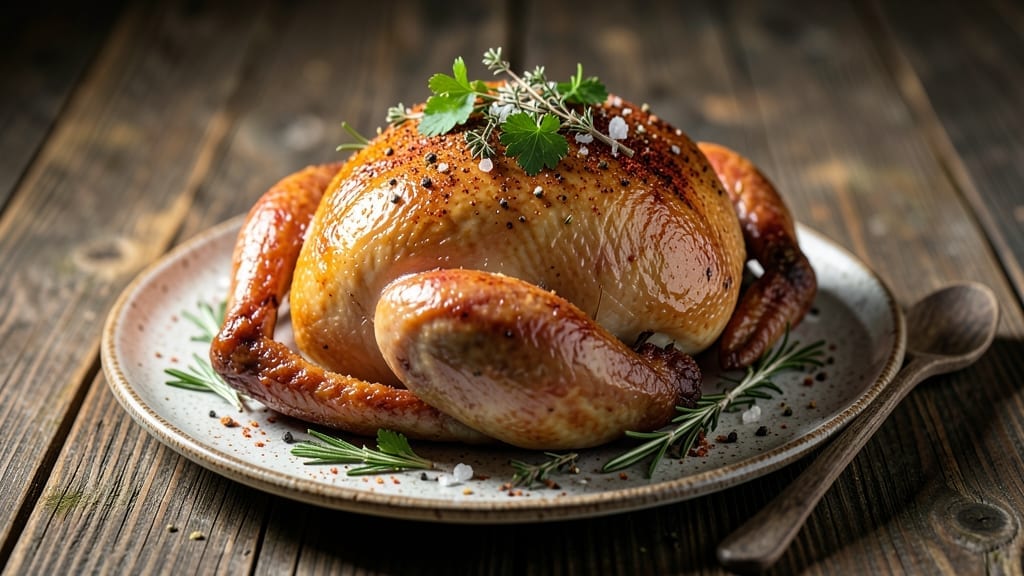
Transforming a whole turkey into a crispy-skinned, juicy masterpiece in half the time is what makes spatchcock smoked turkey my go-to holiday centerpiece.
The key lies in removing the backbone, flattening the bird, and letting the smoke work its magic at a steady 225°F—where even the thickest meat stays tender while the skin achieves that perfect golden crackle.
I first discovered this method during a Thanksgiving when time was tight, and it became an instant tradition.
What sets this technique apart is how the turkey cooks evenly, eliminating the guesswork of traditional roasting. A simple dry rub of salt, pepper, and smoked paprika creates that signature bark, while the internal temperature reaches 165°F in just 3-4 hours—far less time than a whole bird would take.
The secret weapon? A light basting of melted butter in the last hour to lock in moisture and deepen the flavor. Every bite delivers that perfect balance of crispy skin and juicy meat.
Pair your smoked turkey with roasted root vegetables and a tangy cranberry glaze for a complete feast. The presentation is just as important: carve the turkey on a platter, drizzle with pan juices, and garnish with fresh herbs for a restaurant-quality centerpiece.
This isn’t just a recipe—it’s a game-changer for holiday dinners and special occasions.
The wood choice matters too: hickory for a classic smoky depth or applewood for a sweeter, more delicate flavor. Let the turkey rest for 20 minutes before carving to ensure juices redistribute, and always use a meat thermometer for accuracy.
With this method, you’ll never go back to the old way.
Ingredients for spatchcock smoked turkey
Perfectly crispy skin and juicy meat in half the time—here’s what you need.
| Ingredient | Amount | Notes |
|---|---|---|
| Whole Turkey 🦃 | 12 lb | Fresh or thawed, 12-14 lbs ideal |
| Kosher Salt 🧂 | 2 tbsp | Fine grain preferred |
| Black Pepper 🌶️ | 1 tbsp | Freshly ground, coarse |
| Smoked Paprika 🌶️ | 1 tbsp | For signature bark flavor |
| Unsalted Butter 🧈 | ½ cup | Melted for basting |
| Applewood Chips 🪵 | 2 lb | For sweeter smoke profile |
| Hickory Chips 🪵 | 2 lb | For classic smoky depth |
| Fresh Rosemary 🌿 | 1 tbsp | Chopped for garnish |
| Fresh Thyme 🌿 | 1 tbsp | Chopped for aromatics |
| Meat Thermometer 📊 | 1 whole | Digital, instant-read |
| Aluminum Foil 🔥 | 1 sheet | Heavy-duty, for wrapping |
| Pan Juices 🥘 | ½ cup | From smoking process |
[recipe_ingredient_scaler]
The turkey is the star, so choose a 12-14 lb bird—big enough for a crowd, but not so large it takes forever to cook. Look for fresh or properly thawed turkey; frozen birds with ice crystals won’t cook evenly. Butcher shops often have better quality than grocery store selections, with more marbling and better texture. If you’re using frozen, thaw it in the fridge, not on the counter—safety first. The meat thermometer is non-negotiable; cheap ones give inaccurate readings, so invest in a digital, instant-read model for peace of mind.
No applewood chips? Hickory is a solid substitute—it’s more traditional and adds a deeper smokiness. Short on fresh herbs? Dried rosemary and thyme work at half the amount, but they won’t have the same brightness. If you’re worried about the wood choice, a blend of applewood and hickory gives you the best of both worlds. For the dry rub, coarse black pepper creates better texture than fine, and smoked paprika adds depth beyond regular paprika. Always use unsalted butter for basting—salted can make the skin too salty.
This turkey keeps beautifully for 3-4 days in the fridge if wrapped tightly in foil. For long-term storage, freeze for up to 3 months—just make sure it’s cooled completely before wrapping. The basting butter? Use it within 2 days or it’ll go rancid. If you’re prepping ahead, pat the turkey dry thoroughly before seasoning—moisture on the skin prevents crispiness. And don’t skip the rest time—20 minutes is non-negotiable for juicy meat. Carve against the grain for the best texture, and always save the pan juices for drizzling.
Why You’ll Love This Recipe
- Flat-Lies Like a Pro: No fancy techniques here—just a few shears and 30 minutes to flatten that turkey. I’ve spent hours struggling with awkwardly shaped birds, but spatchcocking turns it into a flat, even cooking surface. Trust me, your arms will thank you.
- Smoky Crispy Perfection: That smoked paprika and hickory chips? Game-changer. The bark on the skin gets this deep, savory crust while the inside stays juicy—no dry turkey here. Plus, the butter basting at the 3-hour mark locks in that golden sheen.
- Leftovers That Last (Literally): Three to four days in the fridge? That’s a whole week of lunches. I pack slices with pan juices for gravy, and my kids beg for turkey sandwiches. Budget-friendly too—you’re getting a feast for a fraction of restaurant prices.
- Weeknight Hero: Four to five hours sounds long, but it’s passive cooking while you prep sides or relax. The turkey does all the work, and by the time you’re carving, dinner’s ready. Even on a Tuesday night, this steals the show.
Step-by-step instructions for spatchcock smoked turkey
Here’s the method that delivers crispy skin and juicy meat efficiently.
Spatchcock and Season the Turkey
Remove the turkey from the refrigerator and let it sit at room temperature for 30 minutes before handling. Place it breast-side down on a stable cutting board. Using kitchen shears, cut along both sides of the backbone and remove it completely. Flip the turkey over and press down firmly on the breastbone until it cracks. The turkey should now lay flat like a butterfly—this is spatchcocking, which allows for even cooking and crispier skin.
Pat the turkey dry thoroughly with paper towels, especially under the skin and in the cavity. This step is crucial for crispy skin. In a small bowl, mix the 2 tablespoons kosher salt, 1 tablespoon black pepper, and 1 tablespoon smoked paprika. Rub this mixture all over the turkey, including under the skin and inside the cavity. Let it rest uncovered in the refrigerator for 1 hour to allow the seasoning to penetrate deeply and the skin to dry further.
Prepare the Smoker and Smoke the Turkey
Combine the 2 pounds applewood chips and 2 pounds hickory chips in a separate container. Soak them in water for 30 minutes before adding them to your smoker. Preheat your smoker to 225°F using these chips. You want to see clean, blue smoke—this indicates the wood is burning properly and not creating excess white steam.
Once the smoker reaches temperature, place the turkey breast-side up on the smoker grates. Smoke the turkey for 4 to 5 hours, maintaining the temperature between 225°F and 250°F. Avoid opening the smoker during this time—each time you open it, you lose heat and moisture. After 3 hours, baste the turkey with the ½ cup melted unsalted butter using a basting brush. This step adds moisture and helps create a golden, crispy skin.
Monitor Temperature and Finish Cooking
Use the meat thermometer to check the internal temperature of the turkey. Insert the probe into the thickest part of the thigh, avoiding the bone. The turkey is done when the temperature reaches 165°F. This typically occurs after 4 to 5 hours of smoking, but timing can vary based on your smoker and the turkey’s size.
Once the turkey reaches 165°F, remove it from the smoker and transfer it to a cutting board. Tent loosely with aluminum foil and let it rest for 20 to 30 minutes. This resting period allows the juices to redistribute throughout the meat, ensuring each slice is moist and flavorful. During this time, you can prepare your sides or make gravy using the ½ cup pan juices collected from the smoker.
Garnish and Serve
After resting, remove the foil and garnish the turkey with the 1 tablespoon chopped fresh rosemary and 1 tablespoon chopped fresh thyme. These herbs add a beautiful aroma and a pop of color. Carve the turkey into slices, ensuring each portion is crispy on the outside and juicy on the inside. Serve immediately with your favorite sides and enjoy the fruits of your labor.
The result should be a turkey with crispy, golden skin and perfectly juicy meat—exactly what you promised your guests. The spatchcocking method cuts cooking time in half while delivering exceptional flavor and texture.
Pro Tips For Making Spatchcock Smoked Turkey
- Soak Wood Chips Properly: I learned this the hard way—dry chips create too much white steam and not enough flavor. Soak those 2 pounds applewood and 2 pounds hickory chips for the full 30 minutes before adding them to the smoker. Trust me, the difference in smoke quality is night and day, and you’ll get that clean blue smoke you’re after.
- Baste at the Right Time: Don’t rush the butter—wait until exactly 3 hours in to baste with the ½ cup melted unsalted butter. This timing ensures the skin has dried enough to crisp properly while still locking in moisture. I used to baste too early, and the skin would steam instead of golden.
- Check Thigh, Not Breast: The breast might look done, but insert that meat thermometer into the thickest part of the thigh, away from the bone. That’s where the turkey’s slowest to cook, and hitting 165°F there guarantees it’s safe and juicy all the way through. I’ve ruined a turkey by trusting the breast temperature—don’t make that mistake.
- Rest Under Foil Loosely: Tent that turkey with foil loosely—not too tight, or you’ll trap steam and ruin the crisp skin. A 20-30 minute rest lets the juices settle, but the skin stays perfect. I used to wrap it snug, and the result was sad, soggy skin. (Yes, even if you’re impatient like me.)
Regional styles of spatchcock smoked turkey
Southern Smoky Tradition
In the South, a smoked turkey is more than a meal—it’s a ritual. I remember my granddaddy’s backyard cookouts where he’d pile on hickory chips and let the turkey smoke low and slow for hours. The key there is patience: start at 225°F and keep it steady.
My granddaddy swore by wrapping the turkey in foil halfway through to tenderize the meat, though I prefer the crispy bark from open smoking. The result? A turkey so tender it falls apart at the table—just like my granddaddy’s. 🔥
Texas-Style Spicy Kick
If you want a little heat, Texas-style is where it’s at. Swap out some of the smoked paprika for 2 tsp cayenne pepper and add 1 tbsp chili powder to the dry rub.
I like to finish with a drizzle of hot honey—sweet and spicy together is a match made in heaven. This version keeps the smoky depth but adds that Texas-sized kick. Trust me, your guests will be talking about it long after the meal. 🌶️
Pacific Northwest Herb Infusion
Out here on the coast, we love fresh herbs and lighter woods. Use applewood chips exclusively for a sweeter smoke, then stuff the turkey cavity with fresh sage, garlic, and lemon peels before smoking. I also add 1 tbsp dried oregano to the dry rub for that Mediterranean touch.
The result? A turkey with bright, citrusy notes that pairs perfectly with local salmon or wild mushrooms. It’s like a coastal hug in every bite. ✨
Appalachian Wild Game Twist
For a rustic, foraged twist, I gather wild garlic and blackberry leaves from the forest floor and stuff them under the turkey skin. Add 1 tbsp ground coriander to the dry rub for an earthy depth.
The smoke from hickory and cherry wood blends beautifully with these wild flavors. This method is all about embracing what nature provides—no fancy ingredients needed, just good, honest taste. 🌿
Cajun Bayou Boldness
If you’re feeling adventurous, lean into the Cajun spirit. Replace part of the hickory chips with pecan wood chips for a nuttier smoke, then add 1 tbsp Cajun seasoning and 1 tsp smoked garlic powder to the dry rub.
Finish with a drizzle of Cajun remoulade sauce before serving. This version is bold, spicy, and full of character—just like the bayou itself. 💛
Nutrition facts
Frequently asked questions
Why does spatchcocking make the turkey cook faster?
Spatchcocking flattens the turkey so it cooks more evenly and directly over the heat source. This eliminates the need for the breast to cook faster than the thighs, cutting total cooking time by nearly half. The 225°F smoker temperature works perfectly with this method to crisp the skin while keeping the meat juicy.
Can I use only one type of wood chip instead of mixing applewood and hickory?
If you prefer a sweeter smoke, stick with applewood chips—they add a delicate fruitiness. For a classic, bold flavor, use hickory chips exclusively. The blend in the recipe balances sweetness and depth, but each wood works beautifully on its own. Just adjust to your taste!
What if my turkey isn’t done after 5 hours? What should I do?
If the internal temperature hasn’t reached 165°F after 5 hours, close the smoker lid and let it cook another 30-60 minutes, checking the temperature every 20 minutes. Avoid opening the smoker too often—every time you do, you lose heat and moisture. If needed, increase the smoker temperature slightly (up to 250°F) to speed things up.
How do I prevent the turkey from drying out during smoking?
Pat the turkey thoroughly dry before seasoning to ensure crispy skin, then baste it with ½ cup melted unsalted butter after 3 hours of smoking. Also, avoid opening the smoker too often, and let the turkey rest 20-30 minutes before carving to let juices redistribute. This keeps the meat moist and flavorful.

Trained in classic French technique but raised on slow-cooked ribs and spicy rubs, she blends culinary skill with smoke and soul.
- Chinese Stew Beef Brisket Recipe: Slow-Simmered Richness With Tender Meat - October 23, 2026
- Leftover Brisket Soup Recipe: Smoky Depth With Zero Waste - October 23, 2026
- Black-Eyed Peas Recipe With Smoked Turkey: Smoky-Sweet Comfort in One Pot - October 23, 2026