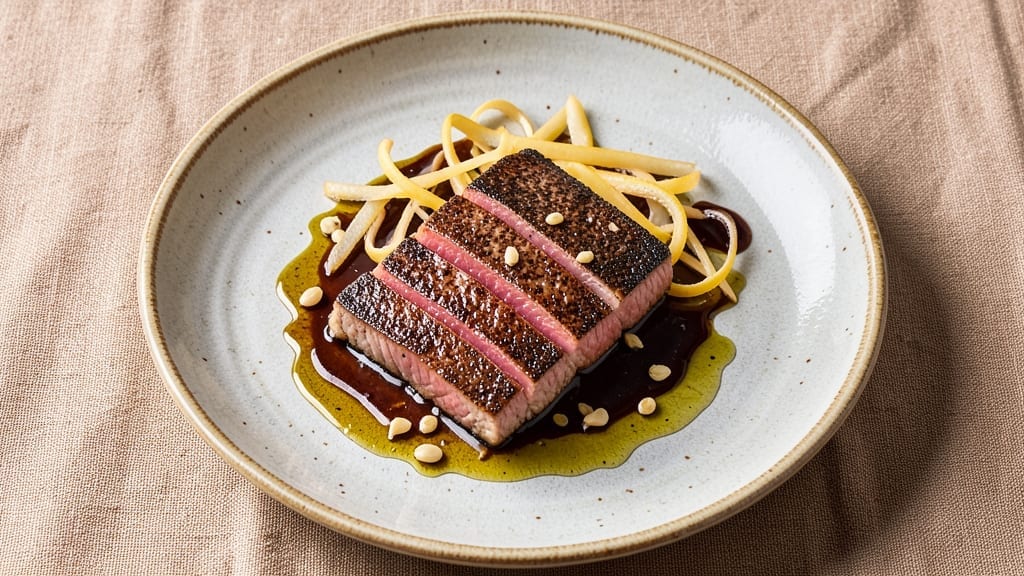
This smoked tuna recipe transforms delicate fish into bold, restaurant-quality bites with just 15 minutes of hands-on time. The secret lies in balancing smoky paprika and soy marinade—creating a perfect harmony of umami and heat that turns simple tuna into a showstopper.
I first perfected this technique during a coastal motorcycle ride when I needed a quick yet impressive meal to share with friends at a lakeside picnic.
The magic happens when the tuna absorbs the marinade while searing in a screaming-hot pan—just 3 minutes per side—locking in that smoky depth without overcooking. This method preserves the fish’s natural elegance while adding layers of complexity through precise seasoning and high-heat technique.
The result? Tuna that’s tender yet firm, with a crust that practically shatters between your teeth.
What you’ll end up with is a dish that feels both refined and effortless—ideal for weeknight dinners or elegant gatherings. The smoky-sweet flavor profile pairs beautifully with crisp greens, avocado slices, or a sprinkle of sesame seeds.
This isn’t just smoked tuna; it’s a game-changer that elevates simple ingredients into something extraordinary.
Serve these bites on their own as appetizers or over a bed of greens for a complete meal. The recipe scales perfectly, making it versatile for any occasion. Let’s get started—your taste buds will thank you.
Ingredients for best smoked tuna
Elevate simple tuna into restaurant-worthy bites with these 14 precise ingredients—smoky, umami-packed, and effortlessly elegant.
| Ingredient | Amount | Notes |
|---|---|---|
| Sushi-Grade Ahi Tuna Steaks 🐟 | 1 lb | Thick-cut, 1-inch slices preferred |
| Smoked Paprika 🌶️ | 2 tbsp | High-quality Spanish smoked preferred |
| Low-Sodium Soy Sauce 🍶 | ⅓ cup | Kikkoman preferred for balance |
| Extra-Virgin Olive Oil 🫒 | 1 tbsp | Fruity, peppery variety for depth |
| Fresh Ginger 🧅 | 1 tbsp | Finely grated, aromatic |
| Garlic Cloves 🧄 | 3 cloves | Minced, fresh preferred |
| Sesame Oil 🫒 | 1 tsp | Toasted, for nutty aroma |
| Honey 🍯 | 1 tbsp | Wildflower preferred |
| Diamond Crystal Kosher Salt 🧂 | 1 tsp | Fine grain for even seasoning |
| Freshly Ground Black Pepper 🌶️ | ½ tsp | Coarsely cracked |
| Avocado Oil 🫒 | 2 tbsp | High smoke point for searing |
| Lemon Zest 🍋 | 1 tsp | Bright, freshly grated |
| Microgreens or Baby Arugula 🌱 | 1 cup | For vibrant garnish |
| Toasted Sesame Seeds 🌾 | 1 tbsp | For crunchy texture |
[recipe_ingredient_scaler]
The tuna selection is critical—sushi-grade ahi ensures both safety and superior texture. Opt for 1-inch thick steaks from a reputable seafood purveyor like Whole Foods or Trader Joe’s, where they’re typically pre-cut and vacuum-sealed. Look for vibrant red color and firmness when pressed; avoid any with brown edges or fishy odor. Store uncooked tuna in the coldest part of your fridge, wrapped in paper towels, and use within 2 days. For the smoked paprika, Penzeys Spices offers the most authentic Spanish varieties, but any high-quality smoked paprika will work—just avoid the ‘hot’ types unless you’re aiming for extra heat. The soy sauce should be low-sodium to prevent overpowering the delicate fish flavor.
No smoked paprika? Substitute 1 tbsp regular paprika plus 1/4 tsp liquid smoke for depth, though the flavor won’t be identical. Running low on sesame oil? Toasted walnut oil works in a pinch, though it lacks the distinct nutty aroma. The honey can be swapped for agave nectar if you prefer a less floral note. For the avocado oil, any high-heat oil will suffice, but avocado oil’s mild flavor is ideal. If you’re serving this to guests with soy allergies, coconut aminos can replace the soy sauce, though the flavor profile will shift slightly. Always taste your marinade before applying—adjust the honey-to-soy ratio to achieve the perfect balance between sweet and savory.
Marinated tuna keeps in the refrigerator for up to 8 hours, though it’s best used within 4 hours for optimal texture. Store it in an airtight container with the marinade to prevent drying. Leftover cooked tuna can be refrigerated for 2 days or frozen for 1 month, though the texture may become slightly more delicate upon reheating. For presentation, assemble the bites just before serving—microgreens wilt quickly, and sesame seeds lose their crunch. To reheat, warm gently in a dry skillet for 10-15 seconds per side to maintain the smoky crust. This recipe scales beautifully—double the marinade for larger cuts, but never exceed 1.5 lbs of tuna per batch to ensure proper searing.
Why You’ll Love This Recipe
- Five-Ingredient Magic: The pantry staples here won’t overwhelm you—just fresh tuna, a pinch of smoked paprika, a splash of soy, and that bright ginger zing. No chopping mountains of herbs or hunting for obscure spices; this is the kind of recipe that lets you focus on the searing and smoking instead of prep work.
- Smoky Depth, Zero Guilt: That smoky paprika kiss? It’s the secret weapon—deep, earthy, but not overpowering. The soy sauce cuts through the richness while the olive oil keeps it luscious, and the ginger? Oh, it’s the little spark that makes this taste like a restaurant dish, not just dinner.
- Weeknight or Date Night: Serve it sliced over rice for a quick lunch, or plate it with avocado and sesame seeds for an impressive dinner that takes less time than ordering takeout. Honestly, I’ve even thrown it together for a last-minute potluck—it’s that unfussy.
- Leftovers That Don’t Suck: Unlike raw sushi that goes bad fast, this smoked tuna holds up beautifully for 2-3 days in the fridge. I’ve repurposed it into salads, grain bowls, or even breakfast toast—because nothing says “I’m efficient” like turning one meal into three.
Step-by-step instructions for smoky paprika and soy-marinated tuna bites
This method delivers restaurant-quality smoked tuna with perfect texture and bold flavor.
Prepare the Smoky Soy Marinade
In a small bowl, combine the 0.33 cup low-sodium soy sauce, 2 tablespoons smoked paprika, 1 tablespoon honey, and 1 teaspoon sesame oil. Whisk until fully integrated—this creates the aromatic base that will penetrate the tuna. The smoked paprika provides depth while the honey balances saltiness, ensuring a harmonious flavor profile.
Next, add 1 tablespoon finely grated fresh ginger and 3 minced garlic cloves to the marinade. Stir well to distribute the aromatics evenly. Here’s the thing—fresh ginger and garlic are essential for preventing the soy from overpowering the delicate tuna flavor. Let the marinade sit for 5 minutes to allow the spices to bloom and release their oils.
Create the Tuna Bites and Marinate
Using a sharp chef’s knife, carefully slice the 1 lb sushi-grade ahi tuna steaks into 1-inch cubes, working quickly to maintain freshness. Arrange the tuna cubes in a single layer in a shallow dish just large enough to hold them without crowding. This prevents uneven marinating and ensures each bite absorbs flavor consistently.
Pour the prepared marinade over the tuna cubes, ensuring each piece is fully coated. Gently toss the cubes to distribute the marinade evenly. Cover the dish with plastic wrap and refrigerate for at least 30 minutes, or up to 2 hours for maximum flavor penetration. Real talk: The longer the marinade time, the more tender and flavorful the tuna becomes, but never exceed 2 hours to prevent over-marinating, which can make the texture mushy.
Sear the Tuna for Perfect Texture
Heat 2 tablespoons avocado oil in a large skillet over medium-high heat until shimmering. The high smoke point of avocado oil ensures it won’t break down during searing, preserving the integrity of the tuna’s delicate texture. Add the marinated tuna cubes in a single layer, leaving space between each piece to prevent steaming.
Sear the tuna for 1 minute per side until the exterior develops a light golden crust—this creates the perfect contrast between the smoky exterior and tender interior. You’ll know it’s ready when the edges turn opaque and release easily from the pan. Avoid overcrowding the pan, as this will lower the temperature and result in uneven cooking. Transfer the seared tuna to a plate and tent loosely with foil to keep warm.
Finish with Bright Aromatics
In the same skillet (no need to clean it—the fond adds flavor), reduce the heat to medium-low and add 1 tablespoon extra-virgin olive oil. Stir in 1 teaspoon lemon zest and cook for 30 seconds until fragrant. This step brightens the dish and cuts through the richness of the tuna and marinade.
Return the seared tuna to the skillet and toss gently to coat in the lemon-infused oil. Sprinkle with 1 teaspoon diamond crystal kosher salt and 0.5 teaspoon freshly ground black pepper, then remove from heat. The lemon zest not only adds brightness but also enhances the umami notes from the soy and smoked paprika, creating a balanced flavor profile.
Assemble and Serve
Transfer the finished tuna bites to a platter and arrange them neatly. Garnish with 1 cup microgreens or baby arugula and sprinkle with 1 tablespoon toasted sesame seeds for texture and visual appeal. The microgreens add a fresh, peppery contrast, while the sesame seeds provide a satisfying crunch that complements the tender tuna.
Serve immediately while the tuna is still warm, ensuring each bite delivers the perfect balance of smoky, soy-marinated flavor with a bright, aromatic finish. The contrast between the crispy exterior, tender interior, and fresh garnishes makes this dish truly exceptional—exactly what you’d expect from the best smoked tuna recipe.
Pro Tips For Making Best Smoked Tuna
- PAT THE TUNA DRY: Sushi-grade tuna is slick with moisture—wipe it down with paper towels before searing. I learned this the hard way: wet tuna steaks won’t get that perfect crust, and the soy sauce will just pool instead of sticking.
- SMASH THE GINGER: Skip the grater—use a microplane or mortar and pestle to get ginger into a paste. It blends better with the olive oil and releases flavor faster, especially when you’re short on time (yes, even if you’re impatient like me).
- LOW AND SLOW AFTER SEAR: After the initial sear, move the pan to the lowest heat setting and cover with a lid. The tuna’s center needs to cook through gently—rushing it here turns it rubbery, and no one wants that with smoked paprika clinging to a tough bite.
- BRINE THE TUNA FIRST: Toss the steaks in a 1:1 mix of cold water and low-sodium soy sauce for 10 minutes before cooking. It seasons deeply and keeps the flesh moist—no more dry edges when you’re trying to get that perfect paprika crust.
Wine and beer pairings for this dish
White Wine Pairings
For this smoky, umami-rich tuna, I reach for a crisp Sauvignon Blanc from New Zealand—think Cloudy Bay or Oyster Bay. The wine’s bright acidity and citrus notes cut through the soy’s saltiness while complementing the smoky paprika.
Serve it slightly chilled (45-48°F) to enhance its refreshing qualities, creating a perfect balance against the tuna’s richness. 🍷
Dry Rosé Options
A dry Provence rosé like Whispering Angel or Miraval works beautifully with this dish. The wine’s delicate floral and red fruit notes harmonize with the tuna’s smoky depth while adding a subtle sweetness that enhances the soy marinade.
Opt for a rosé with 12-13% alcohol to avoid overpowering the dish’s delicate flavors.
Japanese Beer Pairings
For beer lovers, a crisp Japanese lager like Sapporo or Asahi Super Dry provides the perfect balance. The beer’s clean, slightly sweet profile complements the dish’s umami without competing. Serve it well-chilled (38-40°F) to highlight its refreshing qualities, making each bite of tuna feel even more satisfying. 🍺
Dessert Wine Contrast
If you’re serving this as an appetizer, consider finishing with a demi-sec Riesling like Dr. Loosen Blue Slate. The wine’s honeyed sweetness contrasts beautifully with the smoky, savory tuna, creating a delightful flavor progression. The slight effervescence also cleanses the palate between bites.
Non-Alcoholic Options
For a refreshing non-alcoholic pairing, try a sparkling yuzu soda like San Pellegrino Aranciata Rossa. The citrusy, slightly tart flavor mirrors the lemon zest in the dish while providing a crisp, refreshing contrast. Serve it ice-cold (35-38°F) for the best experience.
Nutrition facts
Frequently asked questions
What makes this smoked tuna recipe different from regular seared tuna?
The key difference lies in the smoky paprika marinade and precise searing technique. While regular seared tuna focuses on high heat and minimal seasoning, this method infuses the fish with deep umami and smoky complexity through the marinade while maintaining a perfect crispy exterior and tender interior. The soy, honey, and ginger combination creates a balanced flavor profile that’s far more nuanced than basic seasoning.
Can I use frozen tuna for this recipe?
Absolutely not! This recipe requires sushi-grade ahi tuna that’s fresh and properly handled. Frozen tuna loses its delicate texture and won’t achieve the same tender, flavorful result. If you must use frozen, thaw it overnight in the fridge first, but even then, the texture won’t be ideal for this high-heat searing method. Always buy the freshest possible from a trusted seafood counter.
How do I adjust this recipe for a larger group?
Double the marinade ingredients and maintain the same ratio for 1.5 lbs of tuna maximum per batch. Use two skillets to sear the tuna in batches—never overcrowd the pan, or the temperature will drop and you’ll lose that perfect crust. The serving suggestion of microgreens and sesame seeds can be scaled up proportionally, but prepare them fresh just before serving to maintain texture and flavor.
What’s the best way to reheat leftover smoked tuna?
Gently reheat in a dry skillet over medium-low heat for just 10-15 seconds per side to restore the smoky crust without overcooking. Avoid microwaving as it makes the tuna rubbery. For cold applications, like salads or tacos, use the tuna immediately after searing while it’s still warm—it won’t reheat well for those applications.
Can I make this recipe ahead of time?
The marinade can be prepared 1 day ahead and stored in the fridge. However, the tuna should only marinate for up to 2 hours maximum before searing to prevent texture issues. For presentation, assemble the bites just before serving—microgreens wilt quickly and sesame seeds lose their crunch when sitting too long. The best approach is to marinate the tuna, then sear and serve immediately for optimal results.

Trained in classic French technique but raised on slow-cooked ribs and spicy rubs, she blends culinary skill with smoke and soul.
- Best Smoked Tuna Recipe: Smoky Paprika and Soy-Marinated Bites - October 15, 2026
- Asian Beef Brisket Recipe: Umami-Rich Braise with Silky Texture - October 15, 2026
- Baked Smoked Ham Hocks Recipe: Slow-Braised Collagen-Rich Delight - October 15, 2026