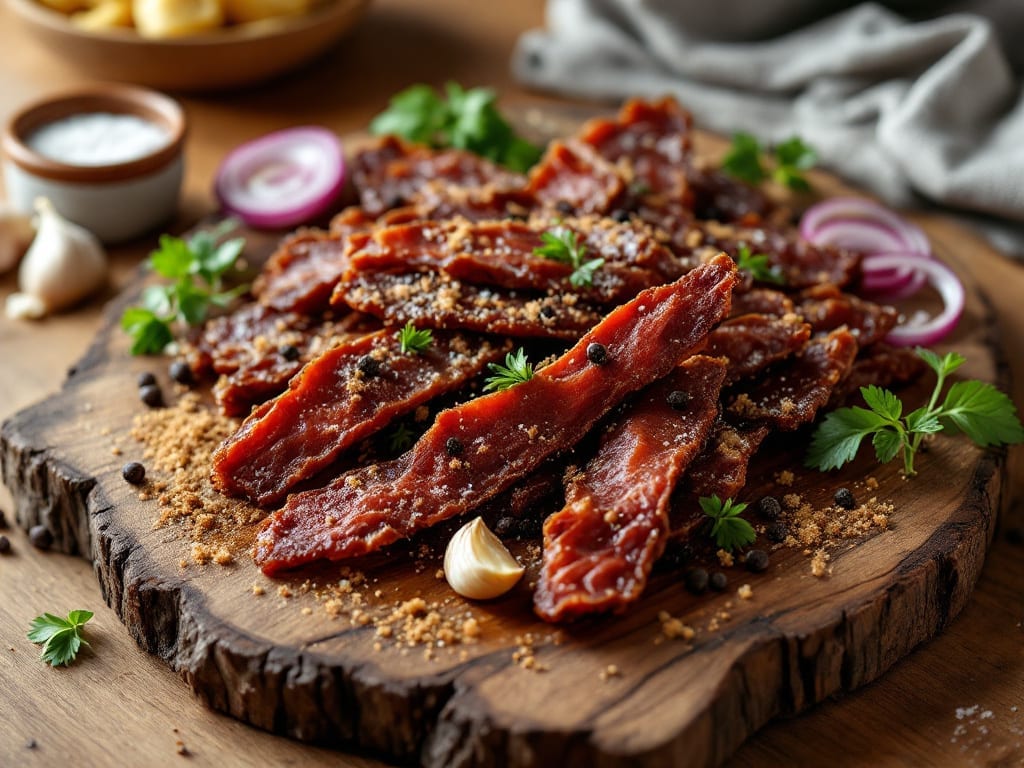
Creating homemade smoked jerky transforms tough cuts of meat into lean, flavorful protein that lasts for months—no preservatives needed. The key lies in precise curing, proper slicing, and controlled smoking, a technique I perfected during my family backyard cookouts where hickory smoke filled the air.
This method delivers restaurant-quality results with just a few simple ingredients and patience.
You’ll start with quality protein—beef, venison, or turkey—cured in a carefully balanced mix of salt, sugar, and spices that penetrate deeply for preservation and flavor. The meat is then sliced thinly and either smoked low-and-slow or dehydrated until it reaches that perfect chewy texture.
Traditional methods use wood smoke for depth, while modern approaches offer nitrite-free alternatives.
What you’ll end up with is shelf-stable protein that’s rich in flavor, packed with nutrients, and ready to take on camping trips, hiking adventures, or as a convenient snack at home.
The process is straightforward but requires attention to detail—especially when it comes to moisture control and smoking times—to ensure every bite is tender and flavorful.
Whether you’re a pitmaster looking to expand your skills or a beginner eager to try smoking for the first time, this recipe delivers professional results. Let’s get started on your first batch of homemade jerky!
Ingredients for smoked jerky
Lean protein, bold flavors, and shelf-stable results—just a few simple ingredients transform tough beef into restaurant-quality jerky.
| Ingredient | Amount | Notes |
|---|---|---|
| Beef Top Round Roast 🥩 | 2 lb | Tough cut, trimmed of fat |
| Kosher Salt 🧂 | ½ cup | Diamond Crystal preferred |
| Brown Sugar 🍯 | ¼ cup | Light or dark variety |
| Black Peppercorns 🌶️ | 2 tbsp | Freshly cracked for intensity |
| Garlic Powder 🧄 | 1 tbsp | Not garlic salt |
| Onion Powder 🧅 | 1 tbsp | Finely ground preferred |
| Smoked Paprika 🌶️ | 1 tbsp | For authentic smoky depth |
| Ground Cayenne Pepper 🔥 | ½ tsp | Adjust for heat preference |
| Worcestershire Sauce 🍶 | 1 tbsp | For umami complexity |
| Liquid Smoke 💨 | 1 tsp | Optional for non-smokers |
| Hickory Wood Chips 🌳 | 1 package | For traditional smoke flavor |
| Butcher Paper 📄 | 1 sheet | For easy slicing |
[recipe_ingredient_scaler]
The beef cut matters most here. Top round roast is lean and flavorful—sirloin or flank steak work too, but top round stays tender during curing. Grab the roast from the butcher counter, not pre-packaged; it’s usually cheaper and fresher. If you’re using venison or turkey, trim all visible fat and silver skin to ensure even curing. Costco or local meat markets often have the best prices for bulk cuts. For the salt, Diamond Crystal kosher salt dissolves best—no clumping in your cure mix. The brown sugar should be light for a milder sweetness, but dark adds deeper caramel notes if you prefer.
No smoked paprika? Regular paprika plus a pinch of liquid smoke works in a pinch. Short on Worcestershire? Soy sauce or a splash of balsamic vinegar adds umami depth. The cayenne is optional but recommended—start with half a teaspoon and adjust to taste. For a nitrite-free option, add 1 tsp celery powder to the cure mix for preservation. If you’re using a smoker, hickory wood chips give that classic BBQ flavor, but fruitwoods like cherry or apple add sweetness. The butcher paper isn’t just for slicing—it keeps your work surface clean and makes the meat easier to handle during the smoking process.
Once cured, the meat keeps in the fridge for 1-2 weeks before smoking. For long-term storage, smoke it low-and-slow (165°F for 3-4 hours) or dehydrate at 160°F until brittle. Vacuum-sealed jerky lasts 6-12 months in the freezer. I like to portion it into ziplock bags with oxygen absorbers for camping trips—no refrigeration needed. The flavor actually improves after a few weeks as the spices meld. If you’re new to smoking, start with a small batch—this recipe makes about 1 lb of jerky, perfect for testing your setup.
Why You’ll Love This Recipe
- No-Fuss Prep: The beef only needs a quick trim and slice—no fancy cuts or hours of marinating. I’m talking 15 minutes from raw to smoker, and honestly? That’s all it takes for a batch that tastes like it simmered all day.
- Sweet-Savory Magic: Brown sugar and garlic powder team up to give it that perfect balance—smoky depth with just a hint of sweetness that makes it irresistible. Between us, the first piece is always gone before the last one even cools.
- Packable Anywhere: Wrap it in foil or vacuum-seal it, and boom—you’ve got a lunch that travels better than my coffee addiction. Camping trips, road trips, or just a busy workday? This jerky’s your new best friend.
- Budget Smoker Win: Top round is cheap, and a pound lasts me days. I make a big batch, freeze half, and still have leftovers that disappear faster than my willpower on a lazy Sunday. Plus, the smoker gets used for something actually useful.
Step-by-step instructions for smoked jerky
Here’s the method—simple, foolproof, and guaranteed to deliver jerky that stays perfect for months.
Trim and Slice the Beef Top Round Roast
Start by trimming away any visible fat or silver skin from the 2 lb beef top round roast using a sharp boning knife. This lean cut is perfect for jerky, but removing excess fat ensures a cleaner texture. Next, slice the roast against the grain into strips about ¼-inch thick and 1-inch wide. You’ll end up with roughly 12-15 strips, depending on your knife skills. The thinner the slices, the faster they’ll dry and smoke.
Here’s the thing—if your slices aren’t uniform, some pieces will dry too quickly while others remain chewy. Take your time with this step. For best results, use a meat slicer if available, as it provides consistent thickness. Arrange the strips on a plate and set aside while you prepare the marinade.
Create the Jerky Marinade
In a large bowl, combine the 0.5 cup kosher salt, 0.25 cup brown sugar, 2 tbsp freshly cracked black peppercorns, 1 tbsp garlic powder, 1 tbsp onion powder, 1 tbsp smoked paprika, and 0.5 tsp ground cayenne pepper. Mix these dry ingredients thoroughly to distribute the spices evenly. This blend forms the backbone of your jerky’s flavor profile—don’t skip the cayenne if you like a little heat, but reduce it to 0.25 tsp for a milder kick.
Next, add the 1 tbsp Worcestershire sauce and 1 tsp liquid smoke to the dry mixture. Stir until you have a coarse, even-textured blend. The Worcestershire sauce adds umami depth, while the liquid smoke enhances that authentic barbecue flavor without requiring a smoker. This mixture should coat the beef strips completely when applied, so don’t be shy—you’ll want a generous coating on every piece.
Marinate the Beef Strips
Transfer the sliced beef strips to a resealable plastic bag or airtight container. Pour the marinade over the strips, ensuring each piece is fully coated. Seal the bag and massage the marinade into the meat for 2-3 minutes to help it penetrate evenly. This step is crucial for flavor infusion and tenderness. Place the bag in the refrigerator and let the beef marinate for at least 12 hours, though 24 hours yields the best results. The longer it marinates, the more flavorful and tender your jerky will become.
I know it’s tempting to rush this step, but patience pays off here. The acidity from the Worcestershire sauce and the salt will begin to break down the beef’s proteins, making the jerky more pliable and flavorful. After marinating, remove the strips and pat them dry with paper towels. This drying step is essential—excess moisture will prevent proper smoking and drying later on.
Smoke the Jerky Low and Slow
Preheat your smoker to 165°F using the 1 package hickory wood chips. Hickory provides a classic, robust smoke flavor that pairs perfectly with beef. Once the smoker reaches temperature, place the dried beef strips on the smoker grates, ensuring they aren’t overlapping. This allows proper airflow and even smoking. Smoke the jerky for 4-6 hours, depending on your smoker’s efficiency and the thickness of your slices. The jerky is done when it reaches an internal temperature of 160°F and the edges are slightly darkened and firm to the touch.
Here’s where it gets technical: You’ll notice the jerky will start to shrink as it dries. This is normal and indicates the moisture is being driven out. If you’re using a smoker with a water pan, keep it filled to maintain humidity levels—too dry an environment can cause the jerky to dry out too quickly on the outside while remaining raw inside. Check the temperature periodically, and resist the urge to peek too often, as each time you open the smoker, you lose heat and prolong the cooking time.
Wrap and Rest for Maximum Shelf Life
Once the jerky reaches 160°F and is fully dried, remove it from the smoker and let it cool completely on a wire rack. This cooling step is critical—it allows the jerky to firm up and prevents condensation from forming when you wrap it. Once cooled, wrap each piece individually in the 1 sheet butcher paper. Butcher paper is ideal because it allows the jerky to breathe slightly while still protecting it from contaminants. Store the wrapped jerky in an airtight container or resealable bag in the refrigerator for up to 3 months, or freeze for 6-12 months to extend its shelf life even further.
Your jerky should be firm, slightly chewy, and deeply flavorful. If any pieces feel too soft or moist, return them to the smoker for an additional 30-60 minutes to finish drying. Properly made jerky will keep well and make for a fantastic high-protein snack, camping food, or emergency ration. Enjoy it as a standalone treat or pair it with a sharp mustard or spicy sauce for an extra kick.
Pro Tips For Making Smoked Jerky
- Trim to ¼-Inch Thickness: I learned this the hard way—thicker slices mean uneven cooking and chewy jerky. Use a sharp knife (or meat slicer if you have one) to cut the top round into ¼-inch slices, no thicker. This ensures every piece hits the smoker at the same pace and gets that perfect bite.
- Cure Meat Overnight: Skipping the overnight cure is where jerky goes wrong. Toss the beef with kosher salt and brown sugar (about 1.5 tablespoons each per pound) and refrigerate 12–24 hours—this breaks down proteins for tender jerky. Trust me, rushing this step means tough, salty jerky that’ll make you regret it.
- Start Hot, Finish Low: Crank your smoker to 180–190°F for the first hour to blast off moisture, then drop to 165°F until internal temp hits 160°F. I used to leave it steady, and the jerky always ended up dry. This two-stage approach keeps it chewy without gummy edges.
- Toss with Wet Garlic: Dry garlic powder sticks to the meat like dust—mix it with 1 teaspoon of water before tossing. This guarantees even coating and deeper flavor. (Yes, it sounds weird, but it works.) The wet mix clings better than dry powder ever could.
Troubleshooting your smoked jerky
Uneven Drying
If your jerky dries unevenly—some pieces brittle while others remain chewy—it’s usually due to inconsistent slice thickness or airflow issues. I’ve seen this happen when slices vary from ⅛-inch to ½-inch thick. Stick to ¼-inch slices for consistency, and use a meat slicer if possible.
For airflow, space strips ½-inch apart on smoker racks and avoid overlapping. If using a dehydrator, rotate trays every 2 hours to ensure even exposure. 🌡️
Excessive Moisture
Jerky that feels sticky or slimy after smoking likely didn’t dry enough. This happens when humidity levels are too high or smoking time is insufficient. Pat slices thoroughly with paper towels before smoking, and aim for an internal temp of 160°F—use a meat thermometer to check.
If your smoker lacks a water pan, place a shallow tray of water nearby to stabilize humidity. For dehydrators, extend drying time by 1-2 hours if pieces feel damp.
Bitter or Harsh Flavor
A bitter aftertaste often means over-smoking or using too much salt. Reduce hickory wood chips to ½ package or switch to milder woods like apple or cherry. For salt balance, cut the kosher salt to ⅓ cup and add 1 tbsp honey to the cure mix to mellow the sharpness.
If using liquid smoke, reduce to ½ tsp—it’s potent! Taste-test a small piece before committing to the full batch. 🍯
Jerky Sticking to Smoker
Sticky jerky usually means residual marinade or grease wasn’t fully dried. Before smoking, pat slices extra dry with paper towels, then lightly dust with cornstarch or arrowroot powder to create a barrier. Use a wire rack over the smoker grates to prevent contact with surfaces.
If strips still stick, reduce marinade moisture by adding 1 extra tbsp brown sugar to absorb excess liquid during curing.
Shrinking Too Much
Jerky that shrinks excessively (becoming brittle or leathery) likely dried too quickly. Slow down the process by lowering your smoker temp to 150°F or increasing humidity with a water pan. For dehydrators, set the temp to 145°F and check slices every 30 minutes after 2 hours of drying.
Humidity control is key—aim for a balance where jerky firms up but doesn’t harden like leather.
Weak or Muted Flavor
Pale, bland jerky often results from insufficient marinade penetration or under-smoking. Extend the marinade time to 48 hours for deeper flavor infusion, and massage the cure into the meat every 12 hours.
Boost smoke intensity by using 2 packages of wood chips or adding 1 tsp smoked paprika to the marinade. For extra depth, brush slices with ½ cup beef broth> during the last 30 minutes of smoking. 🔥
Nutrition facts
Frequently asked questions
What’s the best cut of meat for smoked jerky?
Top round roast is my go-to choice—it’s lean, flavorful, and perfect for jerky. Sirloin or flank steak work too, but avoid fatty cuts like ribeye. For game meat, venison or turkey are excellent alternatives. Always trim all visible fat and silver skin for the best results.
Can I make jerky without a smoker?
Use a dehydrator set to 160°F for 4-6 hours or an oven with the door slightly open at 175°F. For extra flavor, add 1 tsp liquid smoke to the marinade. Monitor closely to avoid over-drying.
How long does homemade jerky last?
Properly made jerky keeps for 1-2 months in the fridge or 6-12 months in the freezer. For longer shelf life, vacuum-seal it with oxygen absorbers. The flavor actually improves over time as the spices meld together.
Why did my jerky turn out too tough?
Over-drying or slicing against the grain can make jerky tough. Slice with the grain for tenderness, and check internal temp—it should reach 160°F, not higher. If using a dehydrator, reduce temp to 145°F for a chewier texture.
What’s the best wood for smoking jerky?
Hickory gives classic BBQ flavor, while apple or cherry add sweetness. Avoid pine—it can taste bitter. For fruitwoods, soak chips for 30 minutes before using to prevent flare-ups.

Trained in classic French technique but raised on slow-cooked ribs and spicy rubs, she blends culinary skill with smoke and soul.
- Masterbuilt Smoker Beef Brisket Recipe: Bark-To-Meat Ratio Hack for Unmatched Flavor - October 15, 2026
- Costco Beef Brisket Recipe: Low-and-Slow Masterpiece With Molasses-Kissed Crust - October 15, 2026
- Smoked Herring Recipe: Scandinavian-Style With Dill and Mustard Cream - October 15, 2026